The Spirit & the Story
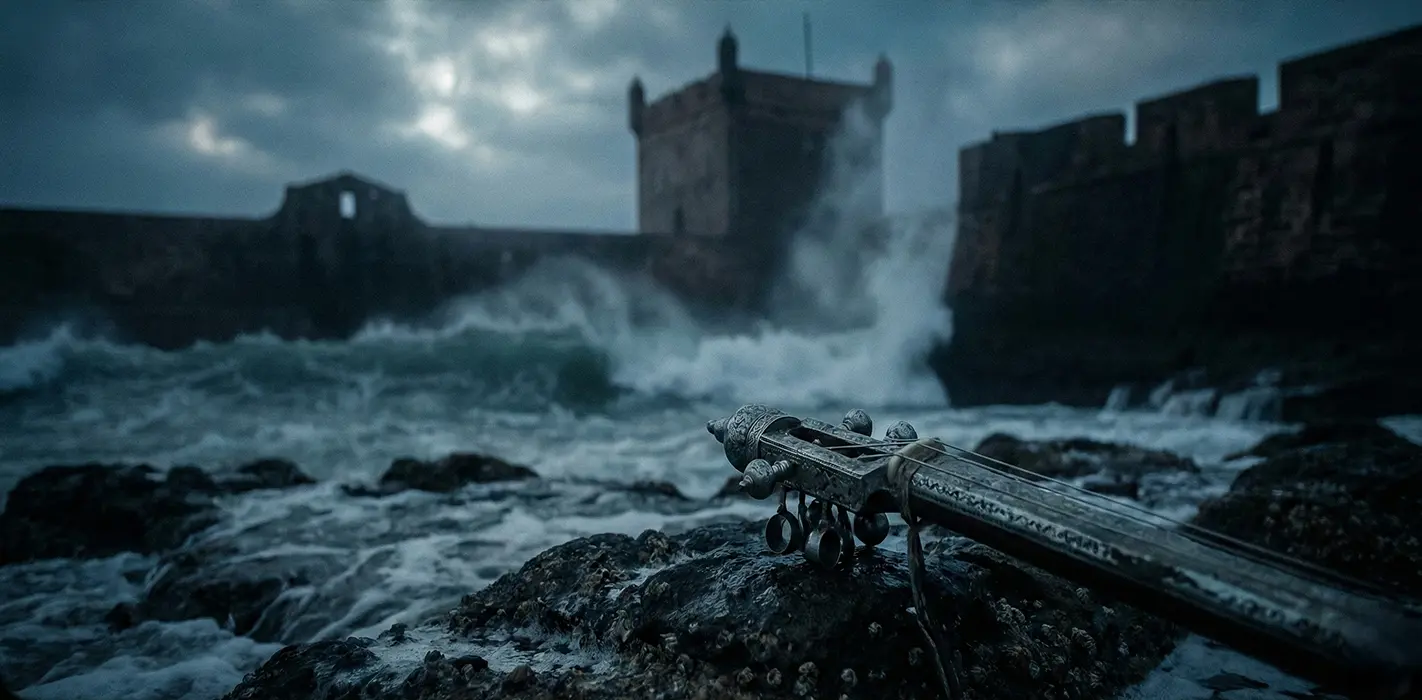
Essaouira — known historically as Mogador — is not just a Gnawa city. It is the Gnawa city. Standing on Morocco’s windswept Atlantic coast, this fortified port served for centuries as the final stop on the trans-Saharan caravan routes from Timbuktu. It was through these routes that enslaved peoples from present-day Mali, Senegal, Guinea, and Niger were brought to Morocco, carrying with them the ancestral rhythms, spiritual practices, and collective memory that would crystallize into what we now call Gnawa.
Unlike the bustling urban centers of Casablanca or Marrakech, Essaouira’s intimate medina — a UNESCO World Heritage Site — provided the enclosed, protected spaces necessary for preserving the Lila (the nocturnal ritual) in its most authentic form. The narrow alleyways, the roar of the Atlantic winds, and the salt-kissed stone walls all became part of the sonic and spiritual fabric of the Marsaoui tradition. Here, the spirits (Mlouk) are said to arrive on the ocean breeze, and the deep bass of the Guembri echoes the eternal dialogue between Africa and the sea.
The city earned its title as the spiritual capital not through modern tourism alone, but through centuries of unbroken practice. Generations of masters have passed down Taknawit — the complete body of Gnawa knowledge, music, and ritual — within the same families and the same sacred spaces, creating a living chain of transmission that remains unbroken to this day.
The Marsaoui Style
How do you recognize the Essaouira school by ear alone? The Marsaoui style is considered by scholars and practitioners alike to be the purest form of Gnawa music, preserving ancient Bambara and Sudanese linguistic traces in its lyrics that have been diluted in larger commercial centers.
Rhythm & Melody: The Marsaoui style is distinctly more melodic, hypnotic, and fluid than other schools. Where Marrakech pounds with intensity and Tangier leans toward Andalusian-influenced melodies, Essaouira flows like the ocean itself — deep, meditative, and trance-inducing. The emphasis is on chelba (the swaying), a gentle rhythmic rocking that guides both musicians and participants into altered states of consciousness.
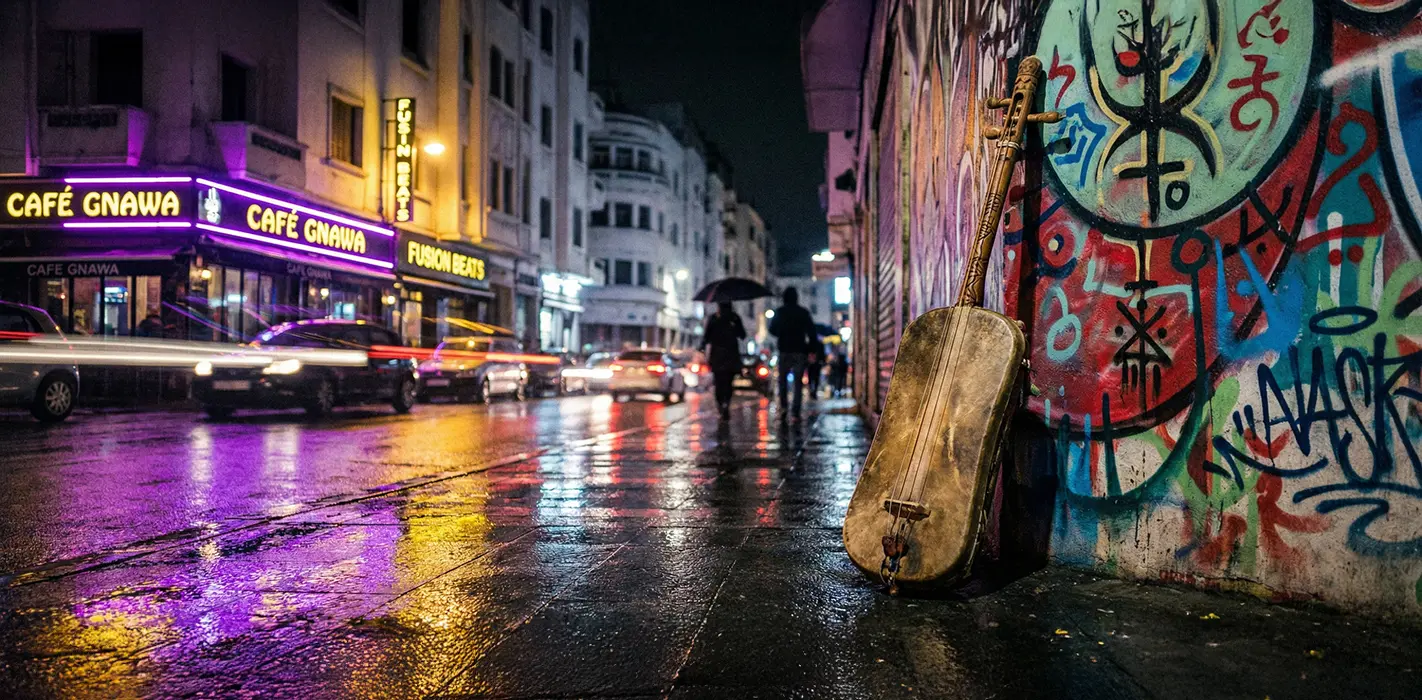
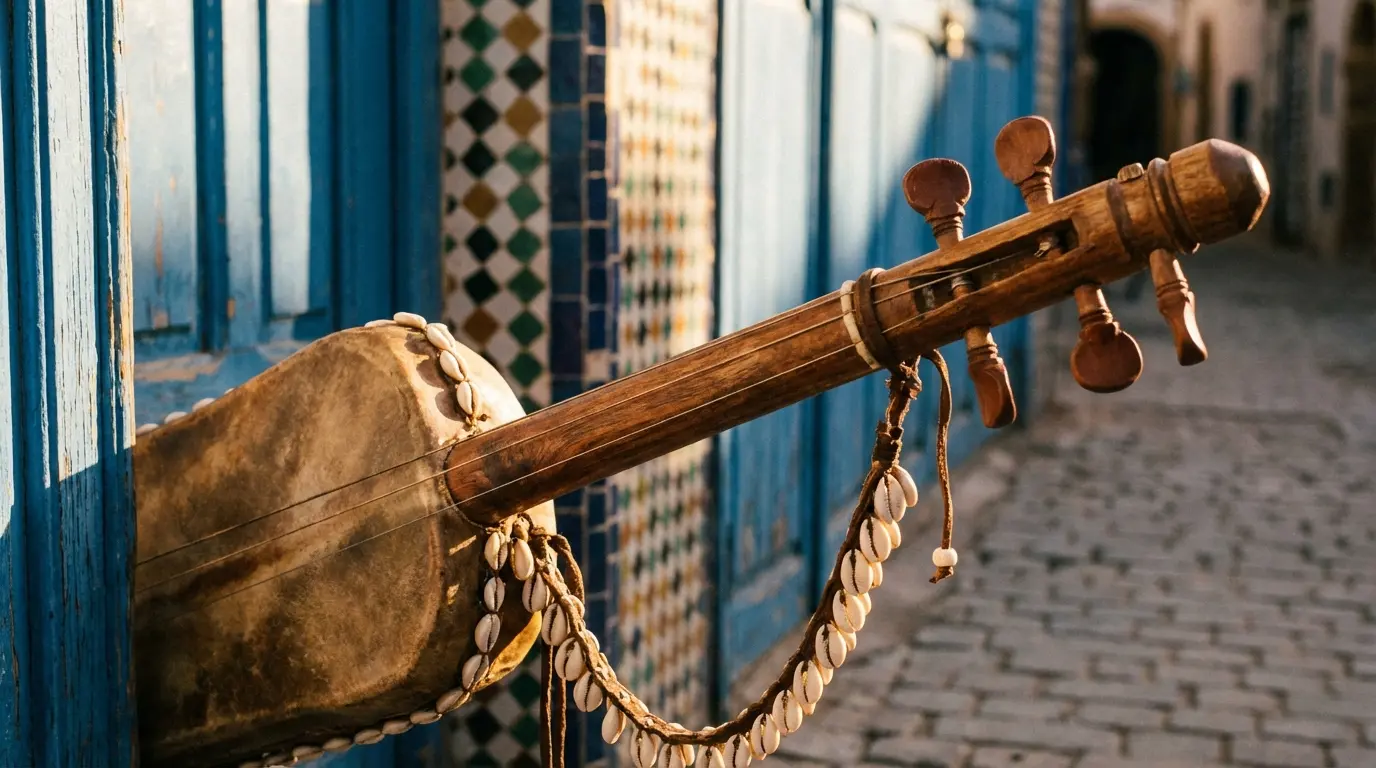
The Guembri: In the hands of a Marsaoui master, the Guembri becomes a singing instrument. The playing style emphasizes the lyrical quality of the bass, with precise finger-plucking techniques that draw out haunting, sustained notes. The metallic buzzer (sersera) on the neck creates a distinctive shimmer — a sonic signature unique to Essaouira’s instruments.
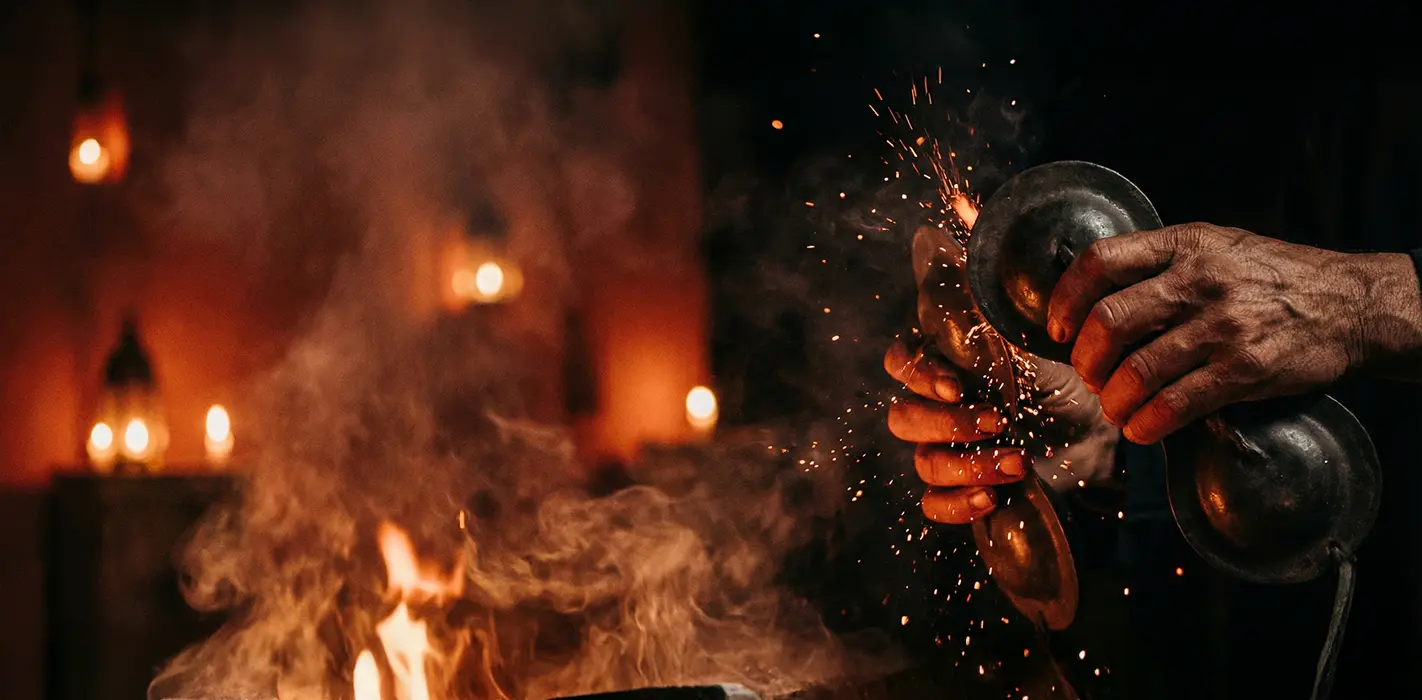
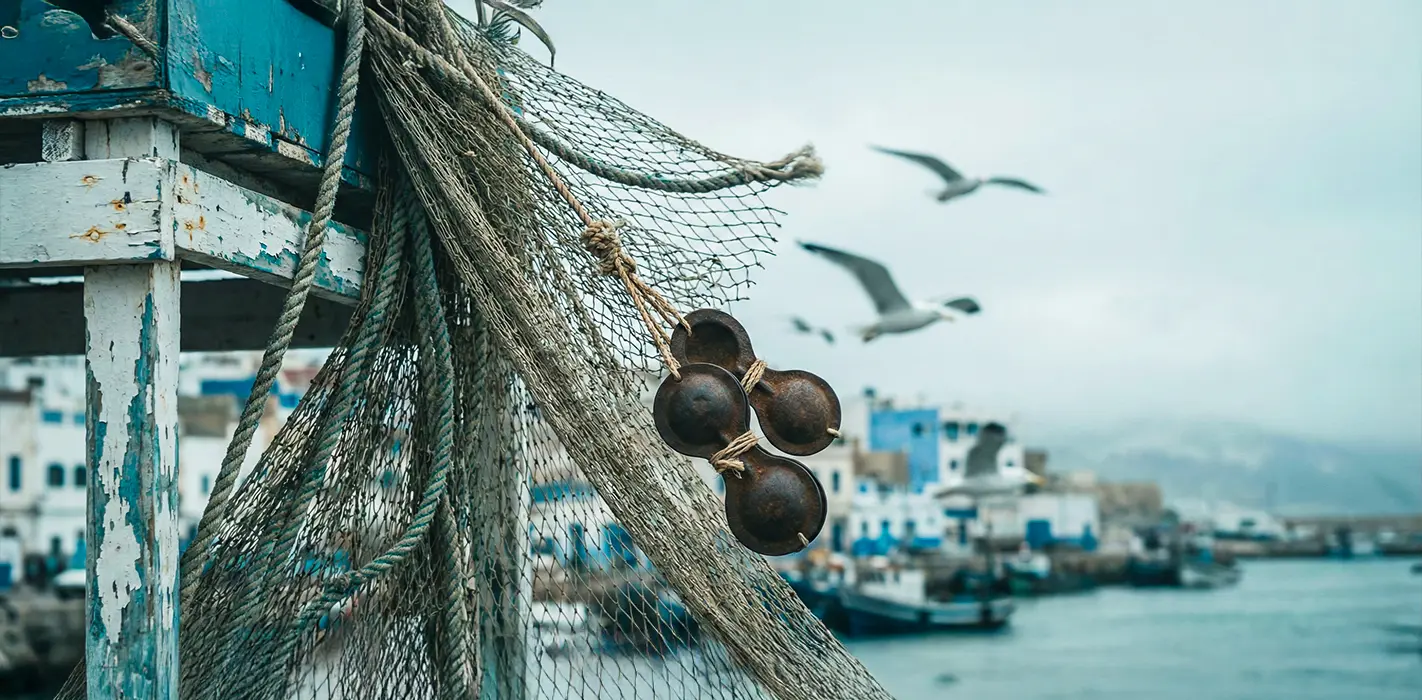
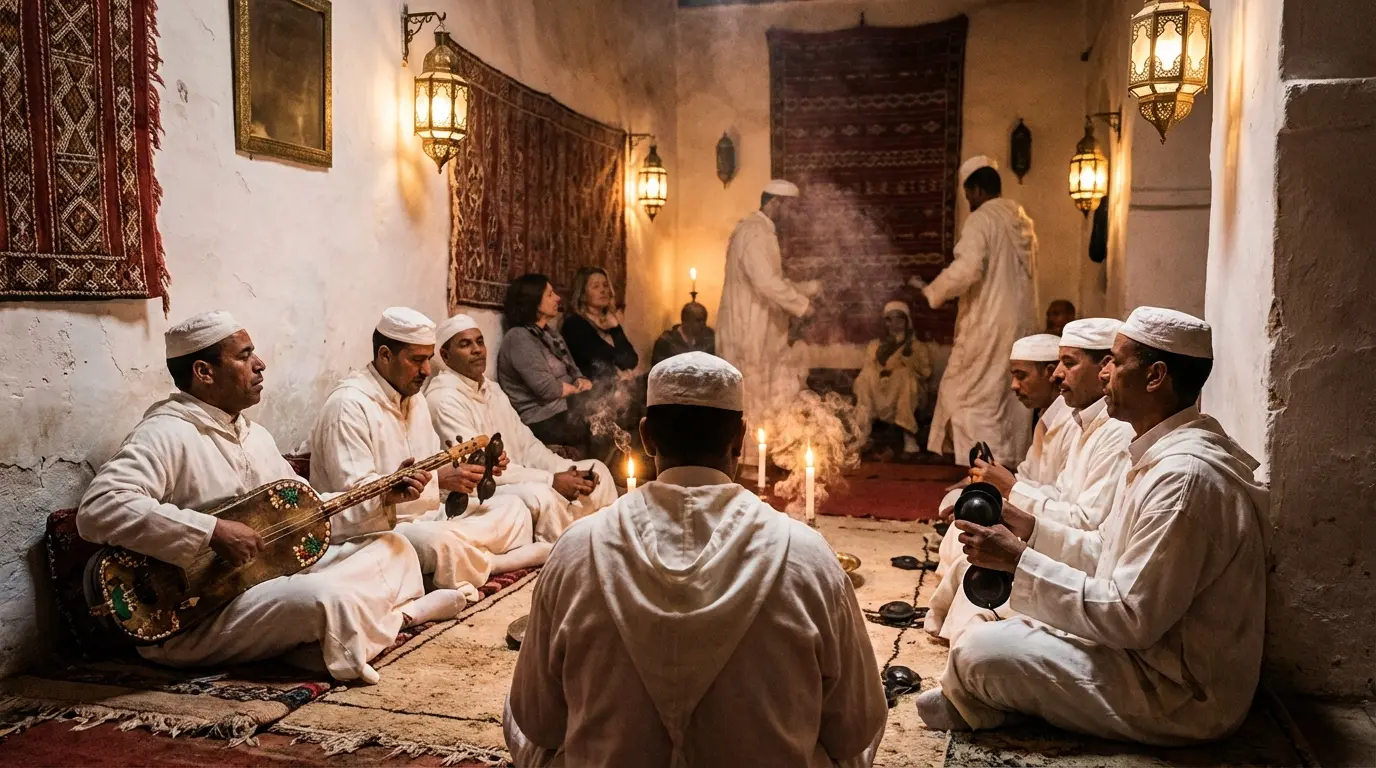
The Qraqeb: The iron castanets of the Koyos (chorus members) maintain a relentless, hypnotic pattern that is said to echo both the sound of chains — a sonic memory of slavery and liberation — and the thundering of horse hooves across the Sahara.
The Chachia: Marsaoui masters are recognizable by their elaborate ceremonial attire. The chachia (cap) adorned with cowrie shells connects to West African spiritual traditions, while the colors of the robes change according to the spirit being invoked during the Lila.
The Sacred Spaces
The true heart of Gnawa in Essaouira beats not on festival stages, but within the ancient walls of its zaouias — spiritual lodges that function as both shrine and conservatory.
Zaouia Sidna Bilal: Located in the western quarter of the medina (Hay Bni Anter), this is the spiritual headquarters of Gnawa in Essaouira. Named after Bilal Ibn Rabah — the first muezzin of Prophet Muhammad and a formerly enslaved Abyssinian — the zaouia serves as the institutional anchor of the brotherhood. Here, the hierarchical structures of the order are maintained, disputes are resolved, and spiritual lineage is transmitted from elder Maâlems to apprentices. Every year, on the 20th of Sha’ban, the zaouia hosts the annual Moussem (pilgrimage), during which the elite masters parade through the streets in full ceremonial dress, collecting offerings and blessing the faithful.
The continued activity of the zaouia in Essaouira — compared to its decline in other cities — is a key factor in the city’s status as the capital of Gnawa. Unlike a museum, the zaouia is alive: it breathes, it heals, it initiates.
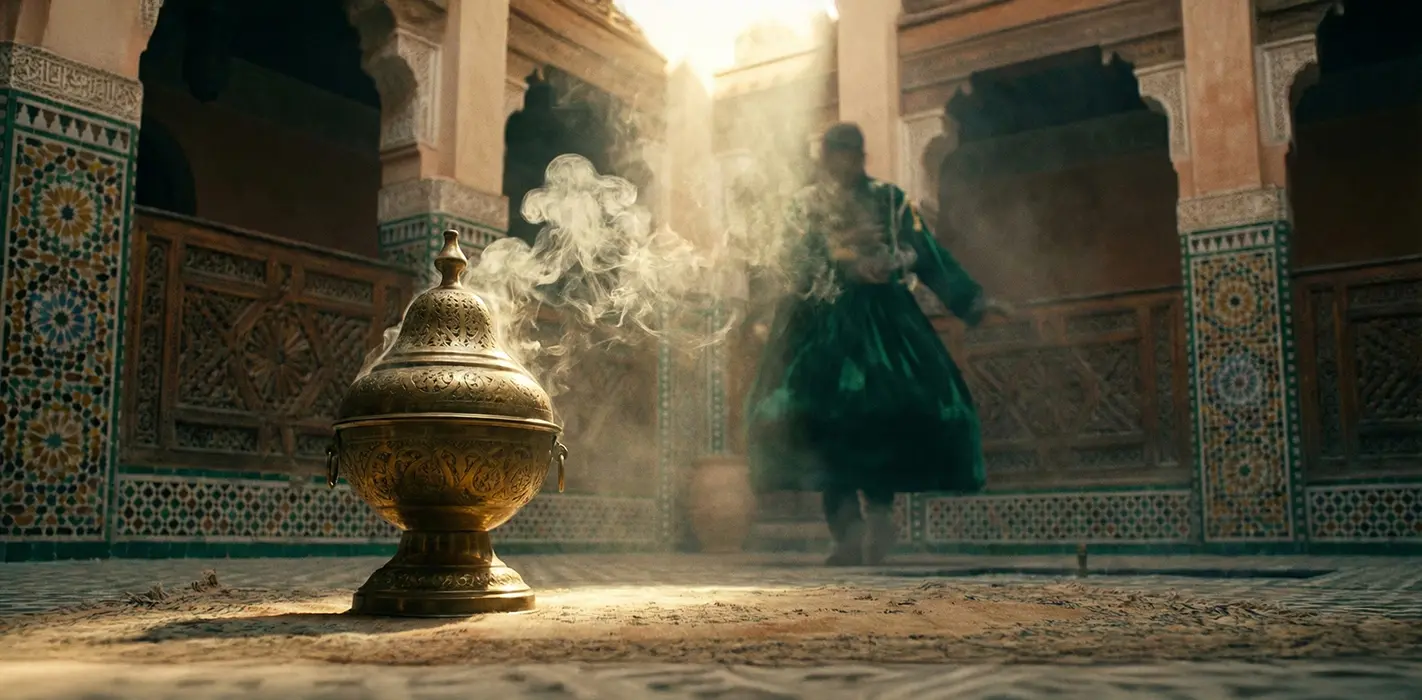
During the Lila, the master invokes seven families of spirits (Mlouk), each associated with a specific color, incense (Bakhour), and rhythm — from the white of purity (Moulay Abdelqader Jilali) to the black of ancestral African spirits (Lalla Mimouna), passing through the blue of the sea (Sidi Moussa) and the red of fire and war (Sidi Hammou). The master’s skill is measured by his ability to navigate this complex ritual sequence and orchestrate the collective trance (Jedba).
The Festival & Its Legacy
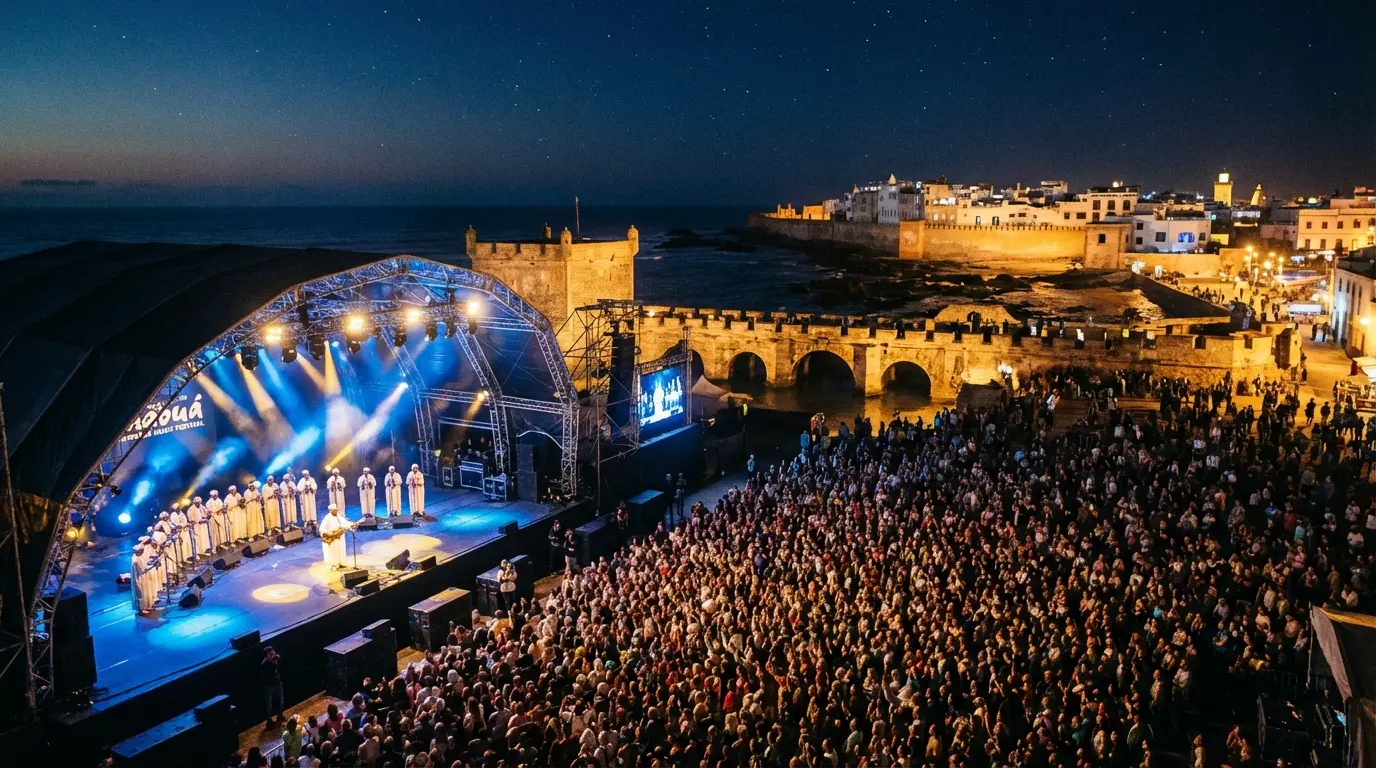
The Gnaoua World Music Festival, launched in 1998, is the single most important factor in solidifying Essaouira’s global status. But its impact goes far beyond tourism.
Social Transformation: Before the festival, masters often lived on the margins, dependent on private Lilas and charity. The festival elevated their status to “artists” and “masters” on par with global jazz legends. The creation of Association Yerma Gnaoua allowed masters to organize, defend their rights, and secure social recognition.
The Fusion Logic: The festival’s iconic fusion concerts serve a profound symbolic purpose. Musically, they demonstrate the universality of Gnawa’s pentatonic scale, which harmonizes seamlessly with jazz, blues, and reggae. Symbolically, they place the Gnawa Maâlem in a position of power — he is the host, and the visiting global star (Marcus Miller, Pat Metheny) must adapt to his rhythm. This reversal of colonial dynamics is at the heart of Essaouira’s pride.
The Anthology: In 2013, Association Yerma Gnaoua produced a definitive anthology of Gnawa music (9 CDs and a book), archiving the repertoire of senior masters to prevent the loss of oral history.
UNESCO Recognition: In December 2019, led by the efforts of Association Yerma Gnaoua, Gnawa was inscribed on UNESCO’s Representative List of the Intangible Cultural Heritage of Humanity — formally recognizing Essaouira’s role not just as a city of music, but as a guardian of a human treasure.