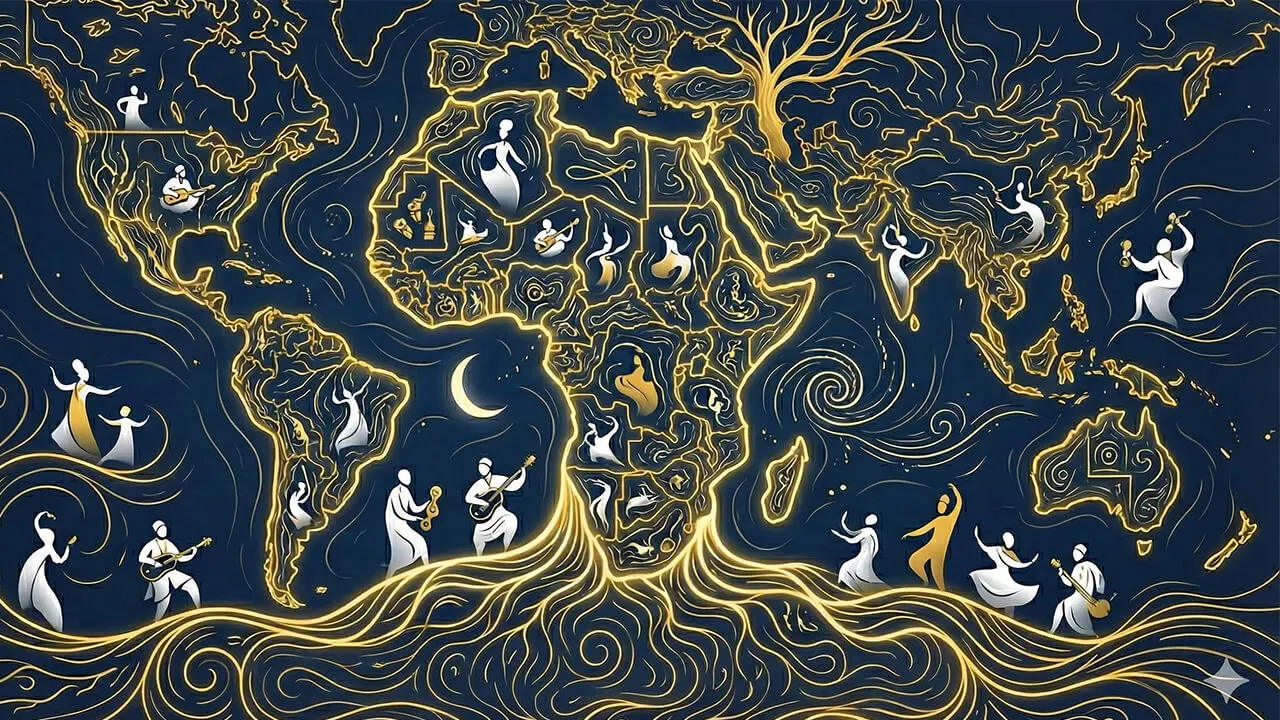
How the music of enslaved Africans became Morocco's most celebrated cultural export — a journey through chains, healing, and global recognition.
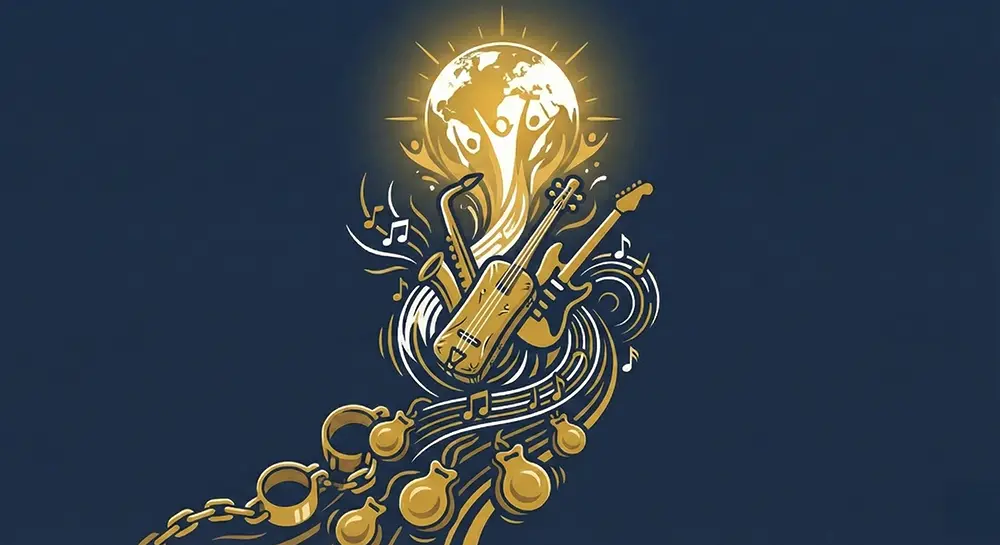
There is a legend whispered among the Gnawa about their instruments. The guembri, they say, represents the hull of the slave ships that carried their ancestors across vast distances. The qraqeb — those iron castanets that chatter through every ceremony — echo the sound of chains that once bound their wrists. Whether literally true or not, the legend captures a profound truth: Gnawa music was born from suffering, forged in bondage, and transformed into one of humanity’s most powerful expressions of spiritual survival.
This is the hidden history of how the songs of enslaved Africans became Morocco’s gift to the world.
The Ancestors: Children of Empire
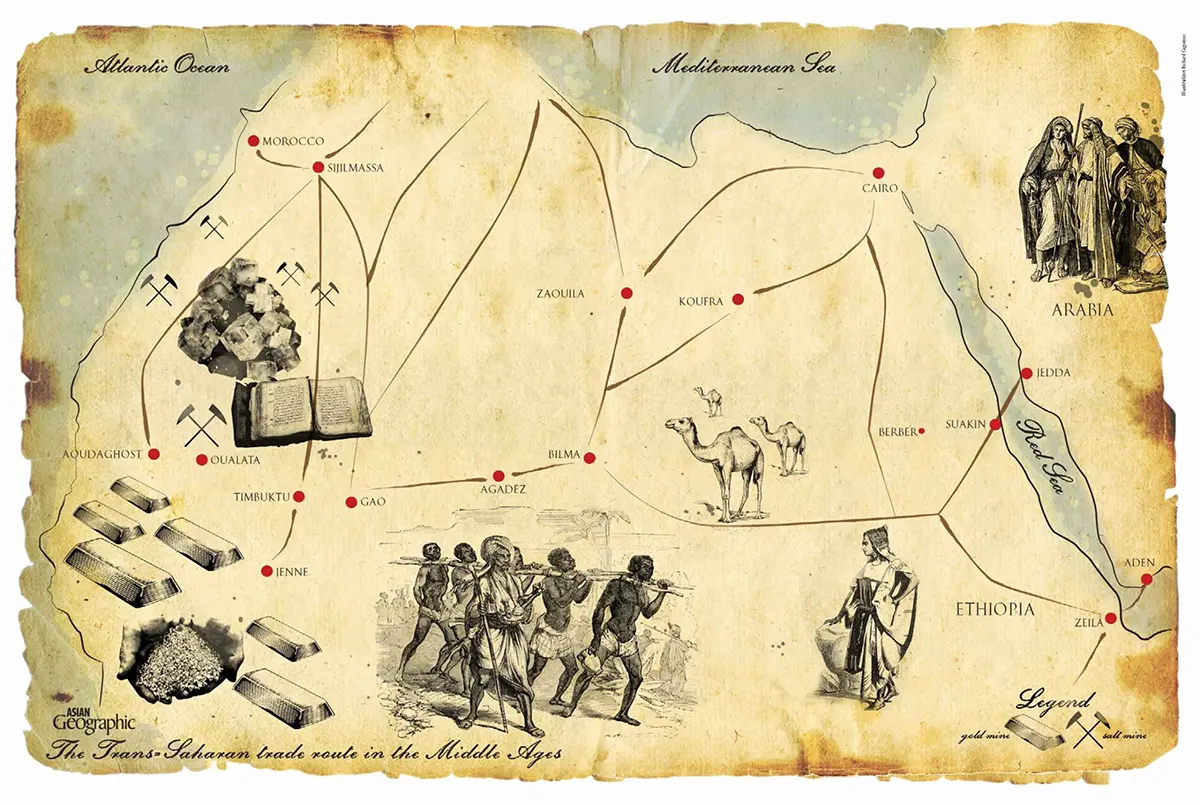
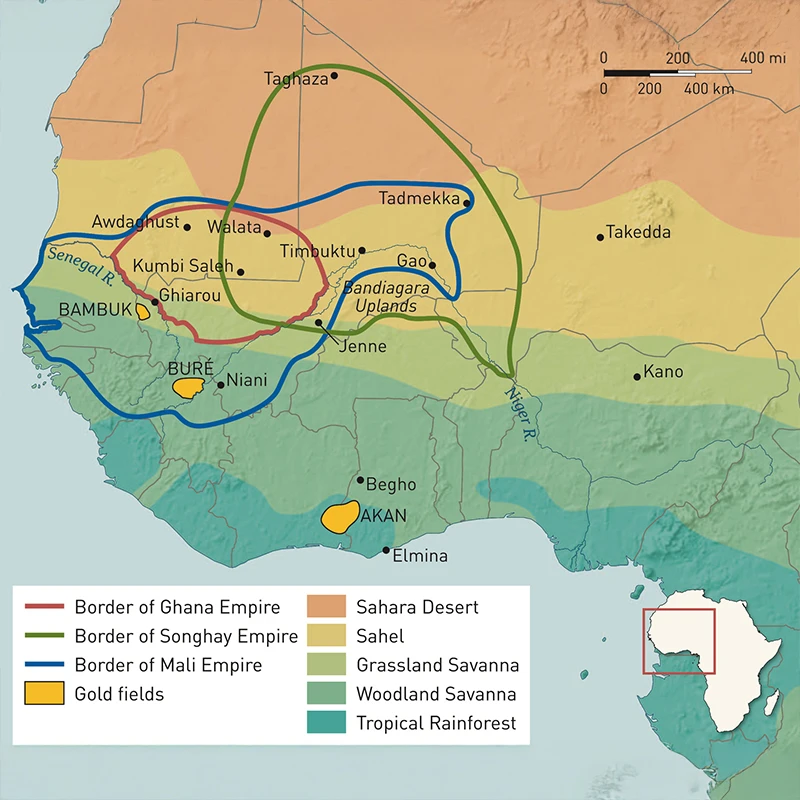
The ancestors of today’s Gnawa did not come from a single place or people. They were captured from the great empires and kingdoms that flourished along the Niger River and across the West African Sahel — the Songhai of Timbuktu, the Bambara of the Niger basin, the Mandinka traders, the Hausa of what is now Nigeria, and the Fulani pastoralists who roamed the grasslands.
These were not primitive peoples. They came from civilizations that had built universities in Timbuktu, traded gold across continents, and developed sophisticated systems of music, spirituality, and governance. When they were torn from their homelands and marched across the Sahara, they carried this cultural wealth within them — songs that would survive centuries, rhythms that would outlast empires.
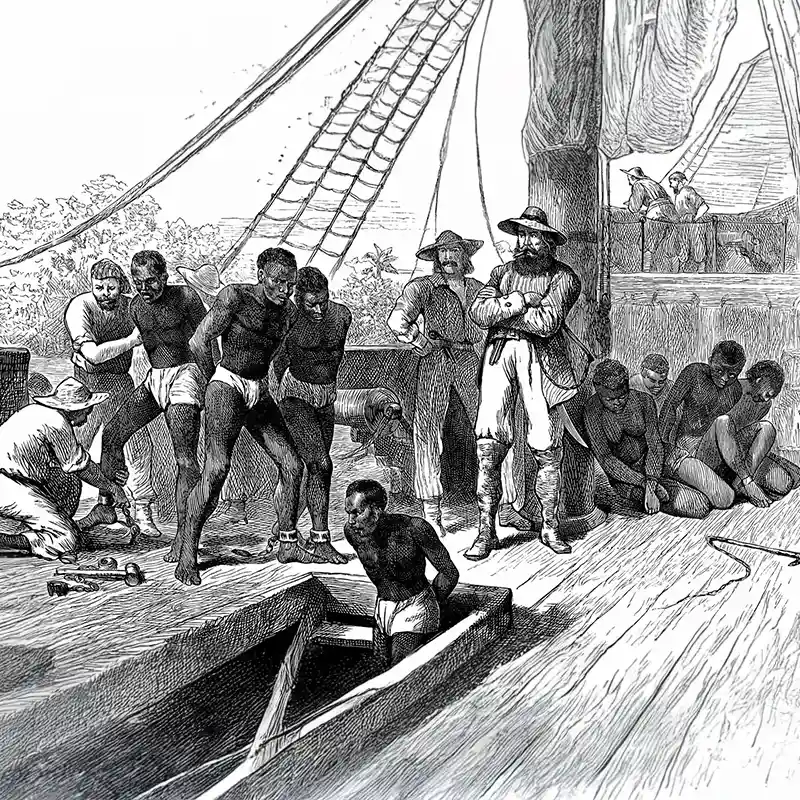
The first waves arrived through the trans-Saharan caravan trade that had connected sub-Saharan Africa to the Mediterranean world since antiquity. But the flow intensified dramatically in the late 16th century when Sultan Ahmed Al-Mansur conquered parts of the Songhai Empire and brought back approximately 12,000 captives. These enslaved Africans were put to work in sugar plantations, construction projects, and domestic service across Morocco.
The Army of Bukhari: Soldiers in Chains
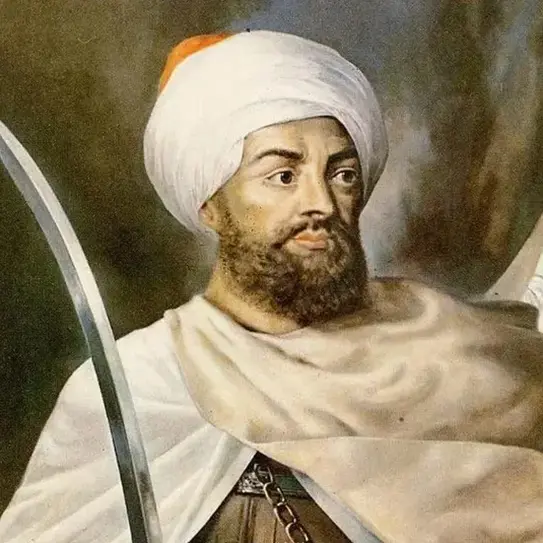
The second — and most significant — wave of enslaved Africans arrived under Sultan Moulay Ismail (1672-1727), one of Morocco’s most powerful rulers. He created what became known as the Abid Al-Bukhari (Slaves of Al-Bukhari), a massive army of enslaved Black Africans who swore loyalty on the famous hadith collection of Imam Al-Bukhari.
At its height, this army numbered over 150,000 soldiers — a force that made Moulay Ismail one of the most powerful rulers of his era. These soldiers lived in their own communities, married among themselves, and developed distinct cultural practices that blended their African heritage with Moroccan Islam.
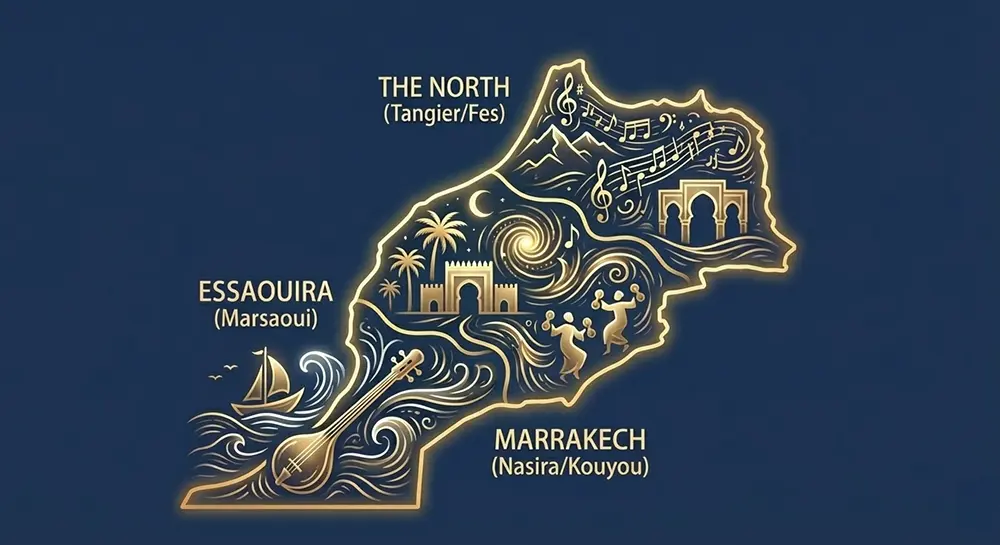
When Moulay Ismail died and his empire fragmented, these communities did not disappear. They scattered across Moroccan cities — Marrakech, Fez, Meknes, Essaouira — establishing the zawiyas (religious brotherhoods) and cultural practices that would evolve into modern Gnawa. Some historians trace a direct line from the military drumming of the Abid Al-Bukhari to the powerful rhythms of contemporary Gnawa music.
The connection to Sidi Bilal — the Ethiopian slave freed by the Prophet Muhammad who became Islam’s first muezzin — gave these communities spiritual legitimacy within the Islamic framework. By claiming Bilal as their ancestor, the Gnawa asserted that their African origins placed them not at the margins of Islam, but at its very heart.
The Sound of Chains: Music Born from Suffering
“The guembri is the boat. The qraqeb are the chains.”
This phrase, repeated by Gnawa elders, captures how profoundly slavery shaped every aspect of this music. The polyrhythmic patterns — those interlocking beats that seem to pull listeners into trance — may echo the complex rhythms that helped enslaved people endure grueling work. The call-and-response singing, universal across African diaspora music, preserved community bonds even when families were shattered.
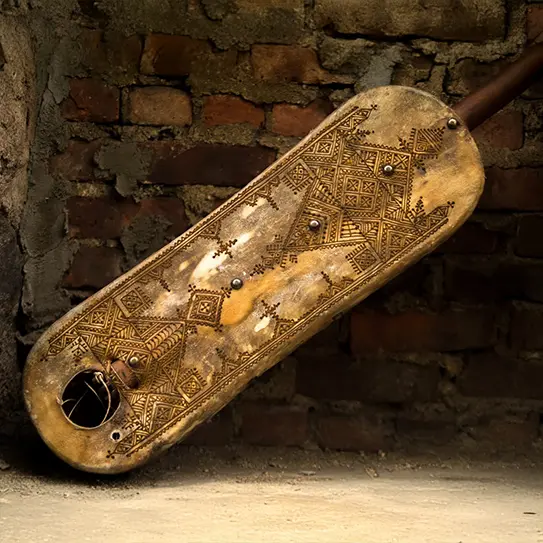
The instruments themselves carry this history. The guembri (also called sintir or hajhouj) — a three-stringed bass lute covered in camel skin — is closely related to the ngoni of Mali and the xalam of Senegal. When a Gnawa Maâlem plays the guembri today, he is playing an instrument whose design crossed the Sahara in the memories of enslaved craftsmen.
More striking still are the songs themselves. During the Oulad Bambara section of every lila ceremony, the Gnawa sing in Bambara and other African languages — words that most performers no longer understand, preserved across centuries through oral transmission. These songs speak of suffering, exile, and the longing for distant homelands. They are, in essence, the oldest surviving African-American music — predating the blues by centuries, yet sharing its emotional DNA.
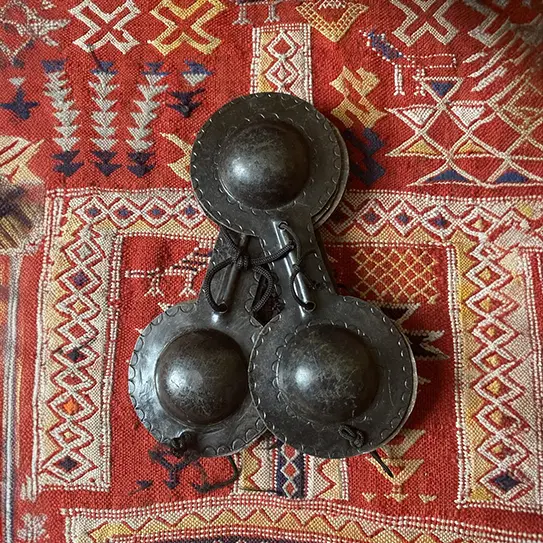
The healing function of Gnawa music also relates directly to slavery’s trauma. The lila ceremony — with its trance states, spirit possession, and cathartic release — provided a way to process collective grief that could not be spoken directly. In a society that denied their full humanity, the Gnawa created ritual spaces where their suffering could be transformed into spiritual power.
From Zawiya to Stage: The Great Transition
For centuries, Gnawa music remained largely hidden — performed in private homes and zawiyas for healing ceremonies, invisible to mainstream Moroccan society and certainly unknown to the outside world. The lila was sacred, secret, and stigmatized. Gnawa practitioners were often viewed with suspicion, associated with “black magic” and marginalized by both religious authorities and social elites.
The transformation began in the 1960s and 1970s, driven by two parallel forces.
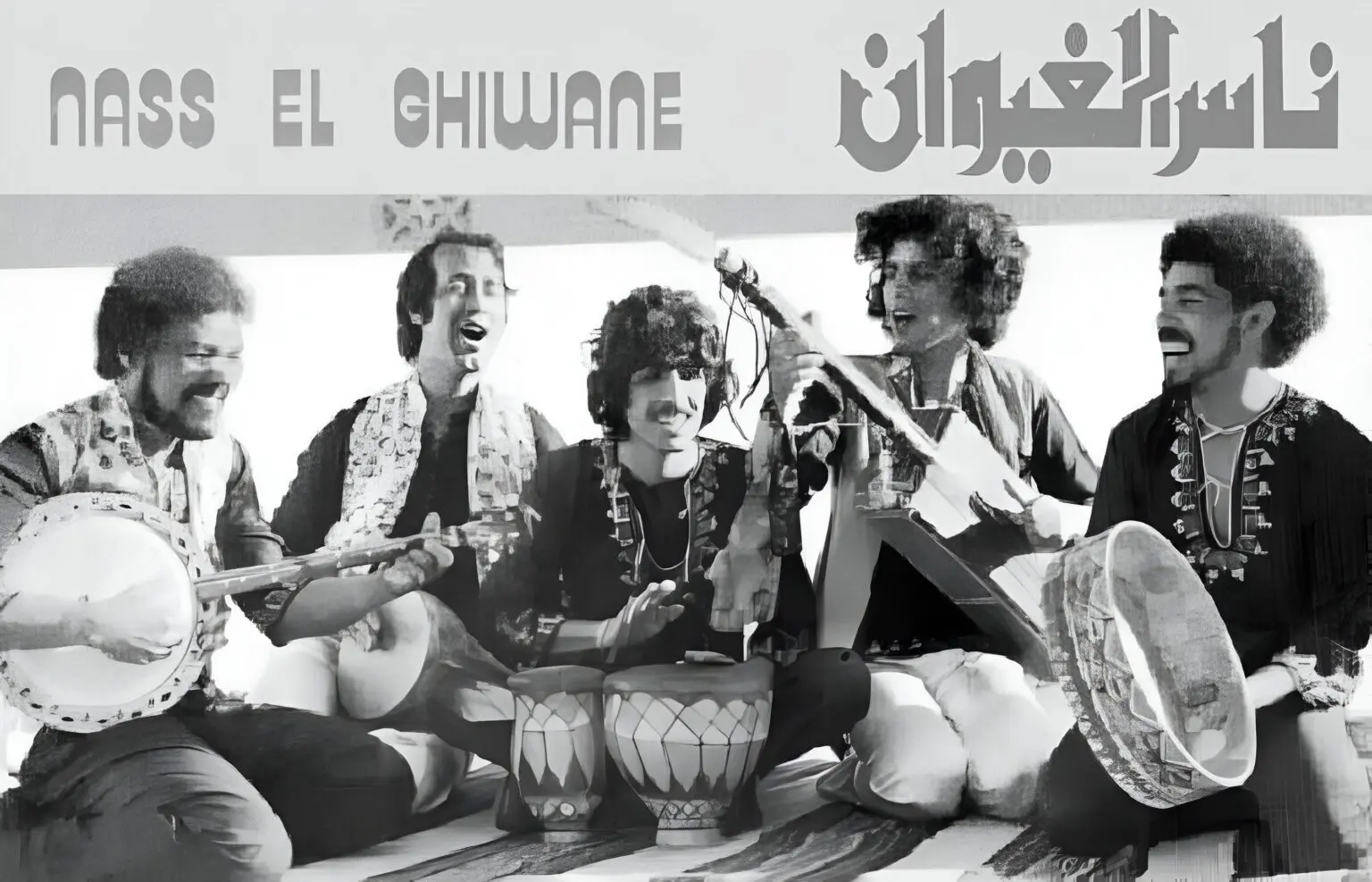
Inside Morocco, young musicians began rediscovering traditional culture as a form of post-colonial identity assertion. Groups like Nass El Ghiwane and Jil Jilala incorporated Gnawa instruments and rhythms into a new sound that merged tradition with contemporary sensibilities. Suddenly, the guembri was appearing on stages before thousands, not just in midnight ceremonies.
Simultaneously, Western musicians discovered Morocco. The hippie trail brought artists like Jimi Hendrix to Essaouira, where he allegedly attended lila ceremonies and was nicknamed “Ghost Doctor” by the Gnawa. Brian Jones of the Rolling Stones recorded Moroccan musicians. Jimmy Page and Robert Plant of Led Zeppelin made pilgrimages to hear the source of rhythms that had filtered into rock through the blues.
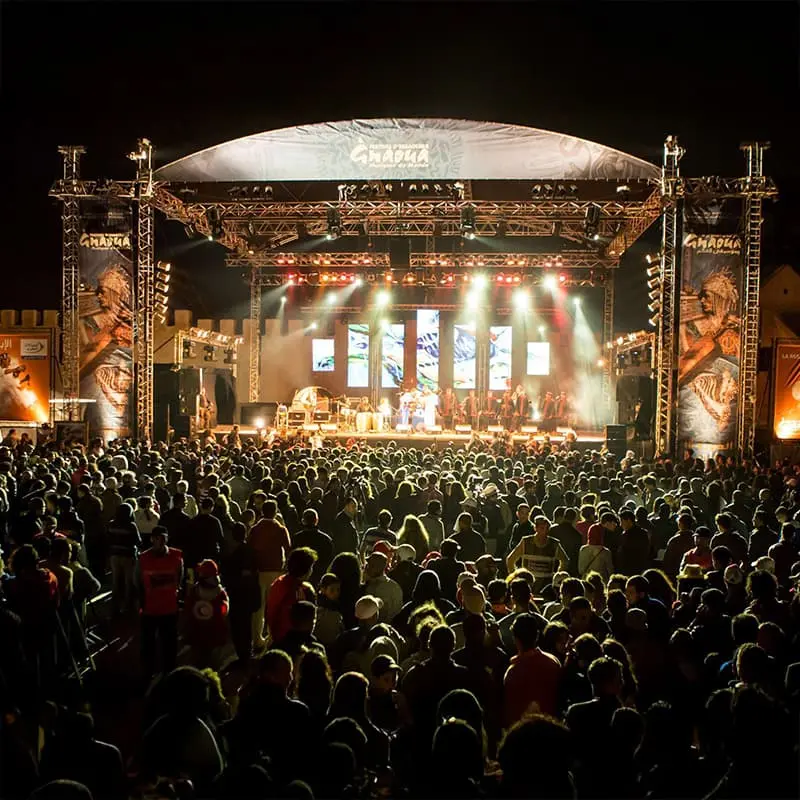
The pivotal moment came in 1998 with the founding of the Gnaoua and World Music Festival in Essaouira. What began as a modest celebration became an annual pilgrimage drawing hundreds of thousands of visitors and featuring collaborations between traditional Maâlems and international stars. The festival did not merely present Gnawa to the world — it created a new framework where sacred tradition and global entertainment could coexist.
Jazz, Rock, and the Global Awakening
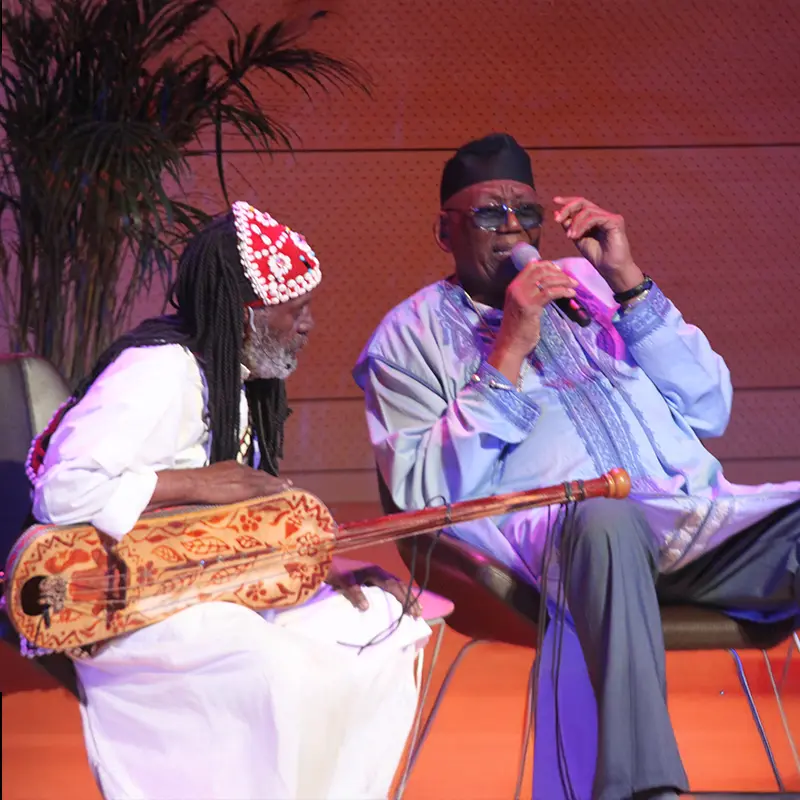
The fusion of Gnawa with jazz was not arbitrary — it was recognition of shared roots. Both traditions emerged from African musical principles: polyrhythm, call-and-response, trance-inducing repetition, the blues scale. When Randy Weston, the great African-American jazz pianist, first heard Gnawa music in the 1960s, he recognized it immediately as a cousin to the sounds he had grown up with in Brooklyn.
Weston’s collaborations with Maâlem Abdellah El Gourd in the 1990s — documented on albums like The Splendid Master Gnawa Musicians of Morocco — introduced Gnawa to jazz audiences worldwide. He spoke of Gnawa as “ancient African music” that helped him understand the deep roots of jazz itself.
The rock connection was equally profound. Robert Plant and Jimmy Page collaborated with Gnawa musicians at Essaouira, recognizing in the guembri’s bass tones the same African pulse that had traveled through the blues into rock and roll. Carlos Santana, Peter Gabriel, and Bill Laswell all recorded with Gnawa masters, creating fusion albums that reached global audiences.
More recently, Jacob Collier featured Maâlem Hamid El Kasri on his Grammy-winning Djesse project, introducing Gnawa to a new generation. The collaboration proved that this centuries-old tradition could speak to contemporary ears without losing its essential power.
These fusions transformed Gnawa’s global status. What had been an obscure Moroccan folk tradition became recognized as one of the world’s great musical heritage forms — the African root from which jazz and blues had grown, preserved in its most ancient form.
Gnawa and Moroccan Identity Today
In 2011, Morocco adopted a new constitution that explicitly recognized the country’s identity as a synthesis of Arab-Islamic, Amazigh, and African (including Saharan-Hassani) components. For the first time, the African dimension of Moroccan identity — long marginalized or denied — received official recognition.
Gnawa stands at the heart of this reimagined identity. The music embodies Morocco’s connection to sub-Saharan Africa, its Sufi spiritual traditions, and its capacity to synthesize diverse influences into something uniquely its own. When UNESCO inscribed Gnawa on the Representative List of Intangible Cultural Heritage of Humanity in 2019, it validated what Moroccans had increasingly come to celebrate: that this music of enslaved ancestors had become a symbol of national pride.
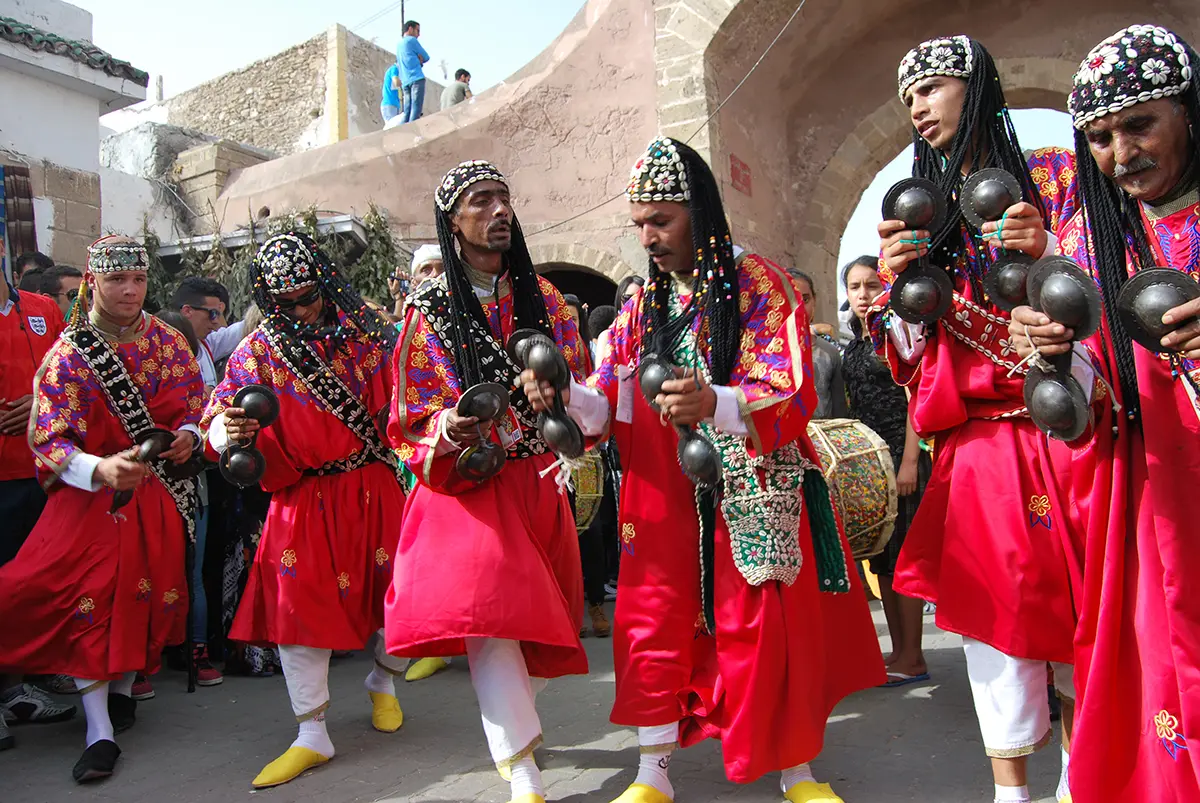
Today, Gnawa occupies a complex position in Moroccan culture. The annual Essaouira festival draws massive crowds and international media attention. Maâlems like Hamid El Kasri, Mustapha Bakbou, and the late Mahmoud Gania became cultural celebrities. Young Moroccans increasingly embrace Gnawa as a marker of authentic identity in a globalizing world.
Yet tensions remain. Traditional practitioners worry about commercialization stripping the music of its spiritual essence. The old debate between “authenticity” and “evolution” plays out in every fusion collaboration. Some argue that the festival circuit has created “YouTube Maâlems” who can perform the movements but lack the spiritual depth that comes from years of ritual practice.
The Living Paradox
The story of Gnawa is ultimately a story of transformation — suffering into healing, chains into music, marginalization into celebration. The descendants of enslaved Africans created a tradition so powerful that it now represents Moroccan culture to the world.
This transformation was not automatic or inevitable. It required the agency of countless individuals — the enslaved ancestors who preserved their songs, the Maâlems who transmitted sacred knowledge through generations, the festival organizers who created platforms for global exposure, the international musicians who recognized Gnawa’s universal significance.
The paradox at Gnawa’s heart remains unresolved: Can sacred music survive its transformation into entertainment? Can healing rituals retain their power when performed for cameras? Can the descendants of slaves control the commercialization of their heritage?
These questions have no easy answers. What is certain is that Gnawa has survived far greater challenges — the trauma of enslavement, centuries of marginalization, the disruptions of modernity. The music that echoed the sound of chains now fills festival stages across the world. The rituals that once processed collective grief now offer healing to seekers from every continent.
From slavery to world music, from chains to global stages, the Gnawa have proven that the deepest human expressions cannot be suppressed. They can only be transformed.
And in that transformation, they become immortal.
"The Gnawa turned their chains into music, their exile into prayer, their suffering into a gift that now belongs to the world."
Continue Your Journey
Explore more about Gnawa’s rich heritage:
- What Is Gnawa? Origins, History & African Roots — The comprehensive overview of where Gnawa came from and what it means today.
- Gnawa Schools: The Distinct Sounds of Essaouira, Marrakech & The North — How the music evolved differently across Morocco’s regions.
- Gnawa Festival Essaouira: The Complete Visitor’s Guide — Plan your visit to the world’s largest celebration of Gnawa music.
Instruments of Liberation
- The Guembri — The sacred bass lute that legends say represents the hull of slave ships.
- The Qraqeb — Iron castanets that echo the sound of ancestral chains.
The Masters
- Abdellah El Gourd — The Tangier preservationist who collaborated with jazz legend Randy Weston.
- Abderrahman Paco — The revolutionary who co-founded Nass El Ghiwane.