The Laboratory
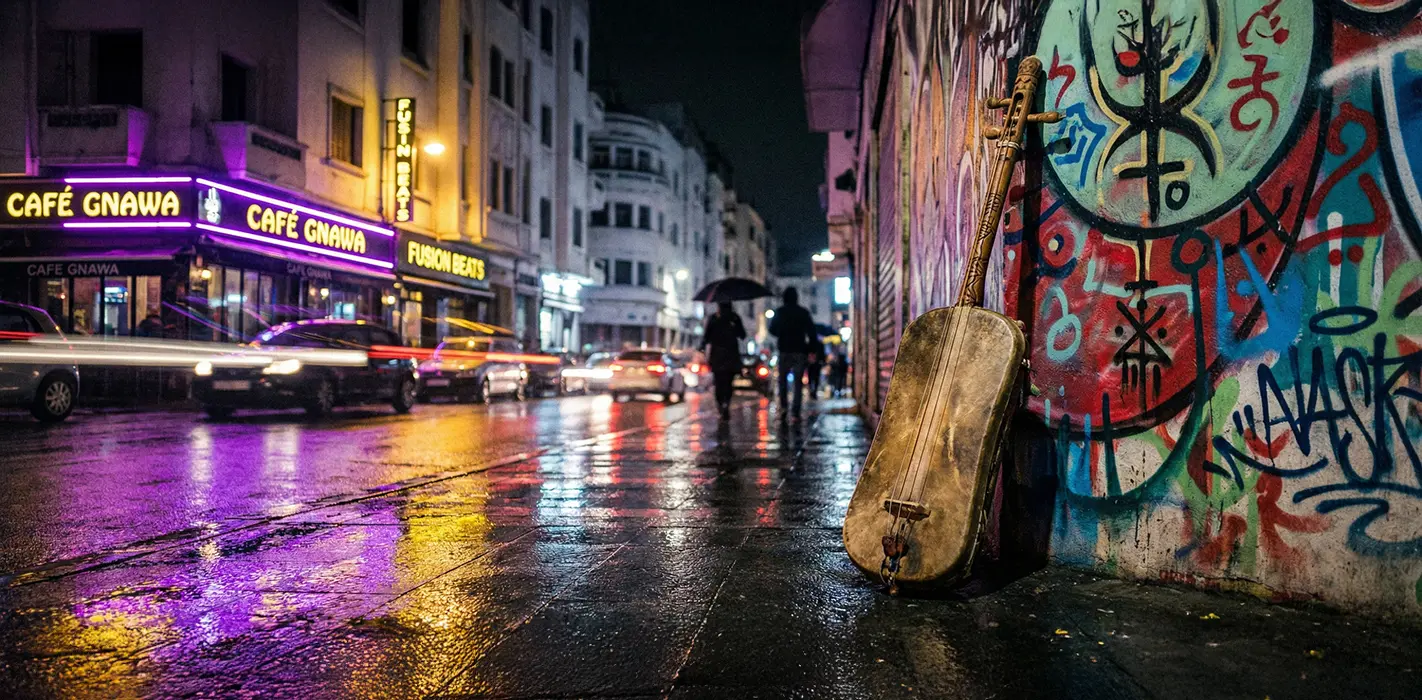
If Essaouira is the spiritual treasury that preserved Gnawa in its ritual purity, and Marrakech is the African crucible of deep trance, then Casablanca is the experimental laboratory — the city where Gnawa was deconstructed, electrified, and reassembled into something entirely new. Here, the Guembri went electric, the Lila left the zaouia for the concert stage, and the ancient rhythms of the Saharan caravans collided with jazz, rock, hip-hop, and Cuban funk.
Morocco’s economic capital — a city of six million, a great Atlantic port, and an industrial engine — has never been a place for preservation. It is a city of transformation. When waves of drought in the 1970s and 80s drove Gnawa masters from the Chiadma coast to Casablanca’s sprawling neighborhoods — Derb Sultan, Hay Mohammadi, Sidi Moumen, Ancienne Médina — they carried the Marsaoui style with them. But the city demanded adaptation. The young Casablancan audience didn’t know the ritual codes; they wanted rhythm and spectacle. Thus was born the Casablanca Marsaoui — a style that kept the traditional song structures of the Mlouk (spirits) but accelerated the tempo to match the city’s roaring pulse.
The Revolutionaries
Abderrahman “Bako” — The Man Who Freed the Guembri
The most consequential moment in Gnawa’s modern history happened in Hay Mohammadi in the early 1970s, when a trained Maâlem from Essaouira named Abderrahman Kirouche — “Bako” — joined a group of radical young musicians called Nass El Ghiwane.
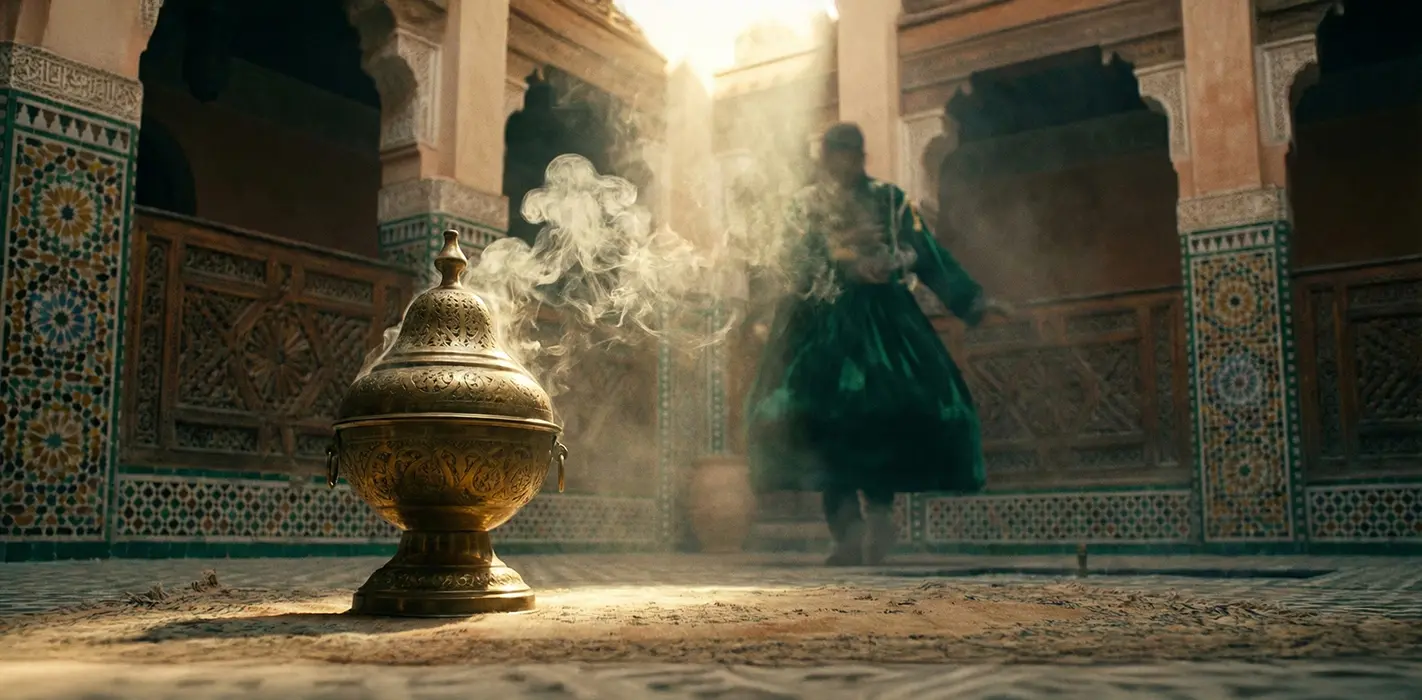
For the first time, the Guembri left its ritual context — the closed, incense-filled room of the Lila — and became the backbone of songs about poverty, injustice, and the Moroccan street. Bako introduced Gnawa rhythms (Ftouh, Sha’shala) into anthems like “Ghir Khoudouni” and “Siniya”, giving them a trance aesthetic that was unprecedented in Arab and African popular music. He made the Guembri cool — a symbol of Morocco’s African identity and social rebellion.
The purists criticized him for “revealing the secret.” History proved them wrong: Bako opened the door for Gnawa to be accepted as a national and world art form. After leaving Nass El Ghiwane in the 1990s, he returned to pure ritual practice until his death — proof that the spirit of the Maâlem never left him.
Maâlem Hamida Boussou — The Purist Patriarch
While Bako exploded outward, Maâlem Hmida Boussou turned his Casablanca home into an unofficial conservatory. Born in Marrakech, trained under the legendary Maâlem Ahmed Ould Dij, Boussou was among the first to understand that Gnawa’s survival required teaching beyond traditional family lineages. His playing was defined by absolute purity — he refused any alteration to the Lila structure or the order of the seven Mlouk families. For him, music was science and healing, never entertainment. He died in 2006, but his legacy lives through his son Hassan Boussou and his many students.
Maâlem Abdelqader Bentahami — The Godfather
Maâlem Abdelkader Benthami, the dean of Casablanca’s Gnawa scene, carried the Marsaoui tradition from Essaouira and opened his doors to a new generation born in the city — musicians who inherited the Marsaoui style as acquired heritage, not birthright. His student Said Benthami and others represent a new lineage: urban Maâlems who mastered traditional technique while developing unprecedented improvisational freedom.
The Electric Guembri & African Gnaoua Blues
In the 1990s and 2000s, Casablanca gave birth to the Nayda movement — a youth-driven cultural explosion. Gnawa fusion was its beating heart, and the electric Guembri was its revolutionary instrument.
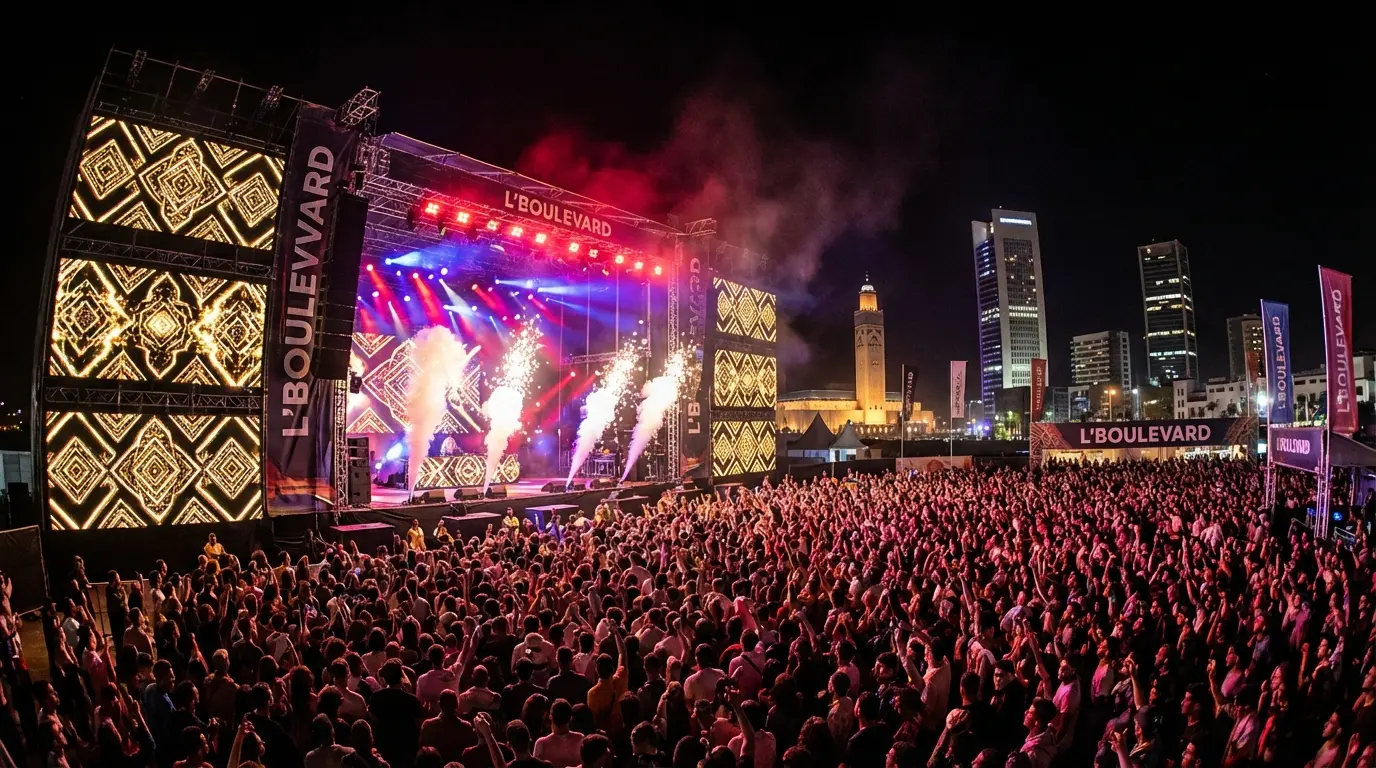
The Technical Problem: When Gnawa moved from intimate homes to massive festival stages (L’Boulevard drew tens of thousands), the traditional Guembri’s quiet, deep tone was swallowed by drums, electric guitars, and PA systems. The solution: adding pickups (like a bass guitar) to amplify the sound and connect it to effects pedals — distortion, delay, wah-wah.
African Gnaoua Blues: Pioneers like Majid Bekkas — who began as a banjo and guitar player — took the electric Guembri into jazz and blues territory. The result is a genre that reveals the shared DNA between the West African pentatonic scales of Gnawa and the blue notes of the Mississippi Delta. This “African Gnaoua Blues” is Casablanca’s unique contribution to world music — a sound that reconnects the Saharan trade routes to their diaspora in the Americas.
The New Wave:
- Bab L’Bluz — Led by Yousra Mansour, who plays electric Guembri with Hendrix-level intensity, this band delivers “Gnawa rock” that shatters the male monopoly on the instrument.
- Gnaoua Click — Raw urban Gnawa fused with reggae and ska, pure Casablanca street energy.
- Khalid Sansi — The complete modern artist: trained Maâlem, hip-hop dancer, and cross-cultural collaborator. His “Imbuktu” project with Malian artist Malik Yob reconnects Casablanca to its trans-Saharan roots, while his work with Cuban funk band Cimafunk proves the Marsaoui groove can merge with any rhythm on earth.
The Sacred Shore — Sidi Abderrahmane
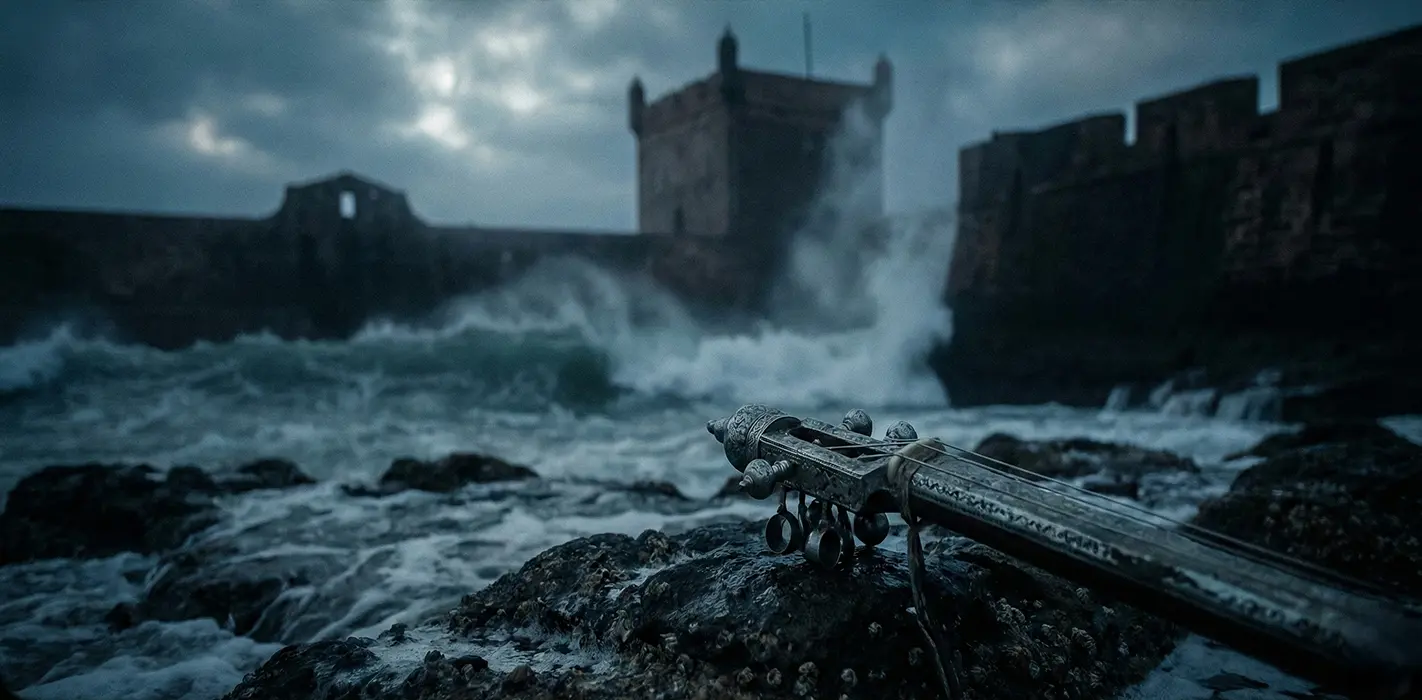
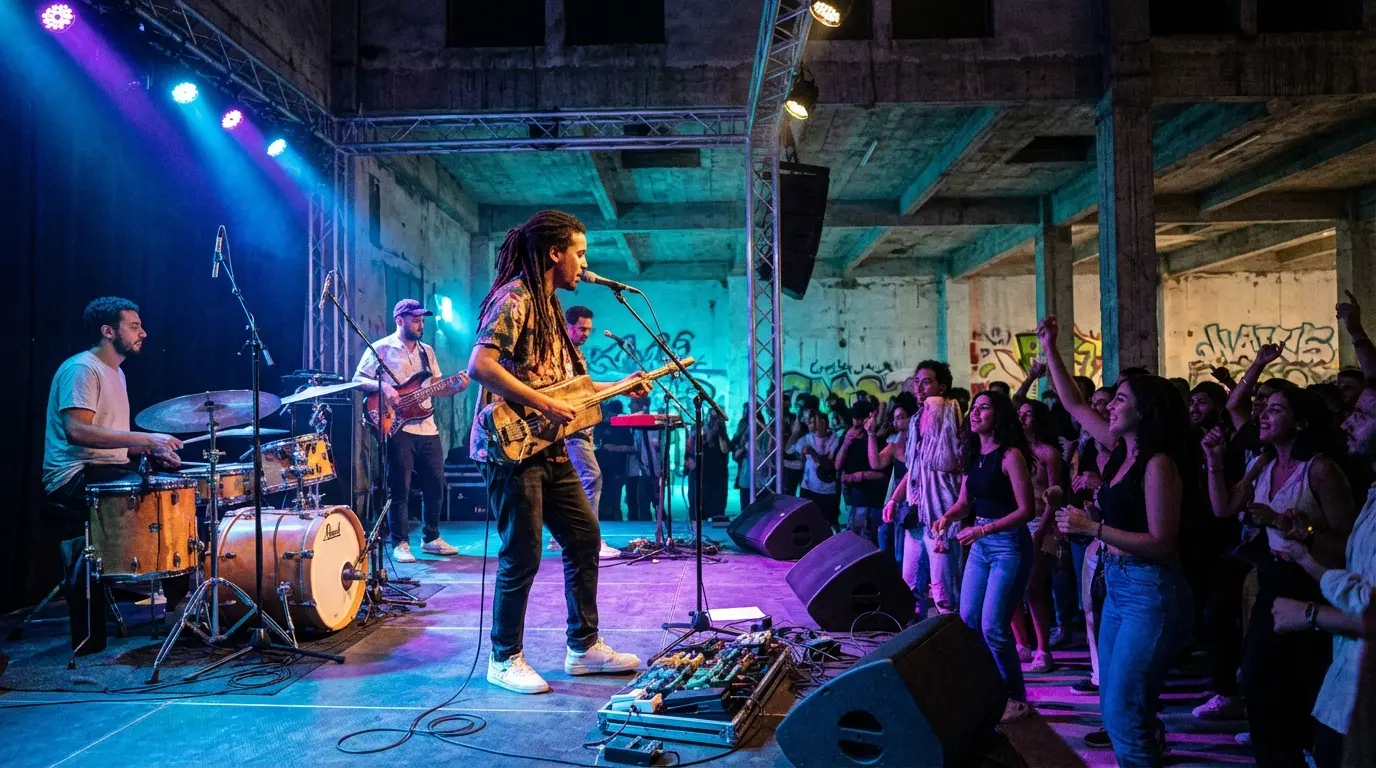
On the rocky coast of Ain Diab, perched on an island battered by Atlantic waves, stands the Shrine of Sidi Abderrahmane — Casablanca’s last bastion of traditional spiritual practice.
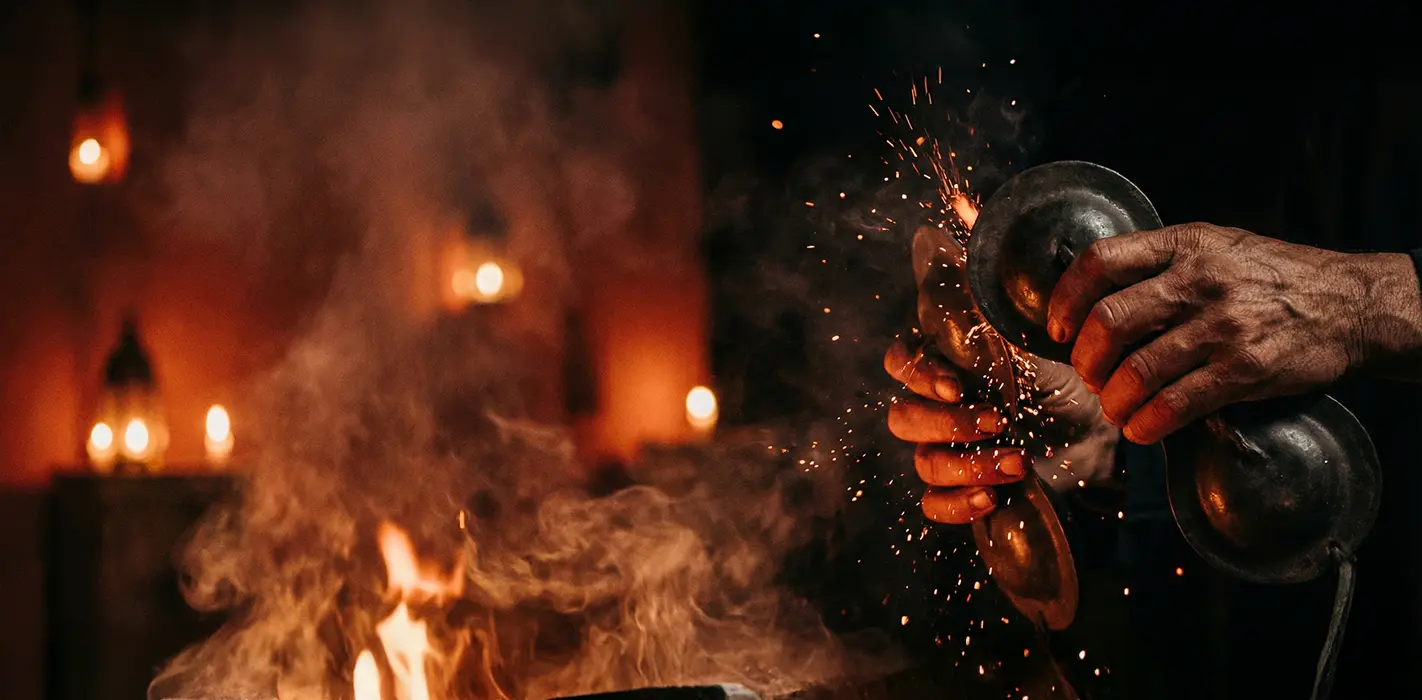
Legend holds that Sidi Abderrahmane was a saint from Baghdad who could walk on water. His shrine became a pilgrimage site for healing — especially from psychological distress, sorcery, and possession. Inside the tiny rooms surrounding his tomb, Moqaddemas practiced divination with molten lead (ldoun), and the most intense Lilas in the city were performed — where the crash of ocean waves merged with the thunder of Qraqeb and the deep pulse of the Guembri, and the sea spirits (Sidi Moussa, the blue Mlouk) were invoked with special urgency.
Since 2024, the authorities have transformed the site into an Archaeological Park — with walking paths, modern lighting, and organized cultural events. The spontaneous rituals have been curtailed, but the spiritual power of the place endures. The tension between heritage preservation and living practice mirrors Casablanca itself: a city forever negotiating between past and future.
The Festival City
L’Boulevard — The Voice of the Street
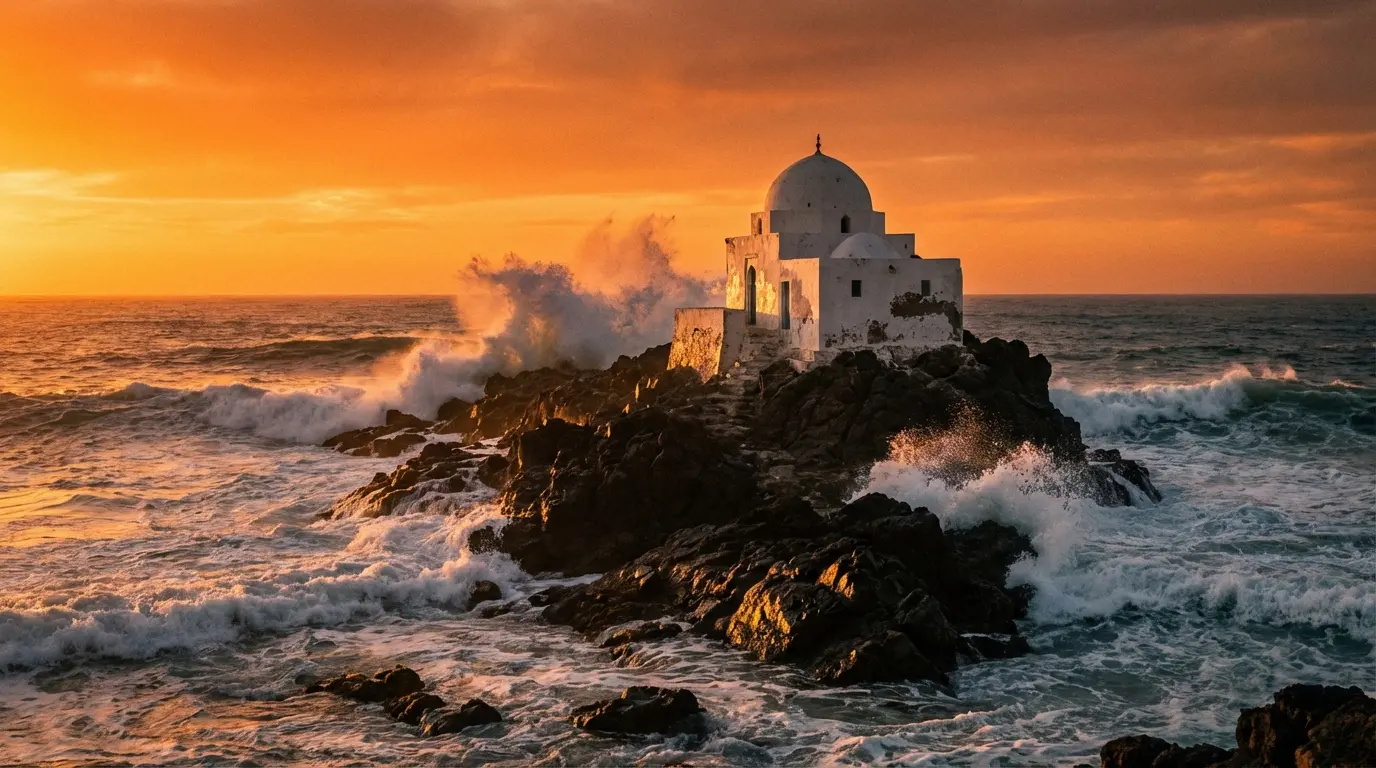
Founded in 1999, L’Boulevard turned Casablanca into Morocco’s capital of urban music. Its Tremplin (springboard) competition — with a dedicated Fusion category — has been the launchpad for bands that blend Gnawa with rock, rap, and electronic music. Tens of thousands of young Casablancans pack the festival each year, experiencing Gnawa not as frozen folklore but as the rebellious heartbeat of their own identity.
Jazzablanca — The Elevation
Where L’Boulevard is raw and populist, Jazzablanca elevates Gnawa into the realm of “World Jazz.” Masters like Hassan Boussou and Majid Bekkas perform alongside international jazz artists with world-class sound engineering. The festival transformed how Casablanca’s middle and upper classes perceive Gnawa — from “street music” to high art.
Njoum Gnaoua — The Bridge
The Njoum Gnaoua festival (13th edition in 2025) bridges tradition and innovation — free public performances in spaces like Place des Nations Unies that combine traditional Lilas with cutting-edge fusion, connecting generations through the living thread of Gnawa music.
The Role of Boultek
Boultek (Centre des Musiques Actuelles), housed in Casablanca’s Technopark, provides professional rehearsal studios and recording facilities that have incubated the entire new wave of Gnawa fusion. It functions as the modern zaouia — a place of transmission where the future sound of Gnawa is engineered, one session at a time.