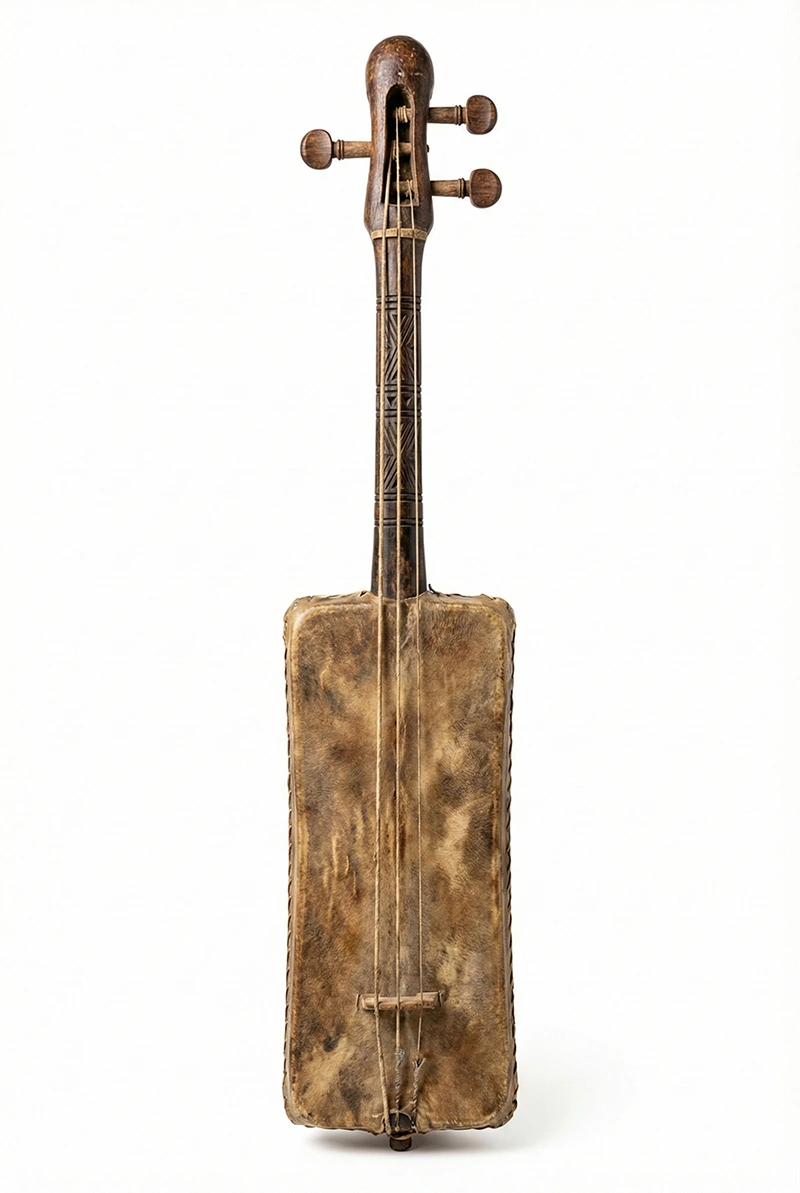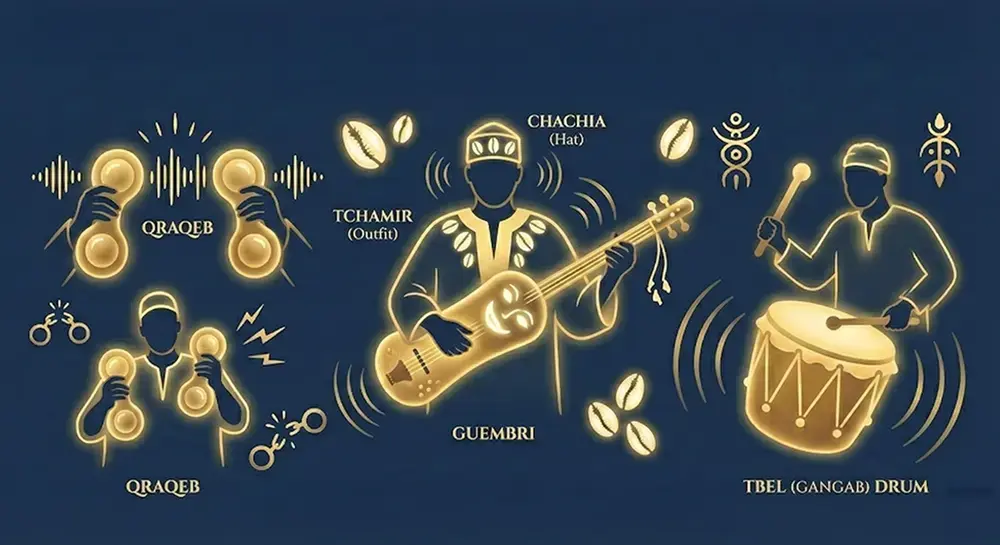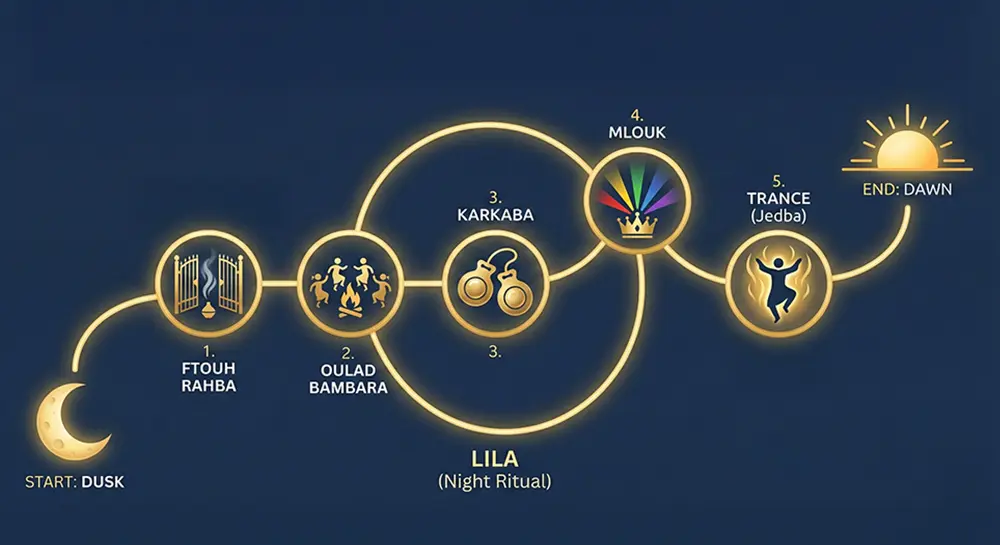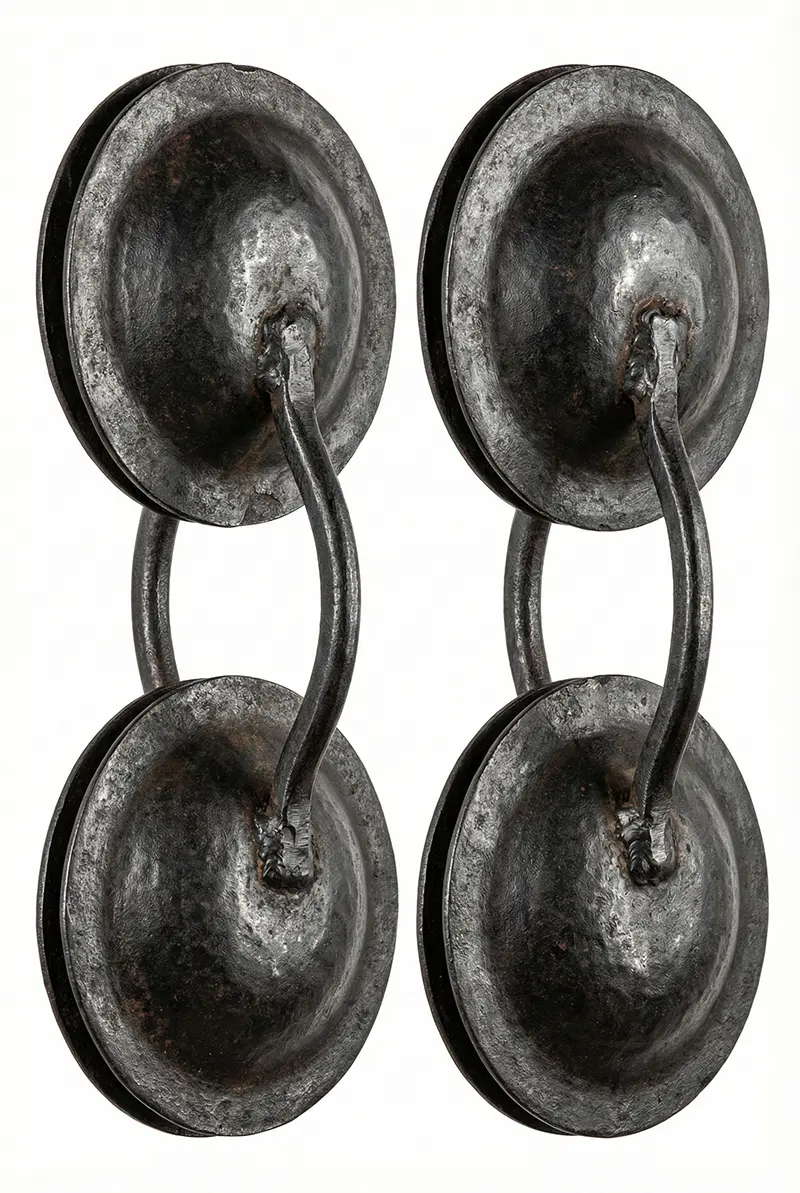
In the darkness of the Lila, before the Guembri speaks, you hear them first: a sharp, metallic thunder that seems to emerge from the earth itself. The Qraqeb are not subtle. They are not gentle. They are large, double-sided iron castanets designed to be loud, relentless, and hypnotic — the rhythmic backbone upon which all Gnawa music is built.
Where the Guembri leads, the Qraqeb drive. They are the engine of the trance, pushing participants into movement and holding them there through sheer, unyielding repetition. When a dozen pairs strike in unison, the sound becomes a wall — impenetrable, inescapable, transformative.
Anatomy of Iron
The Material
Hand-forged from heavy iron or steel. The weight is intentional — it gives the sound its signature depth and presence.
The Structure
Two dumbbell-shaped plates connected by a ring. Musicians hold two pairs, creating four striking surfaces in constant dialogue.
The Aesthetic
Rarely decorated. Their beauty lies in raw industrial form and the visible marks of countless nights of ceremony.
The Sound of Reclamation
The Qraqeb carry a weight that transcends their iron mass. Their piercing, metallic clatter is said to echo the clanking of shackles — the chains worn by enslaved West African ancestors as they were marched across the Sahara toward an uncertain fate.
But in the hands of the Gnawa, this sound is transformed:
The sound of captivity becomes the rhythm of liberation
A memory of pain becomes a tool for healing
Every beat is an audible testament to resilience and roots
This is the alchemy of Gnawa: suffering transmuted into transcendence, bondage beaten into rhythm, history held in iron and set free in sound.
The Collective Heartbeat
While the Guembri provides melody and spiritual leadership, the Qraqeb provide the groove — a dense, polyrhythmic texture that resembles the galloping of horses across open desert.
They are played by the Koyos, the chorus of dancers who surround the Maâlem. In their synchronized striking, a profound message emerges: the collective spirit matters more than the individual. No single pair of Qraqeb stands out; together, they become one voice.
In the ceremony, the Guembri may wander through melodies, the vocals may rise and fall, but the iron heartbeat of the Qraqeb never falters. It is the constant against which all variation is measured — the ground beneath the flight.
Did You Know?
The Test of Endurance: You cannot be considered a true Gnawi musician until you have mastered the Qraqeb. Playing heavy iron at rapid tempo for an entire night — sometimes eight hours or more — requires the stamina of an athlete and the focus of a monk. The Qraqeb are where every journey begins.
Forged in Fire, Freed in Sound
To hold the Qraqeb is to hold history. Their weight in your hands connects you to generations of musicians who transformed their chains into instruments, their sorrow into celebration. When they strike together in the darkness of the Lila, they do not merely keep time.
They keep memory alive.