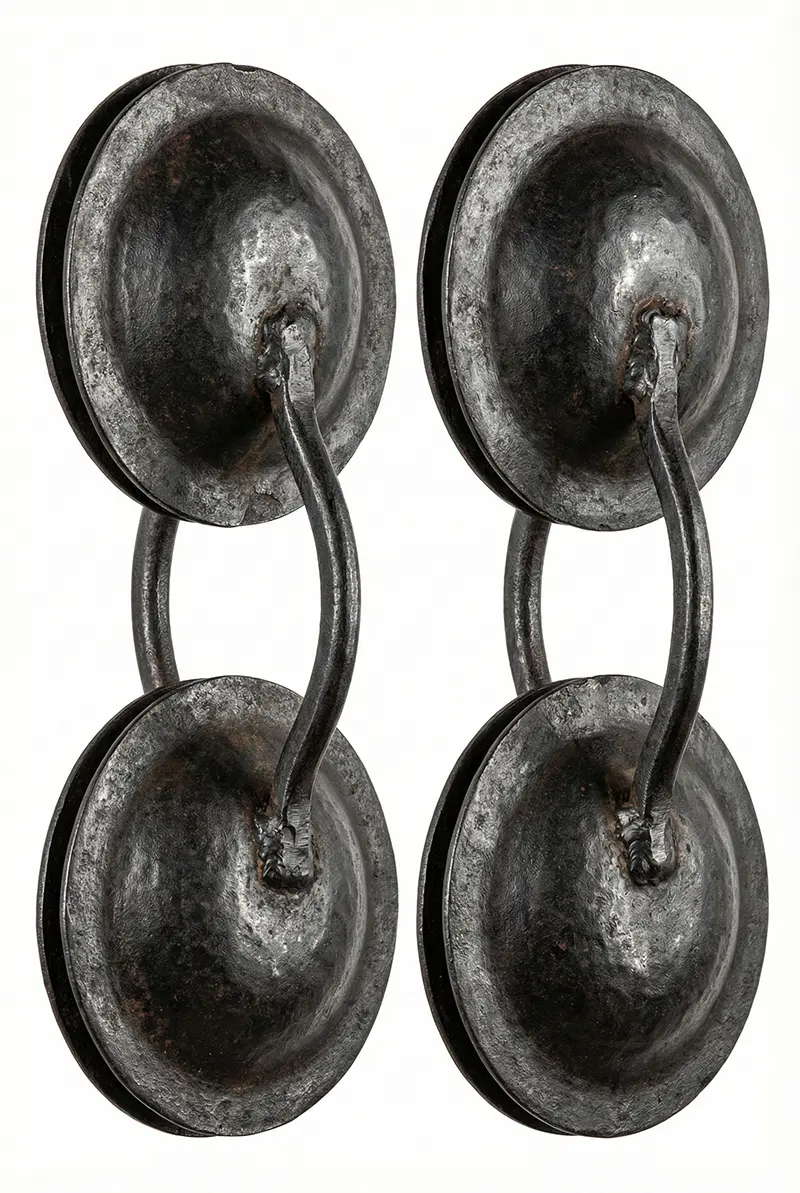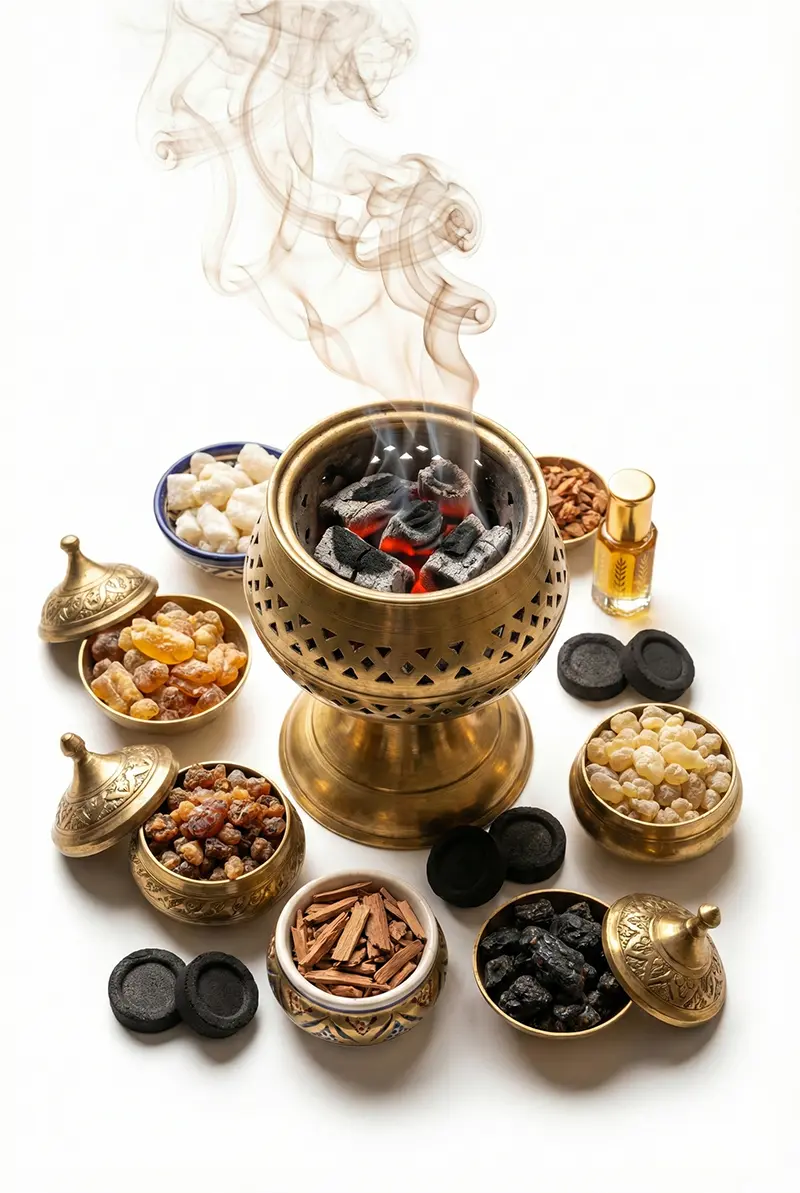
Before the first note sounds, before the Qraqeb begin their iron pulse, something else must happen. The air itself must be transformed. A coal is lit, resin is placed upon it, and slowly, a column of fragrant smoke rises — carrying prayers upward, drawing blessings down.
In Gnawa culture, incense is never mere perfume. El Bakhour is a fundamental ritual element, a mediator between the visible and invisible worlds. The scent creates a sacred boundary, signaling to all — both human and spirit — that the space is ready. The mundane world ends here. The sacred begins.
The Aromatic Palette
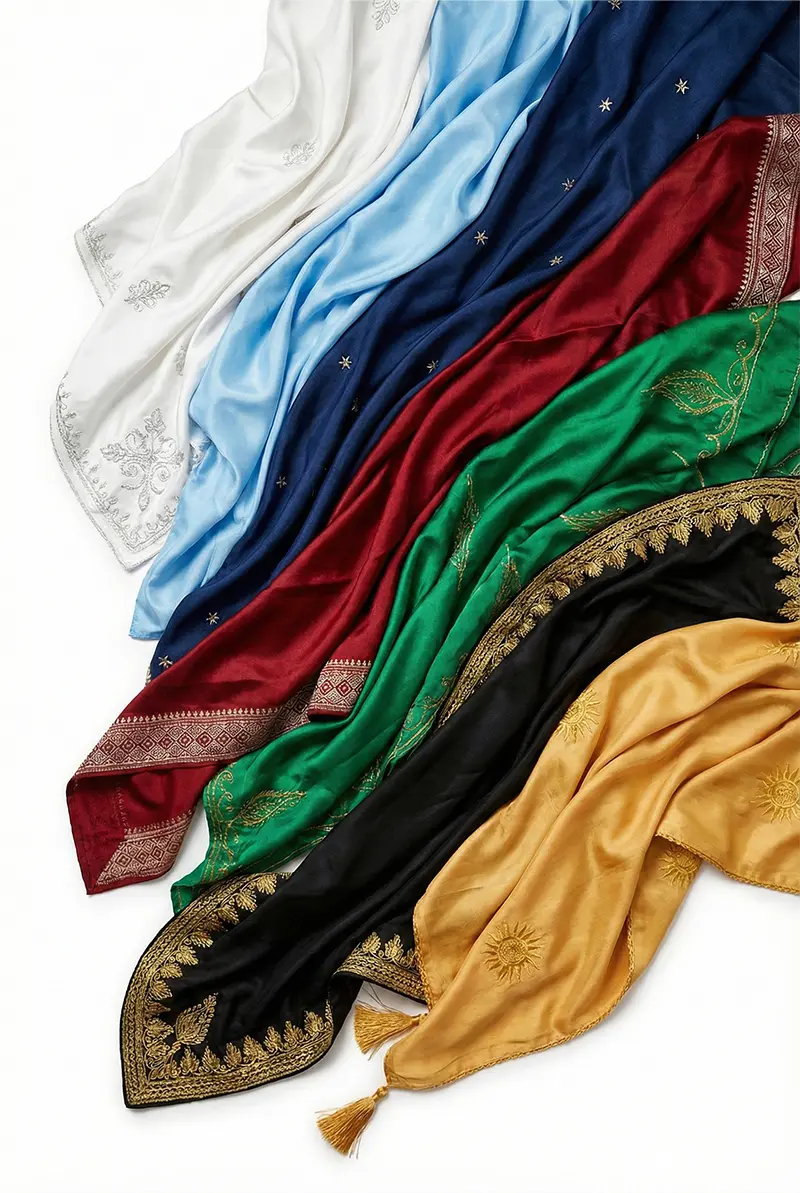
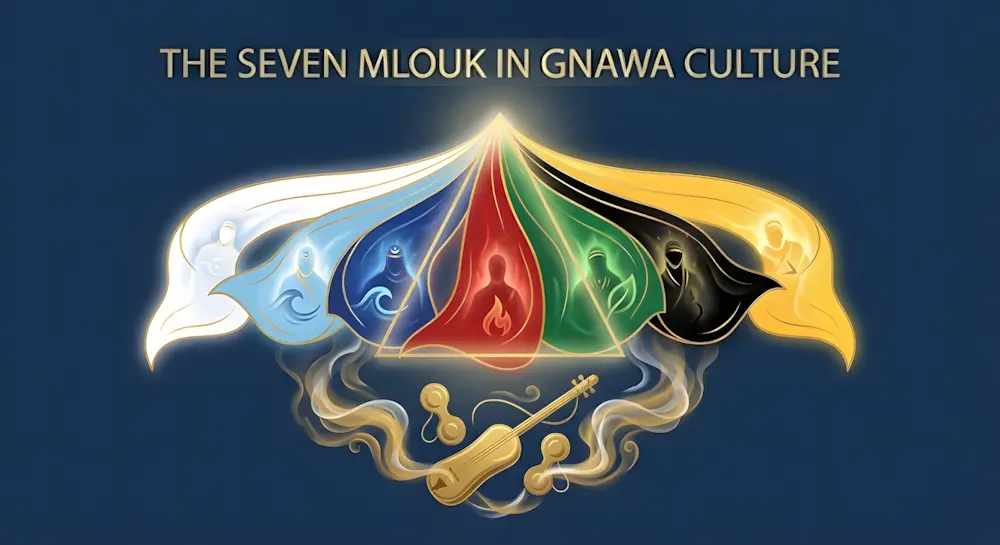
Just as the colors change throughout the night, the incense shifts to match the spiritual energy of each phase:
Jawi (Benzoin)
Sweet, vanilla-like resin. Essential for purification and peace — used to open the ritual and calm the atmosphere.
Soudan (Dark Resin)
Strong and heavy. Used during deep phases like the Black suite — grounding energy during intense trance work.
Luban (Frankincense)
Light and citrusy. Used for beginnings and balance — clearing the mind and lifting the spirit toward openness.
Oud (Agarwood)
Rare, precious, woody. Reserved for high moments and closing rites — symbolizing deep respect and elevation.
The Silent Instrument
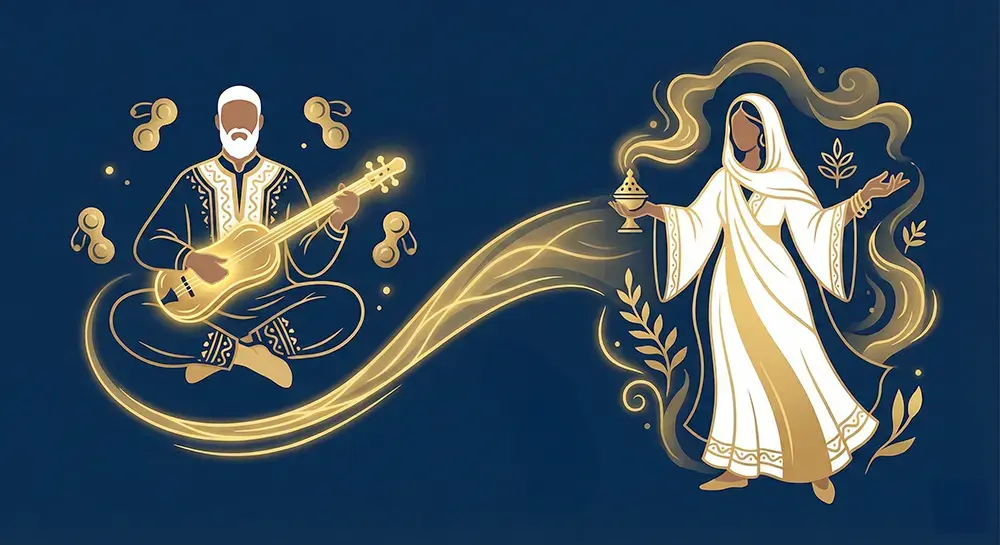
The incense burner — the Mbekhra — plays alongside the music without making a sound:
The Preparation
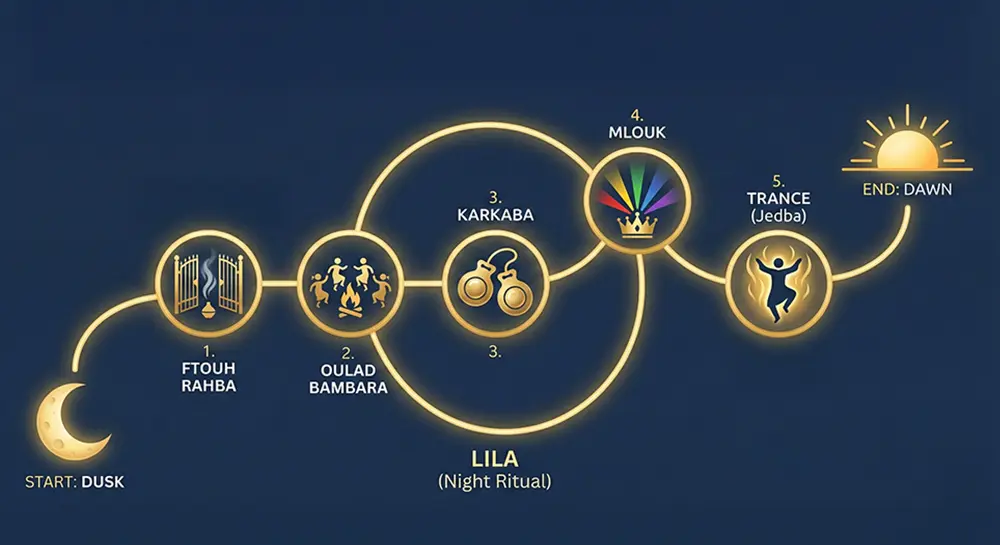
Lit during the Ftouh Rahba to cleanse the floor, the instruments, and the dancers before any music begins.
The Synchronization
As the Maâlem changes musical modes and colors, the incense shifts to align with the specific spirit being summoned.
The Trance
Scent bypasses the logical mind, triggering deep memories and helping the body enter the Hal where sound alone cannot reach.
The Invisible Thread
The Link — The rising column of smoke represents the connection between Earth and Sky — carrying prayers upward and bringing blessings downward.
The Silent Note — In Gnawa, the nose hears just as the ears do. Scent is a silent vibration that fills the voids between musical notes.
Hospitality — Offering fine incense is a sign of honor to the visiting spirits, welcoming them as distinguished guests into the sacred space.
Did You Know?
The Olfactory Anchor: Many visitors find that the smell of Jawi triggers memories of the Lila more vividly than the music itself — long after the night has ended.
Strict Protocol: Specific spirits demand specific scents. Using the wrong incense during a particular phase is considered a ritual error that disrupts the harmony of the entire ceremony.
Where Breath Becomes Prayer
When the smoke rises in the candlelit room, it does more than scent the air. It weaves an invisible architecture — walls of fragrance that separate the sacred from the profane, corridors through which the spirits may travel.
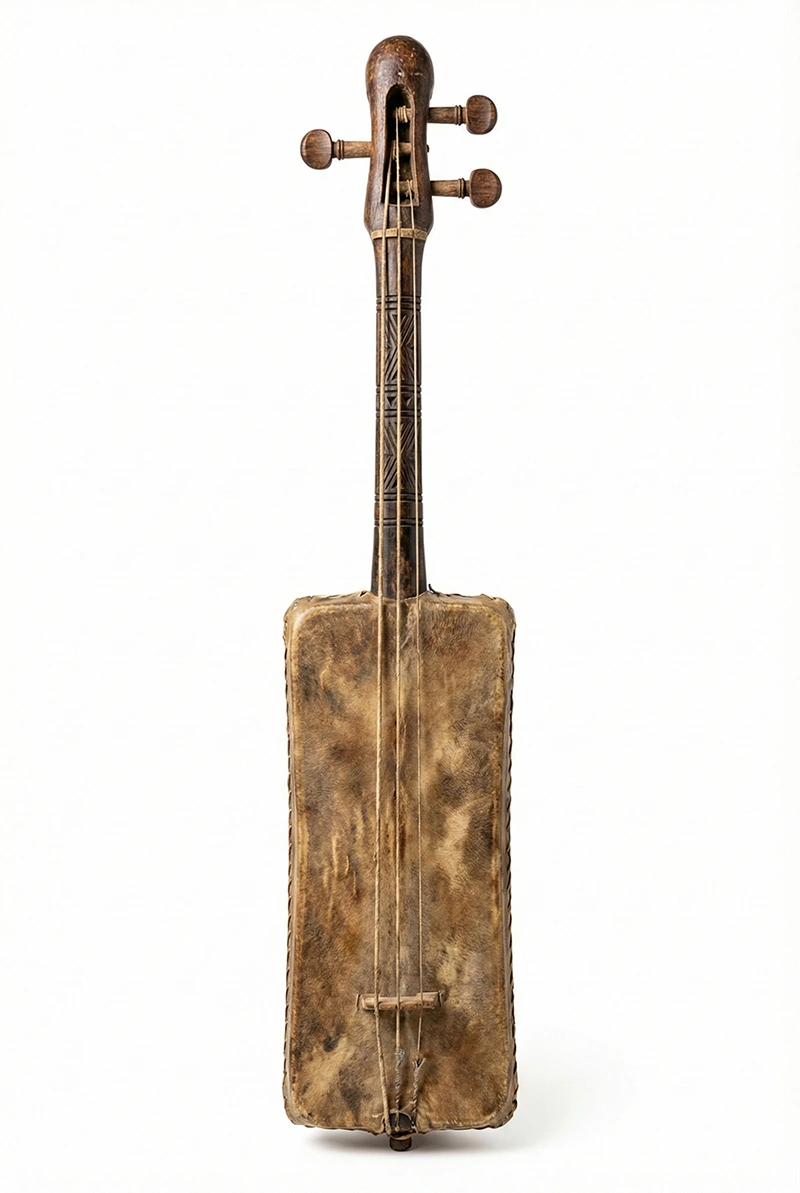
The Maâlem plays his Guembri. The Koyos strike their Qraqeb. And threading through it all, silent but essential, the incense speaks its own language — a language older than words, understood by every soul in the room.
The air is ready. The gates are open.