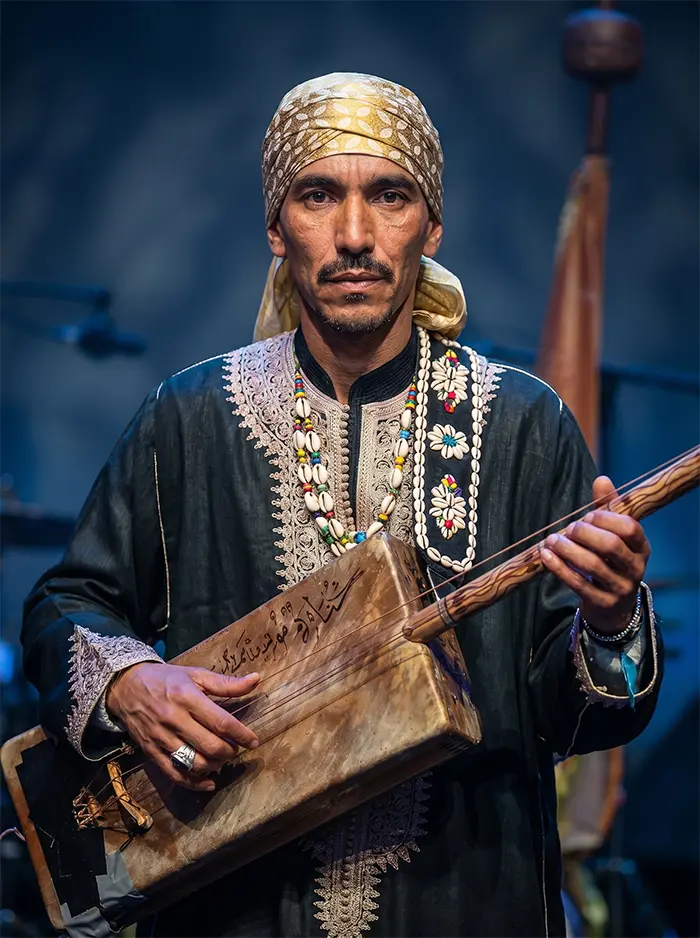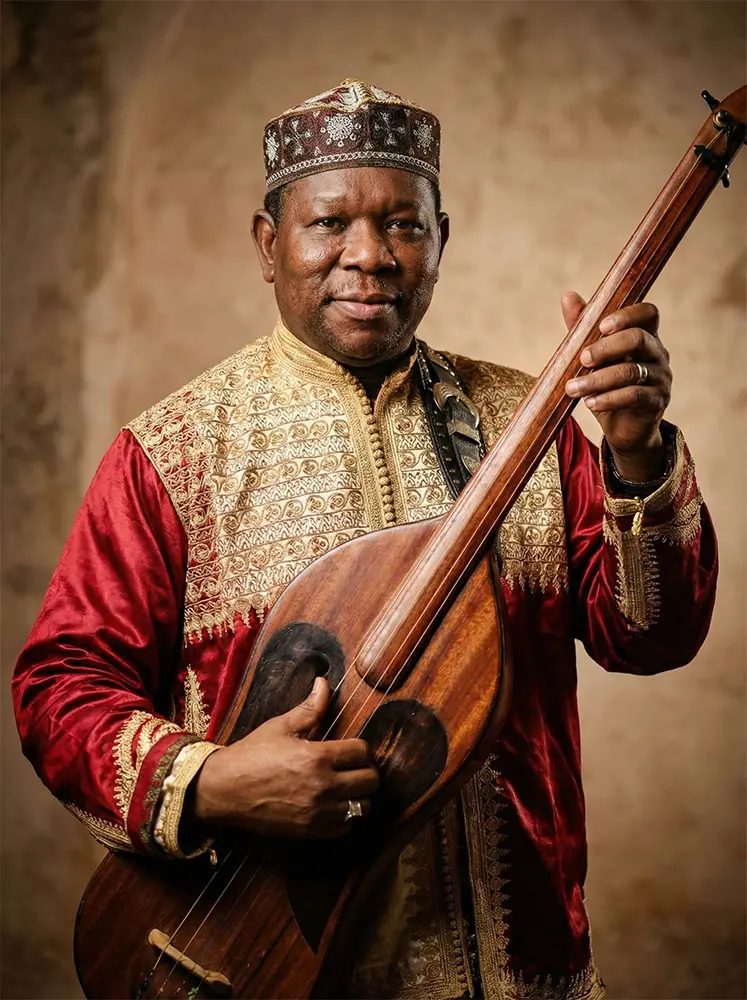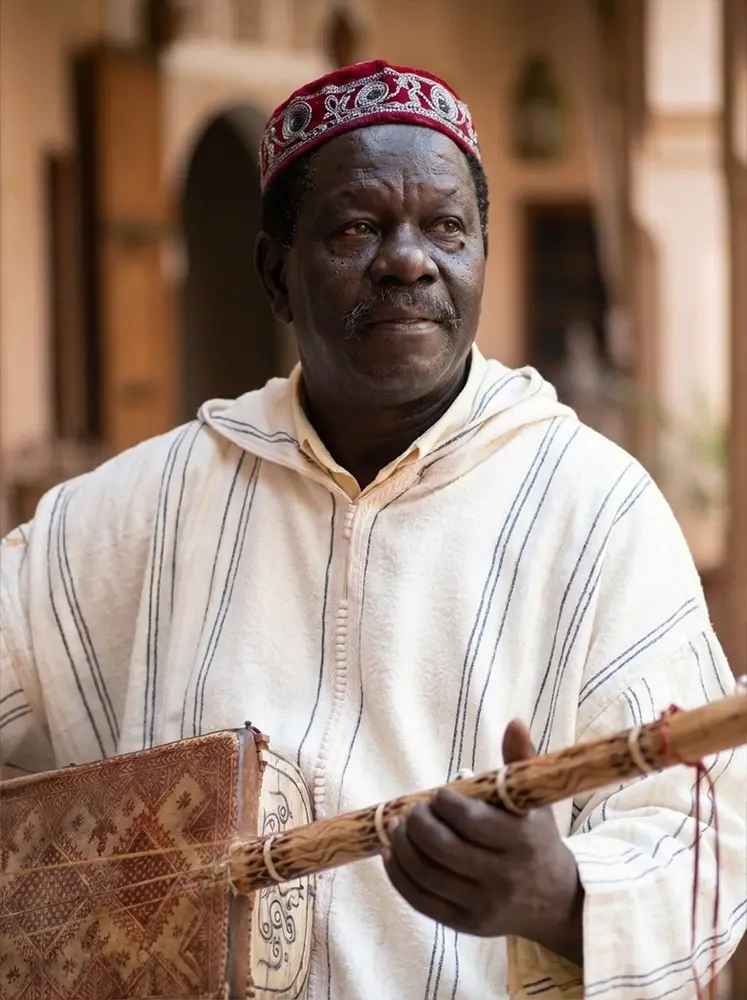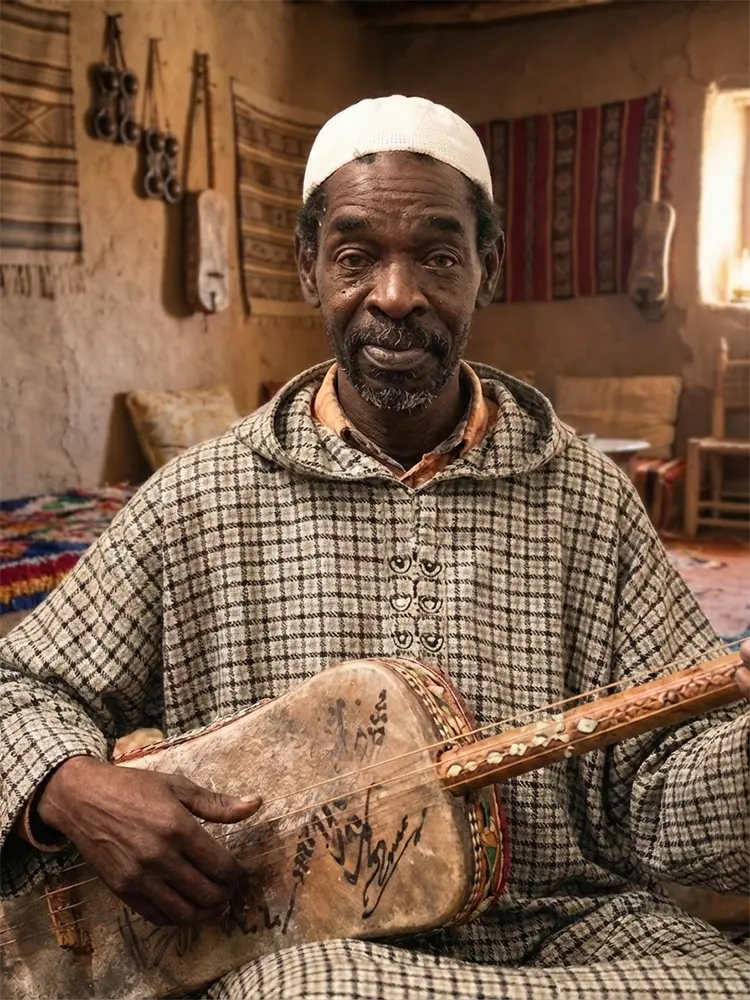
Among the sons of Maâlem Boubker Gania — that founding patriarch of the greatest Gnawa dynasty in Essaouira — every son was a master. But one was a rebel. Maâlem Abdellah Gania (c. 1951–2013), known to the world as “The Marley” or “The Rasta”, was the middle son who grew dreadlocks in a conservative Moroccan city, heard Bob Marley in Reggae’s grooves, and recognized immediately what scholars took decades to articulate: Gnawa and Reggae are cousins — separated by an ocean but united by the same African root.
He was the “luminous shadow” — the man who connected the deepest roots to the most daring branches. While his older brother Mahmoud reigned as the traditional King, Abdellah chose a more parallel, more rebellious path — one that led him to Afrobeat stages in Europe and to tribal healing ceremonies in Essaouira’s back streets with equal authority.
Born into the Aristocracy of Gnawa
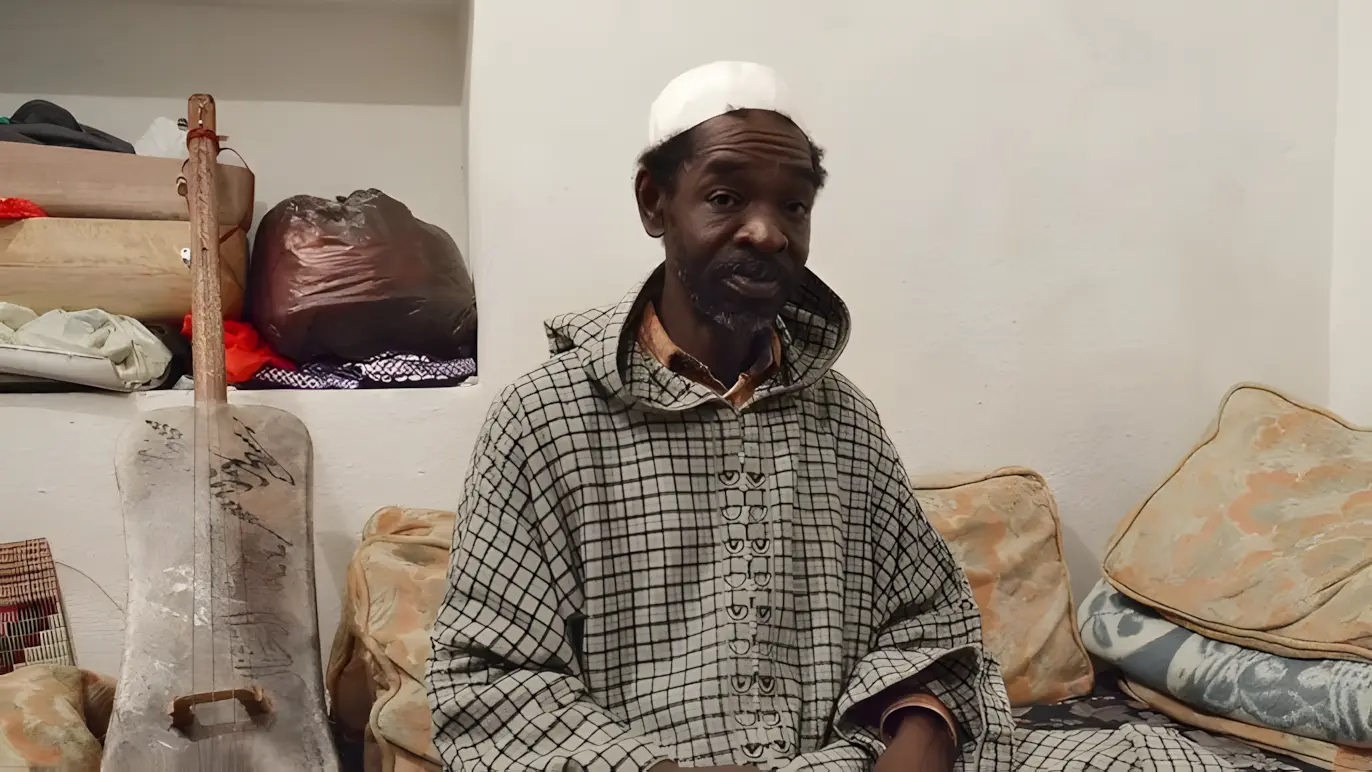
Abdellah was born into the Gania household in Essaouira — a home that functioned as a complete Gnawa institution. His father, Maâlem Boubker Gania (1927–2000), was a living archive of Tagnawit, the sacred Gnawa knowledge. His mother, Aicha Qebral, was a renowned moqaddema (ritual overseer) and clairvoyant healer of exceptional authority.
The family lineage traces directly to West Africa — Mali and Guinea (hence the family name). Family oral history indicates the ancestors were not ordinary domestic slaves, but members of the Abid al-Bukhari, the legendary Black Guard founded by Sultan Moulay Ismail in the 17th century. This military-spiritual origin gave the Gania family what anthropologists call “blood legitimacy”: they are not inheritors of Gnawa, they are among its founders.
Growing up in this household meant the lila was not a ceremony — it was daily life. The rhythm of the qraqeb was the family’s heartbeat. The scent of bakhour was the scent of home. And the invisible world of the Mlouk was as real as the Atlantic wind outside the medina walls.
From his father, Abdellah inherited musical authority — the guembri, the canonical chants, the ritual order of the seven Mlouk. From his mother, he inherited spiritual sensitivity — the ability to read the souls of those in the ceremony and direct the music to heal them.
The Child Prodigy: Master at Sixteen
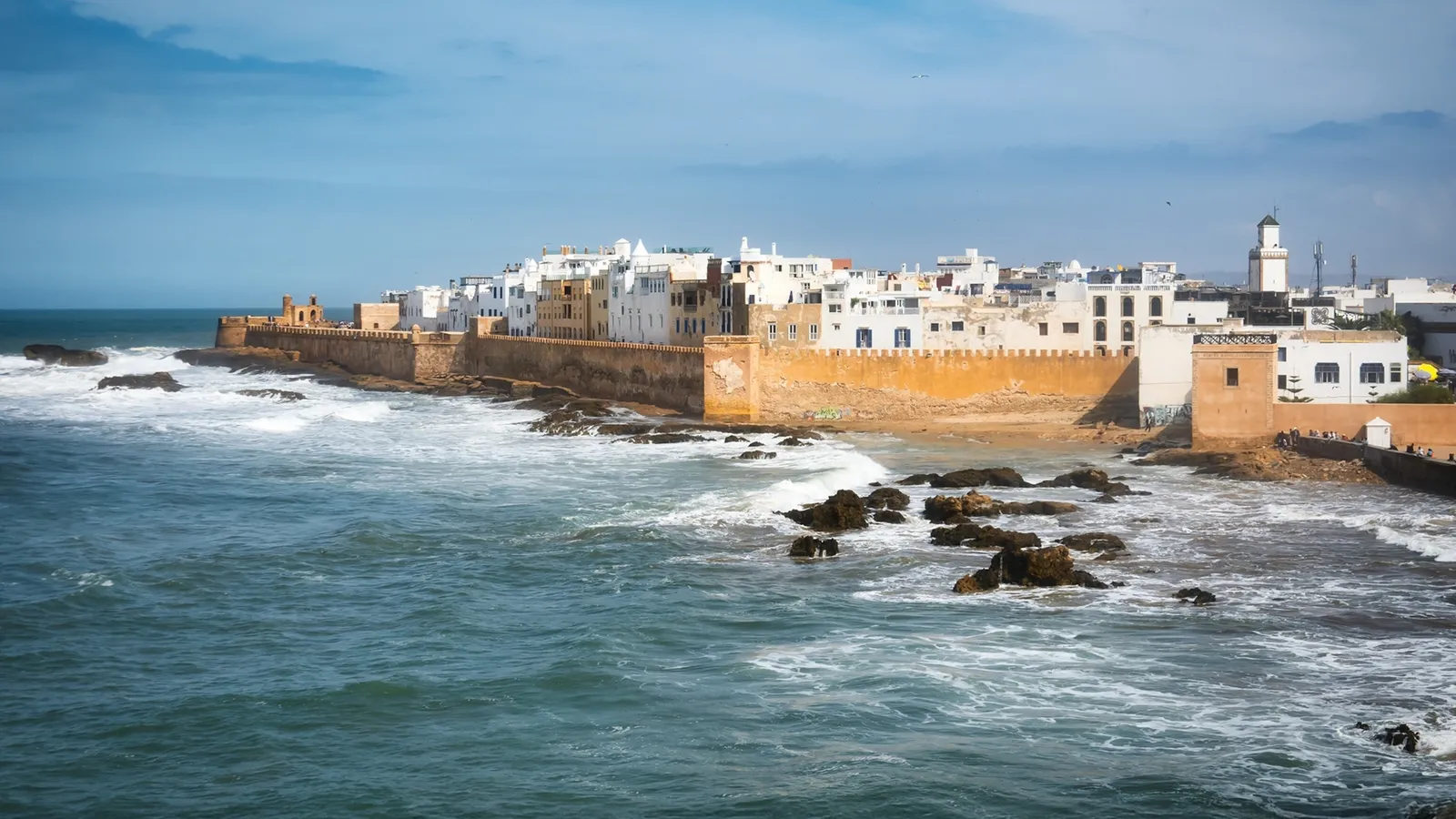
Abdellah began real guembri training at twelve years old. The guembri — a sacred three-stringed bass lute with a camel-skin covered body — demands physical strength to press its thick strings, and exceptional rhythmic sensitivity to simultaneously pluck melodies and percussively strike the skin face of the instrument.
Abdellah showed extraordinary natural talent. While students ordinarily take decades to master Gnawa’s vast repertoire, Abdellah devoured the maqamat (modal scales) and ritual colors at breathtaking speed. He memorized the complex Bambara sequences that open the deepest sections of the night ceremony, and mastered the intricate Ftouh rhythms that inaugurate the lila.
In a rare occurrence in a strictly hierarchical traditional world, Abdellah Gania was granted the title of Maâlem at just sixteen years old. This early coronation was not merely recognition of musical talent — it was recognition of his leadership charisma. The elders saw in his eyes, and in the force of his guembri attacks, the extension of his father Boubker’s spirit.
The Marsaoui Traditional Master
Full ceremonial authority — leading complete traditional lilas from dusk to dawn, with rigorous adherence to the order of the seven Mlouk, colors, and ritual protocols.
The Fearless Innovator
Pioneer of Gnawa-Reggae fusion, then Gnawa-Afrobeat — the first major Maâlem to bring the guembri into dialogue with electric guitars, brass sections, and electronic rhythm.
”The Marley”: Identity as Cultural Statement
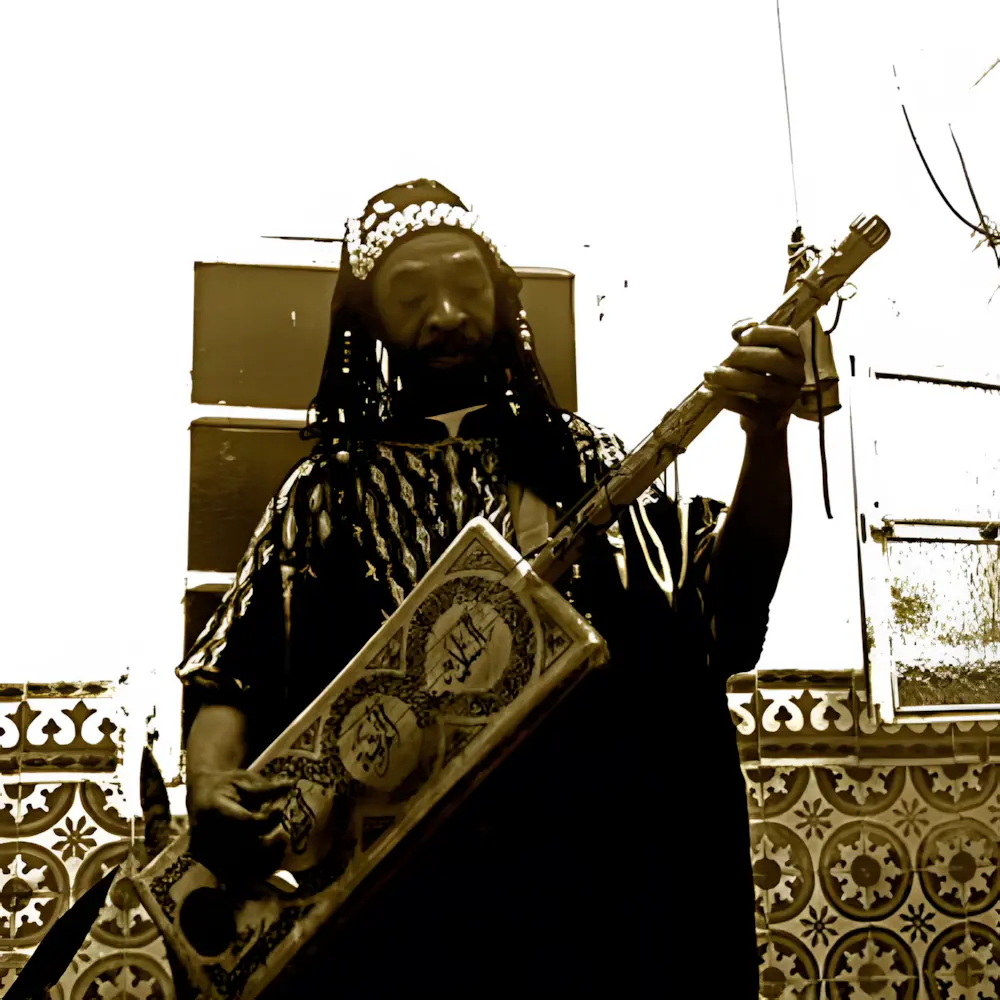
In Essaouira during the 1970s and 80s — when the city was a magnet for international musicians, hippies, and cultural seekers — Abdellah grew his hair into thick, long dreadlocks and earned the nickname “The Marley” or “The Rasta.”
This was not a superficial aesthetic choice. In that era, Essaouira had already become a mythic destination partly through Jimi Hendrix’s legendary visit in 1969 to the Gania family home. The wave of Reggae music sweeping the world resonated deeply with Abdellah. He heard in Bob Marley’s music an echo of his own soul:
| Element | Gnawa | Reggae |
|---|---|---|
| Origin | African diaspora — enslaved West Africans who carried their rhythms to Morocco | African diaspora — enslaved Africans who carried their rhythms to the Caribbean |
| Function | Healing, liberation from spiritual possession, ancestral memory | Liberation from political oppression, ancestral memory, resistance |
| Sonic Anchor | Bass guembri — the heavy, droning three-stringed lute | Bass guitar — the heavy, droning foundation of every track |
| Message | Return to Africa — the ancestors are present | Return to Africa (Zion) — repatriation and freedom |
His dreadlocks were a silent cultural manifesto. In Morocco’s conservative climate, a “Rasta” appearance was considered defiance. For Abdellah, it was a return to the deepest African roots — bypassing the Arab-Islamic cultural layer to touch Mother Africa directly. His look made him beloved among Moroccan youth searching for symbols that united authenticity and modernity, and made him the preferred bridge for Western musicians seeking genuine collaboration.
He was also influenced by the revolutionary Moroccan music movement of the 1970s — groups like Nass El Ghiwane and Lemchaheb, who blended political protest with traditional music. This contextual openness explains the “revolutionary spirit” in Abdellah’s playing: he never saw tradition as a cage, but as a launching platform.
The Fangnawa Experience: When Africa Met Africa in Europe
The jewel in Abdellah’s crown outside traditional ritual was the Fangnawa Experience — a fusion of Fanga (Afrobeat) and Gnawa. The story began at the Détours du Monde Festival in Montpellier, France, in 2011, when Abdellah met Fanga — a French group led by Burkinabe singer Korbo, playing in the style of Nigerian Afrobeat (following Fela Kuti).
The challenge was immense: how to fuse the loud, brass-heavy, complex-drum Afrobeat with the deep-bass, circular-rhythm Gnawa — two traditions with completely different sonic economies?
Noble Tree — 14:21
A 14-minute musical epic. Opens with a strict, slow-burning Gnawa rhythm, then builds into a Funk-Gnawa blend. Abdellah delivers long, deep "mournful vocals" in the ancestral Call and Response style before the modern instruments enter.
Kelen — 9:38
Abdellah enters a vocal duel with singer Korbo. A moment arrives when the electric bass drops to silence and a solo guembri takes over — proving the ancient instrument needs no amplification to command a room.
The album Fangnawa Experience (2012, Strut Records) received stunning critical acclaim. The Independent described Abdellah’s voice as carrying “the mournful soul of the streets of Marrakesh and Essaouira.” PopMatters noted that he “was not afraid to adapt his vocal style” when the group raised tempo or added Dub effects — proof of his enormous artistic flexibility. Critics also cited the moment when the bass guitar drops out to make room for Abdellah’s guembri solo as the album’s finest moment: a confrontation between the ancient and the modern where the ancient wins by pure depth.
The album was definitive proof: Abdellah was not a “museum guardian.” He was a contemporary artist using ancient tools to speak to a universal African memory.
The Healer: Guardian of the Lila Marsaoui
Away from European stages, Abdellah Gania was a chef de lila (lila director) of the highest caliber in Essaouira. His healing ceremonies were distinguished by:
- Rigorous ceremonial order — no rearranging of the mahalat (ritual colors/sequences). He followed the full Ftouh opening through every spirit family to the close
- Clinical authority — inherited from his mother the moqaddema, he knew exactly when to raise the guembri tempo to escalate jedba trance, and when to lower it to safely guide a spirit-filled participant back to stillness
- Pedagogical generosity — he did not hoard the secrets. His most celebrated student, Saïd Boulhimas (winner of the Young Talent Festival, 2006), described their relationship as one of spiritual fatherhood — inheriting Abdellah’s signature “strong picking” technique and his capacity for improvisation within the canonical form
Another student, Omar Hayat — now a celebrated Maâlem in his own right — also trained under both Mahmoud and Abdellah, absorbing the Gania school’s emphasis on theatrical stage presence.

The Passing: 2013
Abdellah Gania passed away in 2013, after a period of illness. He was only in his early sixties — still at the height of his creative powers following the international success of Fangnawa Experience. His passing was described by researcher Cynthia Baker as being felt “bitterly in the zawiya of Sidi Bilal” — one of the sacred spaces where Gnawa ceremonies have been held for generations.
He died two years before his brother Mahmoud (2015) — the elder brother’s grief at losing Abdellah was unspeakable.
His brother Mokhtar absorbed the spirit of Abdellah’s openness and continued his own international collaborations. Abdellah’s sister Zaida Gania continued leading the female moqaddema side of the family’s rituals. And Abdellah’s students — Saïd Boulhimas, Omar Hayat, and others — carry his pedagogical flame forward in Essaouira and beyond.
Essential Listening
Fangnawa Experience
2012 • Strut Records • with Fanga
The landmark collaboration — Gnawa meets Afrobeat. The critical consensus: "one of the finest fusion albums of its decade."
Cassette Archives
1980s–1990s • Moroccan Tape Stash
Rare field recordings of the Gania family's live lilas — including pieces like "Shir Bambara" and "Sidi Sma ya Bulandi" not performed publicly. The "golden reference" of the era.
Détours du Monde Live
2011 • Montpellier Festival
The live recording from the encounter that launched Fangnawa — the electric moment when two continents of African music recognized each other.
"Gnawa and Reggae are the same cry — the cry of Africa that never forgot itself, even across oceans."
— Maâlem Abdellah Gania
Further Exploration
- 📖 Maâlem Boubker Gania — The patriarch father who laid the foundation
- 🌟 Maâlem Mahmoud Gania — The famous older brother — “The Emperor”
- 🔥 Maâlem Mokhtar Gania — The younger brother who carried the flame forward
- 🌱 Maâlem Houssam Gania — The third generation, Mahmoud’s heir
- 🏛️ The Essaouira School of Gnawa — The tradition Abdellah was rooted in
- 🎭 The Gnawa Lila Ceremony Explained — The healing ritual he mastered
- 🌀 The Seven Mlouk: Colors, Spirits & Meanings — The spiritual cosmology in his songs
- 🌍 Gnawa Origins & History — The shared African root he celebrated