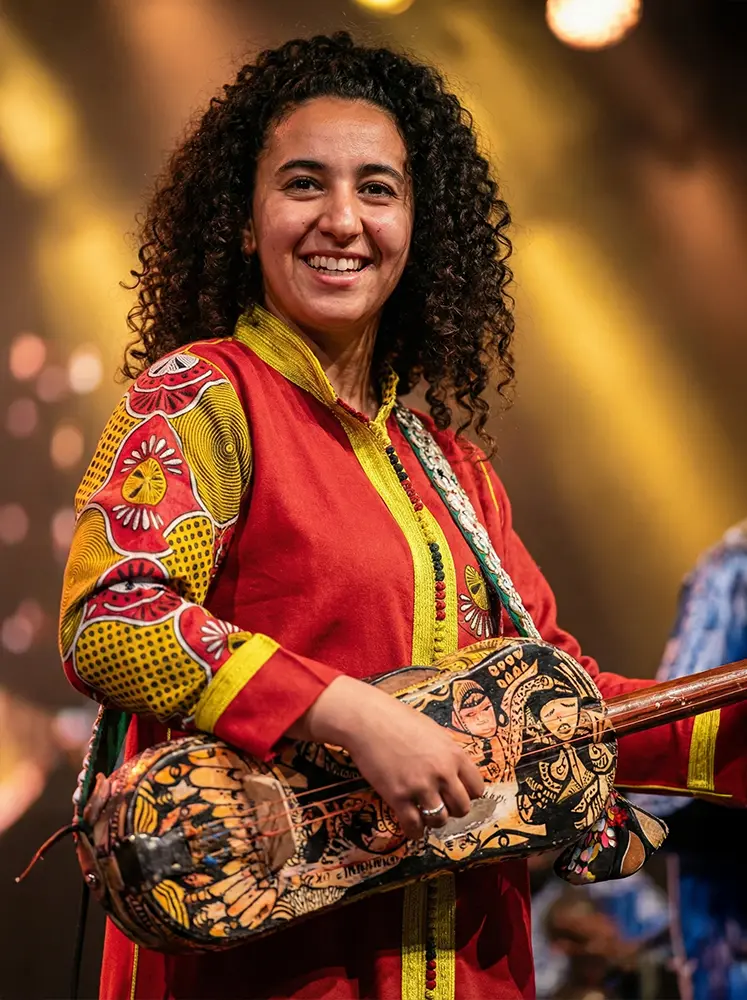
In the windswept city where Gnawa was born, where the Atlantic crashes against ancient walls and the spirit of Africa pulses through every alley, a young woman picked up the guembri and refused to let go. Hind Ennaira was not born into a Gnawa family. She had no lineage to claim, no father to pass her the sacred instrument. She simply loved the music so deeply that she taught herself to play it — and in doing so, became one of the most exciting new voices in Gnawa today.
She is the self-made Maâlema, the rising star who proves that passion and perseverance can unlock doors that tradition once kept firmly closed.
Born in the Cradle
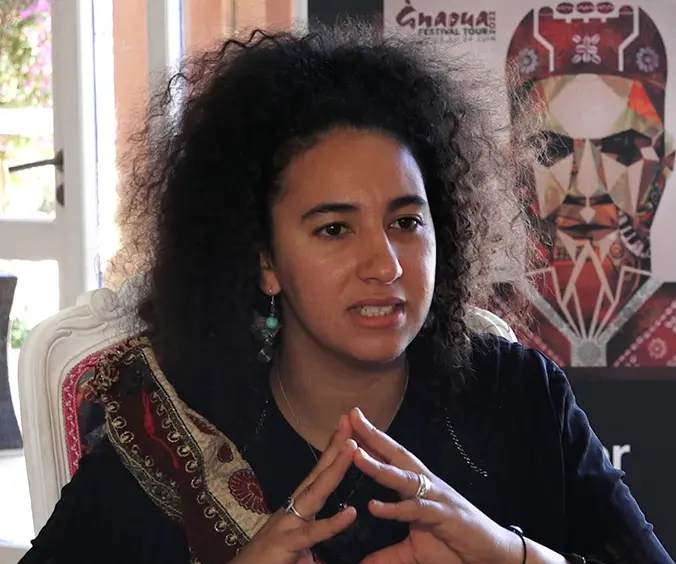
Essaouira, 1997. The city that gave birth to Gnawa, where the festival draws hundreds of thousands each year, where the guembri’s bass notes echo through the medina like a heartbeat. This is where Hind Ennaira opened her eyes to the world.
Unlike Asmâa Hamzaoui, who inherited her father’s guembri, Hind had no family connection to Gnawa. Her path was different — harder in some ways, purer in others. She fell in love with the music as a child, attending lilas and festivals, feeling something stir inside her that demanded expression.
In a world where the guembri was passed from father to son, from master to male apprentice, Hind had to forge her own way. She taught herself to play, studying the masters from a distance, practicing alone until her fingers knew the strings like old friends.
The Self-Taught Master
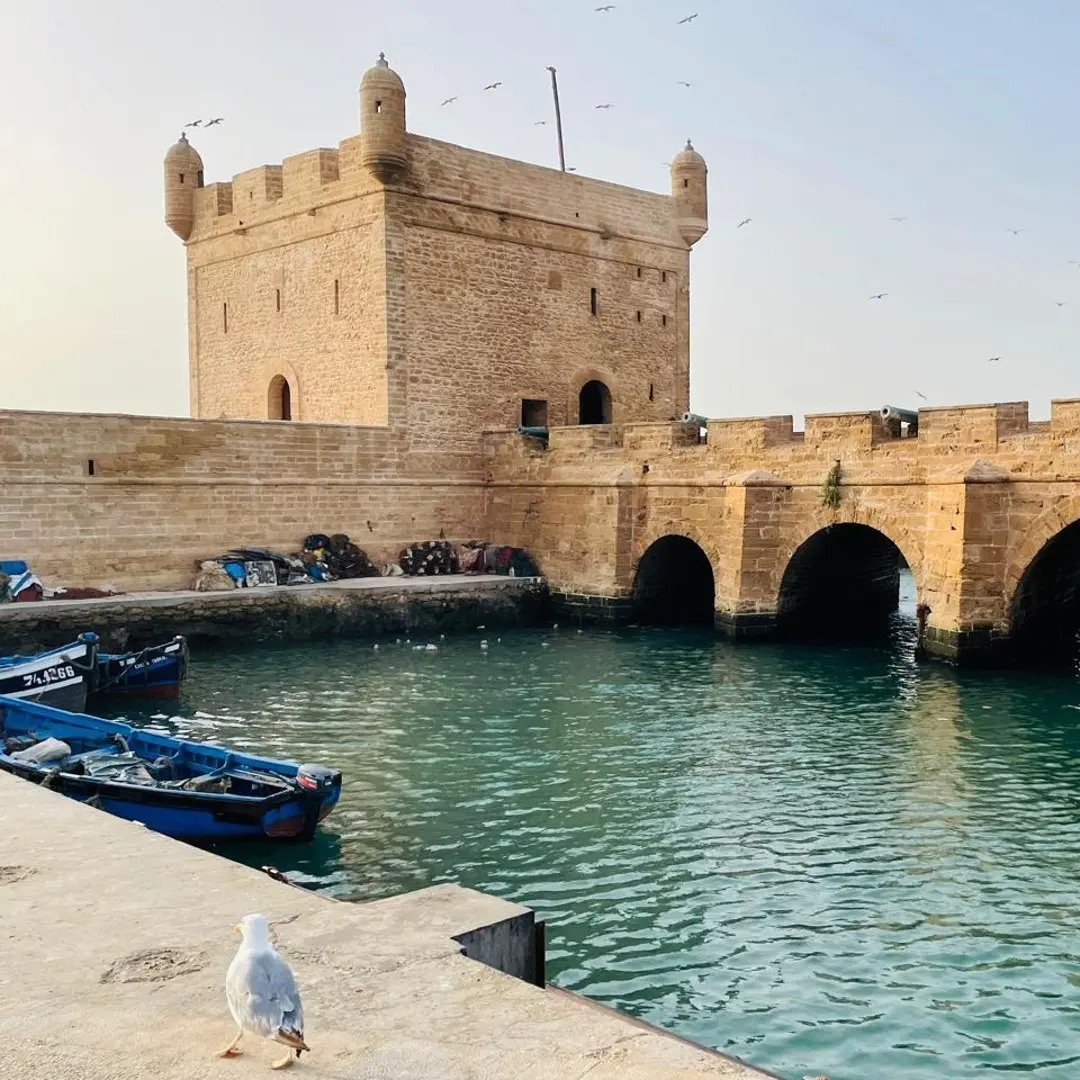
What Hind lacked in lineage, she made up for in determination. She sought out the great masters of Essaouira, learning not through formal apprenticeship but through observation, immersion, and relentless practice.
Her breakthrough came when she joined the circle of Maâlem Mohamed Boumzough, one of Essaouira’s most respected masters. Under his guidance, she transformed from a passionate amateur into a true musician. She discovered her spiritual lineage — not through blood, but through devotion.
“The guembri chose me,” she says. “I didn’t inherit it. I earned it.”
The Night Everything Changed
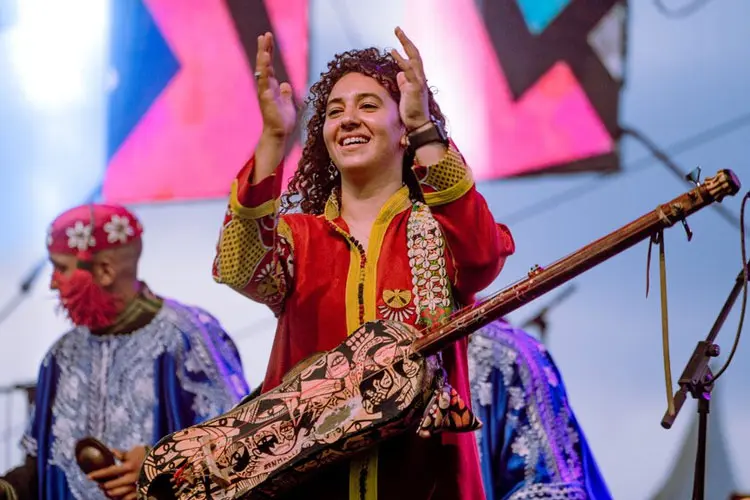
The Gnaoua and World Music Festival, 2023. The world’s most prestigious stage for Gnawa music. Hind Ennaira stepped into the spotlight alongside Maâlem Mohamed Boumzough and Burkinabe artist Yaya Ouattara.
Then came the moment: a guembri solo.
The crowd fell silent as her fingers danced across the strings. The bass notes rolled like thunder. The rhythm built, circular and hypnotic, pulling the audience into trance. When she finished, the applause was deafening.
In that moment, Hind Ennaira announced herself to the world. Not as a curiosity — a woman playing a man’s instrument — but as a genuine talent, a force to be reckoned with.
The Feminine Gnawa
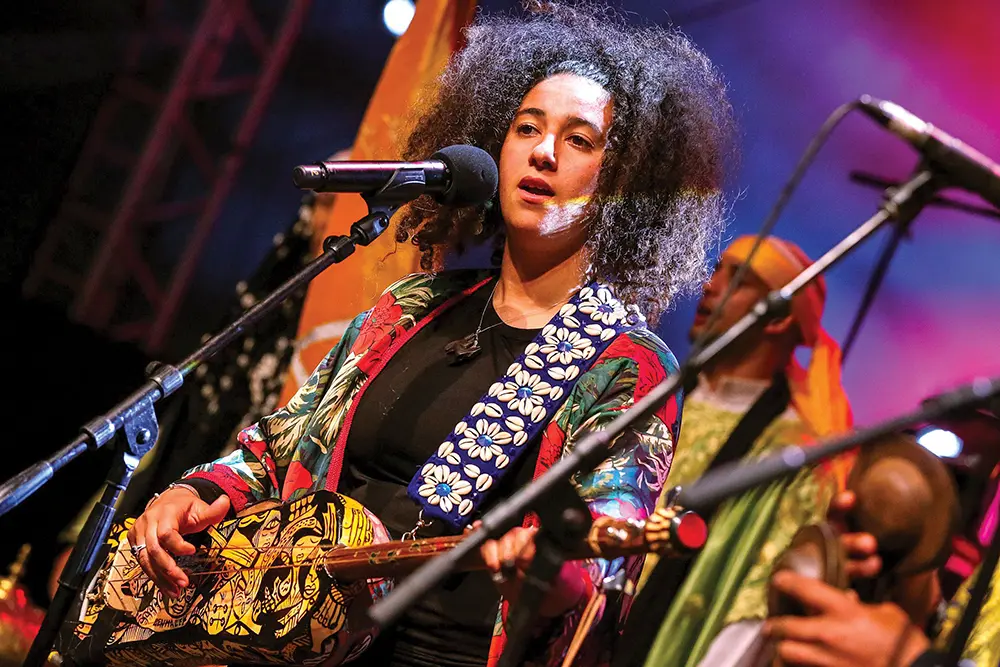
Hind’s style is unmistakable: heavy, circular rhythms rooted in tradition, but infused with a rock-like energy that electrifies young audiences. She calls it “Gnawa for everyone” — music that honors the sacred ritual while welcoming the new.
The Power
A guembri style that combines traditional weight with rock energy — drawing young audiences into the trance.
The Fusion
Collaborations with jazz, Andalusian, and East African musicians — expanding Gnawa's reach without losing its soul.
The Message
Proving that Gnawa belongs to everyone — regardless of gender or family background.
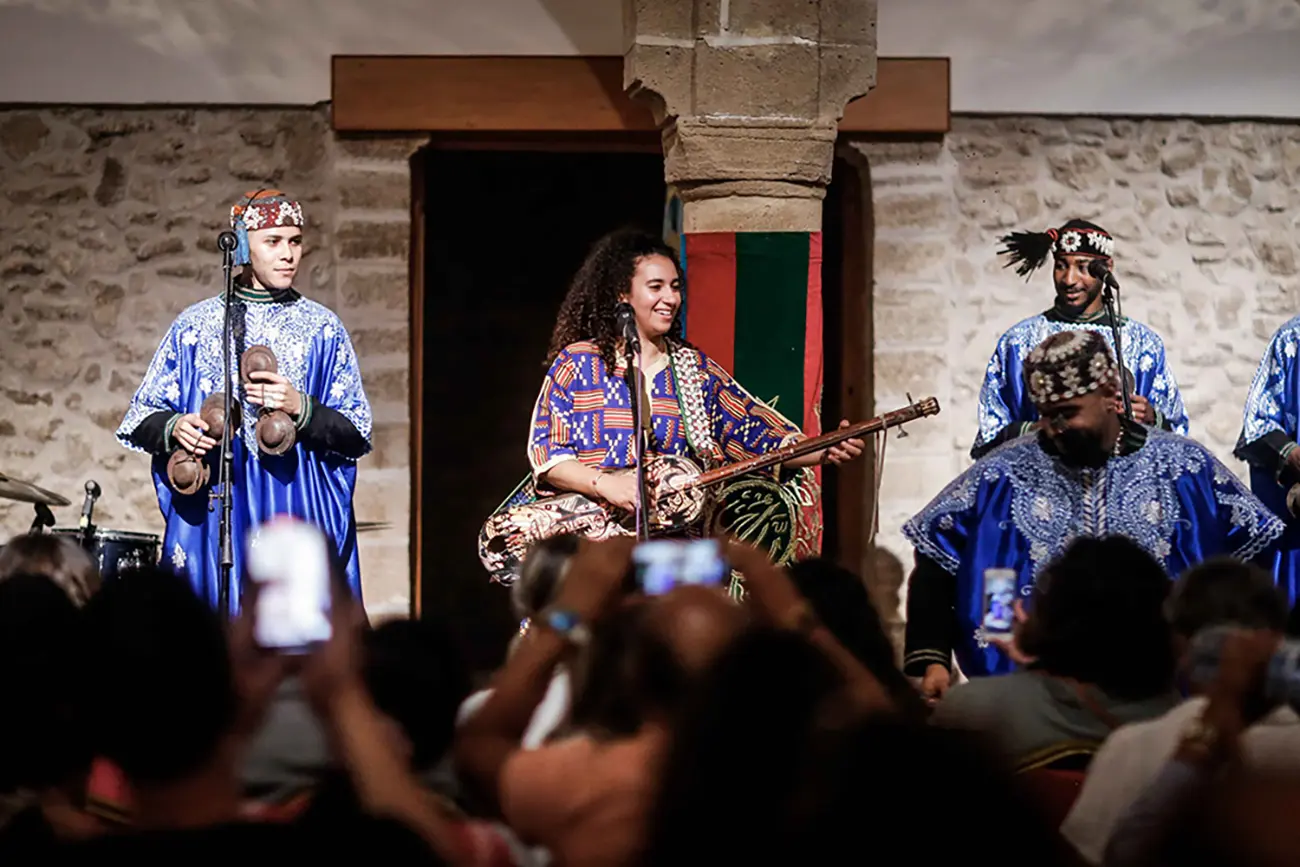
Her performances are a bridge between ritual and spectacle, between the healing ceremony and the concert stage. She plays for the spirits and for the crowd, never sacrificing one for the other.
Taking Gnawa to the World
After her breakthrough at the Essaouira festival, Hind’s trajectory shot upward. In 2023, she performed at the Maqam Cultural Center in Amsterdam, sharing the stage with Salah Edinne Mesbah and the Andalusian Orchestra of Amsterdam — a high-profile concert that introduced her to European audiences.
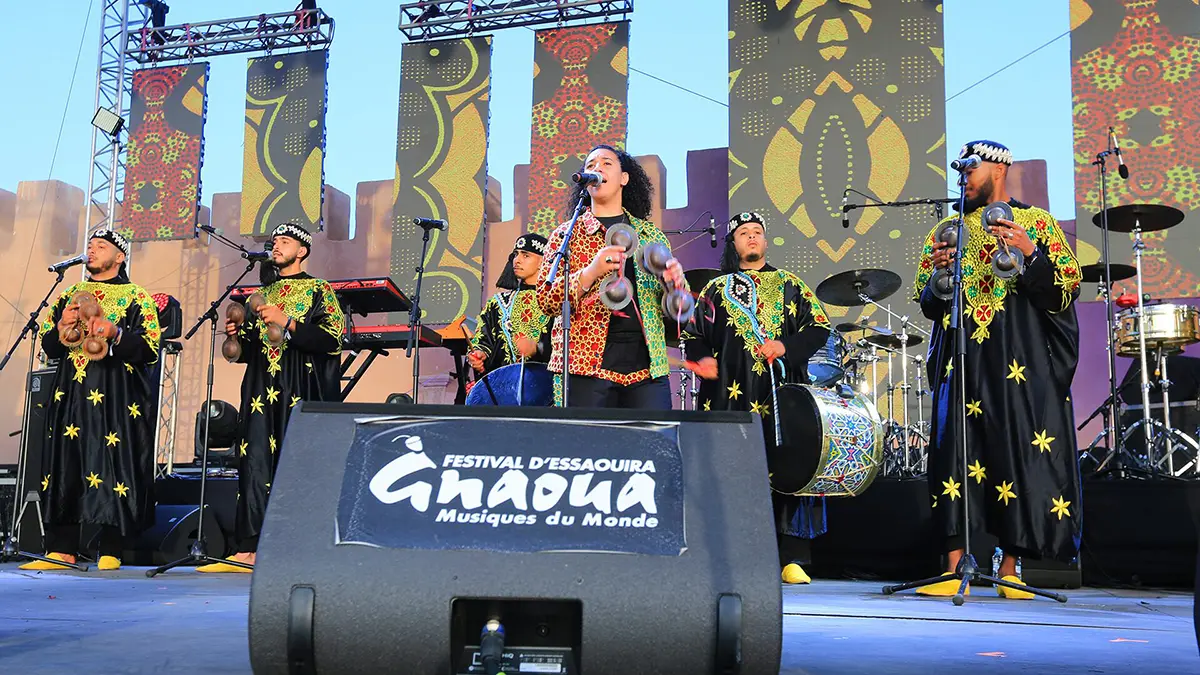
Her return to the Gnaoua Festival in 2025 was triumphant. She headlined the closing night on the Moulay El Hassan stage, commanding a massive crowd with the confidence of a veteran. The audience that once watched her debut now chanted her name.
Her Own Band, Her Own Vision
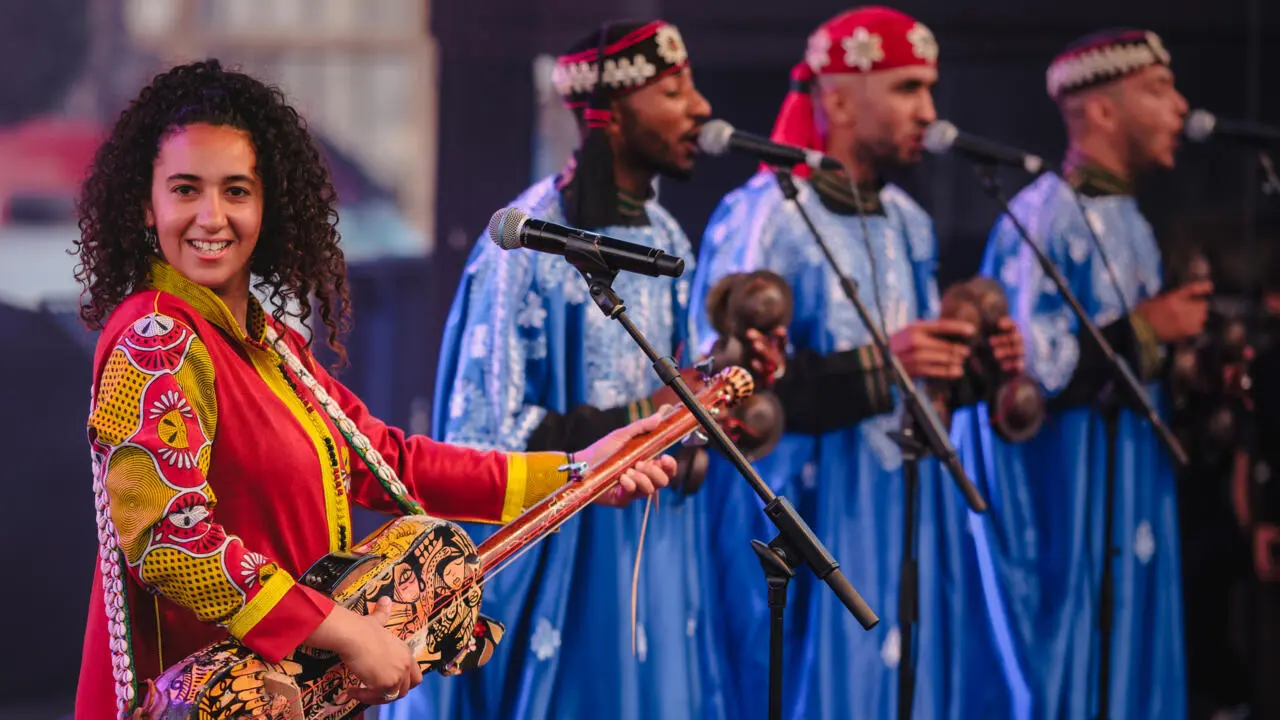
Hind has founded her own group, asserting her musical identity and sharing her vision of inclusive, modern Gnawa. The lineup combines traditional elements with contemporary touches:
- Hind Ennaira — Guembri, qraqeb, lead vocals
- Abdjar Aït Mamas Tuda — Qraqeb, vocals, dance
- Ayoub Jou — Drums
- Yassine El Jari — Electric guitar
- Plus additional qraqeb players and dancers
The inclusion of electric guitar alongside traditional instruments signals her philosophy: honor the roots while reaching for new branches.
A debut album is currently in preparation — a statement piece that will cement her place in the new generation of Gnawa.
Essential Listening
Festival Gnaoua Solo
2023 • Live
The guembri solo that announced her arrival — raw power and traditional depth in one performance.
Essaouira 2025
Closing Night
The triumphant return — headlining the festival that launched her career.
Amsterdam Sessions
2023 • With Andalusian Orchestra
Gnawa meets Andalusian classical — a bold fusion that showcases her versatility.
"The guembri resonates with strength and grace in the hands of a woman. Gnawa belongs to everyone."
— Maâlema Hind Ennaira
The Future is Feminine
Hind Ennaira represents something new in Gnawa: proof that you don’t need to be born into the tradition to carry it forward. Her story is one of self-determination, of a young woman who saw something beautiful and refused to accept that it wasn’t for her.
She made a choice after graduating with a degree in tourism — the safe path, the expected path. Instead, she chose the guembri. She chose the uncertain road of an artist, the struggle of a woman in a male-dominated world, the challenge of earning respect without lineage to lean on.
And she won.
Today, when she takes the stage in Essaouira or Amsterdam or anywhere else the music calls her, she carries a message that echoes far beyond Gnawa: passion and perseverance can open any door. The future of tradition lies not just in those who inherit it, but in those who love it enough to fight for it.
The wind still blows through Essaouira. The guembri still pulses its ancient rhythm. And now, in the hands of Hind Ennaira, it speaks with a new voice — feminine, powerful, and unstoppable.