Explore the mystical world of Gnawa's seven spirit families — each with its own color, music, incense, and healing power. A guide to the cosmic forces at the heart of Gnawa spirituality.
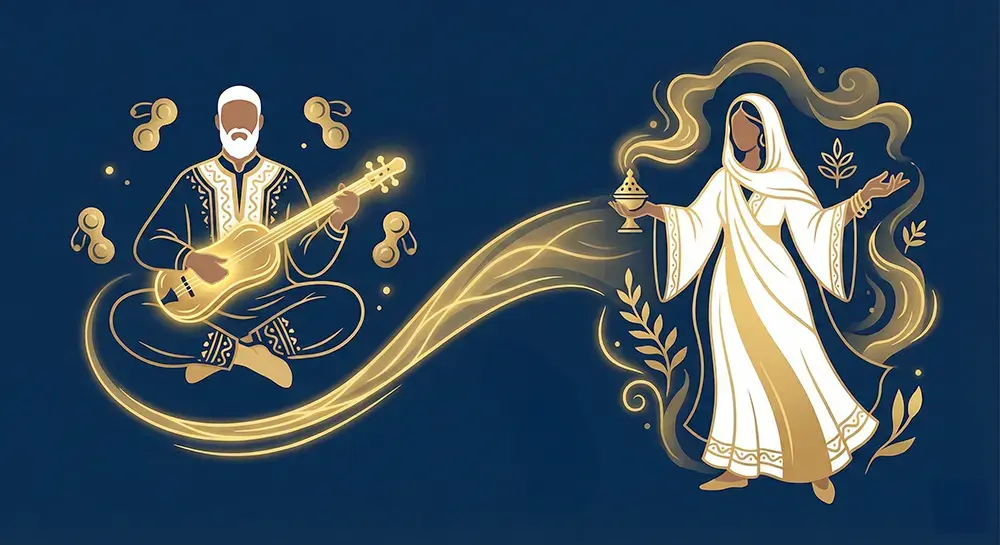
When the guembri’s bass notes begin to pulse through the night, they are doing more than making music. They are opening a path — what the Gnawa call the treq — a journey through seven realms of spirit, each marked by its own color, its own scent, its own rhythm, its own healing power.
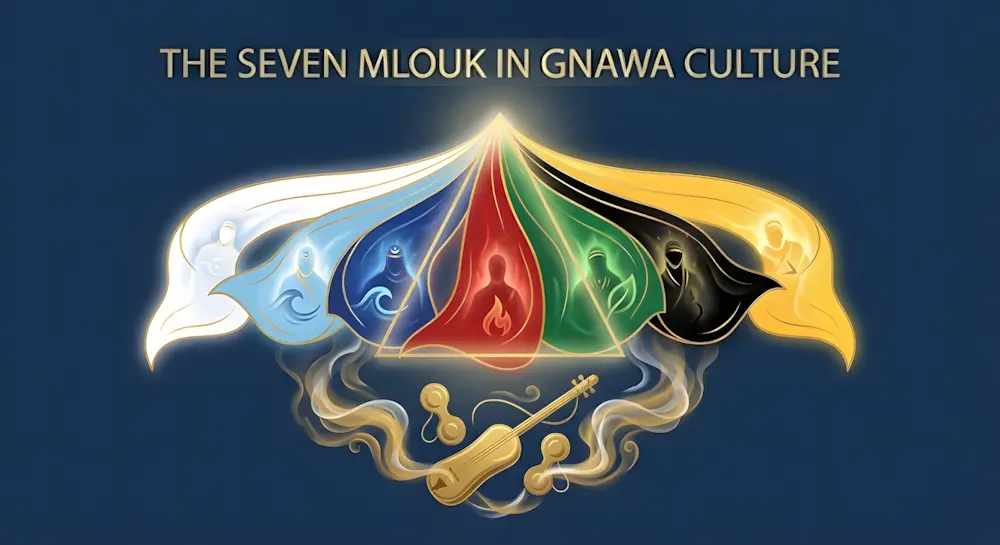
At the heart of Gnawa spirituality lie the Mlouk (singular: Melk) — seven families of spirits that represent the prismatic decomposition of divine light into the forces that shape human experience. Understanding the Mlouk is understanding Gnawa itself.
Who Are the Mlouk?
The Mlouk are not demons to be feared or gods to be worshipped. They are abstract entities — cosmic forces that gather together similar jinn (spirits) into families. Each family is associated with specific aspects of nature, human psychology, and spiritual energy.
The Gnawa believe that the universe was created through seven main manifestations of divine creative activity. The Mlouk represent these manifestations — like white light passing through a prism and separating into seven colors. Each color carries a portion of the original divine energy.
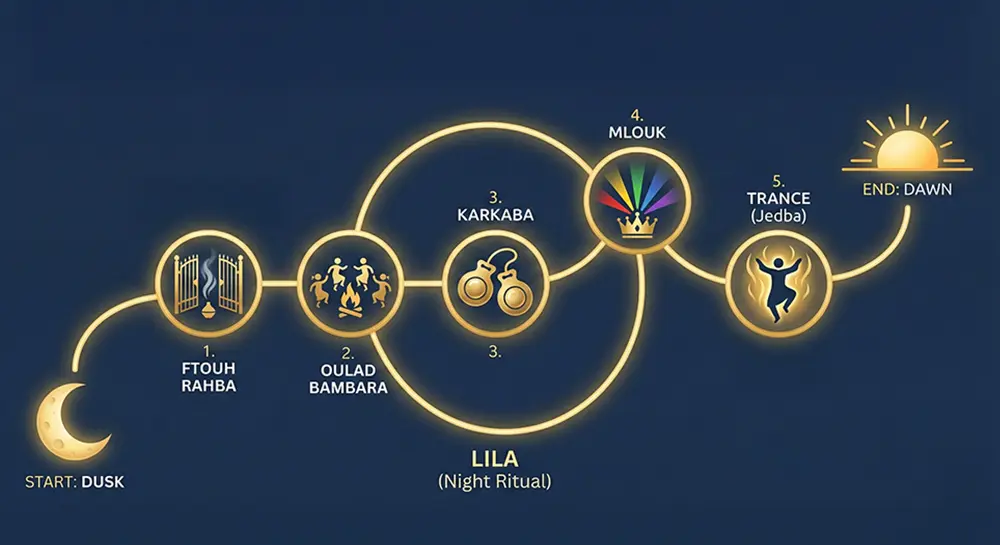
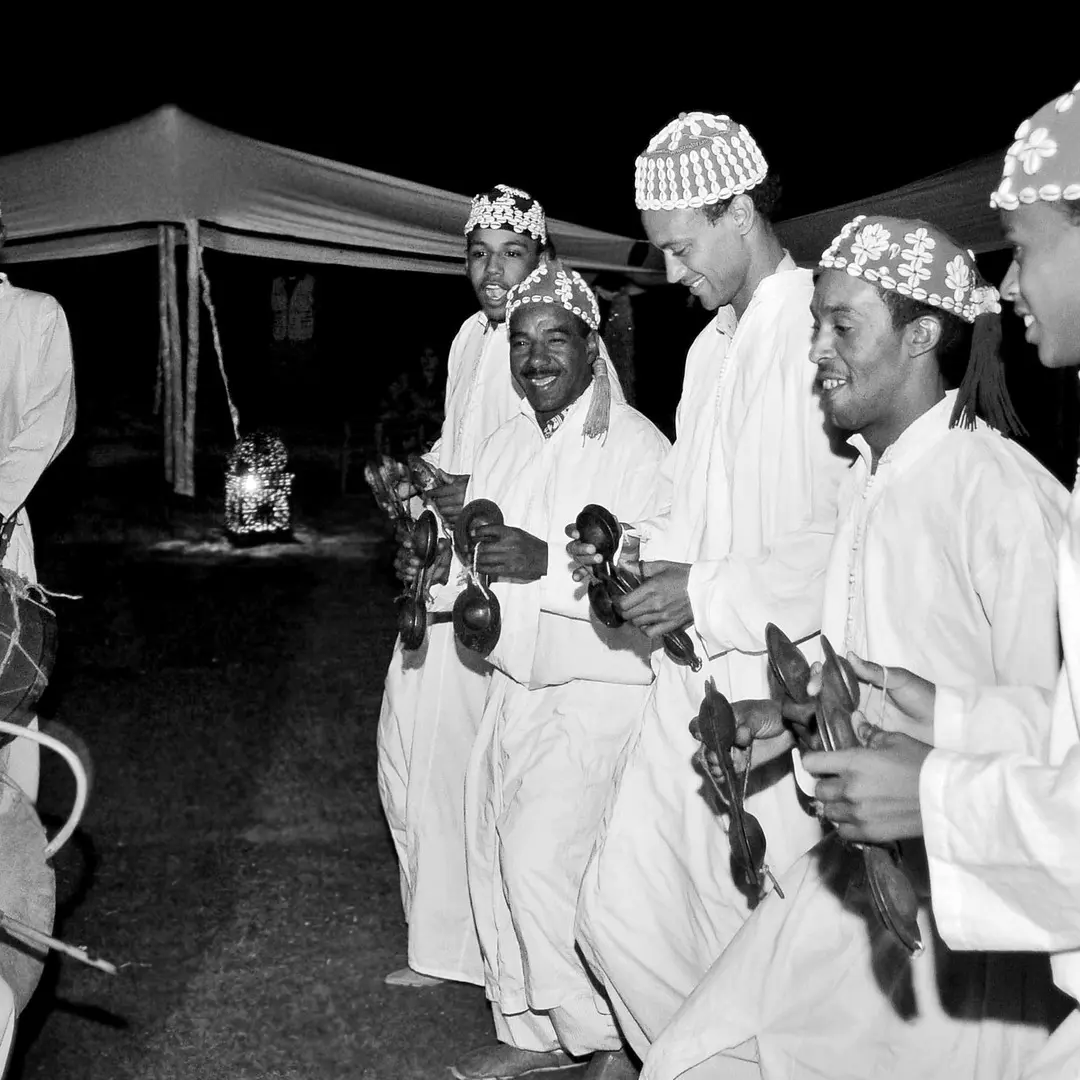
During the lila ceremony, participants enter trance states (jedba) to negotiate their relationships with these spirits. The goal is not exorcism but reintegration — restoring balance between the human body, mind, and the cosmic forces that animate all existence.
The Mlouk are treated as presences (called hadra) that consciousness encounters in ecstatic space and time. Each is related to specific mental complexes, human characters, and behaviors. When someone is afflicted — by illness, depression, bad fortune, or spiritual imbalance — it often means their relationship with a particular Melk has been disturbed.
The Seven Colors and Their Meanings
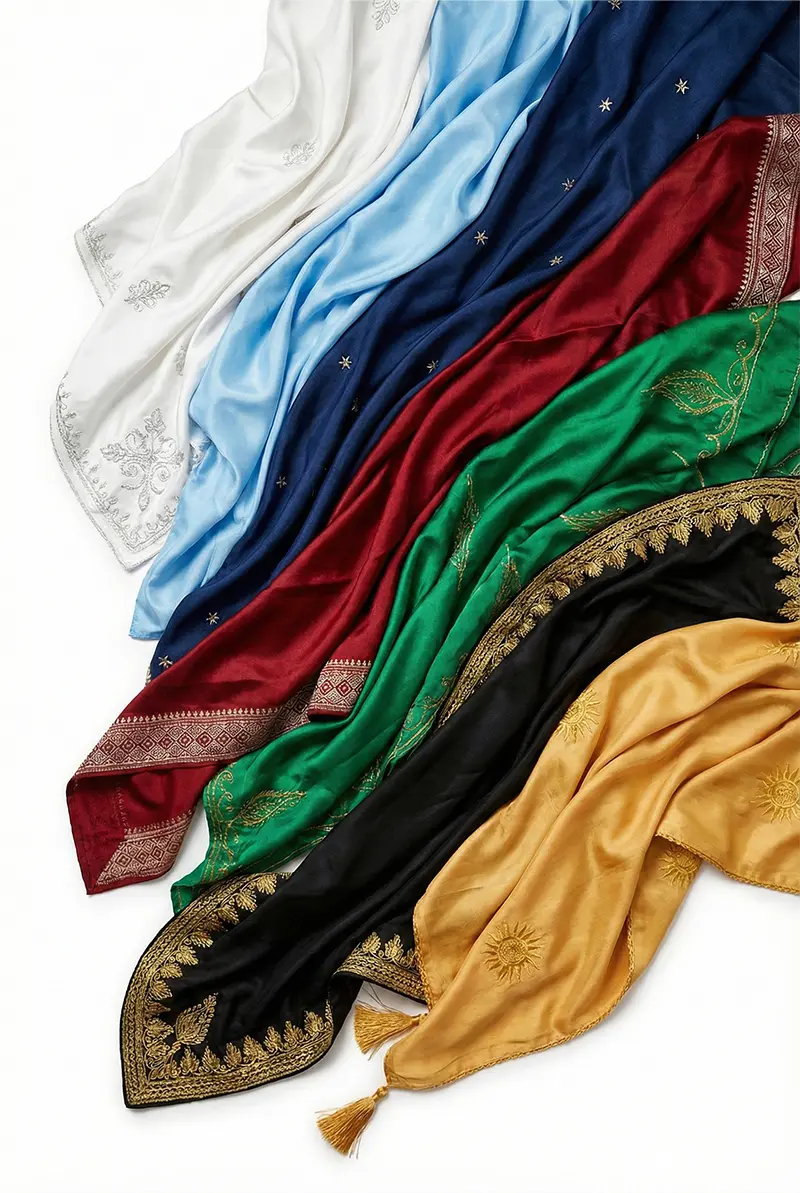
Each of the seven Mlouk families is identified by a specific color that carries deep symbolic meaning. During ceremonies, participants are draped in the color of the spirit possessing them, incense of the appropriate type is burned, and specific musical patterns are played.
White — The Saints & Light
Purity • Day • Spiritual Cleansing • Sufi Heritage
White opens the ceremony, associated with Islamic saints (*Achourafa*) like Sidi Lfqih and Sidi Brahim. This phase is calm and meditative, showcasing the Sufi heritage of Gnawa. The music is peaceful, the incense is sandalwood, and the atmosphere invites purification and honesty. White represents the unity of divine light before it separates into the spectrum.
Black — Sidi Mimoun & The Ancestors
Night • Afterlife • Mystery • Protection from Magic
Black is the realm of **Sidi Mimoun** (also called Baba Mimoun) and **Lalla Mimouna** — complex, composite beings who represent the ancestors of the Gnawa people. They are sometimes compared to Adam and Eve, embodying the mother and father of the community. The music becomes deep and majestic, almost courtly, asking for salvation. Black is associated with mental illness, protection from sorcery, and the mysteries of the unseen world. The incense is heavy black oud, the rhythms are slow and powerful.
Blue — Sidi Moussa & The Sea
Water • Protection • Cleansing • Connection Between Worlds
Blue belongs to **Sidi Moussa** — the spirit of water, often associated with the Prophet Moses (*Moussa* in Arabic) who parted the sea. This is one of the most important phases, invoking protection from evil spirits and healing for skin and bone diseases. The music is fluid and wave-like, the incense is rose or musk, and dancers may balance bowls of water on their heads without spilling. Blue connects the physical and spiritual worlds, purifying all it touches.
Red — Sidi Hamou & Fire
Blood • Power • Strength • Danger
Red is the most intense phase of the lila. It belongs to **Sidi Hamou** (or Bacha Hamou) and **Hammouda** — the kings of the slaughterhouse, spirits of blood and fire. The music becomes fast-paced and powerful, the incense is sharp (sometimes including chili), and the atmosphere crackles with dangerous energy. Trancers in this phase may handle knives or draw their own blood as sacrifice. Red treats inflammation, anger, and conditions requiring fierce energy to overcome.
Green — The Forest Spirits
Earth • Growth • Fertility • Renewal
Green is the realm of **jungle and forest spirits** — Kounya, Ingouba, Lbouhali, and others. These are earth spirits connected to vegetation, growth, and the natural world. The music is soothing and grounded, the incense is green herbs, and the dances involve touching or connecting with the ground. Green heals digestive problems, treats infertility, and invokes prayers for new beginnings and renewal.
Yellow — Lalla Mira & The Sun
Energy • Joy • Jealousy • The Evil Eye
Yellow belongs to **Lalla Mira** — a complex female spirit full of contradictions. She embodies laughter and playfulness on one hand, envy and jealousy on the other. The music fluctuates dramatically between high and low pitches, reflecting life's polarity. Hysterical laughter is common during this phase. Those who lose consciousness may have been afflicted by the evil eye. Yellow treats depression and spiritual poverty, bringing the energy of the sun into dark places.
Sky Blue — The Samawi Spirits
Heaven • Air • Lightness • Celestial Connection
Sky blue (Samawi) represents the celestial realm — the spirits of the sky and air. This lighter shade of blue complements the deeper blue of Sidi Moussa, creating a distinction between water spirits and heavenly spirits. The music is airy and uplifting, the incense is light florals, and the atmosphere feels open and expansive. Samawi treats respiratory ailments and brings clarity to confused minds.
The Black Spirits: Sidi Mimoun in Depth
Among all the Mlouk, the black spirits hold particular power and mystery. Sidi Mimoun (also called Baba Mimoun or Mimoun Leghlimi) represents the realm of darkness, secrets, and the ancestors.
Who Is Sidi Mimoun?
Sidi Mimoun is not evil — he is powerful. He rules the night, the earth, and the world of the dead. He is the protector against sorcery and black magic, but he demands respect and proper invocation.
His female counterpart, Lalla Mimouna, is equally important. Together, they are sometimes called the “Adam and Eve” of Gnawa — the primordial ancestors from whom the community descends. Some scholars see in them traces of pre-Islamic African ancestor worship, adapted to the Moroccan context.
The Black Phase in Ceremony
When the black phase begins:
- Incense: Heavy black oud, sometimes benzoin
- Music: Deep, slow, majestic — almost funeral-like
- Atmosphere: Courtly, serious, demanding
- Trancers: May experience intense visions, communicate with ancestors
- Healing: Mental illness, protection from magic, ancestral reconciliation
The black phase also includes Lalla Aicha (or Lmima, “the mother”) — a spirit of profound sorrow. Her legend tells of a woman whose husband was killed; she cries for him daily and seeks revenge nightly. During her invocation, lights are extinguished, unsalted olives and dried figs are passed around, and the room fills with sounds of weeping. This is one of the saddest moments in the entire lila.
The Blue Spirits: Sidi Moussa in Depth
The blue spirits represent water, purification, and the connection between worlds. Sidi Moussa is one of the most beloved and frequently invoked Mlouk.
Who Is Sidi Moussa?
Sidi Moussa takes his name from the Prophet Moses (Moussa in Arabic) — the prophet who parted the Red Sea, who was saved from the Nile as an infant, whose life was shaped by water. In Gnawa cosmology, Sidi Moussa rules the seas, rivers, and all bodies of water.
He is also associated with protection — the way water cleanses impurities, Sidi Moussa cleanses evil influences. Coastal Gnawa communities, especially in Essaouira, have particularly strong connections to this spirit.
The Blue Phase in Ceremony
When the blue phase begins:
- Incense: Rose, musk, or wet/cool scents
- Music: Fluid, wave-like rhythms that seem to flow
- Atmosphere: Serene, purifying, cleansing
- Trancers: May perform the famous “bowl dance” — balancing a bowl of water on the head while dancing without spilling
- Healing: Skin diseases, bone problems, spiritual impurities
The Moqaddema often takes her turn dancing during the blue phase, demonstrating her worthiness for her spiritual role by performing the water-bowl dance successfully.
How Music and Incense Change for Each Color
The Gnawa ritual is a multi-sensory experience. Each spirit family is invoked not just through color but through specific combinations of sound and scent that create the proper conditions for that spirit’s presence.
The Musical System
The Mlouk are evoked by seven musical patterns — seven melodic and rhythmic cells that form the seven suites of the Gnawa ritual repertoire. Each suite has:
- Specific songs with lyrics invoking that spirit
- Distinct rhythms played on the guembri
- Particular qraqeb patterns that support the rhythm
- Characteristic dance steps that express the spirit’s nature
The Maâlem must know exactly which songs belong to which spirit, played in the proper sequence. The treq (path) through the night follows a strictly encoded order — you cannot invoke the red spirits before the blue, or skip directly to yellow.
The Incense System
Seven types of incense correspond to the seven Mlouk:
| Color | Incense Type | Character |
|---|---|---|
| White | Sandalwood, light resins | Pure, cleansing |
| Black | Heavy oud, black benzoin | Deep, mysterious |
| Dark Blue | Rose, musk, water-associated | Cool, purifying |
| Red | Sharp spices, sometimes chili | Fiery, intense |
| Green | Fresh herbs, green plants | Earthy, grounding |
| Yellow | Amber, bright resins | Sunny, energizing |
| Sky Blue | Light florals, airy scents | Celestial, uplifting |
The Moqaddema controls the incense, reading the ceremony and the participants to determine when to shift from one type to another. The scent creates an olfactory landscape that guides participants through the spiritual journey.
The Purpose: Healing Through Balance
The ultimate goal of invoking the Mlouk is reintegration and balance. The Gnawa believe that humans are made of the same energy that creates all phenomena — the same divine light that separates into seven colors.
When someone is ill, depressed, or suffering from bad fortune, it often means their inner balance has been disturbed. Perhaps they have offended a spirit unknowingly. Perhaps one aspect of their nature has become too dominant. Perhaps ancestral obligations have been neglected.
The lila ceremony addresses these imbalances by:
- Invoking each spirit in order — giving each aspect of existence its due
- Allowing participants to encounter their spirits — through trance and dance
- Negotiating relationships — placating offended spirits, strengthening beneficial ones
- Restoring harmony — between body, mind, and cosmic forces
By dawn, when the ceremony ends, participants have traveled through all seven realms and returned to ordinary consciousness renewed. The Mlouk have been honored. Balance has been restored. Healing has occurred.
"The seven colors are the seven faces of one light. To know them all is to know the wholeness from which we come and to which we return."
Continue Your Journey
Explore more of Gnawa’s spiritual dimensions:
- The Gnawa Lila Ceremony: Full Ritual Explained — See how the seven Mlouk are invoked through the night-long ceremony.
- The Maâlem and The Moqaddema: Gnawa’s Sacred Partnership — Meet the two leaders who guide participants through their encounters with the spirits.
- What Is Gnawa? Origins, History and African Roots — Understand the African origins of this cosmological system.
- From Chains to Chants: Gnawa’s Journey Through Slavery — The historical roots of the spirit tradition.
- The Gnawa Festival Essaouira Guide — Where modern audiences witness the Mlouk invoked live.
- Complete Guide to Gnawa Instruments — Every instrument used in the ceremony.
Instruments of the Spirits
- The Mlouk — Explore the spirit world in detail on our dedicated page.
- The Guembri — The instrument whose bass notes call each Melk by name.
- The Qraqeb — The iron castanets that echo the ancestors’ chains.
- The Bakhour — The sacred incense that creates the sensory landscape for each spirit.
Masters of the Ceremony
- Maâlem Mahmoud Guinea — The legendary Maâlem who mastered the treq through all seven colors.
- Maâlem Houssam Gania — Carrying the Gania dynasty’s spiritual legacy forward.
- Maâlem Hmida Boussou — The Casablanca patriarch whose Al Sur recordings documented the full Mlouk sequence.
- Maâlem Mustapha Bakbou — Essaouira’s living guardian of the sacred treq.
- Maâlem Hamid El Kasri — The voice of Ksar El Kebir who brings the Mlouk to world stages.
Schools and Regional Traditions
- Essaouira School — Where the seven colors ceremony reaches its deepest expression.
- Casablanca School — The heavyweight tradition of the imperial city.