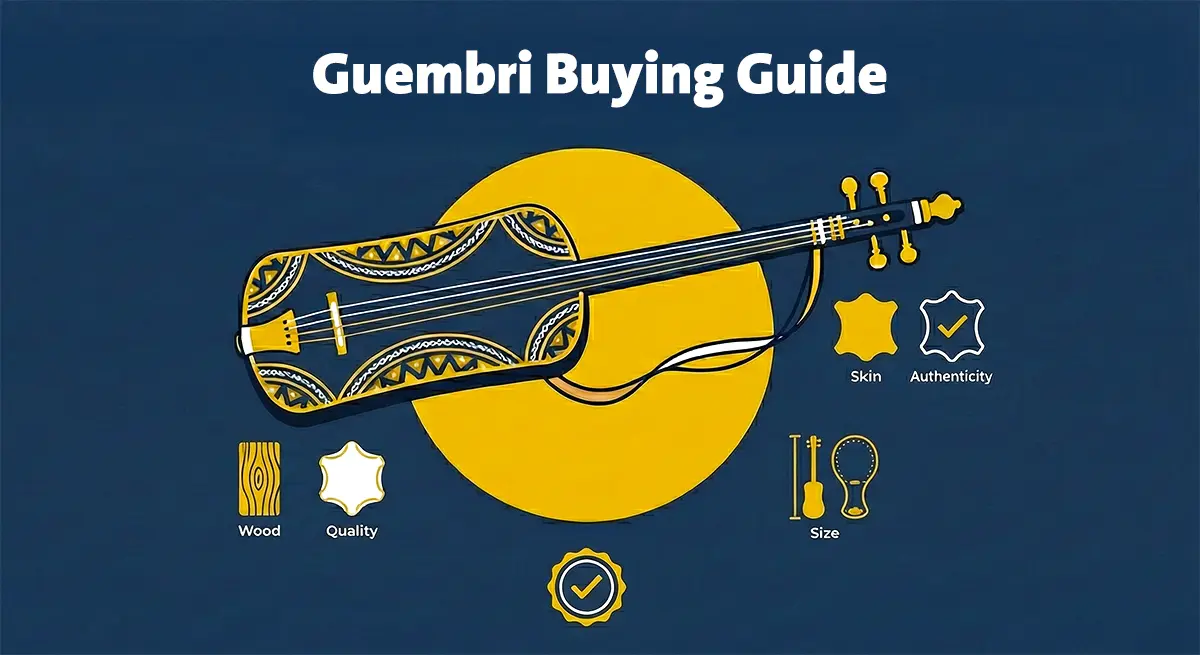
Everything you need to know about attending Morocco's legendary Gnaoua World Music Festival — dates, tickets, accommodations, and insider tips for an unforgettable experience.
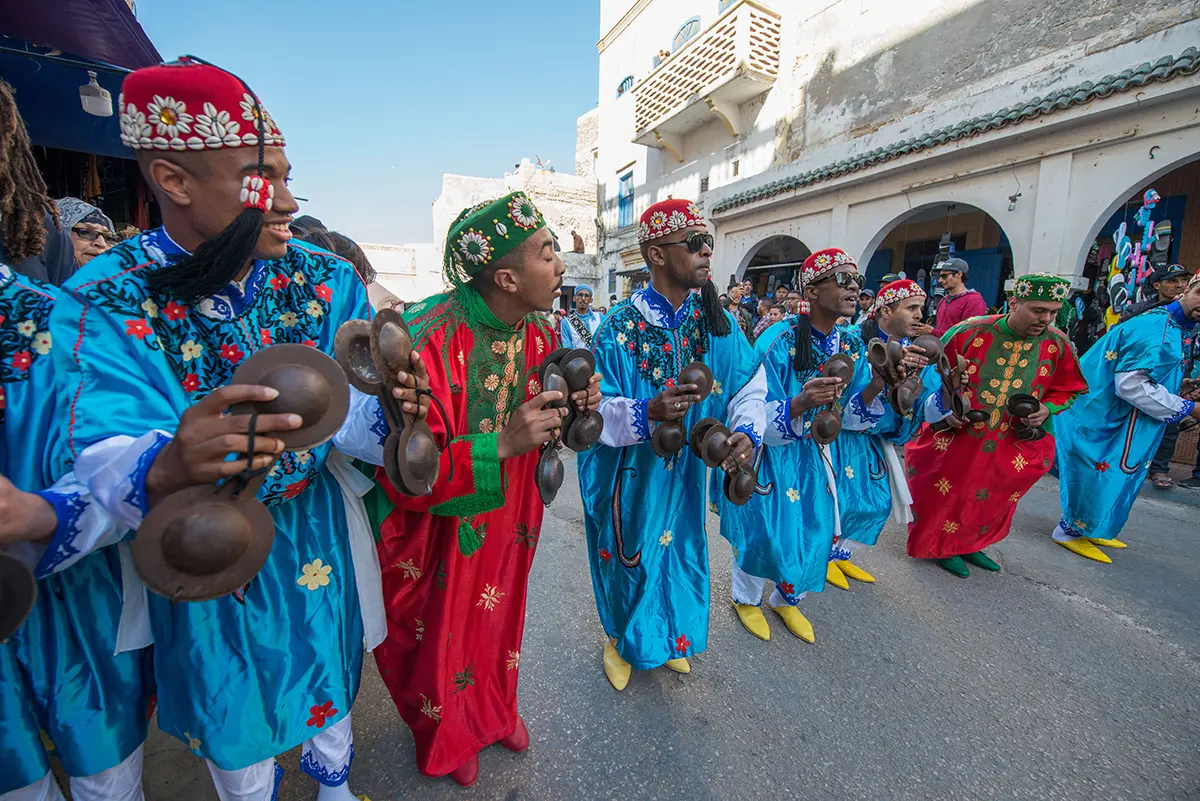
Every June, the Atlantic winds carry something more than salt through Essaouira’s ancient streets. They carry rhythm — the deep pulse of guembris, the metallic chatter of qraqeb, and voices that have called to spirits for centuries.
The Gnaoua World Music Festival transforms this coastal city into a living celebration of Morocco’s African soul. Whether you’re a devoted Gnawa fan or discovering this music for the first time, this guide will help you experience the festival at its fullest.
What Is the Gnaoua World Music Festival?
Founded in 1998, the Gnaoua World Music Festival is one of Africa’s most important cultural events. It celebrates Gnawa music — the spiritual tradition born from the descendants of sub-Saharan Africans brought to Morocco as slaves centuries ago.
But the festival is far more than preservation. It’s a living laboratory where tradition meets innovation. Traditional Maâlems share stages with jazz legends, blues masters, and artists from across the globe, creating fusion performances that exist nowhere else.
The numbers tell the story of its growth:
- 300,000–500,000 visitors over three days
- 30+ Gnawa Maâlems performing
- Dozens of international artists
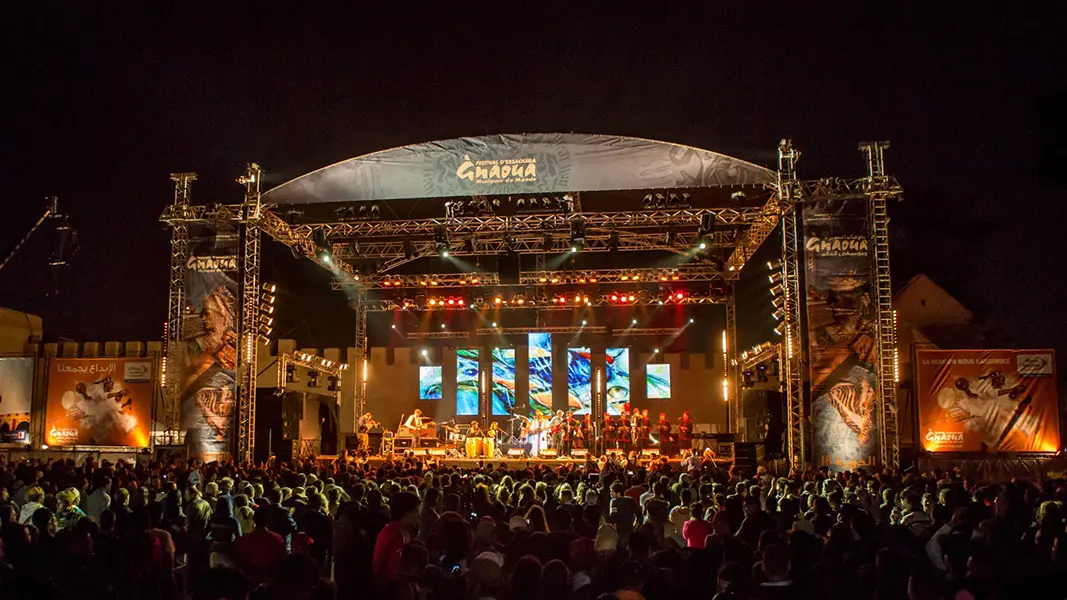
- Free outdoor concerts on multiple stages
- UNESCO recognition of Gnawa culture (2019)
When Does the Festival Take Place?
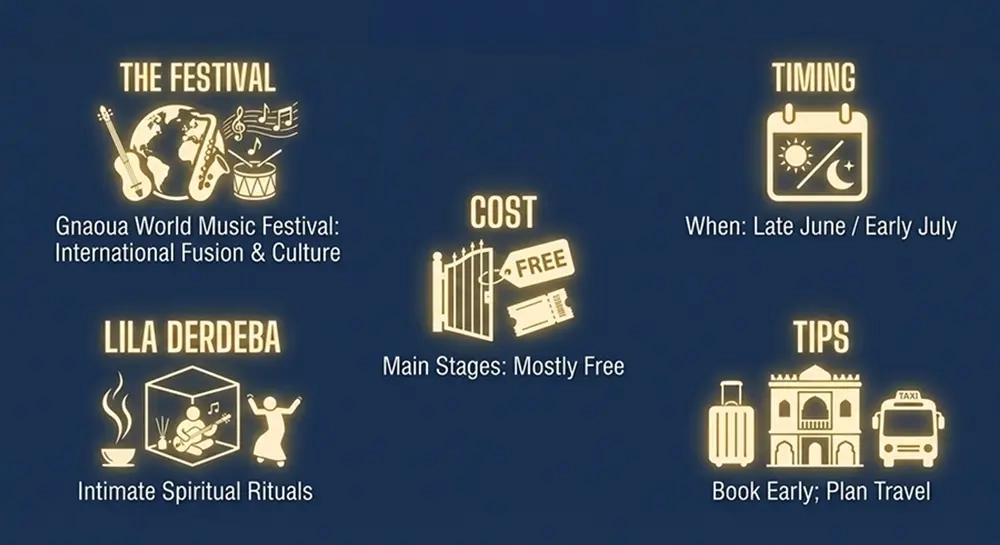
The festival typically runs for three days in late June — perfectly timed for summer weather tempered by Essaouira’s famous ocean breezes.
Recent and Upcoming Dates:
- 2024: June 27–29
- 2025: June 19–21
- 2026: Expected late June (dates TBA)
Why June?
June offers the ideal balance: warm enough for outdoor concerts but cooler than inland cities like Marrakech. Essaouira’s coastal location keeps temperatures comfortable even when the rest of Morocco swelters.
Tip: Arrive at least one day before the festival begins. This gives you time to settle in, explore the medina, and find your bearings before the music takes over.
Is the Festival Free to Attend?
Yes — mostly.
The main outdoor concerts at Place Moulay Hassan and the beach stages are completely free and open to the public. This is part of the festival’s philosophy: Gnawa music belongs to everyone.
However, some options require tickets:
- VIP passes for front-row access and reserved seating
- Intimate venue concerts in smaller spaces
- Lila Derdeba sessions (limited capacity)
For most visitors, the free concerts provide an incredible experience. The main stage performances feature the biggest names and the most spectacular fusion collaborations.
What Are “Lila Derdeba” Sessions?
Beyond the main stages, the festival offers something deeper: Lila Derdeba — intimate traditional ceremonies that reveal Gnawa’s spiritual core.
What Happens in a Lila?
A Lila (meaning “night”) is the traditional all-night Gnawa ceremony, led by a Maâlem with his guembri and supported by qraqeb players. Over several hours, the ceremony moves through seven phases, each associated with:
- A specific color
- Particular spirits (Mlouk)
- Unique rhythms and songs
- Specific incenses
Participants may enter trance states (jedba) as the music builds. The ceremony is designed for spiritual healing — connecting the living with ancestral spirits.
Festival Lilas
During the festival, modified Lilas are held in intimate venues — riads, cultural centers, and traditional spaces. These sessions:
- Feature renowned Maâlems in small settings
- Last 2–4 hours (shorter than traditional all-night ceremonies)
- May require tickets or reservations
- Offer a profoundly different experience from the main stages
Tip: If you can attend one Lila session, do it. The intimacy reveals dimensions of Gnawa that large stages cannot capture.
Main Festival Venues
The festival spreads across Essaouira, turning the entire city into a stage:
Place Moulay Hassan
The heart of the festival. This central square hosts the main stage with headline performances. Crowds gather by the thousands as the sun sets over the Atlantic. Arrive early for good positioning.
Beach Stage
A more relaxed atmosphere with ocean views. Perfect for afternoon concerts and sunset sessions. The sound of waves mingles with the music.
Zaouia Sidna Bilal
The spiritual home of Essaouira’s Gnawa community. More intimate performances and traditional sessions take place here.
Medina Streets
Music fills every corner. Impromptu jam sessions, street performers, and spontaneous gatherings happen throughout the old city.
Accommodation & Travel Tips
Book Early
This cannot be overstated: accommodation sells out months in advance. The festival draws half a million visitors to a small city. Book as soon as dates are announced.
Where to Stay
Inside the Medina: Walking distance to all venues. You’ll be immersed in the atmosphere but expect noise late into the night.
Beachfront: Quieter, with ocean views. Short walk to main stages. Good balance of access and rest.
Outside the Walls: Budget-friendly options, but requires more walking or transport.
Getting There
From Marrakech (most common):
- Bus: Supratours or CTM (2.5–3 hours)
- Private car/taxi: 2–2.5 hours
- Shared taxi: Cheaper but less comfortable
By Air:
- Essaouira-Mogador Airport receives flights from Paris, Brussels, and some domestic routes
- Marrakech-Menara Airport is the main international gateway
Practical Tips
- Cash: Many vendors don’t accept cards. ATMs can run empty during the festival.
- Weather: Warm days, cool nights. Bring a light jacket for evening concerts.
- Sun protection: Essential. The beach stage offers little shade.
- Comfortable shoes: You’ll walk for miles on cobblestones.
- Patience: Crowds are massive. Embrace the chaos.
Beyond the Music
The festival offers more than concerts:
Cultural Forums
Discussions on African heritage, spirituality, human rights, and cultural dialogue. Often featuring scholars, artists, and activists.
Workshops
Some editions partner with institutions like Berklee College of Music for workshops on Gnawa instruments, rhythms, and traditions.
Art & Craft Markets
The medina’s shops overflow with handmade instruments, textiles, and art. Bargaining is expected.
Food
From street-side fish grills at the port to rooftop restaurants, Essaouira’s food scene shines during the festival. Try tagine, fresh seafood, and endless mint tea.
Making the Most of Your Visit
Sample Itinerary
Day Before Festival:
- Arrive and settle into accommodation
- Explore the medina and ramparts
- Watch sunset from Skala de la Ville
Festival Day 1:
- Morning: Beach and port exploration
- Afternoon: Workshops or early performances
- Evening: Main stage headliners
- Night: Street performances and jam sessions
Festival Day 2:
- Morning: Sleep in (you were up late)
- Midday: Lila Derdeba session (if available)
- Afternoon: Art galleries and medina shopping
- Evening: Fusion concerts on main stage
- Night: Beach stage performances
Festival Day 3:
- Morning: Final medina walks
- Afternoon: Closing performances
- Evening: Grand finale concerts
Why Attend?
The Gnaoua World Music Festival is not just a concert series. It’s a portal — into Morocco’s African heritage, into centuries of spiritual tradition, into music that heals and transforms.
You’ll dance under stars. You’ll hear collaborations that will never be repeated. You’ll feel rhythms that have called spirits for generations.
And when you leave Essaouira, those rhythms will follow you home.
"The Gnaoua Festival is not just entertainment — it echoes something more powerful. An ancestral art form renewing and reinventing itself."
— Neila Tazim, Festival Founder
Continue Your Journey
Prepare for the festival and deepen your understanding:
- Best Gnawa Artists to Listen To: A Complete Guide — Know who you’ll be watching before you arrive.
- The Gnawa Lila Ceremony: Full Ritual Explained — Understand the sacred Lila Derdeba sessions offered at the festival.
- What Is Gnawa? Origins, History & African Roots — Context for what you’ll experience at the festival.
Instruments You’ll See
- The Guembri — The bass lute at the center of every performance.
- The Qraqeb — The iron castanets you’ll hear clanging through the streets.
- The Tbel — The large drums that lead the street processions.
Artists to Watch For
- Hamid El Kasri — A regular festival headliner with electrifying performances.
- Houssam Gania — Essaouira royalty and next-generation Gania.