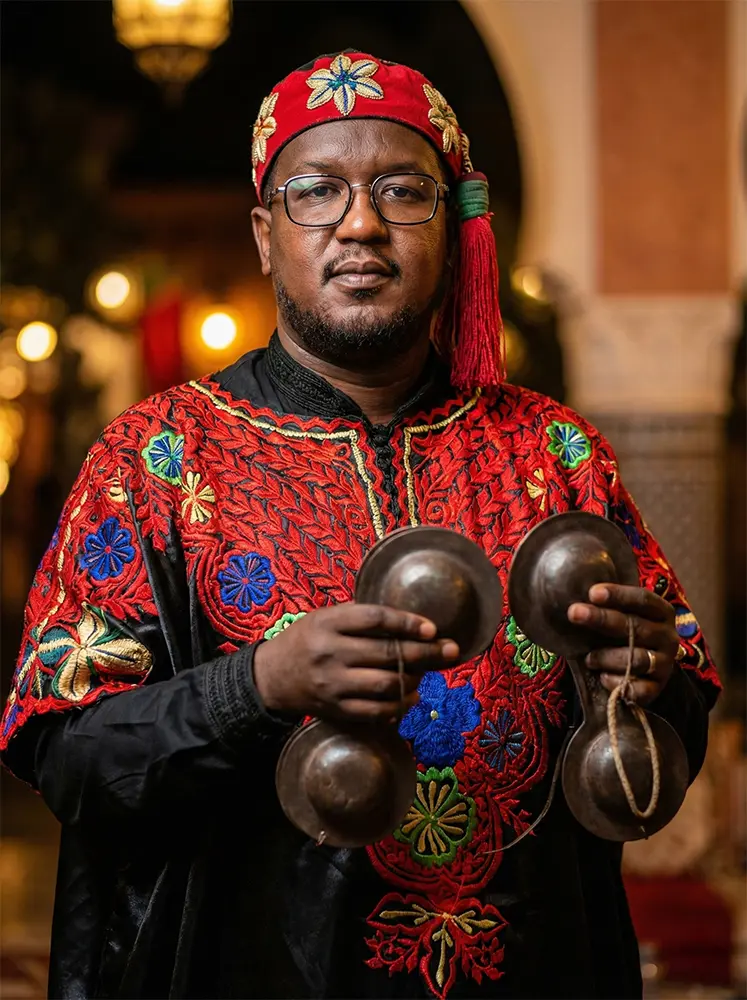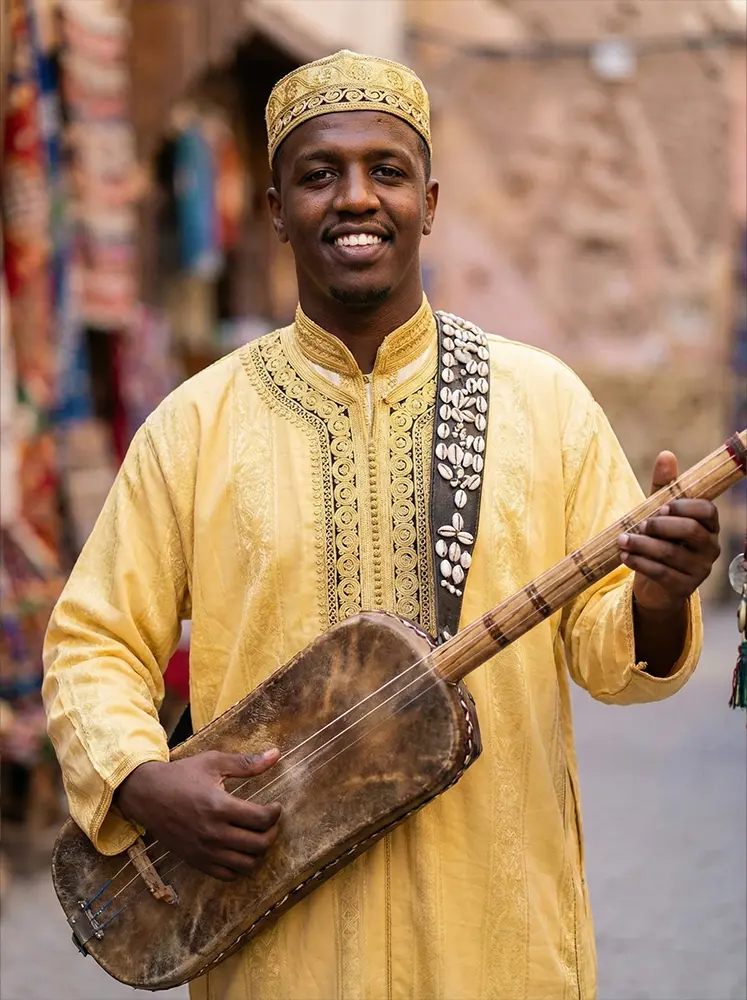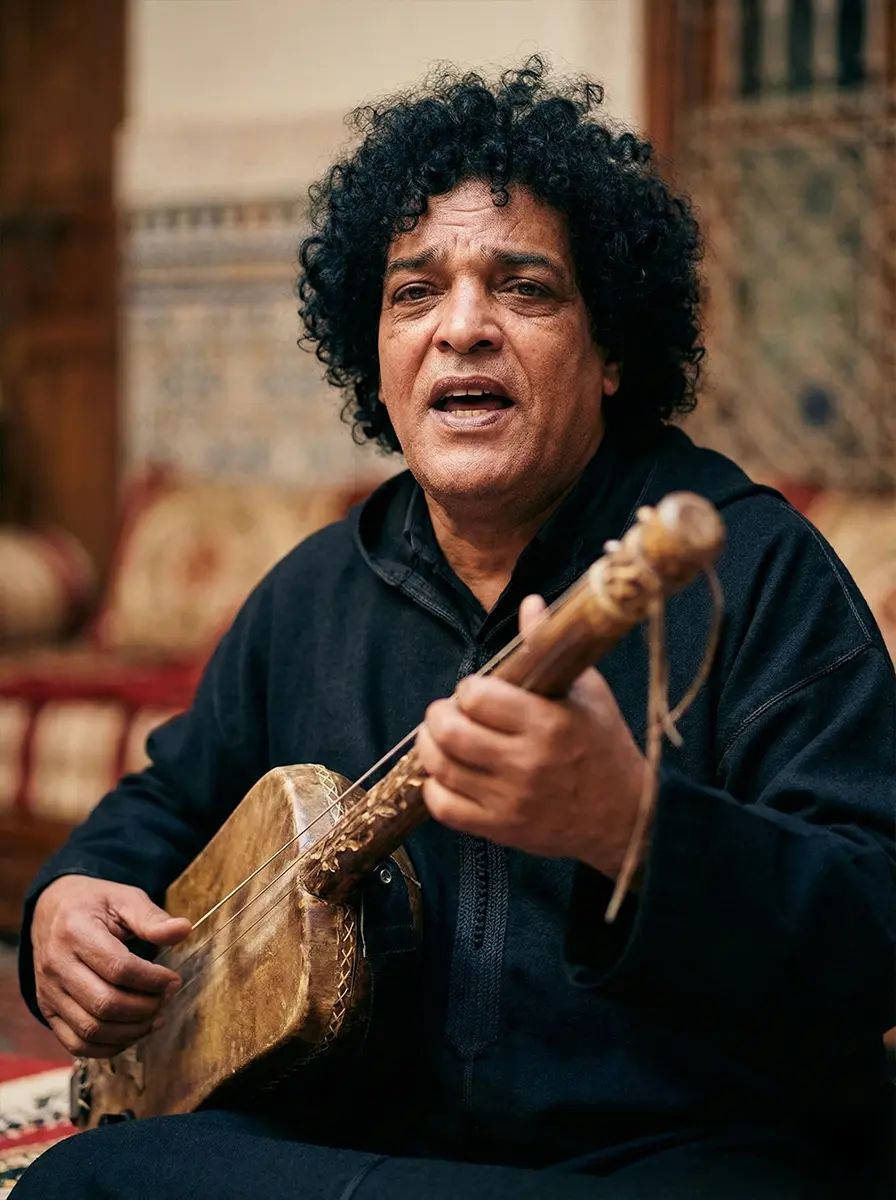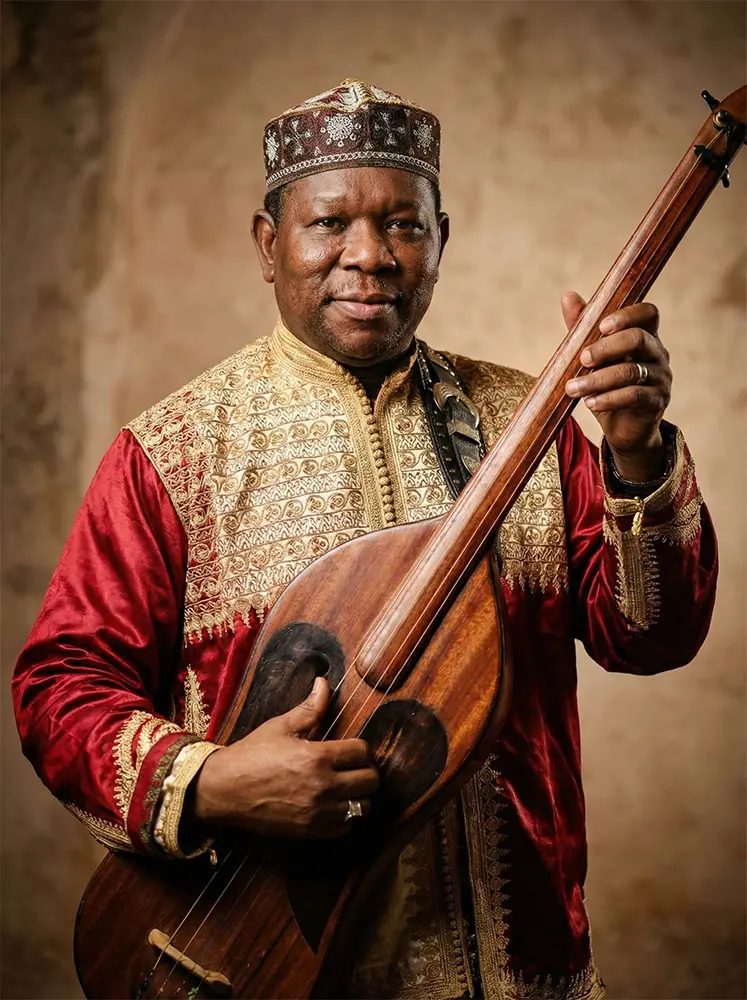
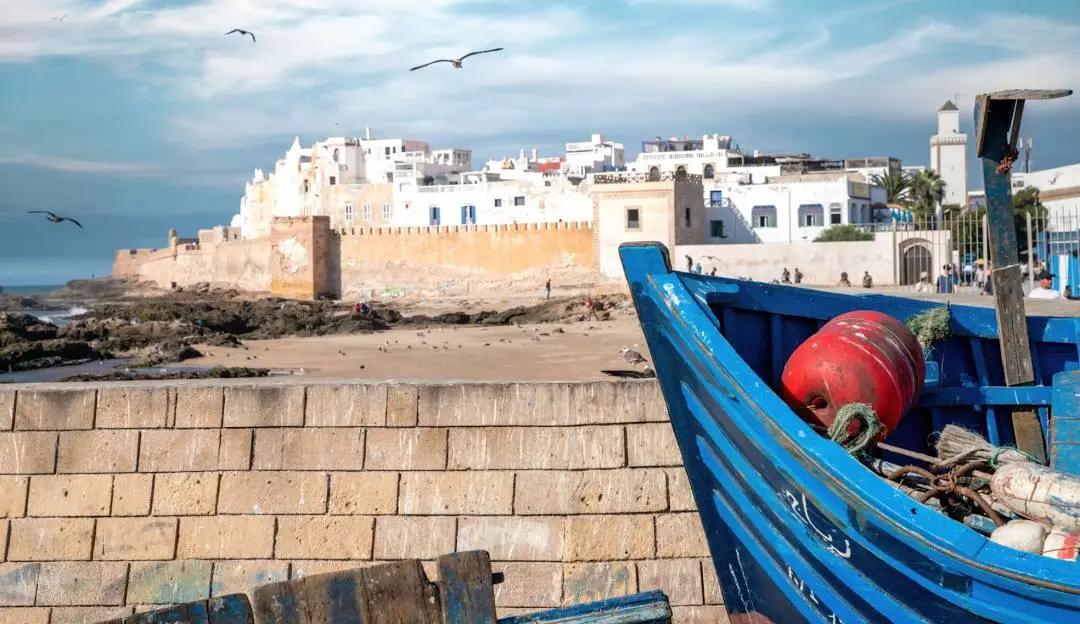
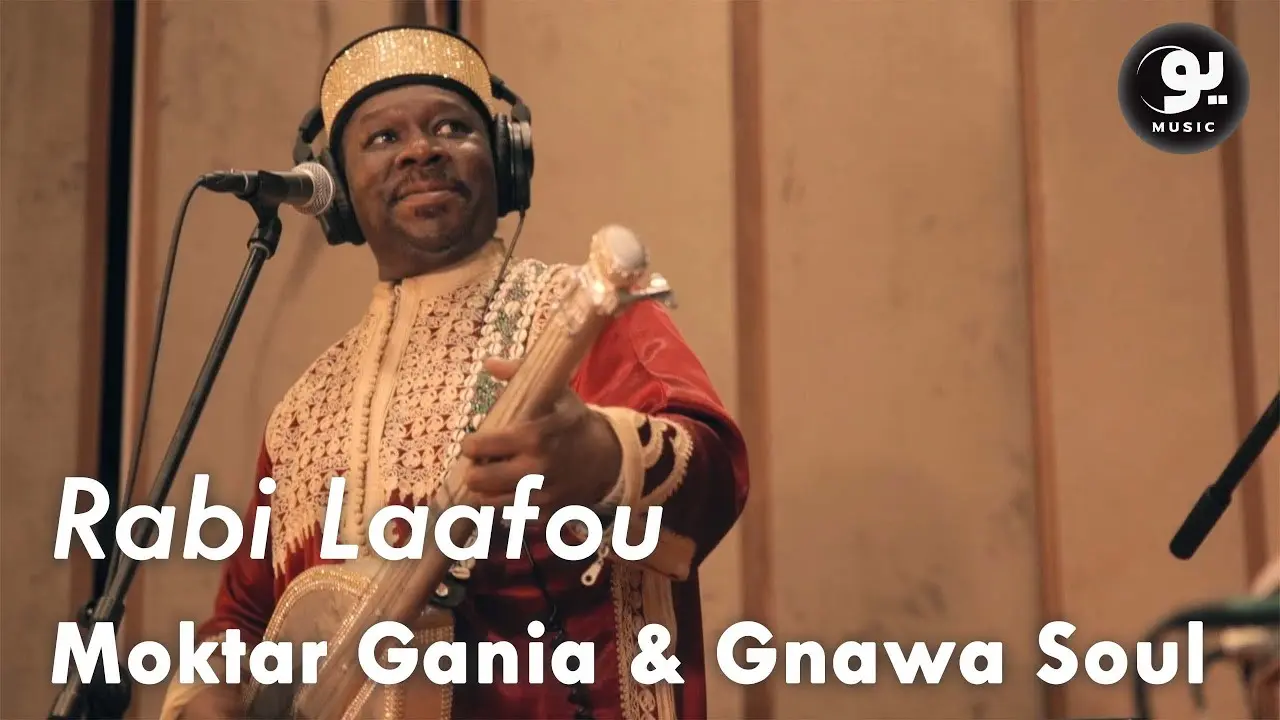
In the alleys of Essaouira — that white Atlantic fortress the Portuguese called Mogador — the name Gania is not just a family name. It is a cultural institution, a seal of spiritual quality, a dynasty that has given Moroccan Gnawa some of its deepest roots. And today, at the center of that dynasty stands Maâlem Mokhtar Gania: the current torch-bearer, the living guardian of the Marsaoui Gnawa tradition, and the man who accepted the hardest challenge — to preserve rigorous Asal (authenticity) while opening the Gnawa zawiya to jazz, blues, and world music through his bold project Gnawa Soul.
He is not merely Mahmoud’s brother. He built his own kingdom — with a fierce guembri, a voice as deep as the Atlantic, and a restless, open spirit.
Roots: Born Inside the Living Zawiya
To understand Mokhtar Gania, one must first understand Maâlem Boubker Gania — the founding patriarch. Historical documents and family oral testimony trace the Gania lineage to West Africa, specifically Mali and Guinea (hence the family name). The ancestors were not ordinary domestic slaves — according to family history and ethnomusicological records, they belonged to the legendary Abid al-Bukhari, the Black Guard founded by Sultan Moulay Ismail in the 17th century. This military origin granted the family a particular social authority: they are not inheritors of Gnawa — they are among its founders.
Mokhtar was born into this legacy in Essaouira. His father Boubker Gania (1927–2000) was a living archive of Tagnawit — the sacred Gnawa knowledge system. His mother Aicha Qebral was a renowned moqaddema (ritual overseer) and highly respected clairvoyant healer. In this household, music was not entertainment. It was medicine — a sacred language for communicating with ancestors and with the Mlouk (spirits).
Mokhtar grew up absorbing this dual inheritance: from his father, the musical authority of the guembri and the canonical Gnawa repertoire; from his mother, the deep understanding of the invisible world — when to raise the rhythm to escalate jedba (trance), when to lower it to calm a restless spirit. This double formation is what allows him, decades later, to make a European festival audience enter a state of collective trance with nothing but a guembri, qraqeb, and his penetrating gaze.
In the Shadow of the Emperor: Learning from Mahmoud
For many years, Mokhtar lived and worked as the essential right hand of his legendary older brother, Maâlem Mahmoud Gania — nicknamed “The Emperor” after his historic 1994 collaboration The Trance of Seven Colors with saxophonist Pharoah Sanders.
This was not a marginal role. In the Gnawa world, a supporting Maâlem is not a sideman — he is a deep listener, accumulating knowledge. While Mahmoud built Gnawa’s global reputation, Mokhtar was watching: how his brother tamed the Mlouk, how he handled Western musicians, how he commanded a stage. During this long apprenticeship, Mokhtar developed his own distinct voice — deeper and more resonant than Mahmoud’s, and a playing style characterized by a fierce Sonic Assault: heavy, direct attacks on the guembri strings that leave no room for ambiguity.
When Mahmoud passed away on August 2, 2015, after a long battle with prostate cancer, the question echoing through Essaouira was inevitable: Who carries the flame?
Despite the presence of Mahmoud’s son Houssam, experience, charisma, and family lineage all pointed to Mokhtar. He accepted the historical mandate: to transition from “the supporting brother” to the family’s Patriarch. He proved his worth not by imitation, but by adding his own signature to the legacy.
The Marsaoui Sound: Architecture of the Soul
Mokhtar is today the foremost guardian of the Marsaoui style — the distinctive Essaouira school of Gnawa, shaped by centuries of trade between the Sahara and the Atlantic. Understanding his art means understanding how this school differs from other regional traditions.
| Element | Marsaoui — Mokhtar Gania | Marrakchi Style |
|---|---|---|
| Rhythm | Heavy, circular, slow crescendo — space for deep trance | Dynamic from the outset, faster |
| Guembri Role | Absolute leader — the qraqeb follow, never dominate | More balanced between guembri and percussion |
| Spiritual Focus | Healing, trance depth, connection to ancestors | Energy, physical release, spectacle |
| Influences | Sub-Saharan + Andalusian + Sufi + Malhoune | Sub-Saharan + Haouz Berber + Dakka |
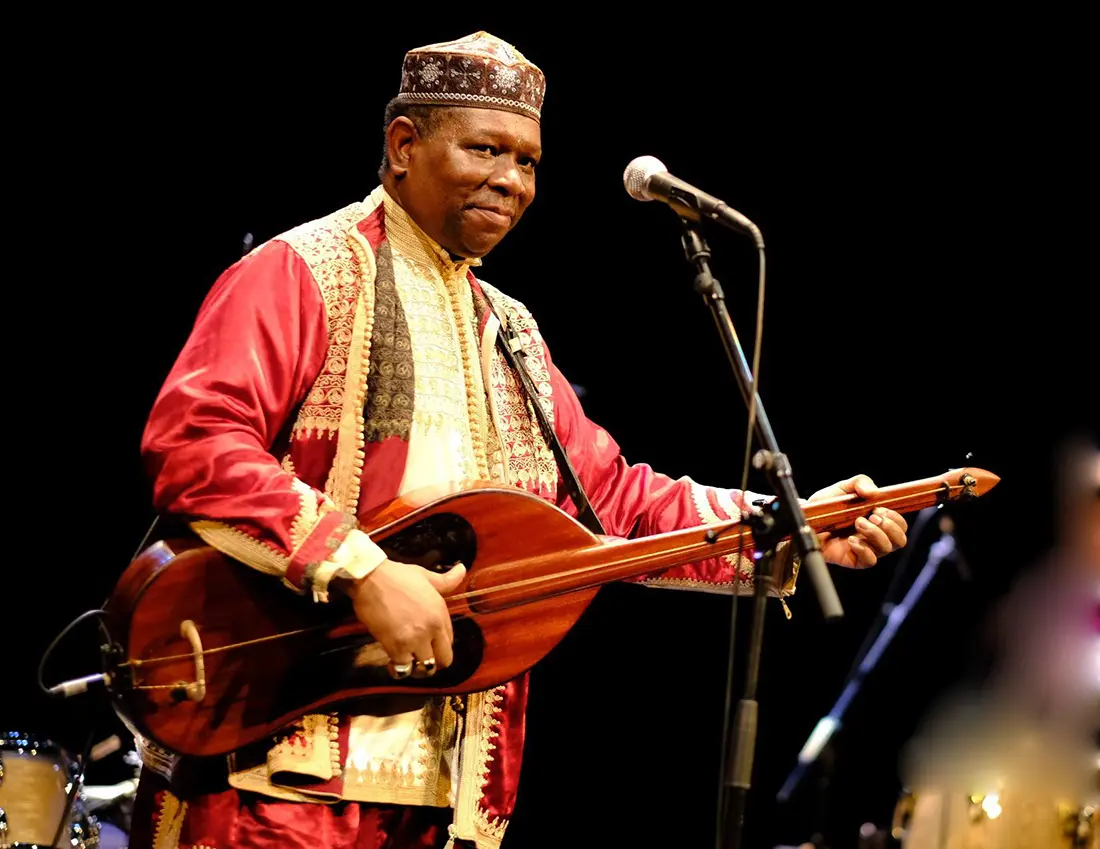
Mokhtar’s guembri technique is distinguished by what critics have called a “Sonic Assault” — he strikes the strings with force that generates a commanding, floor-shaking sound. He also introduced innovations including an electric guembri for large stages, allowing the instrument to hold its own against brass sections and amplified Western instruments. Simultaneously, he uses his thumb not just to pluck strings but to strike the guembri’s skin-covered body — making the instrument function as both lute and percussion in one.
His voice is the second pillar of his art: deeper and more resonant than his brother Mahmoud’s, giving him immediate authority when intoning the devotional chants that call upon the Mlouk — transitioning seamlessly from hushed Sufi whisper in the opening Ftouh to a commanding roar in the Red or Black sequences.
Gnawa Soul: The 21st-Century Manifesto
In May 2022, Mokhtar released Gnawa Soul — his most ambitious creative statement. This was not another folklore album. It was an artistic manifesto redefining Gnawa for the 21st century.
Koyou Koyou
Opens with a strict traditional Gnawa rhythm, then French saxophonist Géraldine Laurent enters — not playing jazz, but mimicking the Gnawa cry. A stunning dialogue between West African lute and brass instrument.
Lalla Moulati
Mokhtar shares vocals with Israeli-Moroccan singer Neta Elkayam — a deliberate resurrection of Essaouira's historic Jewish-Muslim coexistence in the shared lila ritual, demolishing political and religious borders through music.
Alla a Soudane
"People of Sudan" — a cry back to the roots. The arrangement emphasizes the family's Bambara (Malian) origins, with rhythms echoing West African music, confirming Gnawa as the bridge between Maghreb and sub-Saharan Africa.
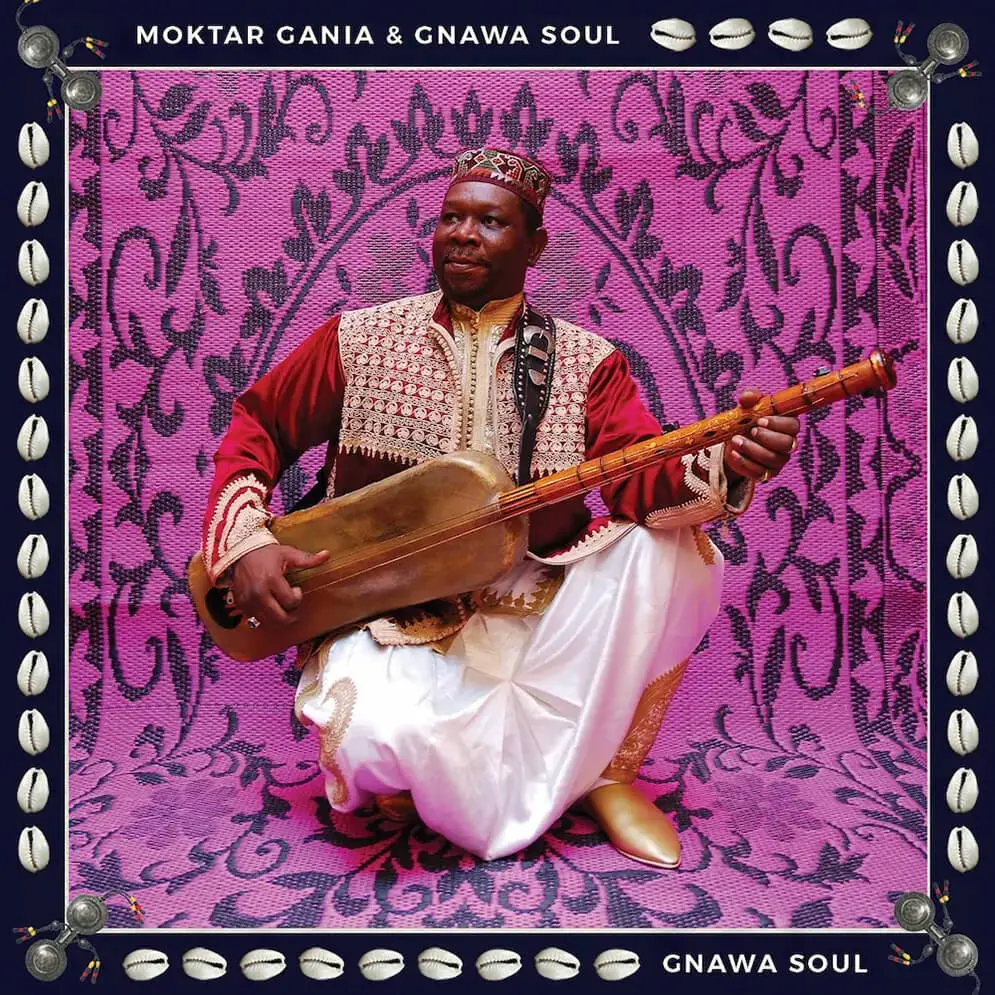
The album was recorded at Planet Essaouira Studio (preserving the city’s spiritual atmosphere), mixed in the United States by Chris Shaw (4 Grammy Awards), and mastered at Metropolis Studios in London — giving it sonic quality matching global rock and jazz releases. The cover was photographed by Hassan Hajjaj (“The Arab Andy Warhol”), presenting Mokhtar in vibrant Gnawa garb within a bold Pop Art frame: ancient art, absolutely contemporary.
The album’s worldwide premiere in North America was at the prestigious Nuits d’Afrique Festival in Montreal (July 2022) — a celebration of Pan-African connections across the Atlantic.
The Silent Revolution: Teaching the Guembri to His Daughter
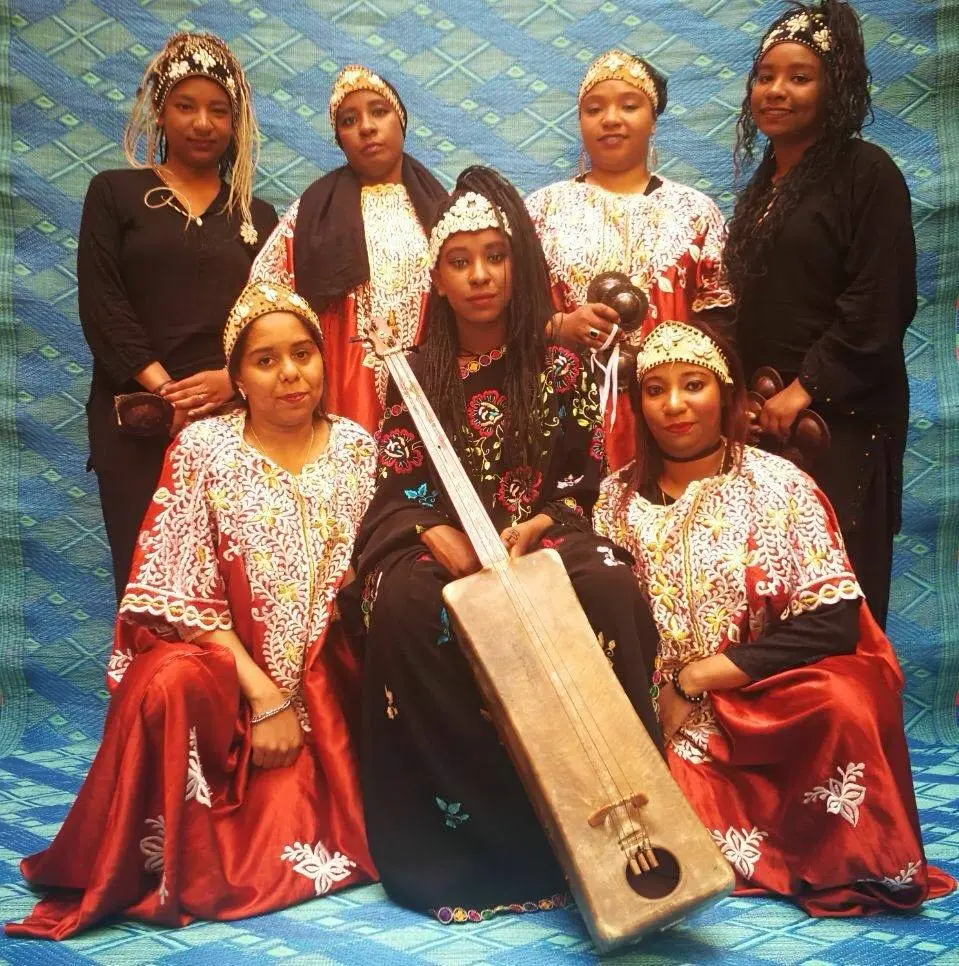
Mokhtar Gania made a decision that broke centuries of tradition: he taught his daughter Sharifa Gania to play the guembri.
Historically, the Gnawa world was strictly gendered — men played and sang, women managed rituals and incense as moqaddemas. Touching the guembri was unthinkable for women; it was considered a sacred male instrument of spiritual authority.
Mokhtar faced an existential dilemma: he had four daughters and no sons. Under traditional custom, this meant the end of his lineage as a Maâlem. Instead of surrendering to this convention, he made a revolutionary choice.
He taught Sharifa the secrets of the guembri — and presented her to the world with pride. When Sharifa appeared on stage at the Essaouira Gnaoua Festival playing an electric guembri crafted by her father, critics described her playing as “of great promise” and praised Mokhtar’s “progressive approach” as having saved the family’s lineage from discontinuity — while opening the door to an entirely new generation of female Gnawa practitioners. His sister Zaida Gania also plays a central role as moqaddema, sometimes contributing vocals to his recordings, making the Mokhtar Gania ensemble a genuinely family affair, integrating both genders in ritual and musical performance.
The International Ambassador
Mokhtar inherited his brother Mahmoud’s international passport — and stamped it with new destinations.
Roskilde 2003 — Denmark
Shared the stage with experimental music giants Bill Laswell and Jah Wobble. A test of Gnawa's resilience against electronic music and heavy bass — Mokhtar's rhythm prevailed.
Randy Weston — Encounter
American jazz pianist Randy Weston, who loved Morocco deeply, found in the Gania family the African roots of jazz rhythm. A perfect illustration of Gnawa's thesis: "Gnawa is James Brown" — it is the origin of Funk and Soul.
UNESCO 2019
When UNESCO inscribed Gnawa music as Intangible Cultural Heritage of Humanity, Mokhtar was among the most prominent voices celebrating the achievement — the symbolic triumph of ancestors who arrived in chains.
On Stage and in the Zawiya: Two Worlds Without Contradiction
Mokhtar maintains a strict personal distinction between performance and ritual — two realities that must never be confused.
On concert stages (Gnawa Soul, festivals), he practices what he calls “relieving distress through music” — allowing dance, applause, and open emotional engagement. But in the private lila — conducted in homes and zawiyas — Mokhtar becomes a healer. Here, the full ceremonial order of the seven Mlouk is followed without negotiation: from the opening White (Ftouh/Abd al-Qadir) through Black (Mimoun), Blue (Sidi Moussa), Red (Hammouda), Green, Yellow, and Purple (Al-‘Ayalat). Thanks to his upbringing with his mother the moqaddema, he possesses precise clinical knowledge of how to guide majdoubeen (those who enter trance states) safely through the ceremony.
This dual capacity — healer and artist, traditionalist and innovator — is Mokhtar Gania’s defining paradox, and his greatest strength.
Essential Listening
Gnawa Soul
2022 • Planet Essaouira / Metropolis London
The definitive artistic statement — Grammy-quality production, global collaborations, and the Marsaoui tradition at its most expansive.
Gnawa Sufi Trance
Traditional Recordings
The Marsaoui tradition in its purest ceremonial form — featuring sister Zaida Gania and the full ritual architecture of the lila.
Roskilde Live 2003
Festival Recording — Denmark
The early international breakthrough — Mokhtar stepping from Mahmoud's shadow to assert the Marsaoui sound on a world stage.
"Our goal is to bring this music to the world."
— Maâlem Mokhtar Gania, to Agence France-Presse, on the UNESCO recognition of Gnawa (2019)
Further Exploration
- 📖 Maâlem Boubker Gania — The patriarch father who built the dynasty
- 🌟 Maâlem Mahmoud Gania — The internationally celebrated older brother
- 🎸 Maâlem Abdellah Gania — The rebel brother — “The Marley of Gnawa”
- 🌱 Maâlem Houssam Gania — The third generation — Mahmoud’s son
- 🏛️ The Essaouira School of Gnawa — The city and tradition Mokhtar embodies
- 🎭 The Gnawa Lila Ceremony Explained — The healing ritual at the heart of his practice
- 🌀 The Seven Mlouk: Colors, Spirits & Meanings — The spiritual cosmology he navigates
- 🌍 All Gnawa Artists — Discover the full lineage of masters