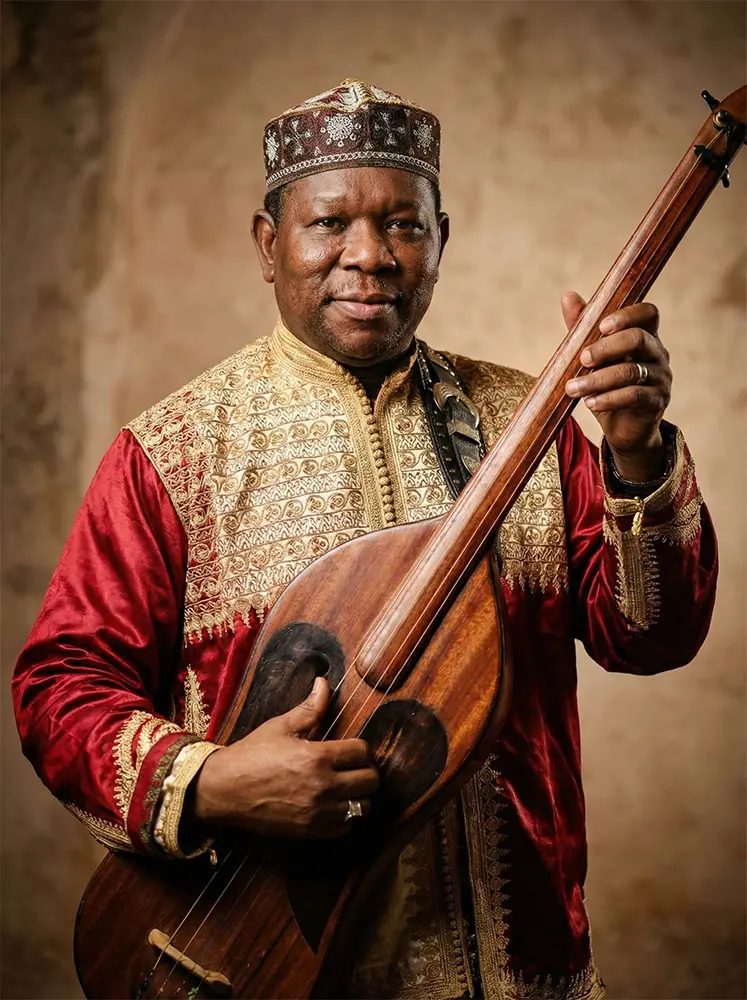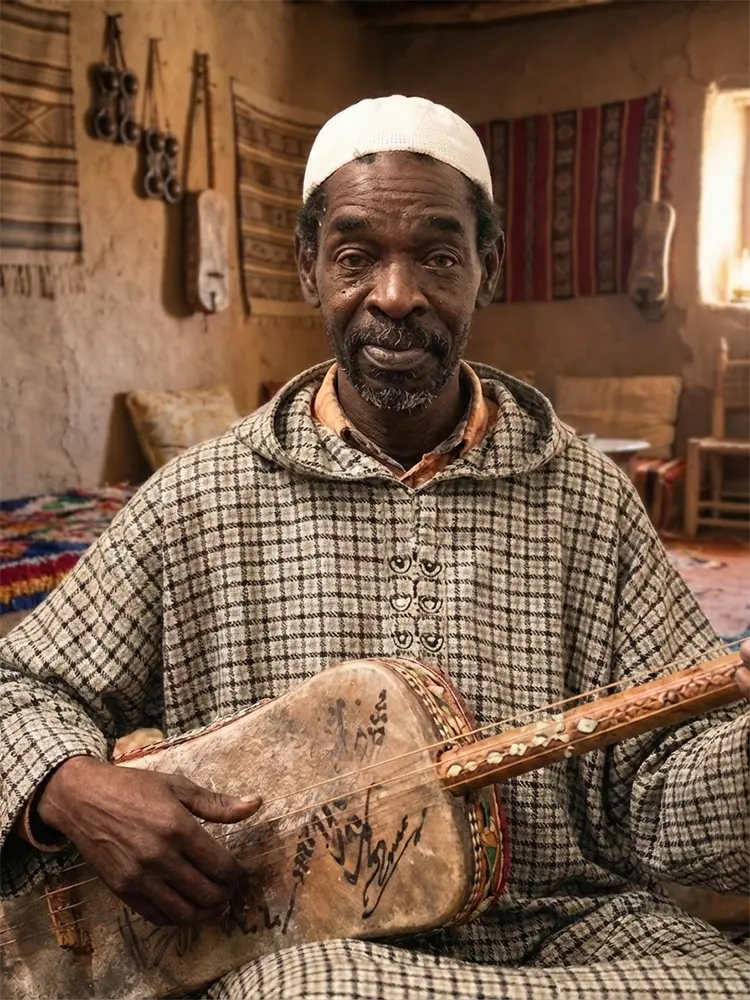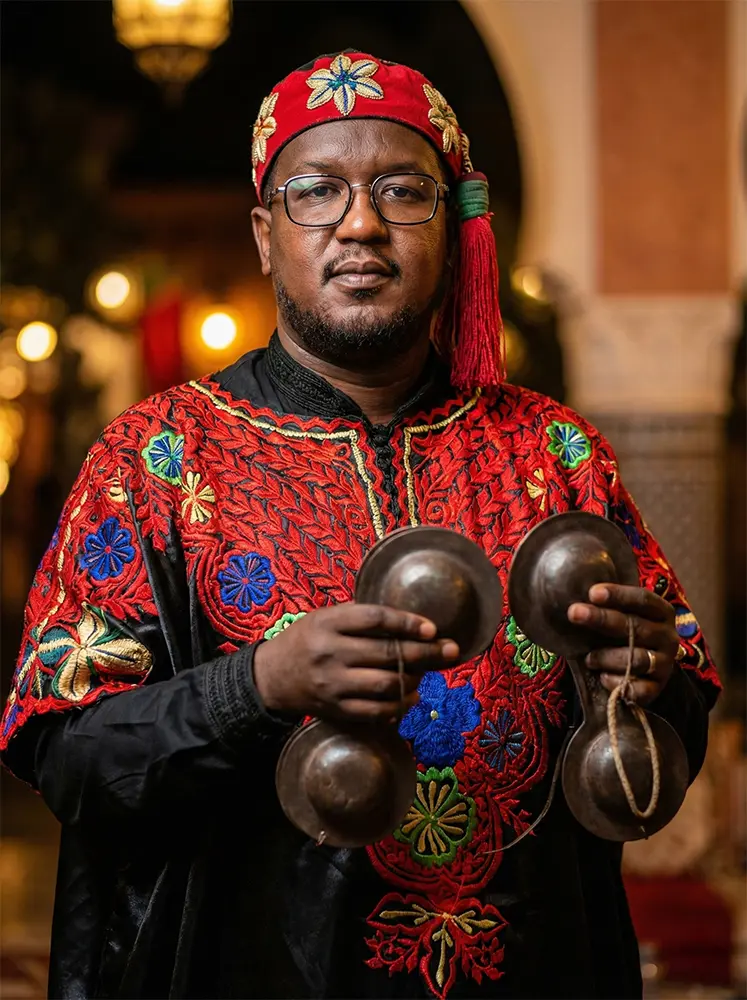
In the living lineage of Gnawa music’s most revered dynasty, every generation carries the weight of ancestors — but Hamza Guinea carries it with his bare hands, beating the sacred tbel (drums) and crashing the iron qraqeb with a force that echoes across the medina of Essaouira. The eldest son of the legendary Maâlem Mahmoud Gania and grandson of the founding patriarch Maâlem Boubker Gania and the great moqaddema Aicha Qebral, Hamza chose a path less celebrated but equally essential: he became the rhythmic guardian — the heartbeat of the ensemble, the keeper of the El Aada procession, and the living proof that Gnawa depends as much on the thundering energy of drums and qraqeb as it does on the strings of the guembri.
While the spotlight often falls on the Maâlem and his guembri, Hamza reminds the world that Gnawa’s trance power is built on collective rhythmic force — and that force has a name.
Roots: Born Inside the Sacred House
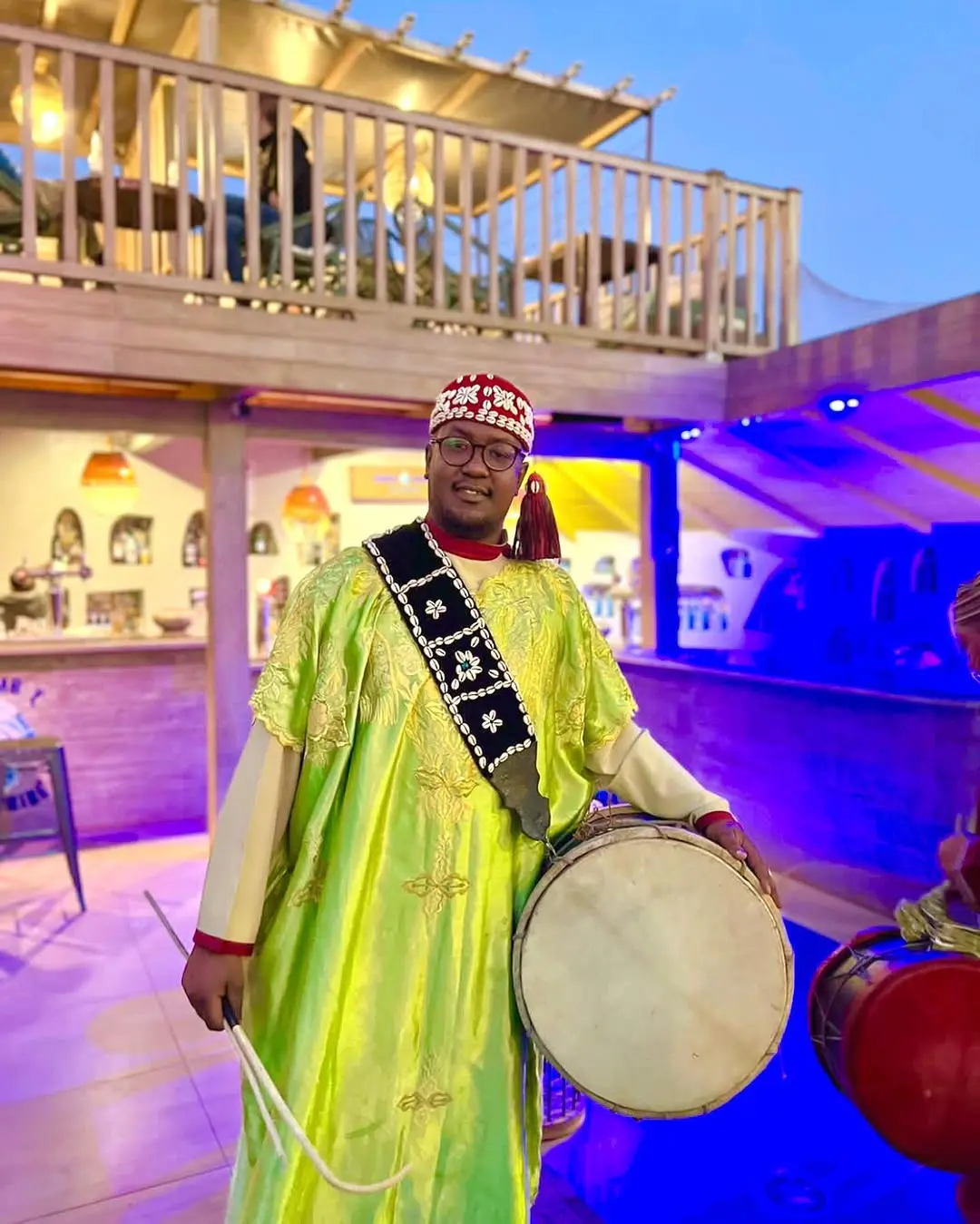
Hamza was born in Essaouira into what is arguably the greatest Gnawa zawiya (spiritual lodge) in Morocco — the Guinea family home. This was not merely a house; it was a living school that breathed music day and night, where the scent of bakhour (ritual incense) mingled with the deep vibrations of the guembri and the metallic clatter of qraqeb from dawn to dusk.
Growing up as the eldest son of Mahmoud Guinea — the artist the world called “The Emperor of Gnawa” — Hamza absorbed the art not as a career choice but as what he calls “a matter of blood and destiny” (masalat dam wa qadar). For him, entering Gnawa was never a personal decision; it was an inherited responsibility passed down through generations, from his grandfather Boubker, through his grandmother the moqaddema Aicha Qebral, into his very bones.
From his earliest childhood, Hamza was immersed in the details of Gnawa rhythms and rituals — not taught in formal lessons, but absorbed organically through daily life within the family compound, where every evening could become a ceremony, and every ceremony was a masterclass.
The Calling: Leading a Lila at Thirteen
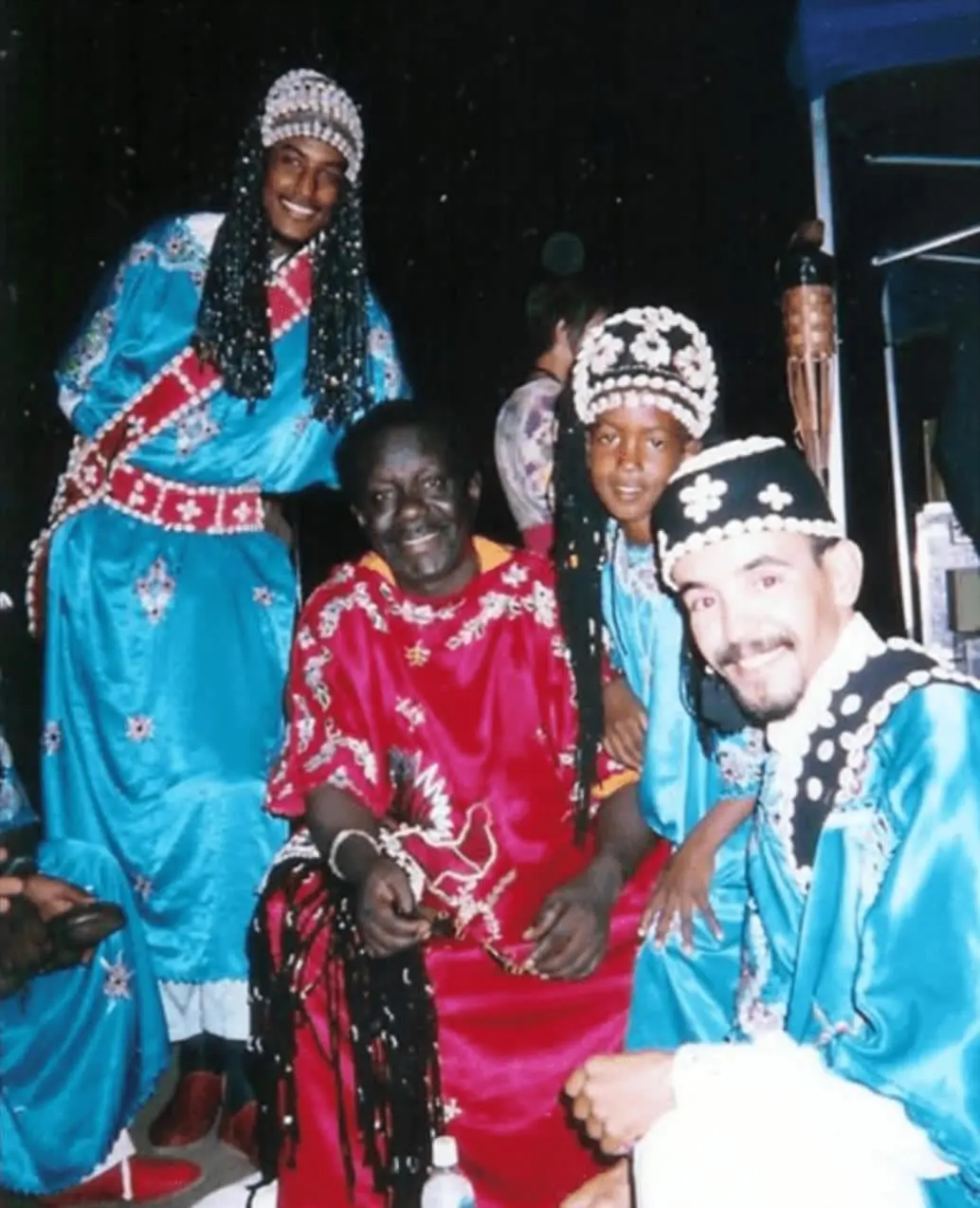
Every Gnawa practitioner has a moment of spiritual transformation — the instant where knowledge becomes calling. For Hamza, this moment arrived devastatingly early: he led his first complete lila (night ceremony) at the age of thirteen.
This was no simple performance. A lila is a sacred all-night healing ritual — a spiritual marathon that runs from evening prayers until dawn, navigating the complex order of the seven Mlouk (spirit families), managing participants who enter jedba (trance states), and coordinating drums, qraqeb, and voice in perfect synchrony. To lead one at thirteen, bearing the impossibly heavy name “Guinea,” was a trial by fire.
In that night, Hamza transcended the fear of beginnings and became an active force within the system of spiritual healing and communication — understanding viscerally that Tagnawit is not mere performance, but a crossing of souls toward serenity.
The Unique Style: Guardian of El Aada
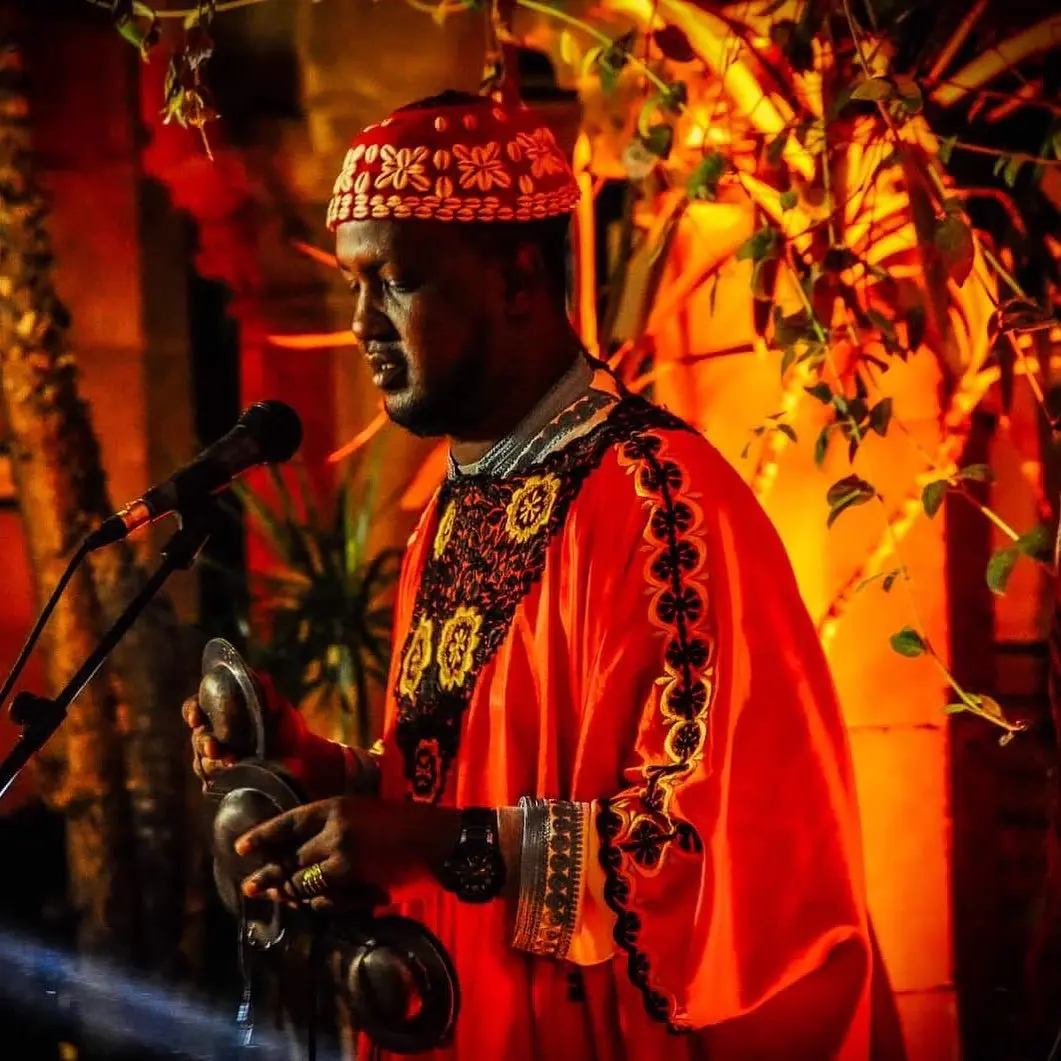
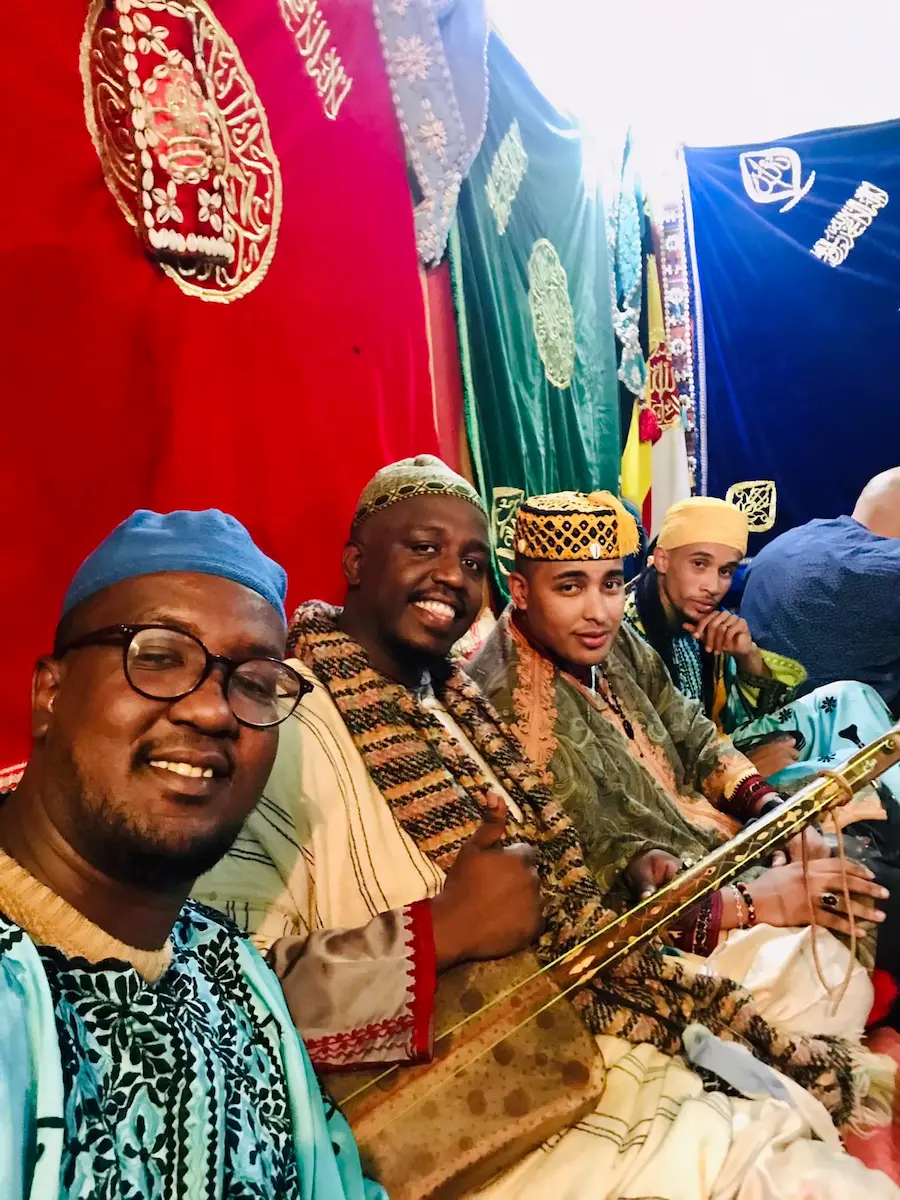
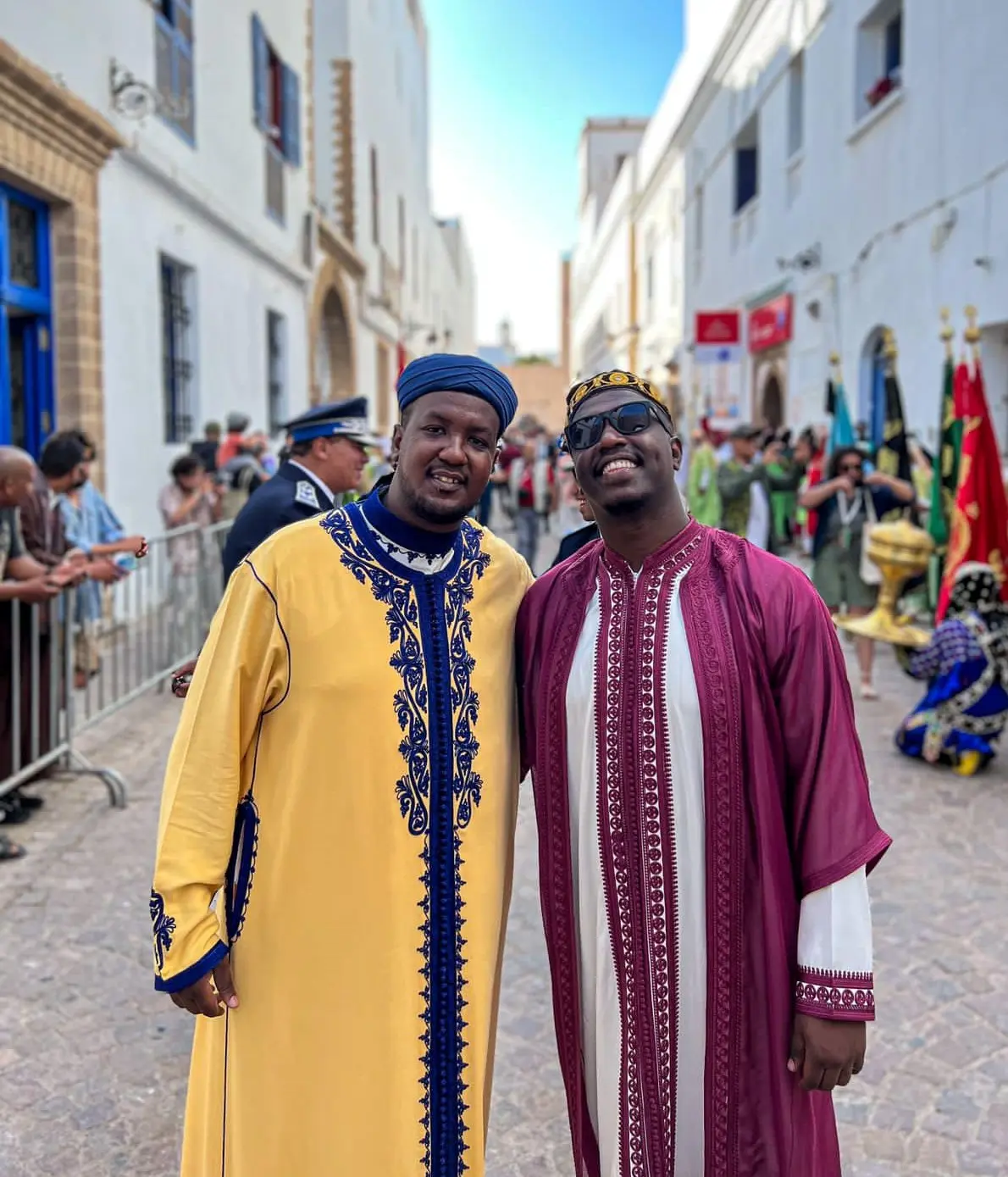
While many contemporary Gnawa artists focus exclusively on the guembri, Hamza Guinea’s artistic signature lies in his deep commitment to the El Aada — the traditional street procession that precedes the night ceremony. This processional ritual, featuring thunderous drumming, synchronized qraqeb, and powerful chanting, represents the founding soul of Gnawa music — the raw, physical, African essence before the more meditative guembri-centered lila begins.
| Element | Hamza's Role | Significance |
|---|---|---|
| Tbel (Drums) | Lead drummer — sets the foundational pulse | The tbel is the African heartbeat of Gnawa, pre-dating the guembri tradition |
| Qraqeb | Master of iron castanets — drives trance rhythms | The metallic pulse that induces jedba through relentless, circular repetition |
| Dance | Performs traditional Gnawa acrobatic dance | Physical embodiment of spiritual energy during processions |
| Chorus (Kouyou) | Leads call-and-response vocal patterns | The collective voice that amplifies the Maâlem's spiritual invocations |
Hamza’s style emphasizes collective energy above individual virtuosity. He believes that the discipline of qraqeb timing is what preserves the ritual’s efficacy and authenticity — a view inherited directly from his grandmother Aicha Qebral, who insisted that every detail of the ceremony serve the healing purpose.
Career: The Essential Pillar
While Hamza works as a civil servant in Essaouira by day, his artistic life is anything but secondary. He has been a foundational presence at the highest levels of Gnawa performance:
Boiler Room Marrakech
Accompanied his father Mahmoud Guinea in the historic Boiler Room session in Marrakech — one of the most-watched Gnawa performances online, bringing the tradition to a global electronic music audience.
Marhaba with James Holden
Played qraqeb and provided chorus vocals on the landmark collaboration between Mahmoud Guinea and British electronic producers James Holden & Floating Points — a groundbreaking Gnawa-electronic fusion.
Supporting Houssam Guinea
Serves as the rhythmic backbone of his younger brother Houssam Guinea's ensemble — securing the qraqeb and tbel foundations across festivals and international tours.
Hamza also performed alongside Houssam in the Three Live Takes session with James Holden, where the track Youmala showcased a stunning synchronization between Hamza’s intense rhythms and the synthesizer landscapes — creating a deep trance state that proved Gnawa’s ancient pulse can dialogue with 21st-century electronic music.
Philosophy: Purity Above Spectacle
Despite participating in world-class fusion projects, Hamza Guinea’s personal philosophy leans strongly toward preservation and authenticity. He stands as a careful guardian against what he sees as excessive dilution of the Gnawa essence:
"Tagnawit is not a personal choice — it is a matter of blood and destiny. It is a spiritual bridge that must be preserved in its purity and its rules, as our ancestors taught us, out of respect for the spirits that dwell within it."
— Hamza Guinea
While he respects the fusion work that brought his family international acclaim, Hamza believes that the core rules — the ritual order, the ceremonial protocols, the discipline of qraqeb timing — must never be compromised. Modern influences, he warns, risk diluting the spiritual qawa’id (foundations) and stripping the art of its healing essence. His role, as he sees it, is not to innovate but to protect: to ensure that the Gnawa his father Mahmoud taught them remains intact for the next generation.
This makes Hamza the conservative anchor of the Guinea ensemble — the brother who guards the rear while Houssam carries the guembri forward into new territories.
Essential Listening
Marhaba
Mahmoud Guinea × James Holden & Floating Points
Hamza's qraqeb and chorus vocals drive the rhythmic foundation of this historic Gnawa-electronic collaboration.
Youmala — Three Live Takes
Houssam Guinea × James Holden
Hamza's rhythms synchronize with synthesizer textures in a stunning demonstration of deep trance across centuries of musical tradition.
El Aada Processions
Essaouira Gnaoua Festival • Live Recordings
Hamza leading the traditional street procession — the raw African essence of the Marsaoui school in its most physical and communal form.
Further Exploration
- 🌟 Maâlem Mahmoud Guinea — His legendary father — “The Emperor of Gnawa”
- 🌱 Maâlem Houssam Guinea — His younger brother — the guembri heir
- 📖 Maâlem Boubker Gania — The founding grandfather of the dynasty
- 🕯️ Moqaddema Aicha Qebral — His grandmother — the spiritual mother of Gnawa
- 🔥 Maâlem Mokhtar Gania — His uncle — current patriarch of the Gania lineage
- 🎸 Maâlem Abdellah Gania — His uncle — “The Marley of Gnawa”
- 🏛️ The Essaouira School of Gnawa — The tradition he protects
- 🎭 The Gnawa Lila Ceremony — The ritual at the heart of his practice
- 🌀 The Seven Mlouk — The spiritual cosmology he serves