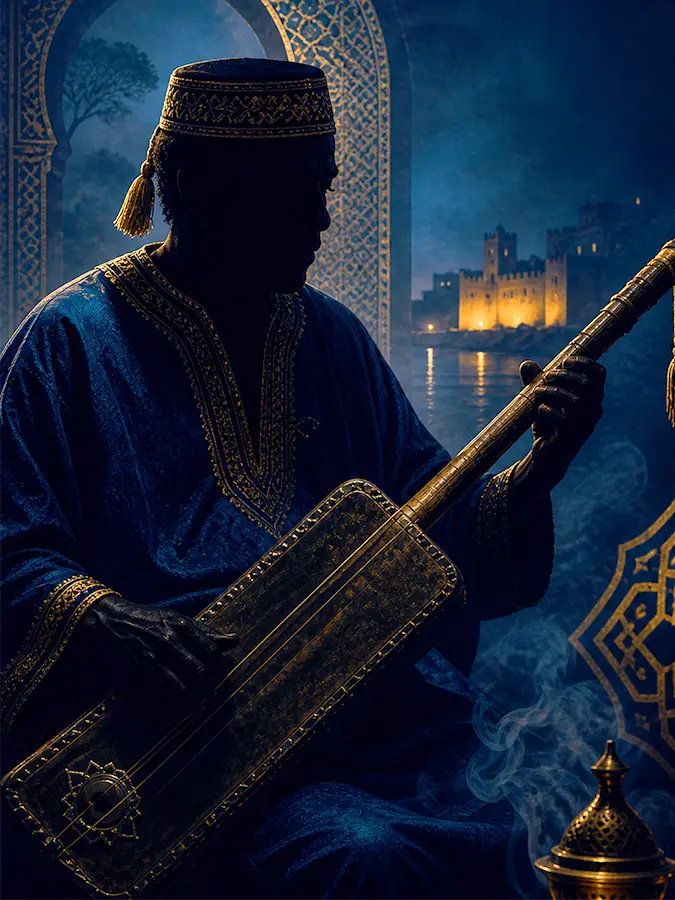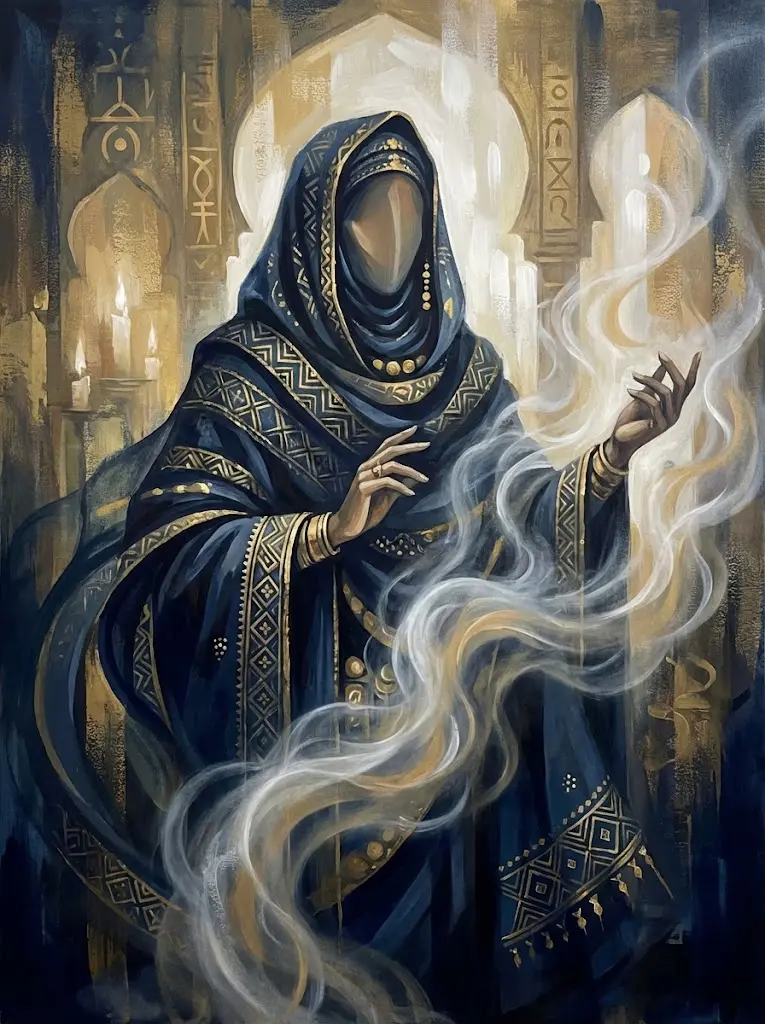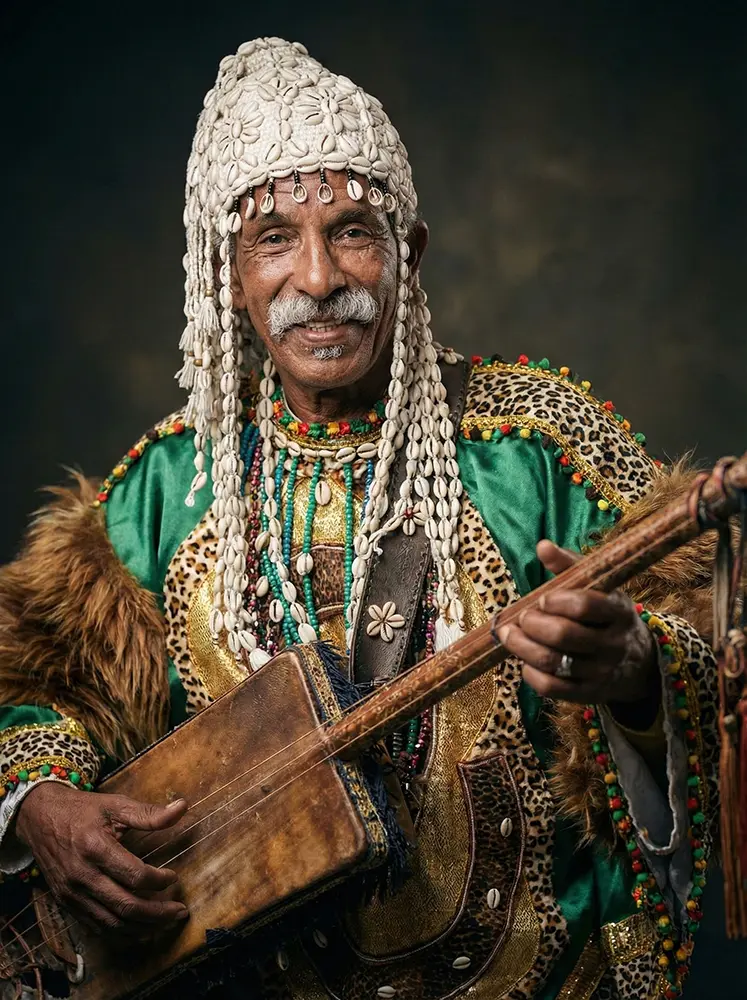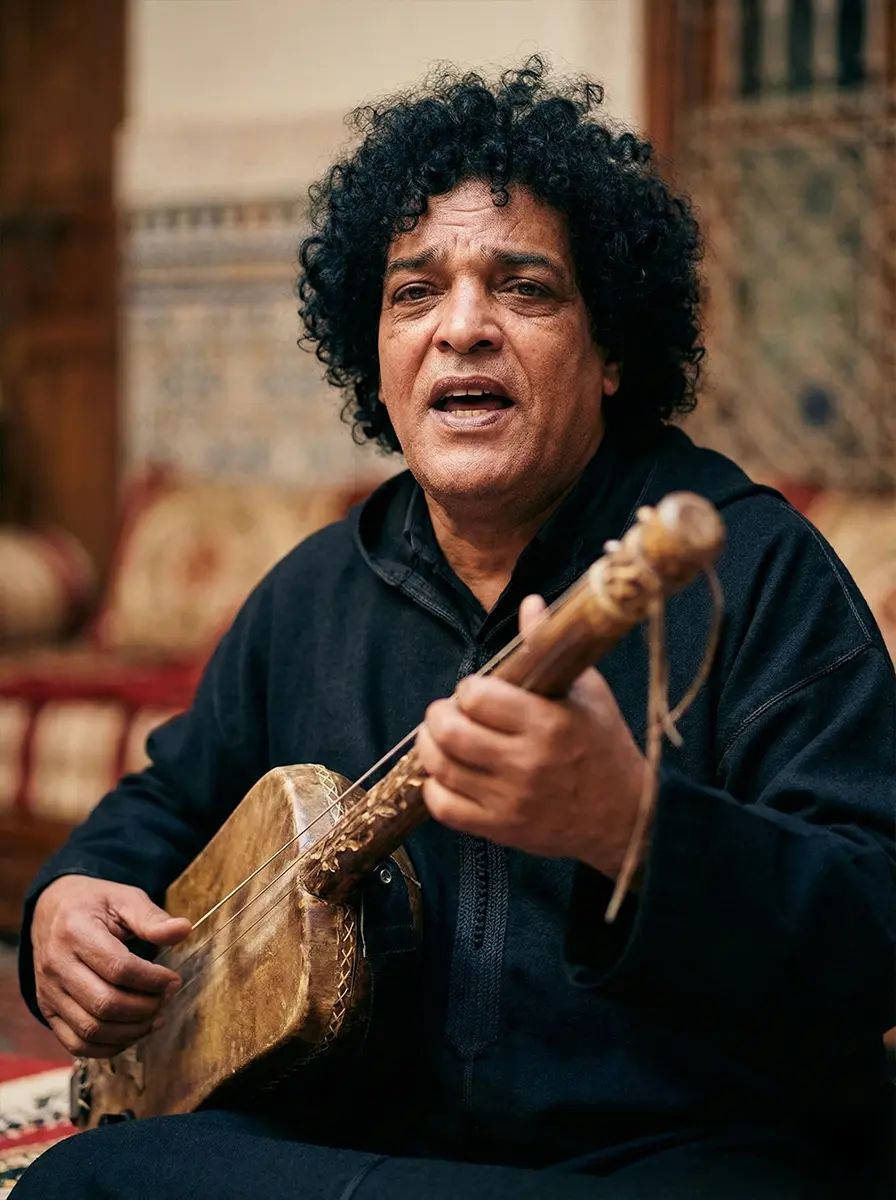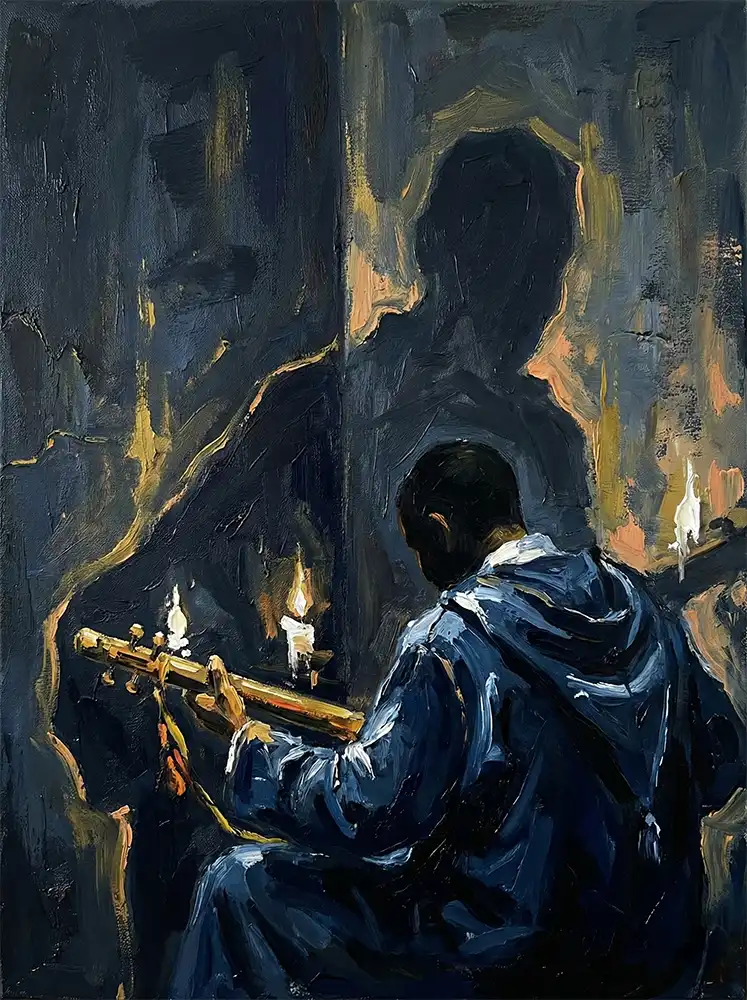
In the medina of Essaouira — that salt-kissed fortress city where the Atlantic wind never rests — one name stands above all others as the original foundation stone of modern Gnawa: Maâlem Boubker Gania (1927–2000). Known to all who knew him simply as “Ba Boubker” (Father Boubker), he was not merely a musician. He was a patriarch, a healer, and a living archive of Tagnawit — the sacred knowledge system that gives Gnawa its soul.
He was the root from which the entire Gania dynasty grew.
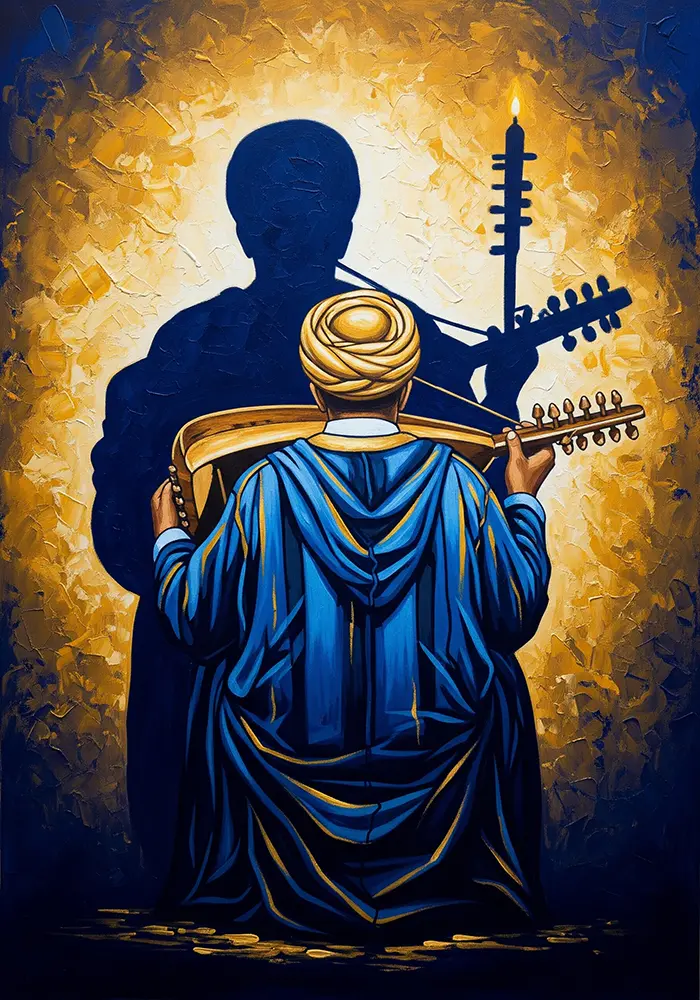
The City That Made Him: Essaouira
Boubker Gania was born in Essaouira, the city the Portuguese called Mogador. He would spend his entire life within its walls — and yet, through his music, he traveled to sub-Saharan Africa every night he played.
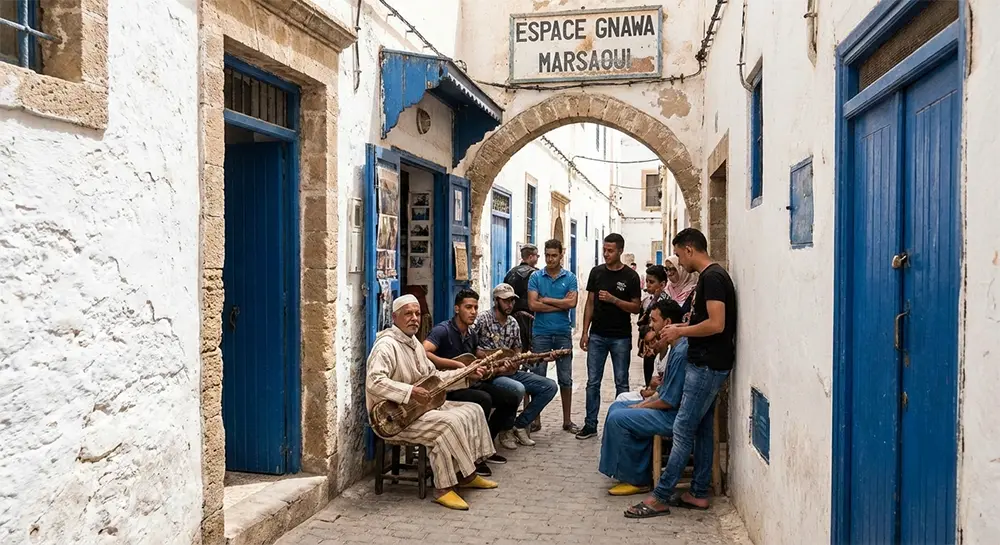
Essaouira is not an ordinary city. Its cobblestone streets have absorbed centuries of trade between the Sahara and the Atlantic. Its air carries the memory of caravans and of the enslaved men and women who passed through its port — many of whom brought with them the rhythms that became Gnawa music. The Essaouira school of Gnawa — called the Marsaoui style — developed here in these narrow alleys, shaped by the city’s unique confluence of Amazigh, Arab, Jewish, and sub-Saharan African cultures.
Boubker grew up immersed in this world. By adolescence he was already absorbing Tagnawit — the secrets of the craft — not from textbooks but from the living ritual of the lila, the all-night healing ceremony that remains the highest expression of Gnawa spirituality.
To learn more about the regional tradition that shaped him, read our deep dive into the Gnawa schools of Morocco.
The Sacred Partnership: Ba Boubker & Aicha Qebral
No story of Boubker Gania can be complete without naming his lifelong partner: Aicha Qebral, a renowned moqaddema and clairvoyant healer of exceptional power.
In Gnawa tradition, the roles of the Maâlem and the Moqaddema are not separate — they are two halves of a single ritual force. The Maâlem commands the music: the guembri, the sacred three-stringed bass lute, and the choral chants that summon the Mlouk (the spirits). The Moqaddema commands the unseen: the ritual colors, the bakhour (sacred incense), the sacrificial offerings, and the complex choreography of the healing trance.
Together, they created a complete ritual universe. Their home in Essaouira was, in essence, a zawiya — an open school where their children absorbed the full spectrum of Tagnawit as naturally as breathing. For a deeper understanding of these complementary roles, explore our article on the Maâlem and Moqaddema in Gnawa tradition.
Roots: From the Sahel to the Atlantic Shore
The family name Gania (also romanized as Guinea) carries a geographical testament. Family oral history and ethnomusicological sources trace the Gania lineage to the Sahel and West Africa — specifically present-day Mali and Guinea — the homelands of the Bambara, Mandinka, and Hausa peoples.
What makes the Gania heritage particularly significant is a detail the family has always been careful to preserve: their ancestors were not domestic slaves, but soldiers — part of the legendary Abid al-Bukhari, the Black Guard founded by Sultan Moulay Ismail in the 17th century. These soldiers lived in qasbas with their families, maintained their musical traditions, and occupied a defined social rank. It was from these military encampments that the foundations of Gnawa music as a coherent tradition crystallized.
This ancestry gives the Gania family a particular authority — they are not inheritors of Gnawa, they are among Gnawa’s founders.
The family traces its settlement to the region around Guelmim (the Gateway to the Sahara), with gradual migration northward to Essaouira — a journey that echoes the broader historical movements documented in our article on Gnawa slavery and world music history.
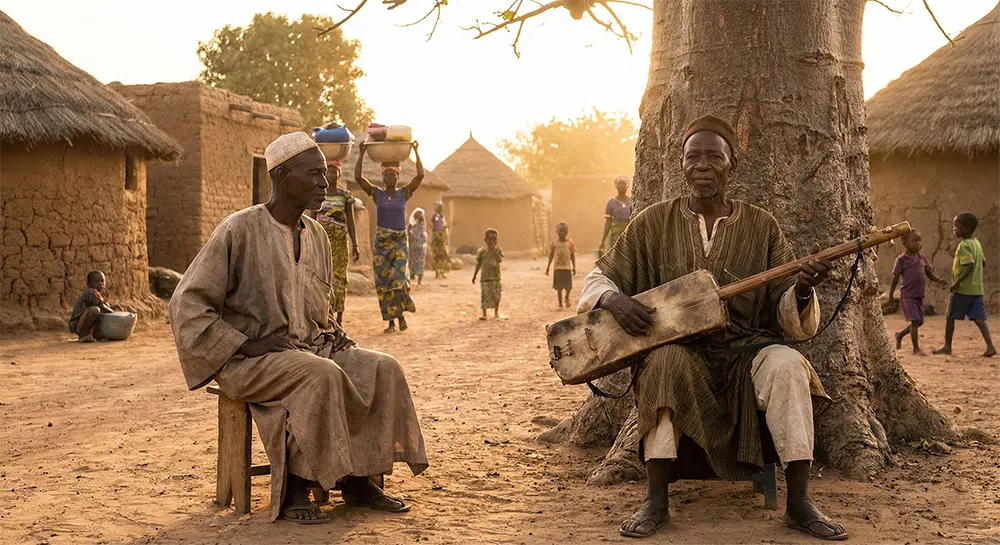
The Marsaoui Sound: Architecture of the Soul
Boubker Gania was the foremost practitioner and custodian of the Marsaoui style — the distinctive Essaouira school of Gnawa. Understanding his art means understanding how this school differs from the better-known Marrakchi tradition.
| Element | Marsaoui (Boubker Gania) | Marrakchi Style |
|---|---|---|
| Guembri Character | Melodic, long phrases, lyrical | Percussive, strong bass accents |
| Tempo Approach | Slow and gradual escalation | Dynamic from the outset |
| Soul Focus | Healing, trance depth, spirituality | Energy, physical release, spectacle |
| Influences | Sub-Saharan + Andalusian + Malhoune | Sub-Saharan + Haouz Berber + Dakka |
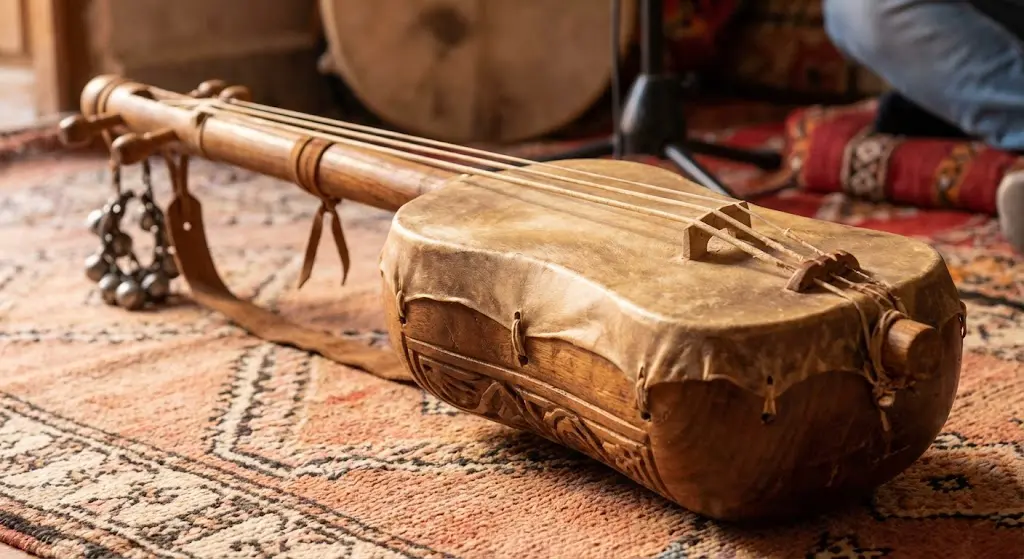
The guembri in Boubker’s hands was not a rhythm section — it was a melodic narrator. His signature technique combined:
- The Drop-Thumb Drone: A continuous low thrum on the short upper string, creating an unbroken harmonic foundation
- Melodic Picking: Fingers weaving melodic phrases on the lower strings simultaneously
- Body Percussion: The palm striking the guembri’s skin-covered face as a drum — making the instrument function as both lute and percussion in one
The qraqeb — the iron castanets held by the chorus — locked into his guembri like gears, never overriding it. In the Marsaoui tradition, the guembri leads; the qraqeb follows. Read more about the qraqeb’s unique role in our article: Qraqeb — The Rhythm of Iron.
For a comprehensive look at how the guembri sits at the sacred center of Gnawa practice, see our dedicated article: The Guembri — Sacred Heart of Gnawa.
Commanding the Night: A Healer’s Philosophy
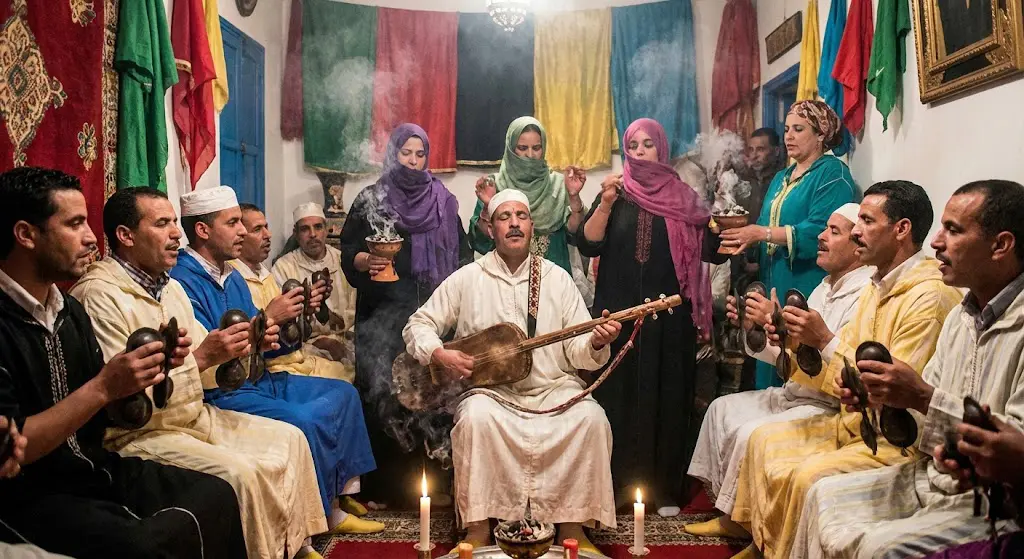
Boubker Gania led lilas — the all-night healing ceremonies of Gnawa — for more than four decades. The lila is Gnawa’s most sacred ritual: a complex ceremonial night during which the Maâlem channels the seven Mlouk (spirit families), each associated with a specific color, incense, melody, and ritual object.
The Seven Mlouk
Boubker navigated the seven spirit families with precision — each Mluk requiring its own color, incense, and rhythmic mode.
The Sacred Night
His lilas were not performances — they were healing sessions. Discover the full ritual structure in our guide to the Gnawa Lila ceremony.
Sacred Incense
The bakhour — sacred incense — was inseparable from his lila. Each spirit family requires its own specific smoke to arrive.
What distinguished Boubker was his unflinching commitment to Authenticity (Asala). He never adapted or simplified the ritual structure for outside audiences. The lila was medicine — and medicine cannot be diluted. Even at the first Essaouira Gnaoua Festival in 1998, when other groups were already experimenting with fusion, Boubker presented a complete, traditional lila as it had always been performed.
When Jimi Hendrix Visited Ba Boubker
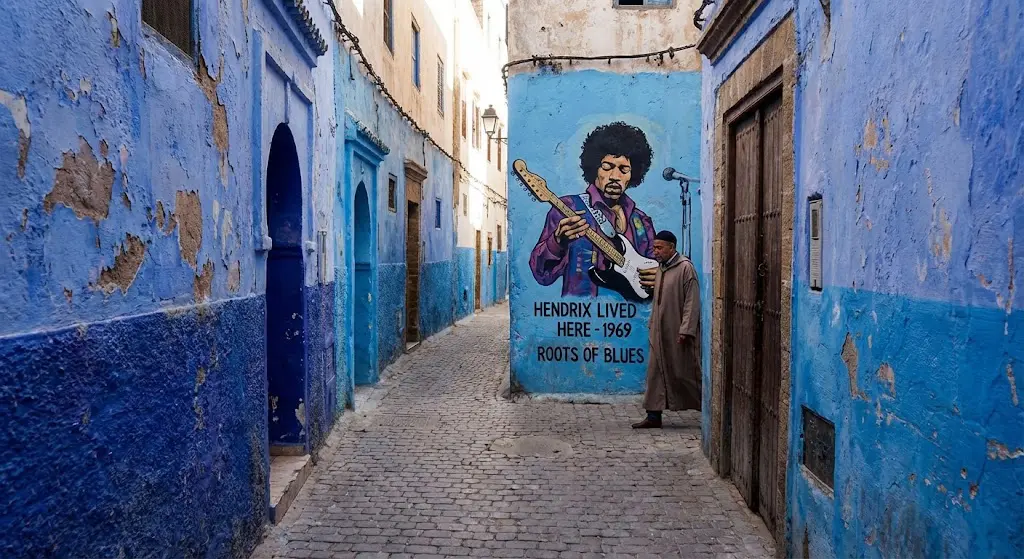
In the summer of 1969, the American rock legend Jimi Hendrix visited Essaouira — drawn by the city’s reputation as a place where ancient African music still flowed freely. Multiple local testimonies confirm that Hendrix spent time in the Gania family’s home, listening — perhaps playing alongside — the master.
The meeting was brief, but its symbolism is enormous. A man considered the greatest electric guitarist in rock history came to sit at the feet of a traditional Gnawa master. The encounter confirmed what scholars of African American music had long argued: that American Blues, then Rock and Roll, carry in their DNA the same African rhythmic memory preserved in Gnawa music. The guembri drone and the Blues guitar share a common ancestor.
This encounter would foreshadow his son Mahmoud Gania’s legendary collaborations with Western jazz and world music artists — notably the iconic album Trance of Seven Colors with saxophonist Pharoah Sanders in 1994, which introduced Gnawa to global audiences.
The Dynasty He Built: The Gania Family
Boubker Gania’s greatest creation was not any album or performance — it was the Gania musical dynasty, a family where every child grew up as a full practitioner of Tagnawit.
| Name | Role | Legacy |
|---|---|---|
| Mahmoud Gania (son) | Maâlem, Guembri, Singer | Globally celebrated, "Trance of Seven Colors," icon of Essaouira. Died 2015. |
| Mokhtar Gania (son) | Maâlem, Guembri | Current torchbearer. Founder of "Gnawa Soul" fusion project. |
| Abdellah Gania (son) | Maâlem, Guembri | "The Marley of Gnawa" — fusion rebel with deep traditional roots. Died 2013. |
| Zaida Gania (daughter) | Moqaddema | Leader of the all-female Haddarate group in Essaouira. Heir to Aicha Qebral's legacy. |
| Houssam Gania (grandson) | Maâlem, Guembri | The third generation. Rising star carrying the family's sacred flame today. |
For full profiles, explore:
- Maâlem Mahmoud Gania — the internationally celebrated son who brought Gnawa to global stages
- Maâlem Mokhtar Gania — the current torchbearer of the Gania tradition
- Maâlem Abdellah Gania — the rebel poet who fused Gnawa with reggae
- Maâlem Houssam Gania — the grandson who received the guembri in a legendary public ceremony
The 1998 Festival: A Patriarch’s Farewell to the World
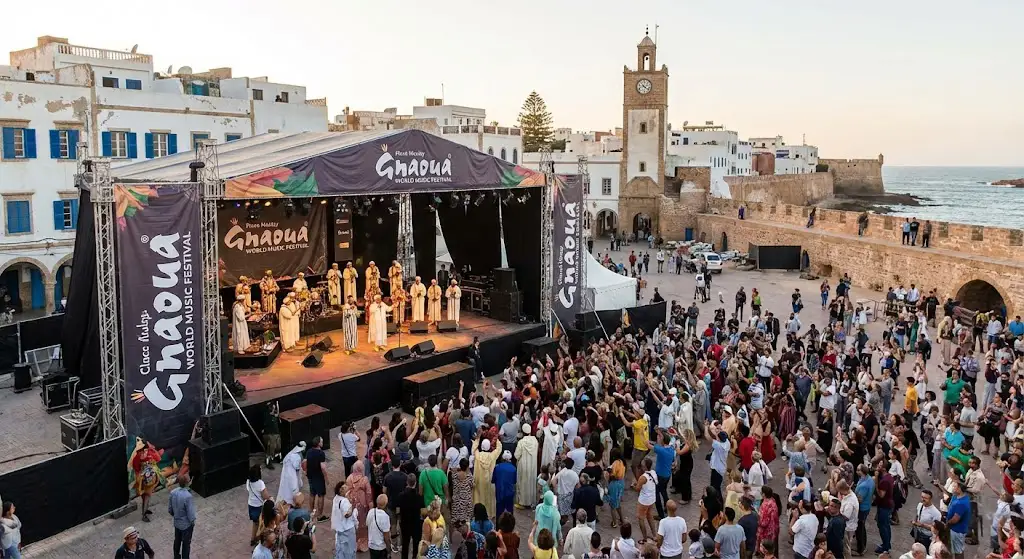
When the Gnaoua and World Music Festival launched in Essaouira in 1998, its organizers knew they needed to anchor it in absolute authenticity. Boubker Gania — then in his early seventies — was the obvious choice to open the ceremony.
While younger groups prepared fusion performances on the main stage, Boubker descended into the intimate space of Dar Souiri and led a complete, traditional lila. No concessions to spectacle. No shortcuts through the sacred ceremony. The performance lasted until dawn, as a lila must.
For an audience that included ethnomusicologists, world music enthusiasts, and Moroccan dignitaries, it was a revelation: this was not folk heritage on display, this was a living practice, as urgent and transformative as it had ever been. Boubker died two years later in 2000, having sealed his legacy in the city he loved.
To plan your own pilgrimage to Essaouira and the festival, read our complete guide to the Gnawa Festival.
Essential Listening
Boubker Gania left no major studio albums in his own name — recording technology came late to the traditional lila world. But his influence is audible through his sons:
The Trance of Seven Colors
1994 • Mahmoud Gania & Pharoah Sanders
To hear Boubker's guembri legacy in its most celebrated form. Mahmoud Gania's playing is the direct transmission of his father's technique.
Gnawa Soul
Mokhtar Gania — Contemporary
Mokhtar's latest project — Boubker's technique fused with jazz and soul, proving the tradition's infinite flexibility.
Live at the Gania Home
Field Recordings • Various
Rare ethnographic recordings from the Gania family home in Essaouira — the closest surviving document of Boubker's lila environment.
"Ba Boubker didn't teach us music. He taught us how to be Ganian — how to serve the spirits, how to respect the tradition, how to carry something bigger than yourself."
— Maâlem Mahmoud Gania, recalling his father
Further Exploration
Dive deeper into the world that shaped Ba Boubker and the legacy he built:
- 📖 The Origins of Gnawa Music — The full historical arc from sub-Saharan Africa to Morocco
- 🎵 The Guembri: Sacred Heart of Gnawa — The instrument Boubker mastered
- 🎭 The Gnawa Lila Ceremony Explained — The healing ritual he dedicated his life to
- 🌀 The Seven Mlouk: Colors, Spirits & Meanings — The spiritual cosmology of each lila
- 🎶 Qraqeb: The Rhythm of Iron — The iron castanets that answered his guembri
- 🏛️ The Essaouira School of Gnawa — The city and tradition he embodied
- 🌍 Regional Gnawa Styles Compared — Understanding what makes Marsaoui unique
- 👥 All Gnawa Artists — Discover the full lineage of masters
Maâlem Boubker Gania left this world in 2000. But in Essaouira, when the Atlantic wind rises at dusk and the first notes of a guembri drift across the medina, his presence is undeniable. He is the foundation. Everything built on Gnawa’s global fame rests, ultimately, on the large and calloused hands of Ba Boubker.