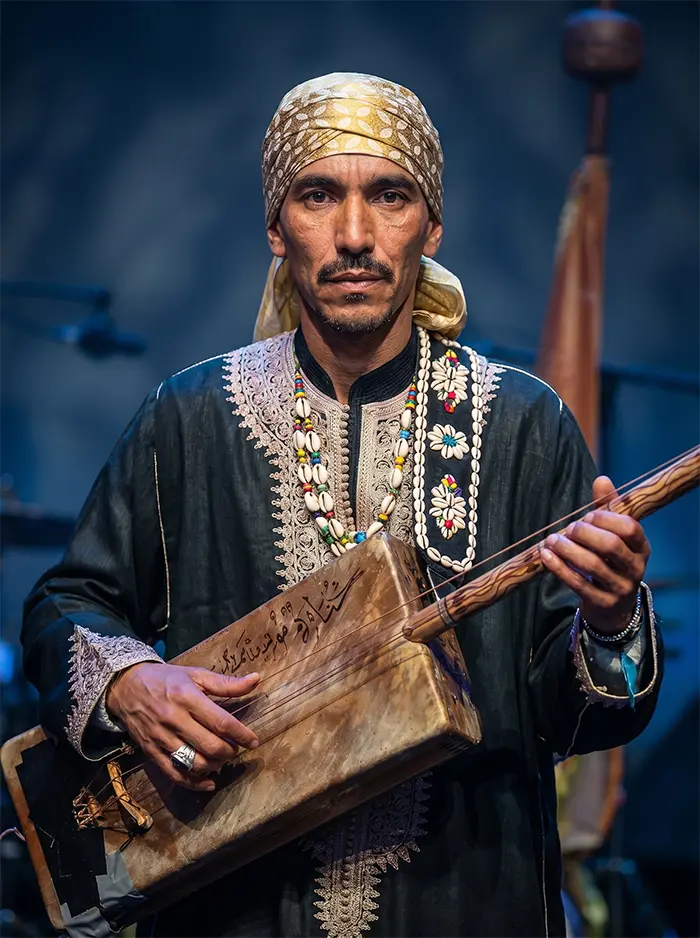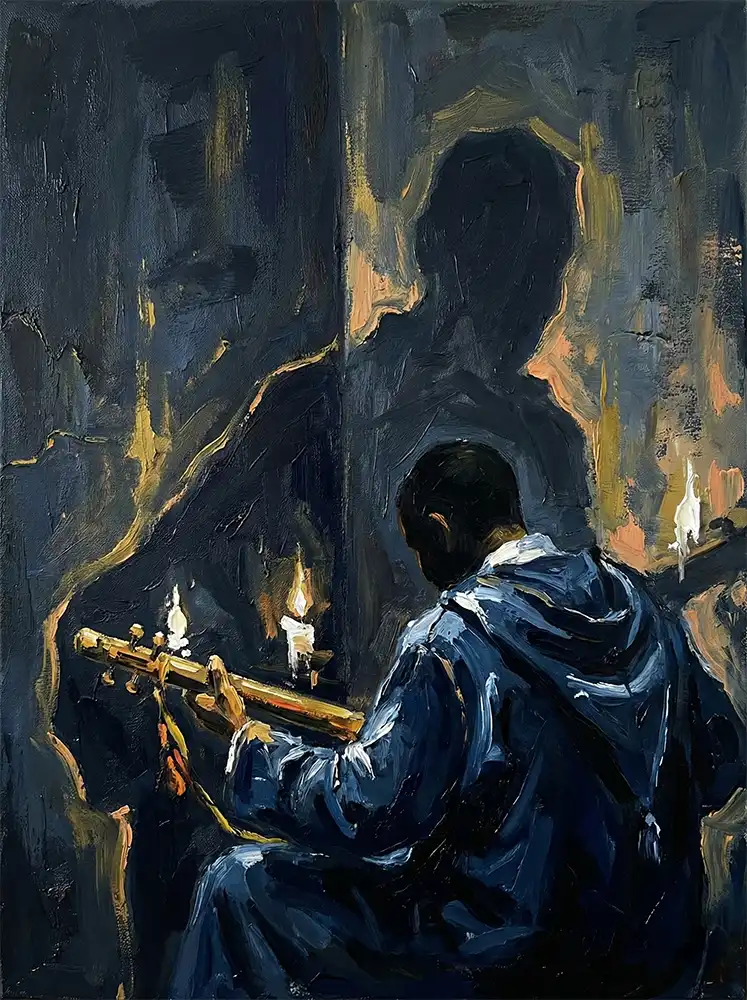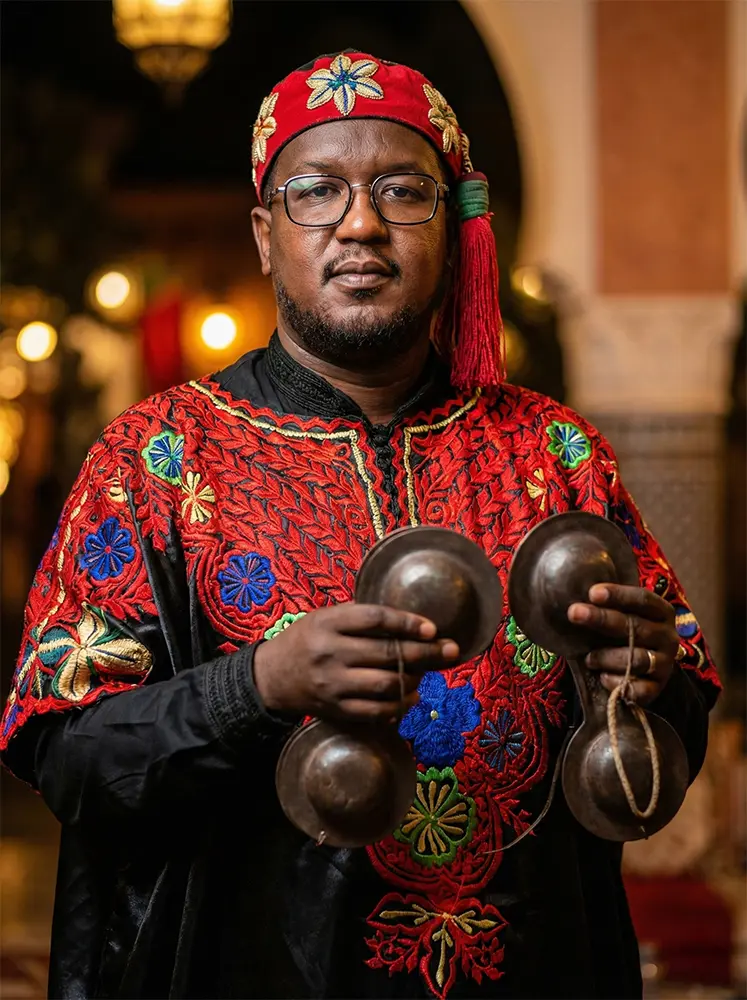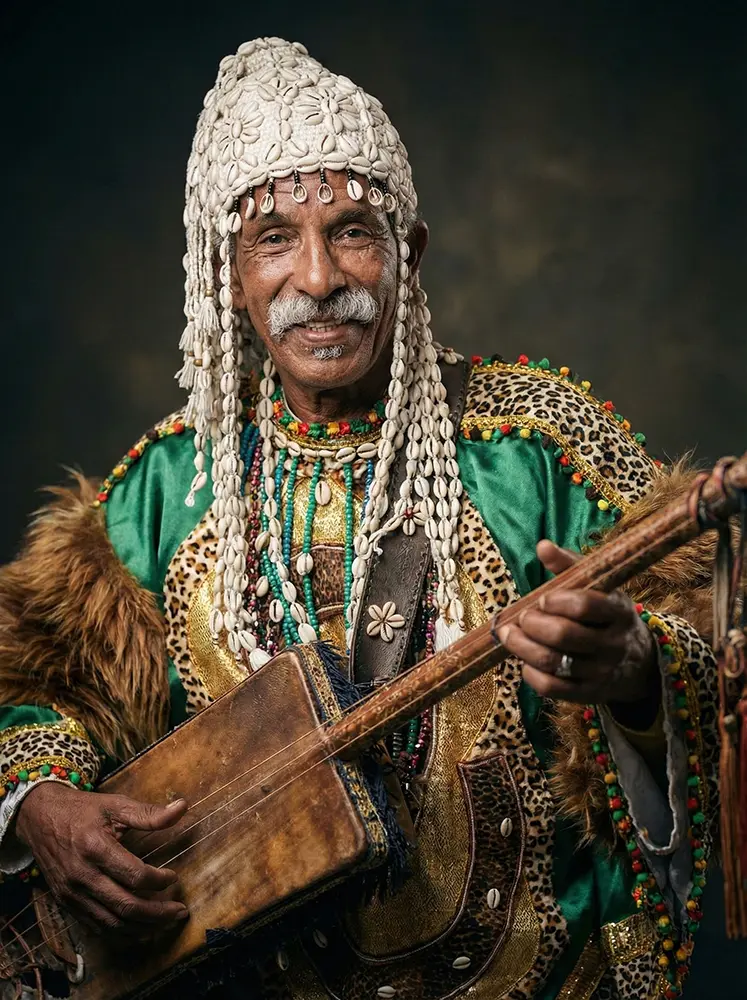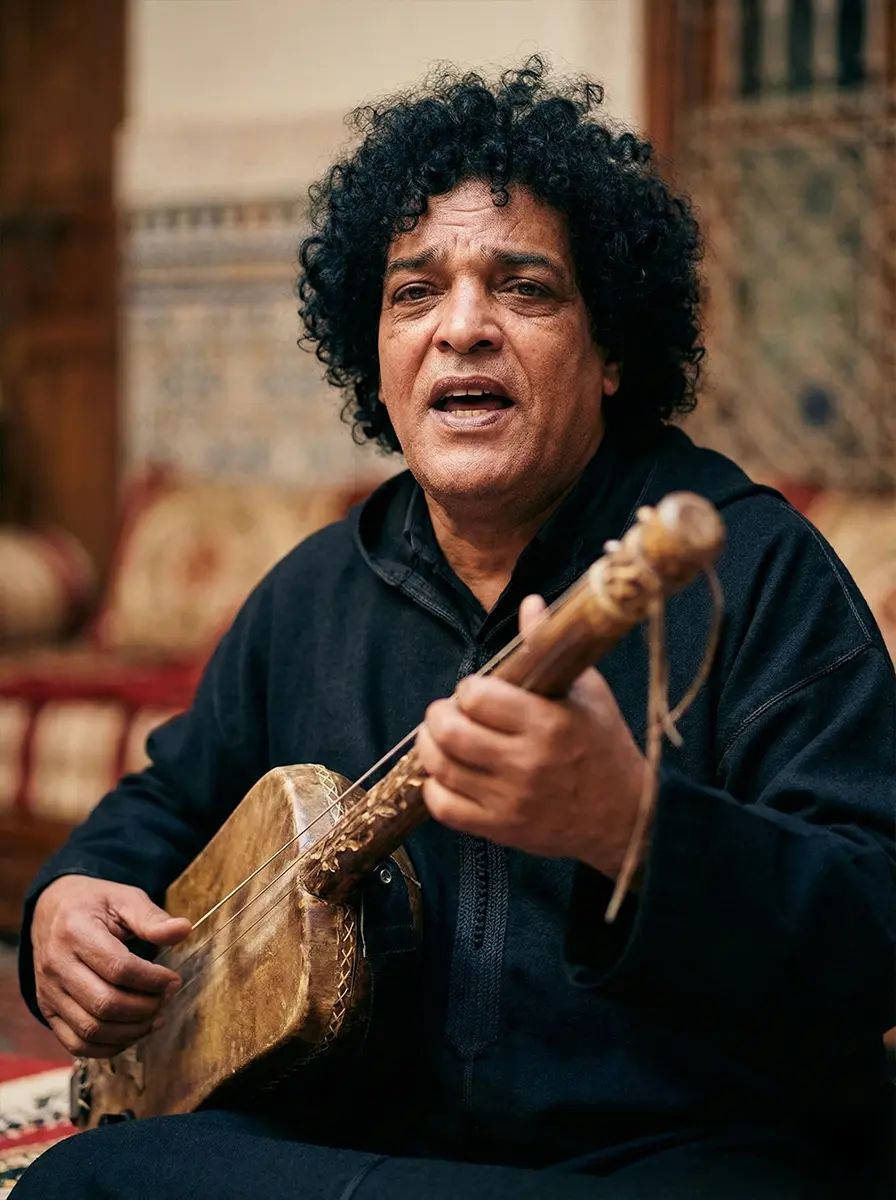
In a world where Gnawa was passed through bloodlines and guarded by families of dark skin, one white-skinned boy from Essaouira dared to dream the impossible. Abderrahman Kirouche, known to the world as “Paco,” did not inherit Gnawa — he conquered it. Through sheer talent, relentless devotion, and a night that became legend, he shattered centuries of tradition and became the first white Maâlem to be blessed by the guardians of tagnawit.
Jimi Hendrix called him “The Ghost Doctor.” Nass El Ghiwane called him “Maâlem.” History calls him a revolution.
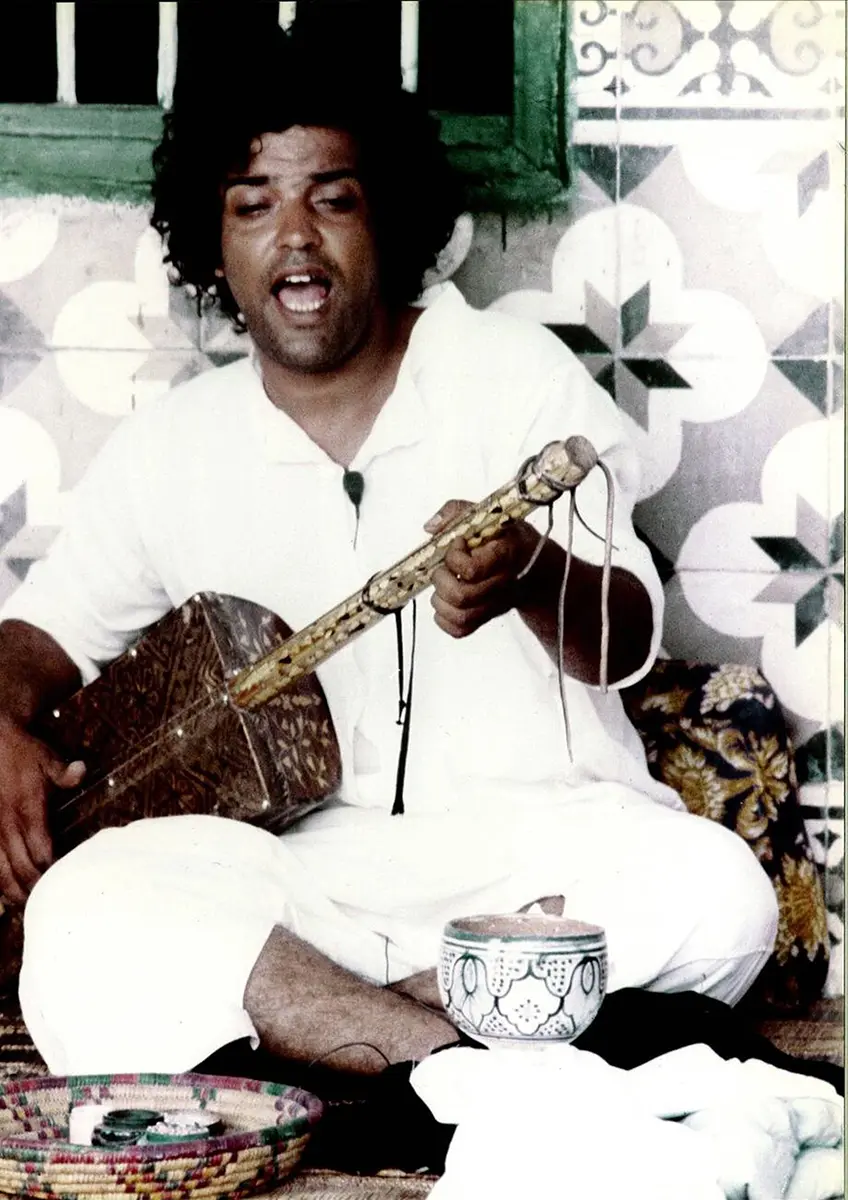
The Wind City’s Unlikely Son
Essaouira in the 1950s was a city haunted by history. Its port had once received waves of enslaved Africans, and from their suffering had emerged tagnawit — the sacred music that healed wounds too deep for medicine. Two families ruled this world with iron tradition: the Lekbani (also known as Sudani) and the Guinea clan. No outsider could enter. No white skin could hold the guembri.
Into this world, in 1948, Abderrahman was born to a poor family with no Gnawa lineage. His father was not a Maâlem. His mother was not a Moqaddema. Yet something in the boy’s soul recognized the rhythms that echoed through Essaouira’s narrow streets as his own.

The Woodcarver Who Heard Spirits
Before he held the guembri, Paco held a chisel. He learned the craft of carving argan wood — the intricate geometric patterns that adorned Moroccan furniture. But in the workshops of Essaouira, he heard something else: the distant pulse of qraqeb from nearby lilas, the bass throb of guembris that seemed to call his name.
He found his first teacher in Maâlem Chabada, a craftsman who made qraqeb for the great Gnawa families. Chabada himself was white-skinned, forever barred from the title of Maâlem despite his mastery. He taught Paco everything he knew — the technical skills, the repertoire, the secrets of the spirits. But he could not give him what he did not have: recognition.
The Hippie Trail and the Ghost Doctor
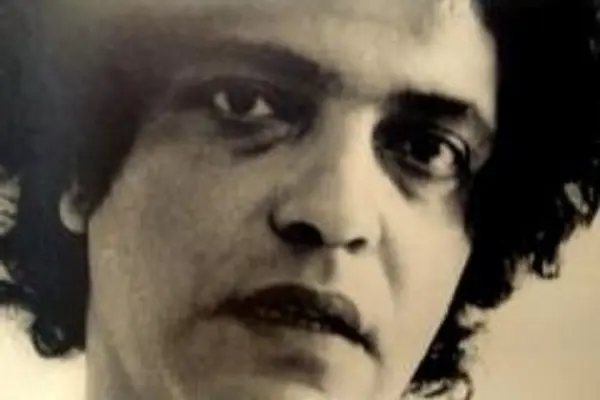
In the late 1960s, Essaouira became a pilgrimage site for another kind of seeker. The hippies arrived — American, British, European — fleeing Vietnam, fleeing conformity, seeking something real. They settled in Diabat, the village outside the city walls, and there they discovered a young Moroccan whose guembri playing seemed to unlock doors in their minds.
Jimi Hendrix was among them.
The guitar god came to Essaouira multiple times, drawn by the trance music that felt like the African root of everything he played. He sought out Paco, attended his lilas, played alongside him in the Diabat nights. It was Hendrix who gave him the nickname that would echo through decades: “The Ghost Doctor” — the healer of spirits, the physician of the invisible.
The hippies loved Paco because he played freely, without the rigid protocols of traditional lilas. But this freedom made him enemies among the Gnawa establishment. They called him krimi — a beggar with a guembri, not a true Maâlem. They said he was diluting the sacred, selling secrets to foreigners.
Paco knew he needed to prove himself on their terms.
The Night That Changed Everything
The challenge came through Moqaddema Halima Marrakchia, a powerful spiritual leader who believed in Paco’s gift. She arranged what no one thought possible: a full lila where Paco would play from sunset to dawn, judged by the greatest Maâlems of Essaouira.
They came to test him, to break him: Maâlem Hajjoub Lekbani, Maâlem Boubker Guinea (father of the legendary Mahmoud), Maâlem Mahdi Qajqal, and others. Each held his guembri ready to intervene if the young pretender faltered — because in a lila, a wrong note could endanger the possessed.
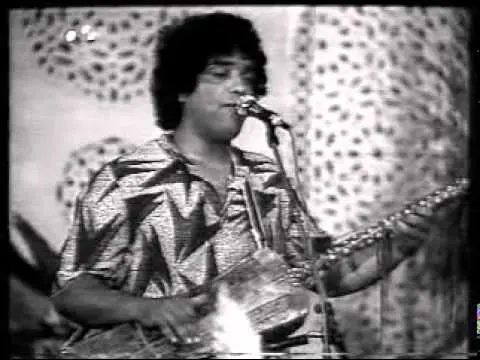
The night unfolded. Paco played the opening aada. He entered oulad bambara. His voice rang clear where other Maâlems mumbled — every syllable precise, every note deliberate. The masters watched, waiting for the slip that would end his dream.
Then came the test no one expected.
Defeating the Serpent Spirit
A figure appeared, wrapped entirely in white cloth, moving like a mummy possessed. This was a jeddab in the grip of Moulay Hanch — the Serpent Spirit, the most dangerous of all the mlouk. Under its influence, the dancer would thrust his head into holes, into toilets, into any crevice where he might suffocate. Only the Maâlem’s music could control him.
The masters reached for their instruments. Surely the boy would fail now.
For over ninety minutes, Paco played without stopping, sweat pouring, fingers bleeding on the strings. He matched every convulsion of the possessed man with a corresponding phrase, pulling him back from danger again and again. The jeddab collapsed. The serpent was defeated.
As dawn broke, the assembled masters spoke the words Paco had waited his whole life to hear:
“Allah y’ziyyen s’san’a” — May God beautify your craft.
He was Maâlem.
The Fourth Pearl of Nass El Ghiwane
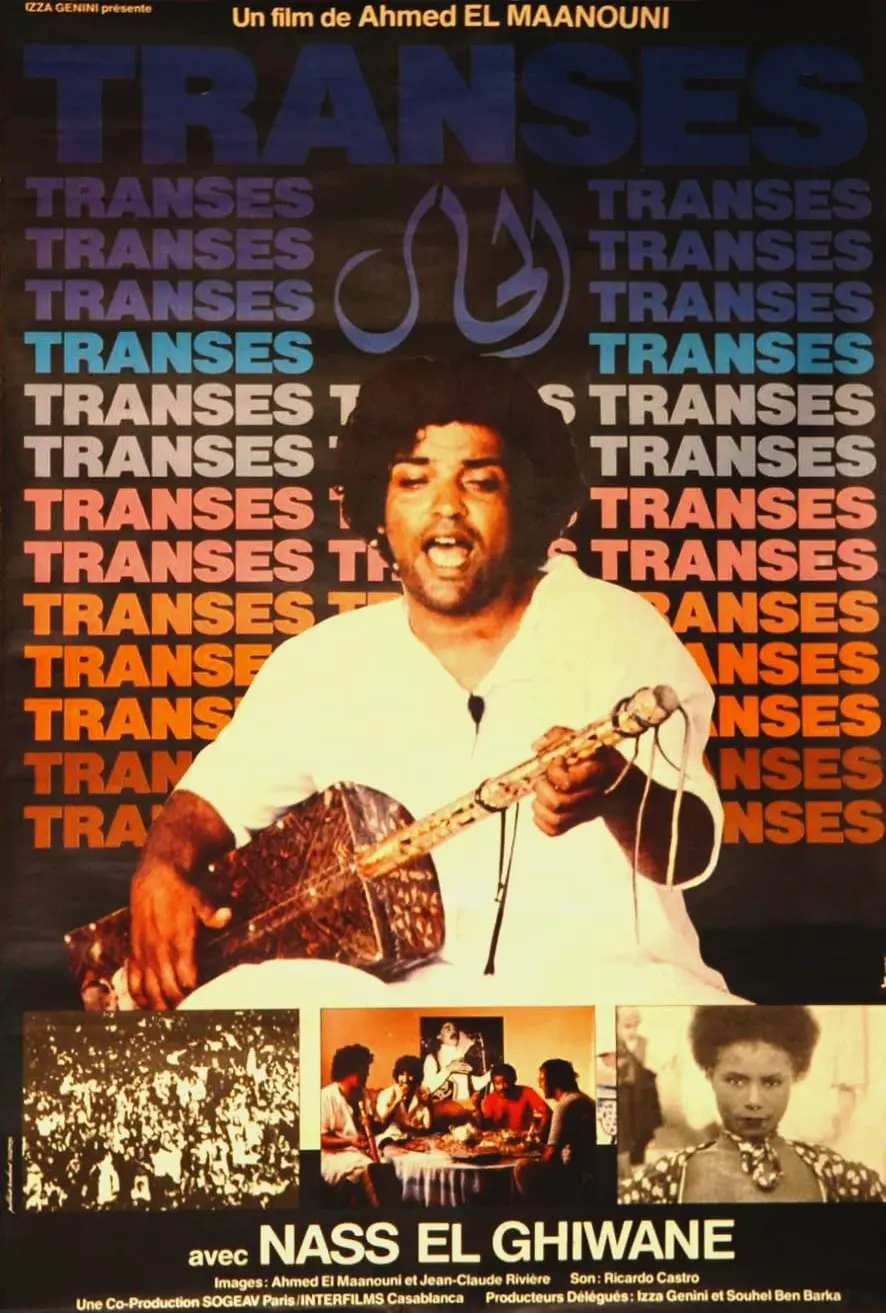
In 1974, another destiny called. Boujemaa, co-founder of Nass El Ghiwane — the band Martin Scorsese called “the Rolling Stones of Africa” — was searching for a guembri player. He found Paco in Marrakech by chance and recognized immediately what he had discovered.
Paco joined the group and transformed their sound. He brought the spiritual weight of tagnawit into their protest songs, creating a fusion that had never existed: the political fire of Ghiwane meets the trance depths of Gnawa.
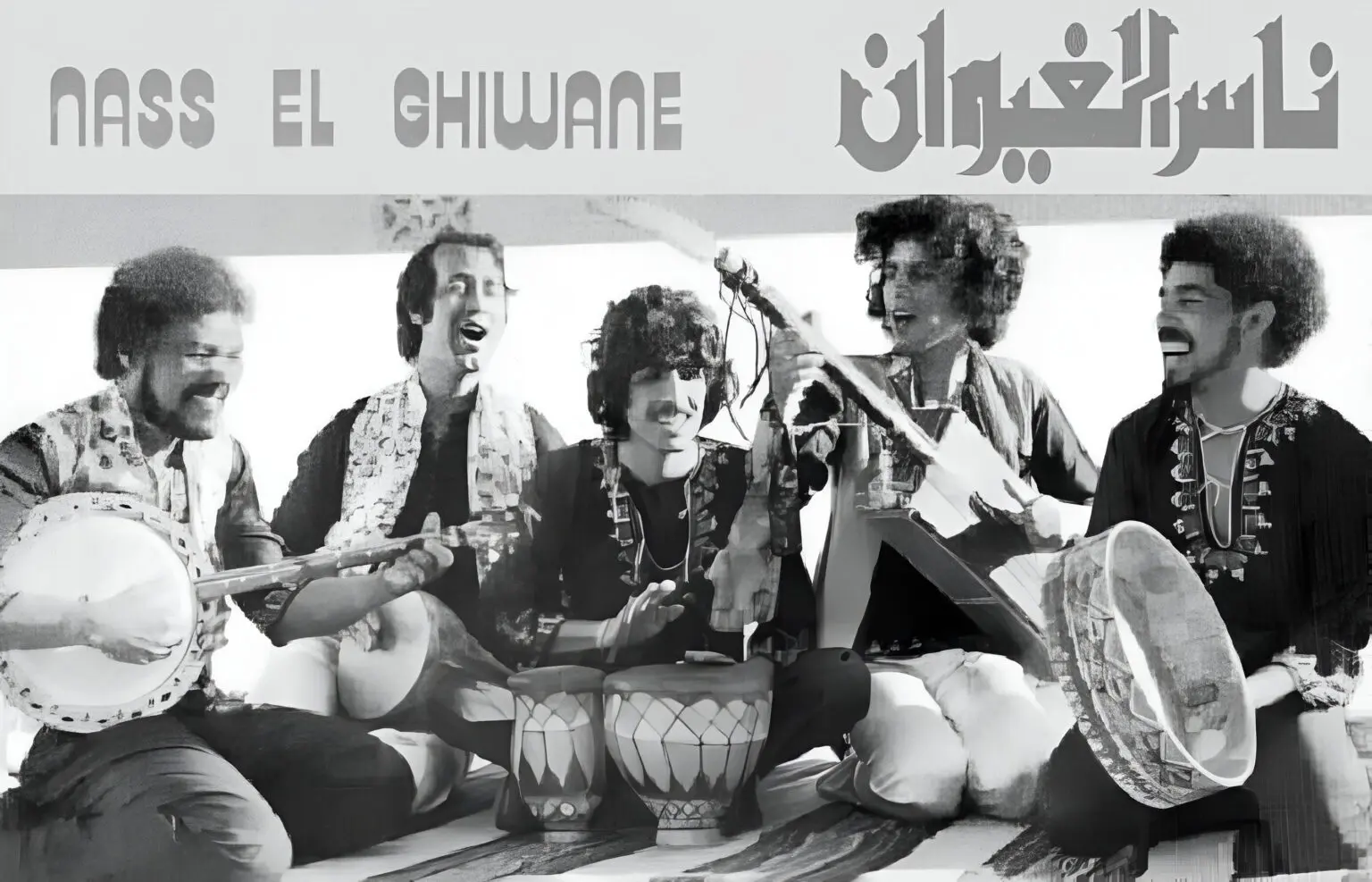
Songs like “Ghir Khoudouni” (Just Take Me) and “Fin Ghadi Biya Khouya” (Where Are You Taking Me, Brother) became anthems of a generation. Larbi Batma, the group’s voice, called Paco simply “Maâlem” — the only title that mattered.
For twenty years, Paco was the spiritual engine of Nass El Ghiwane, bringing Gnawa from the margins to the center of Moroccan consciousness.
The Bohemian’s Return
A dispute with band member Omar Sayed led Paco to leave Ghiwane in the 1990s. He returned to Essaouira, to the wind and the waves and the spirits that had first called him. He formed his own group, simply called “Paco,” and continued to play — not for fame, but for hal, the trance state that was his true home.
The Craftsman
Built his own guembris with the same hands that once carved argan wood — instruments as unique as his sound.
The Electric
Created what he called "electrical rhythm" — Gnawa frequencies that could shake bodies into trance.
The Bridge
Proved that *tagnawit* belongs to whoever loves it enough to master it — blood is not the only inheritance.
International recognition followed. The Living Theatre, the legendary American avant-garde troupe, made him their musician for world tours. It was their lead actress, Christine, who gave him the name “Paco” — after the sound the guembri makes when tuned. She became his wife, though the marriage ended when she could not convince him to leave Essaouira.
The wind city was his true beloved.
The Sad Guembri
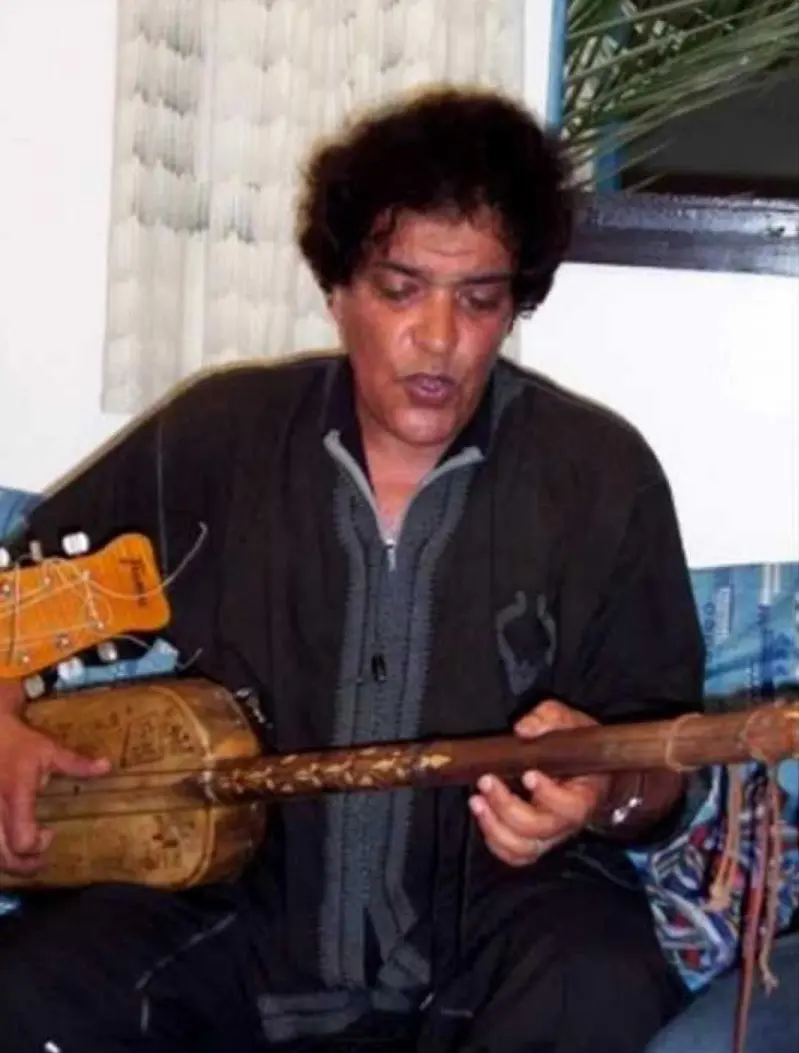
In his final years, Paco retreated from the spotlight. Disease claimed his body slowly, keeping him bedridden in Casablanca far from the sea he loved. He died in 2012 at 64, poor in material wealth but rich in legacy — the fourth pearl to fall from the necklace of Nass El Ghiwane.
Morocco, as often happens, discovered his value only after he was gone.
Essential Listening
Ghir Khoudouni
1987 • With Nass El Ghiwane
"Just take me to God, I cannot bear those who have left." A plea that became prophecy.
Fin Ghadi Biya Khouya
With Nass El Ghiwane
The protest anthem that married Ghiwane's fire with Gnawa's depth.
Al Ghammami
Solo Work
Pure Essaouira sound — the bohemian soul of Paco distilled into music.
"The guembri is sad. Its melodies belong on the mat."
— Maâlem Abderrahman Paco
His story is the story of devotion transcending circumstance. He was not born into Gnawa, but Gnawa was born into him. Through years of dedication, through a night that tested him against the most dangerous spirits, through the blessing of masters who saw his sincerity, he earned what others inherited.
When Martin Scorsese used Nass El Ghiwane’s “Ya Sah” in The Last Temptation of Christ, it was Paco’s guembri that carried the sacred weight. When hippies from California to London spoke of Moroccan trance music, it was Paco’s name they invoked.
The Ghost Doctor is gone now. But in every white-skinned musician who dares to pick up the guembri, in every outsider who proves that love can unlock doors that blood cannot, his spirit plays on.
The wind still carries his melodies through Essaouira.