The Cultural Salon
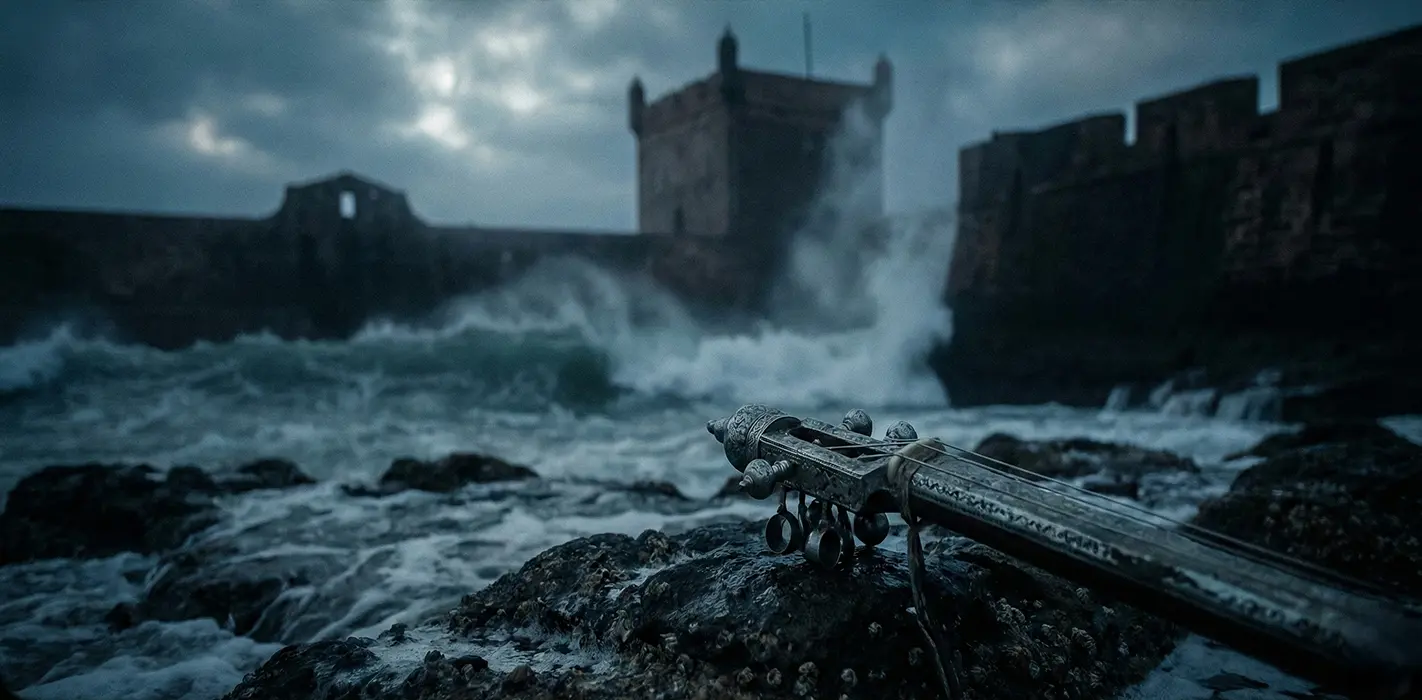
Tangier sits at the tip of Africa, guarding the narrow strait where the Atlantic meets the Mediterranean, where Africa faces Europe just 14 kilometers away. This geography of crossroads — what the Beat writer William Burroughs called the “Interzone” — didn’t just shape the city’s climate and commerce. It created the most refined, cosmopolitan, and internationally connected branch of Gnawa tradition.
Where Marrakech thunders with percussive force and Essaouira flows with oceanic melody, Tangier’s Shamali (Northern) style is something else entirely: elegant, deliberate, and deeply melodic — music shaped by centuries of coexistence with Andalusian court traditions, and then electrified by its encounter with American jazz. This is the school that produced a Grammy-nominated album, that hosted the first African jazz festival, and that built the first institution dedicated to preserving Gnawa heritage: Dar Gnawa.
The Shamali Style — Andalusian Soul in African Skin
The Northern style could not have been born anywhere else. Tangier and Tétouan were aristocratic cities that received Andalusian refugees (Moriscos) after the fall of Granada (1492), creating a musical environment saturated with the refined art of Al-Ala (Andalusian classical music) — a tradition of long melodic lines, complex ornamentation, and contemplative pacing. Masters like Maâlem Alouane codified the Shamali technique and transmitted it to the next generation — most notably to his student Hamid El Kasri, today’s most internationally recognized Gnawa performer.
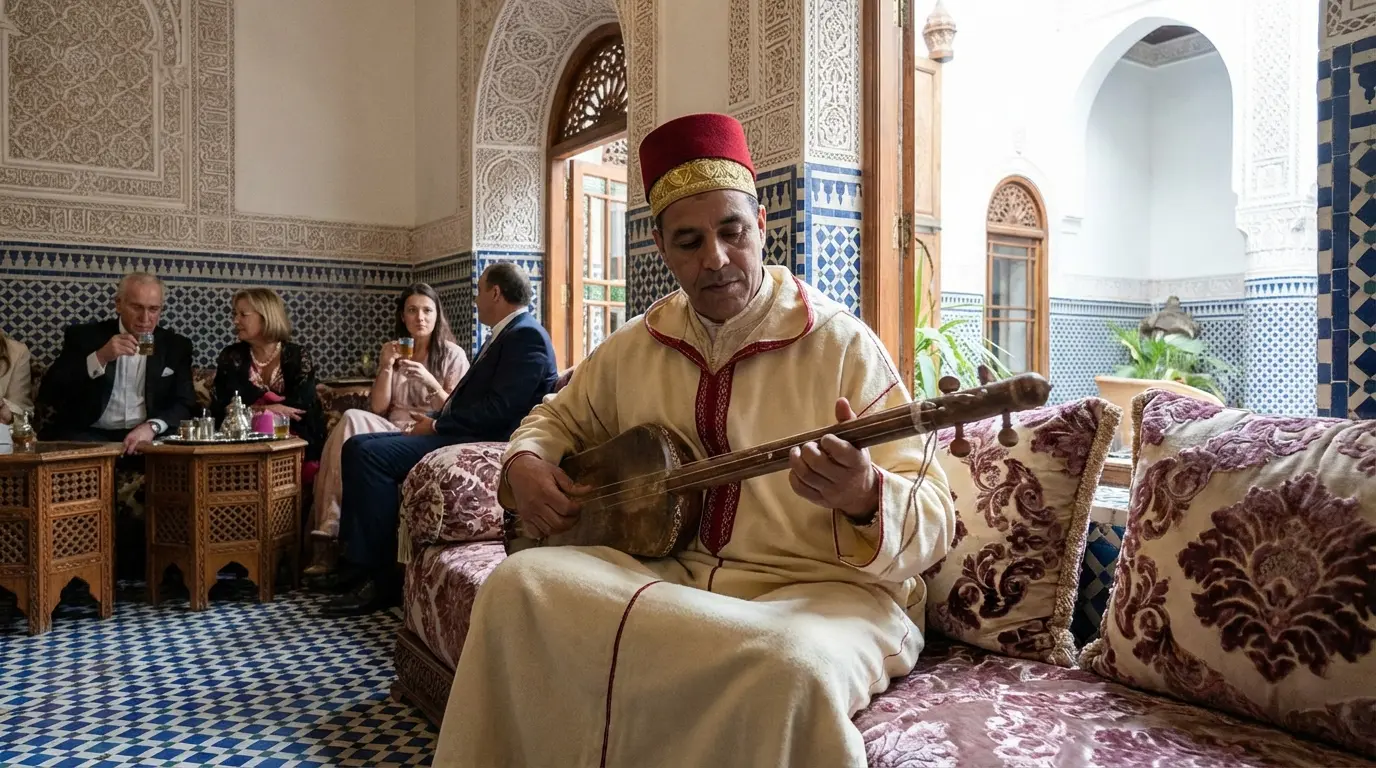
The Guembri: Where the Marrakchi Maâlem slaps the skin and the Essaouira Maâlem uses drop-thumb frailing, the Northern master treats the Guembri more like an oud or a cello. The technique emphasizes strumming — allowing each note to sustain and resonate rather than cutting off sharply. The melodic phrases are longer, more intricate, and more ornamented than in any other school. This quality makes the Shamali Guembri uniquely compatible with jazz — jazz pianists find melodic spaces in the Northern style that don’t exist in the purely percussive southern schools.
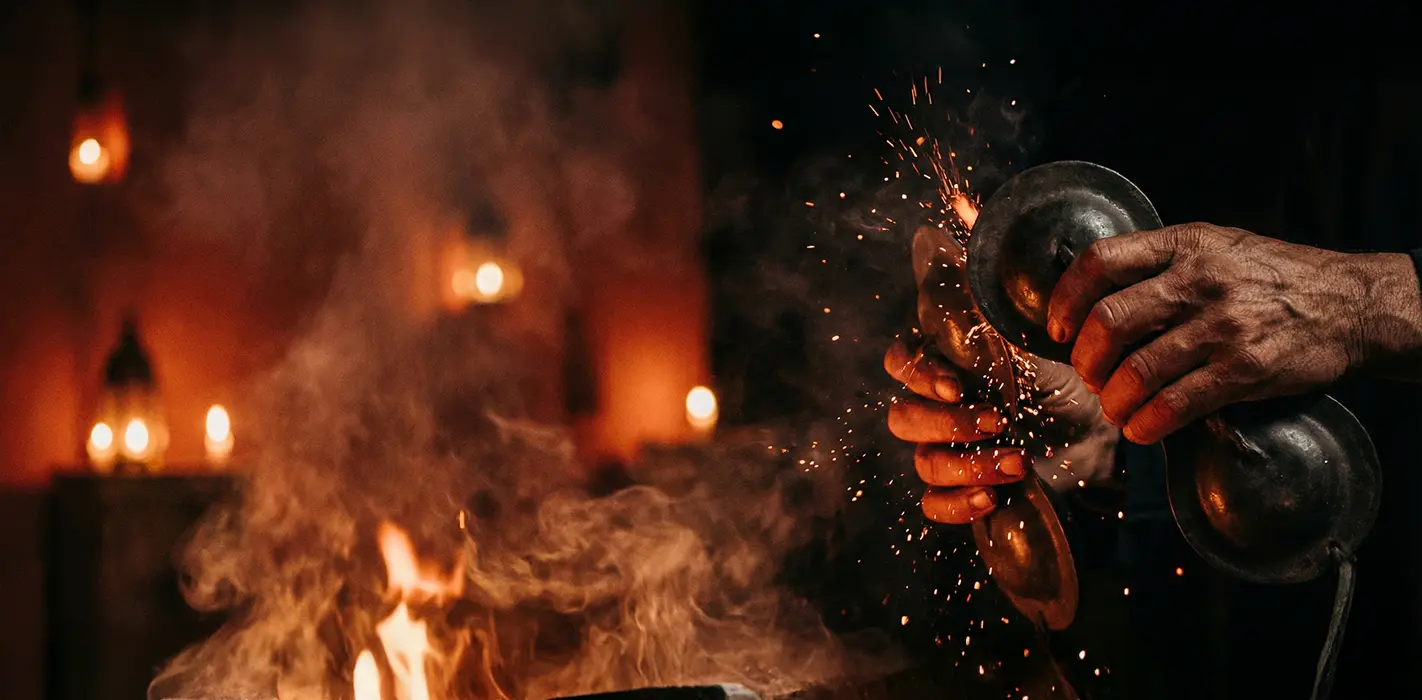
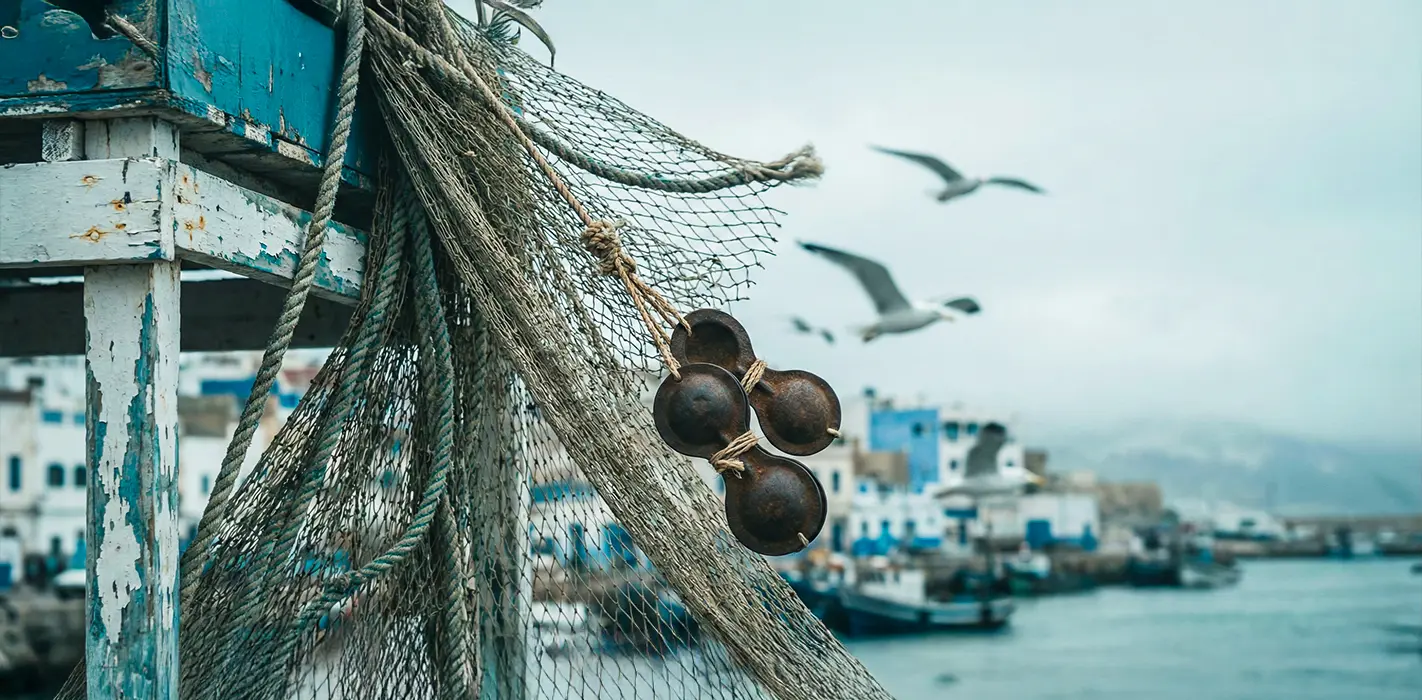
The Qraqeb: More disciplined and slower than in the south. Instead of overwhelming the sound, the iron castanets create a measured, hypnotic pulse that serves the melody rather than dominating it.
Building Trance: While the Marrakchi approach drives participants into Jedba (trance) through rapid escalation, the Shamali method is gradual and meditative — a slow rise that echoes the patience of local Sufi orders (Wazzaniyya, Darqawiyya). The climax, when it comes, arrives not as an explosion but as a revelation.
| Shamali (Tangier) | Marsaoui (Essaouira) | Marrakchi | |
|---|---|---|---|
| Musical focus | Melodic, calm, Andalusian-influenced | Balanced melody/rhythm, flowing | Percussive, raw, direct |
| Guembri technique | Long phrases, ornamentation, sustain | Drop-thumb frailing, staccato | Heavy skin-slapping (darba) |
| Qraqeb | Disciplined, slow, measured | Medium speed, wave-like | Fast, sharp, heart-pounding |
| Trance approach | Gradual, meditative crescendo | Hypnotic repetition | Rapid percussive escalation |
| Aesthetic | Urban, “salon” sophistication | Oceanic spirituality | Desert intensity |
Jazz & Gnawa — The Atlantic Dialogue
The Interzone
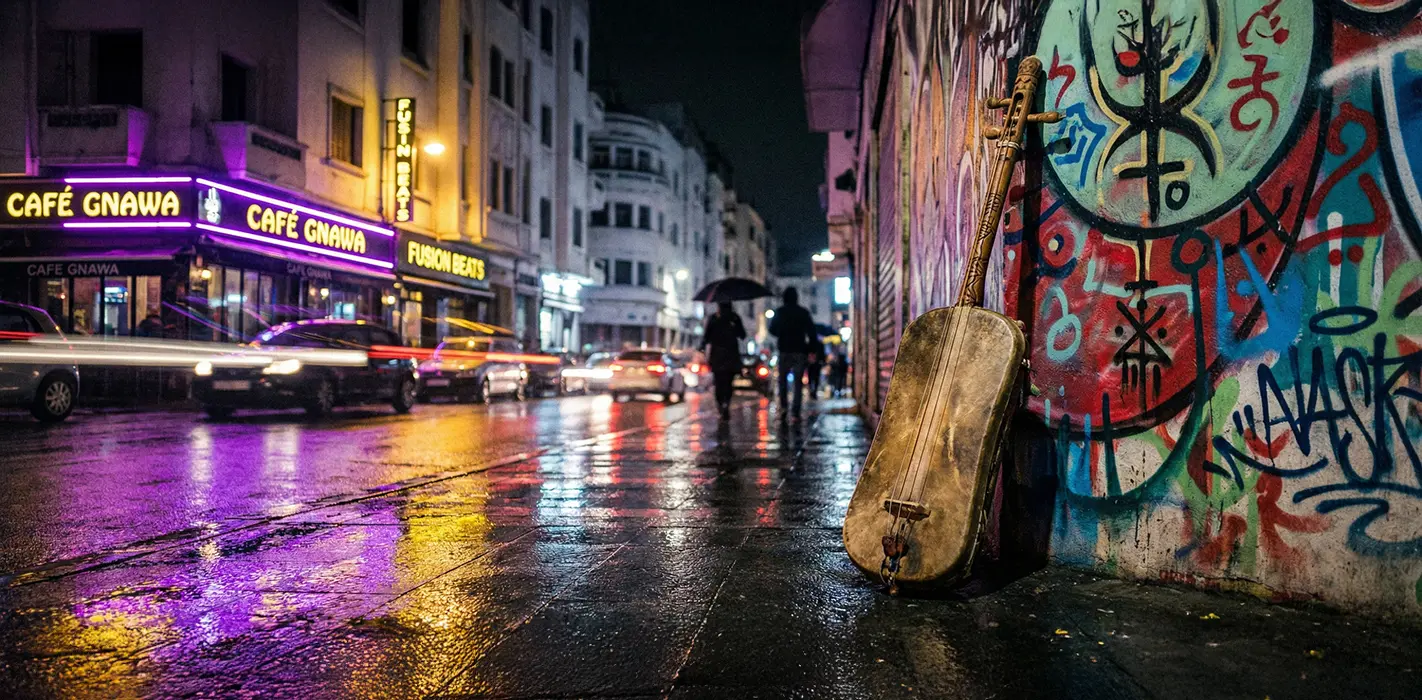
During Tangier’s era as an International Zone (1923–1956), the city became a free port of culture: artists, writers, spies, and musicians from every continent converged in its cafés and medina. Paul Bowles settled here for half a century, making field recordings of Moroccan music. Brion Gysin opened the famous 1001 Nights restaurant with the Master Musicians of Jajouka. And into this extraordinary milieu arrived American jazz musicians — searching for the African roots of their own art.
Randy Weston — The Return to Africa
In 1967, American jazz pianist Randy Weston arrived on a State Department tour — and never truly left. He founded the “African Rhythms” jazz club in Tangier, driven by a conviction that jazz and blues were extensions of African music carried across the Atlantic by enslaved peoples. In Gnawa, he found the missing link: the same pentatonic scales, the same polyrhythms, the same spiritual function of music as healing and possession.
His collaboration with Maâlem Abdellah El Gourd was not superficial fusion — it was deep dialogue. Weston adapted his left hand to mimic the Guembri’s bass lines while his right hand wove jazz melodies through the Qraqeb’s iron pulse. Together, they proved that West African music and African-American music were two branches of the same tree.
The Grammy-Nominated Album
This partnership culminated in “The Splendid Master Gnawa Musicians of Morocco” (1992, released 1994 on Verve Records) — featuring Abdellah El Gourd alongside Mahmoud Guinea and Ahmed Boussou. The album received a Grammy Award nomination for Best World Music Album in 1996 — a historic moment that placed Gnawa and the Northern School on the global stage.
Tanjazz & International Jazz Day
The legacy lives on through Tanjazz (Tangier Jazz Festival), which consistently programs Gnawa-jazz collaborations. In 2024, Tangier was selected to host International Jazz Day — where Maâlem Abdellah El Gourd and the Dar Gnawa ensemble performed with contemporary jazz masters, confirming the city’s enduring role as the world capital of this spiritual-musical dialogue.
Dar Gnawa — The First Institution
Maâlem Abdellah El Gourd
Born in 1947 in the Kasbah of Tangier, Abdellah “Boulkhir” El Gourd grew up immersed in Gnawa traditions. What set him apart was his parallel career: he worked as a sound engineer at Voice of America’s Tangier broadcast station. This gave him fluent English, technical recording expertise, and the ability to translate Gnawa philosophy for Western audiences — making him the first true “organic intellectual” of the Gnawa tradition.
The Institution
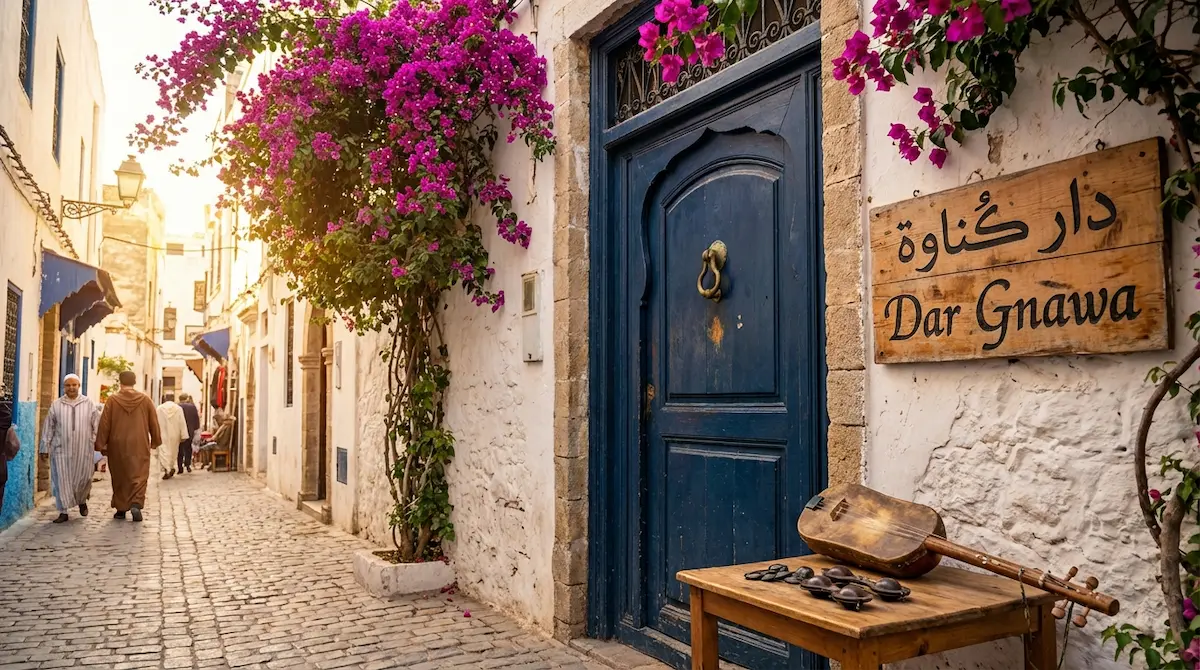
In 1980, El Gourd founded Dar Gnawa in a 19th-century house (c. 1850) in the Kasbah — the first cultural center and registered association dedicated to Gnawa in Morocco:
- Academy: Teaching youth not just Guembri playing, but instrument-making (crafting Guembris, Qraqeb, and Tbel) and understanding the complete ritual hierarchy of the Mlouk.
- Archive: Preserving recordings, photographs, and historic instruments — a living museum of Tangier’s Gnawa memory.
- International Hub: Hosting jam sessions and collaborations with jazz legends like Archie Shepp, the German band Dissidenten, and countless visiting musicians drawn by the city’s magnetic reputation.
The Sacred Geography
Sidi Bouarakia — Guardian of the City
The patron saint of Tangier, Sidi Bouarakia (Mohamed El Haj El Baqali, d. 1718), holds a special place in the Gnawa calendar. During his annual moussem (festival), the Gnawa brotherhood organizes a spectacular Hadiya (gift-bearing procession):
The procession departs from the Grand Socco or the Kasbah, snaking through the medina’s narrow alleys toward the saint’s shrine. Musicians wear wool djellabas and carry embroidered banners (rayat) in the colors of the Mlouk — red, green, black. The Tbel drums thunder with a majestic, heavy rhythm distinct from the dancing rhythms of the Derdeba. The procession carries a black bull as sacrifice and symbolic gifts (giant candles, milk, dates, sugar) — a renewal of the spiritual pact between the Gnawa brotherhood and the city’s guardian saint.
Hercules Caves — Gateway to the Sea Spirits
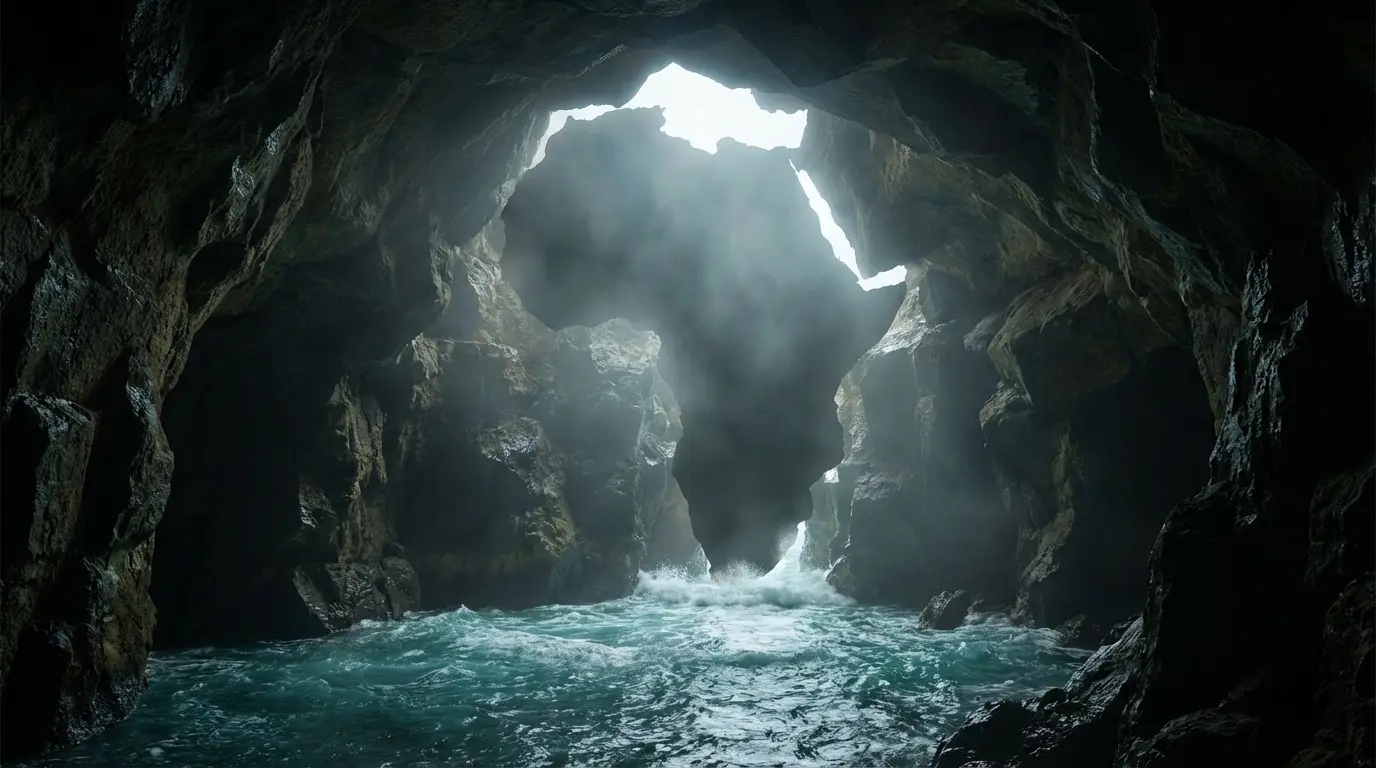
The legendary Hercules Caves on the Atlantic coast hold deep significance beyond their tourist appeal. For Gnawa practitioners, they are a portal to the marine Mlouk — especially Sidi Moussa (lord of the seas, the blue spirit) and Lalla Mimouna.
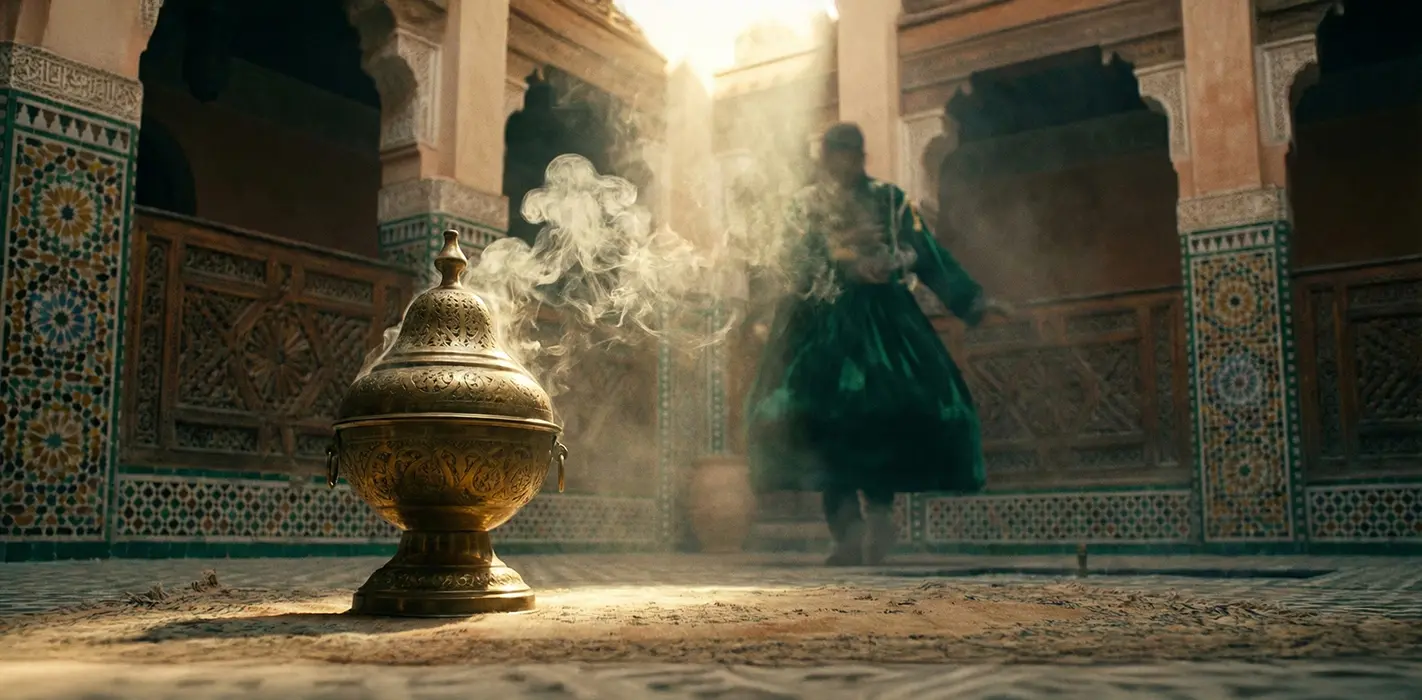
The caves and Achakar beach are sites for ritual sea washing — bathing in the Atlantic waters where two oceans meet, believed to possess special power to break sorcery and expel negative spirits. During Sha’ban, miniature Lila ceremonies may be held in the caves, surrounded by Bakhour smoke and the roar of the ocean — a breathtaking fusion of Greek mythology and African spiritual practice.
The Northern Dress — Elegance as Identity
The Tangier Maâlem dresses differently from his southern counterpart — and it’s not just fashion, it’s philosophy.
Where southern Gnawa wear brightly colored satin costumes and Chachias heavy with cowrie shells and mirrors (announcing their African origins boldly), the Northern master favors the red Tarboosh (fez), gold-thread embroidered caps, and heavy wool djellabas in sober colors — cream, dark brown, charcoal. This dress mirrors Andalusian court musicians and the Makhzen (royal) aesthetic.
The message: the Tangier Gnawa presents himself as a “learned artist” — not a wandering dervish but a sophisticated musician worthy of sitting alongside classical Andalusian orchestras. It is elegance as cultural strategy, refinement as survival.