The Spirit & the Story
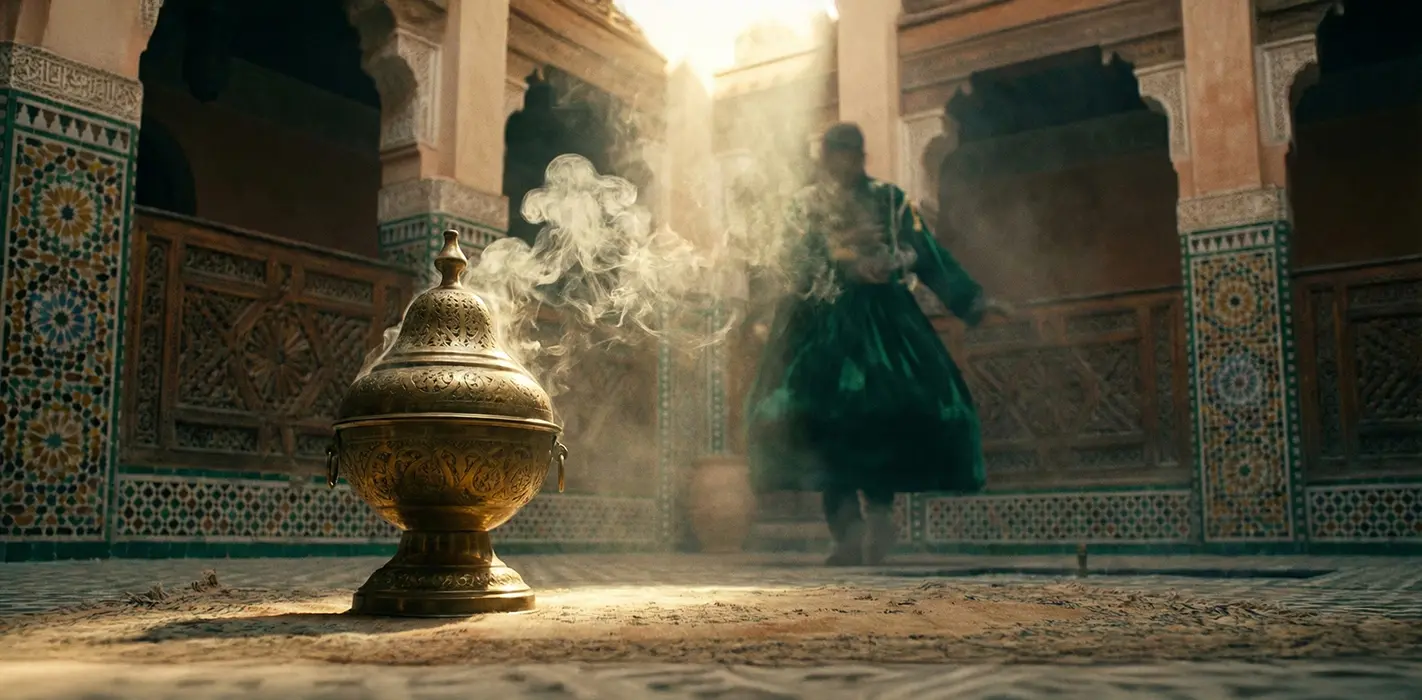
Marrakech — the Red City — stands as the great inland fortress of Gnawa tradition. While Essaouira is the spiritual capital by the sea, Marrakech is the crucible where African rhythms were forged in fire, dust, and blood. For centuries, this city at the foot of the Atlas Mountains served as the first major stop for trans-Saharan caravans arriving from Timbuktu, carrying gold, salt — and enslaved peoples from Mali, Guinea, and the Western Sudan.
In the slave markets of the medina — notably Souk El Ghzel (the wool market) — captive Africans were traded. This memory survives in the Gnawa songbook: “They took us from our lands, separated us from our parents, and sold us in Souk El Ghzel.” This raw connection to the history of slavery and liberation gives the Marrakchi school its distinctive emotional intensity — a music born not from the ocean breeze, but from desert heat and ancestral pain.
The presence of the Black Guard (Abid al-Bukhari), the elite army of Sultan Moulay Ismail in the 17th century, consolidated the African community in Marrakech’s Kasbah quarters. These soldiers and their families built the zaouias and established the ritual practices that would crystallize into what we now call the Marrakchi school — the most percussive, physical, and ritually conservative branch of Gnawa tradition.
The Marrakchi Style
How do you recognize the Red City school by ear alone? Where Essaouira flows like the ocean, Marrakech strikes like thunder.
Rhythm & Attack: The Marrakchi style is built on a philosophy of percussive aggression. The rhythms are sharp, fast, and powerful — reflecting the energy of a city of souks and spectacle, not the meditative calm of the coast. The emphasis is on driving, relentless patterns that push participants toward trance (Jedba) through sheer intensity rather than hypnotic repetition. This is what scholars call the difference between the regional styles of Gnawa.
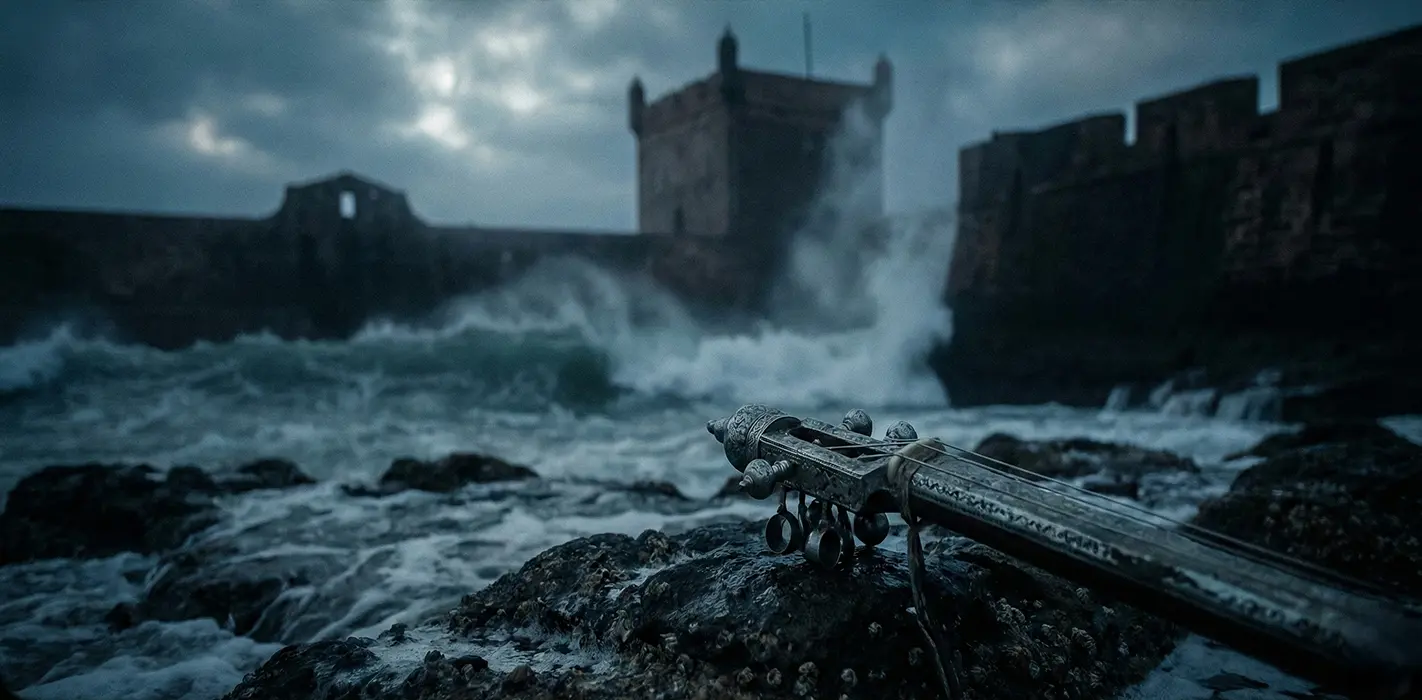
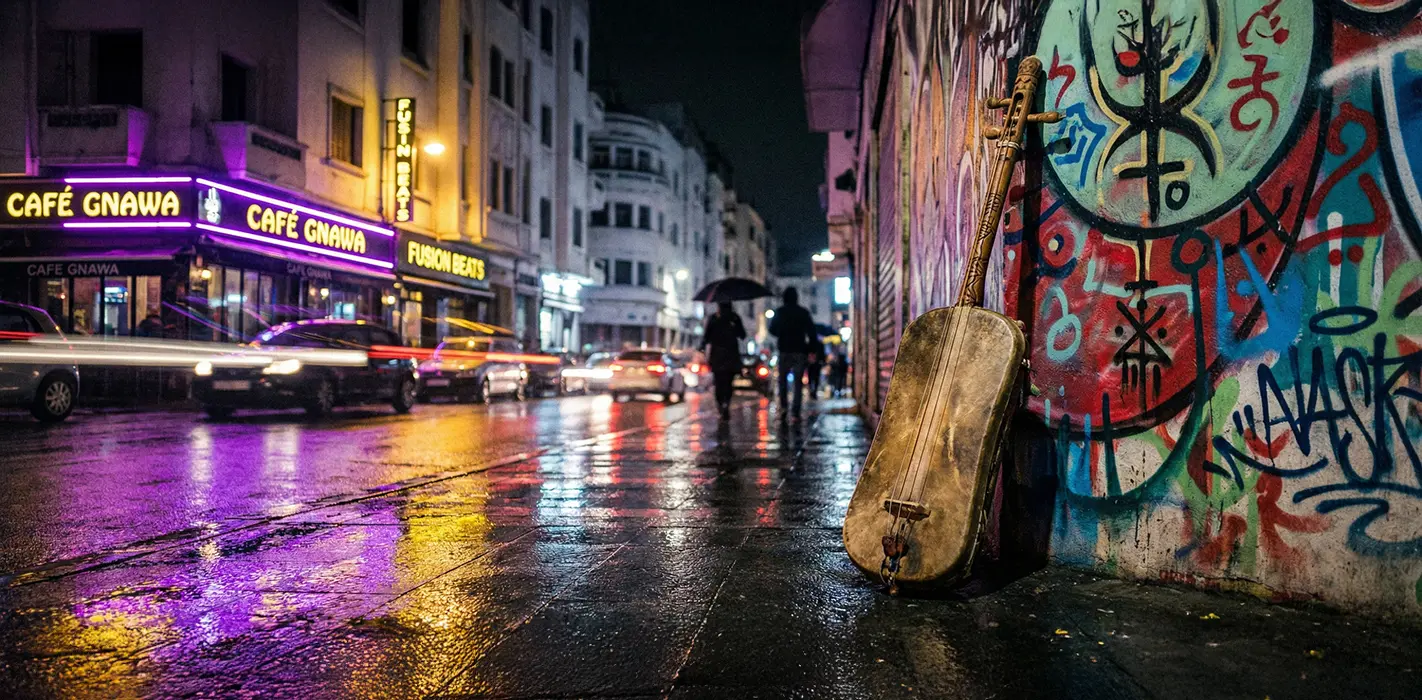
The Guembri: In Marrakchi hands, the Guembri becomes a drum and bass instrument simultaneously. The signature technique is heavy slapping (darba) — striking the goatskin face of the instrument with force while plucking the strings, creating an additional percussive layer that mimics a drum. This technique is physically demanding and produces a raw, aggressive sound that is the sonic fingerprint of the Red City.
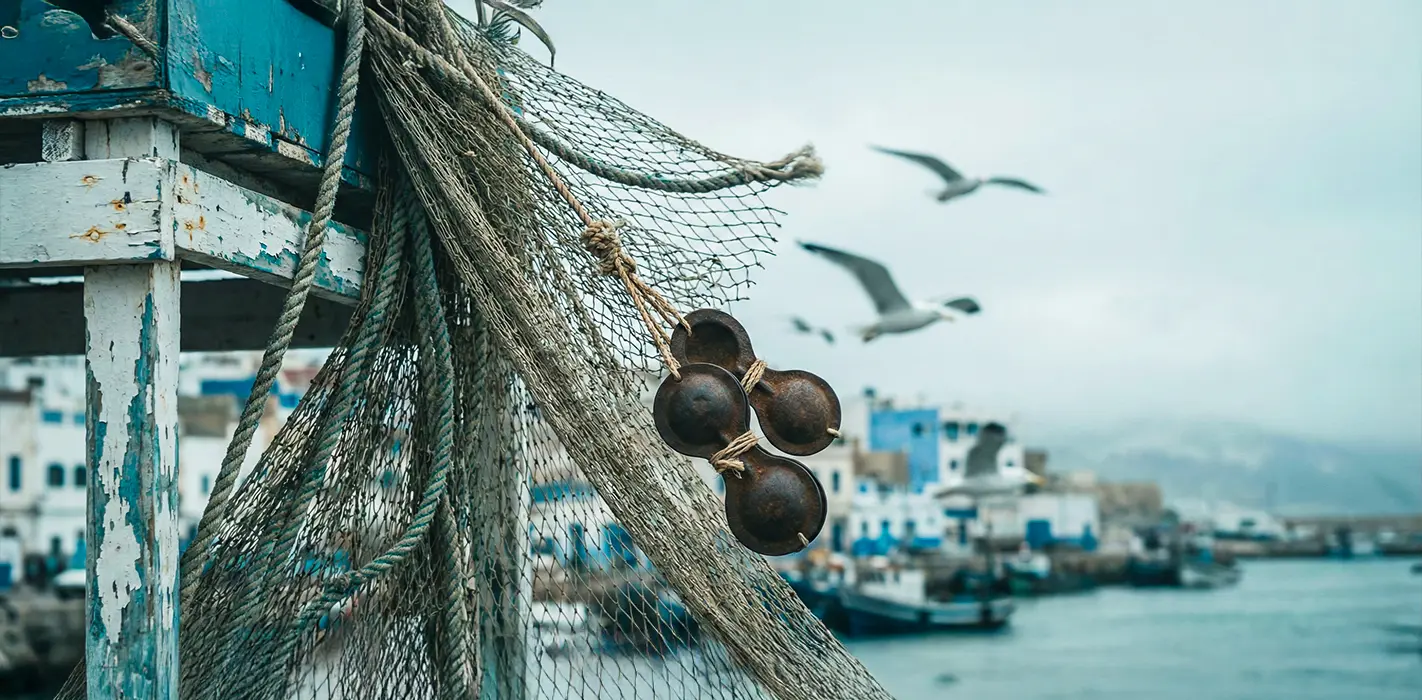
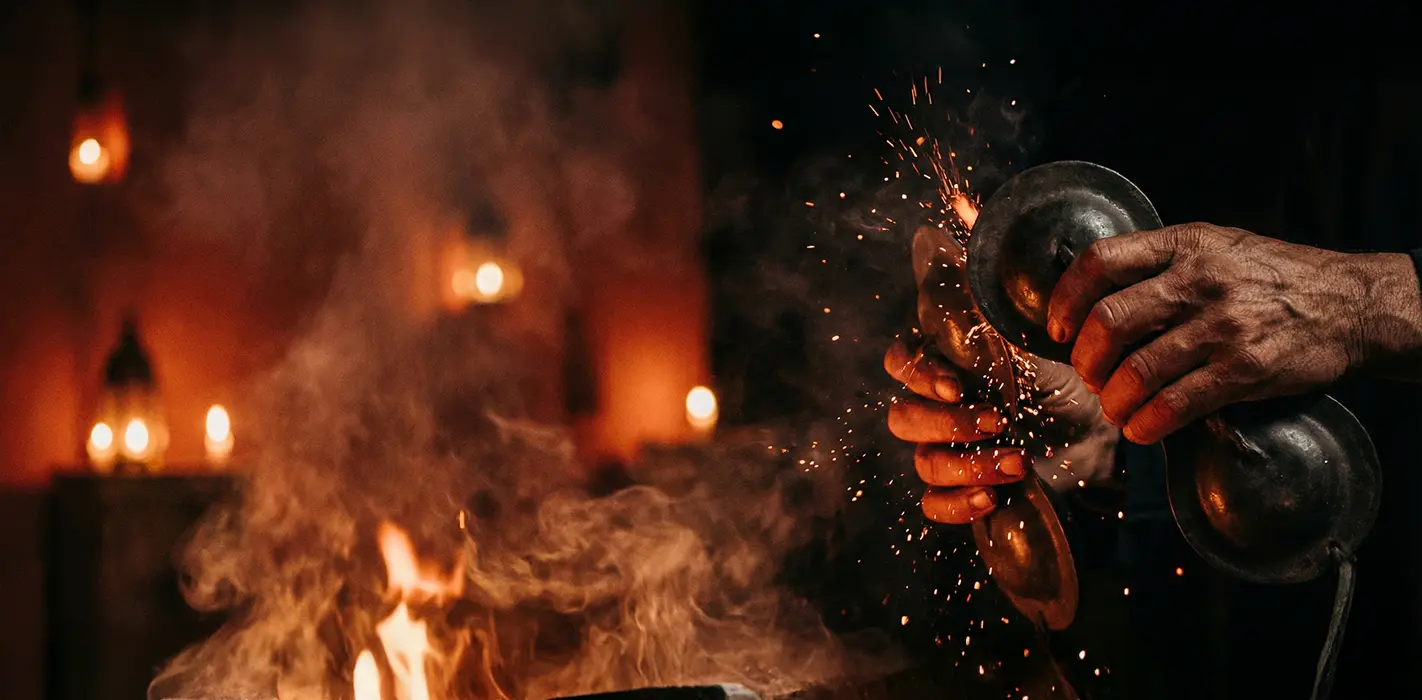
The Qraqeb: The iron castanets dominate the Marrakchi sound. The patterns are faster, louder, and more complex than in other schools — with intricate syncopation that demands extraordinary physical stamina from the Koyos (chorus members). The Qraqeb don’t merely accompany; they lead.
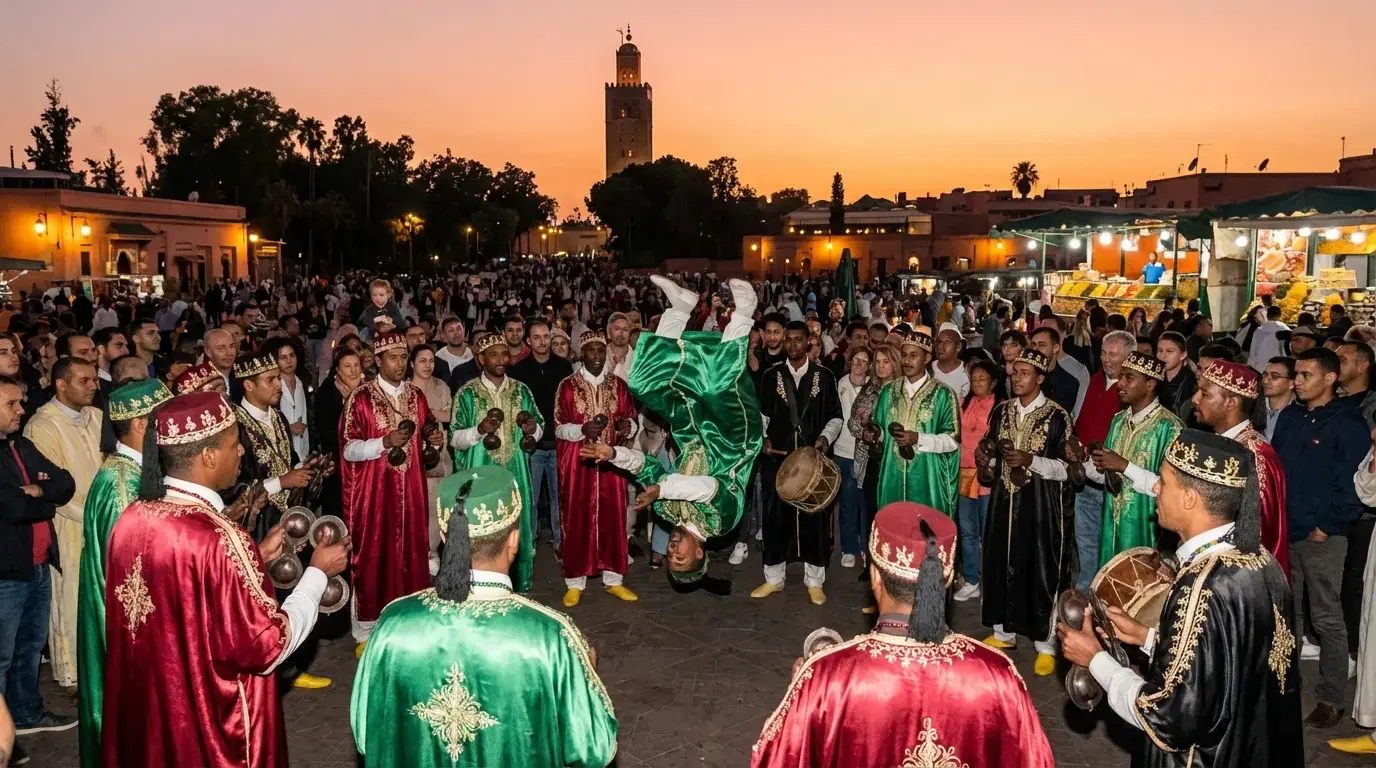
The Kouyo Acrobatics: The most visible difference between Marrakech and other schools is the spectacular acrobatic tradition of the Kouyo dancers. Born in the competitive arena of Jemaa el-Fna, Marrakchi Koyos perform backflips, human pyramids, contortions, and spinning leaps that transform the musical performance into physical theatre — a tradition unique to the Red City.
The Sacred Spaces
Gnawa life in Marrakech unfolds between two opposing yet complementary worlds: the open spectacle of the square and the hidden sanctity of the zaouia.
Jemaa el-Fna — The Stage: The legendary square, a UNESCO Masterpiece of Oral and Intangible Heritage, is where Gnawa meets the public. Here, musicians form halqas (circles) and perform the profane side of their art — entertainment, acrobatics, and shortened musical sets designed to captivate tourists and passersby. The Koyos leap and spin, the Qraqeb crash, and the Guembri thunders. But the spirits (Mlouk) are never invoked in this space — it is considered too open and unprotected for sacred work.
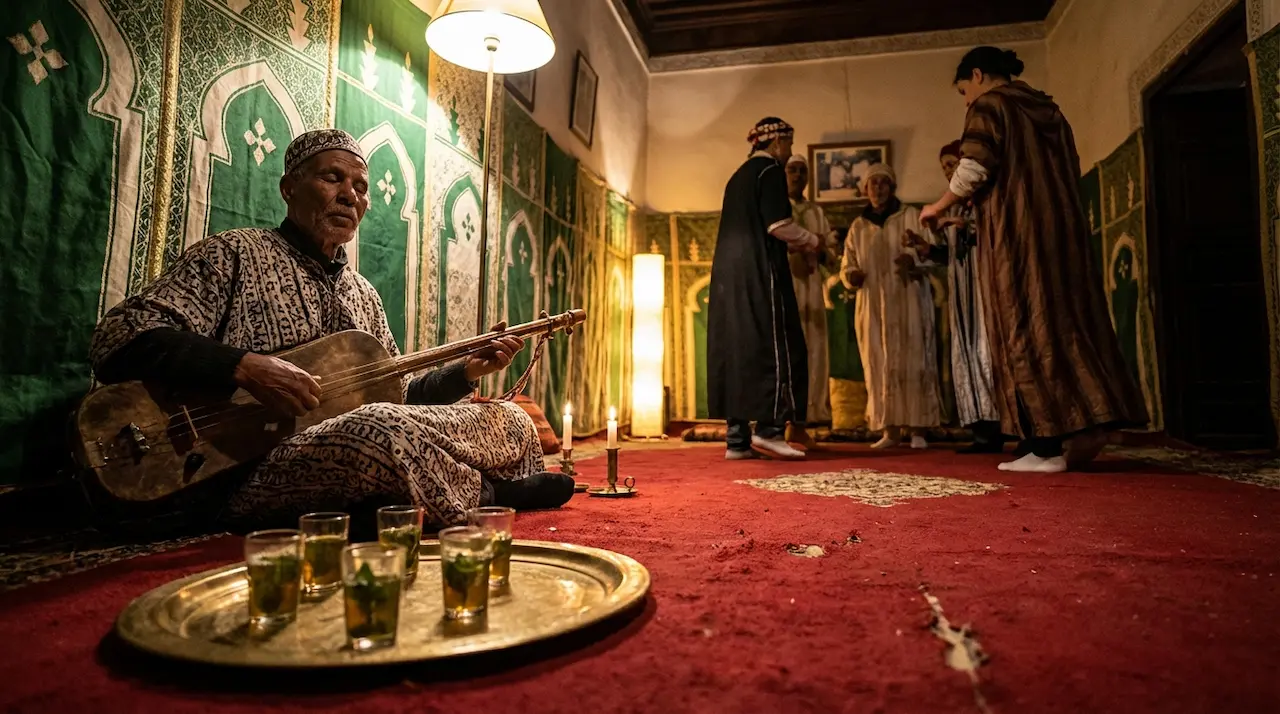
Zaouia Sidna Bilal — The Heart: Deep in the Kasbah quarter, the Zaouia of Sidna Bilal is the spiritual headquarters of Marrakech Gnawa. Named after Bilal Ibn Rabah, the Ethiopian companion of Prophet Muhammad and first muezzin, the zaouia serves as shrine, conservatory, and tribunal. Here, the hierarchies of the brotherhood are maintained, apprentices are initiated, and the complete Lila ceremony is performed in its most uncompromising form — far from tourist eyes.
Within the Marrakech community, a subtle division exists: the Abid Lalla Karima (who sing in Amazigh and perform by day) and the Abid Sidna Bilal (who sing in Darija Arabic and perform the nocturnal Lilas). Both traditions converge at the zaouia, creating a rich tapestry of practice unique to the Red City.
The Dynasties
The Baqbou Dynasty
No family embodies the Marrakech school more completely than the Baqbou dynasty — three generations of Maâlems who shaped Gnawa history.
Maâlem Ayachi Baqbou (the patriarch) was both master musician and spiritual Moqaddem, the living archive who transmitted the complete Taknawit to his sons with absolute fidelity. His playing style — powerful, precise, uncompromising — set the standard for the Marrakchi technique.
Maâlem Mustapha Baqbou (1953–2025) became a legend by bridging worlds. In the 1970s, he joined Jil Jilala, the revolutionary band that brought Gnawa rhythms into mainstream Moroccan music alongside Malhoun poetry. Later, he pioneered Gnawa-jazz fusion, collaborating with Marcus Miller, Pat Metheny, and Louis Bertignac. His Guembri playing combined Marrakchi power with improvisational flexibility — making him the global ambassador of the Red City school.
Maâlem Ahmed Baqbou (Mustapha’s brother) represents the opposite pole: the purist guardian. Known as “The Talking Guembri” for his ability to make the instrument speak, Ahmed focuses on the complete, unabridged Lila in its most traditional form. He performs every color (Mehlla) and every spirit without shortcuts — preserving the ritual as his father transmitted it.
Other Pillars
Maâlem Abdelkbir Marchan, with his powerful voice and commanding presence, bridges the Marrakech and Essaouira styles — proof that the greatest masters transcend regional boundaries.
The Ritual Calendar — Sha’bana & the Seven Saints
The Seven Saints of Marrakech
The spiritual landscape of Marrakech is guarded by the Sabaatou Rijal — the Seven Saints: Sidi Bel Abbes (patron saint of the city), Cadi Ayad (the great jurist), Sidi Youssef Ben Ali, Sidi Mohamed Ben Slimane Al-Jazouli, Sidi Abdel Aziz Tebaa, Sidi Abdallah Ghazouani, and Imam Suhaily. Before major Lilas, Gnawa masters visit these shrines — especially Sidi Bel Abbes — to request spiritual permission and baraka (blessing).
During the Lila’s opening section (Al-Ada), the Seven Saints are invoked by name. This creates a sacred bridge: the orthodox Sufi world of the Saints grants legitimacy to the deeper, African spirit work that follows.
Sha’bana — The Season of Fire
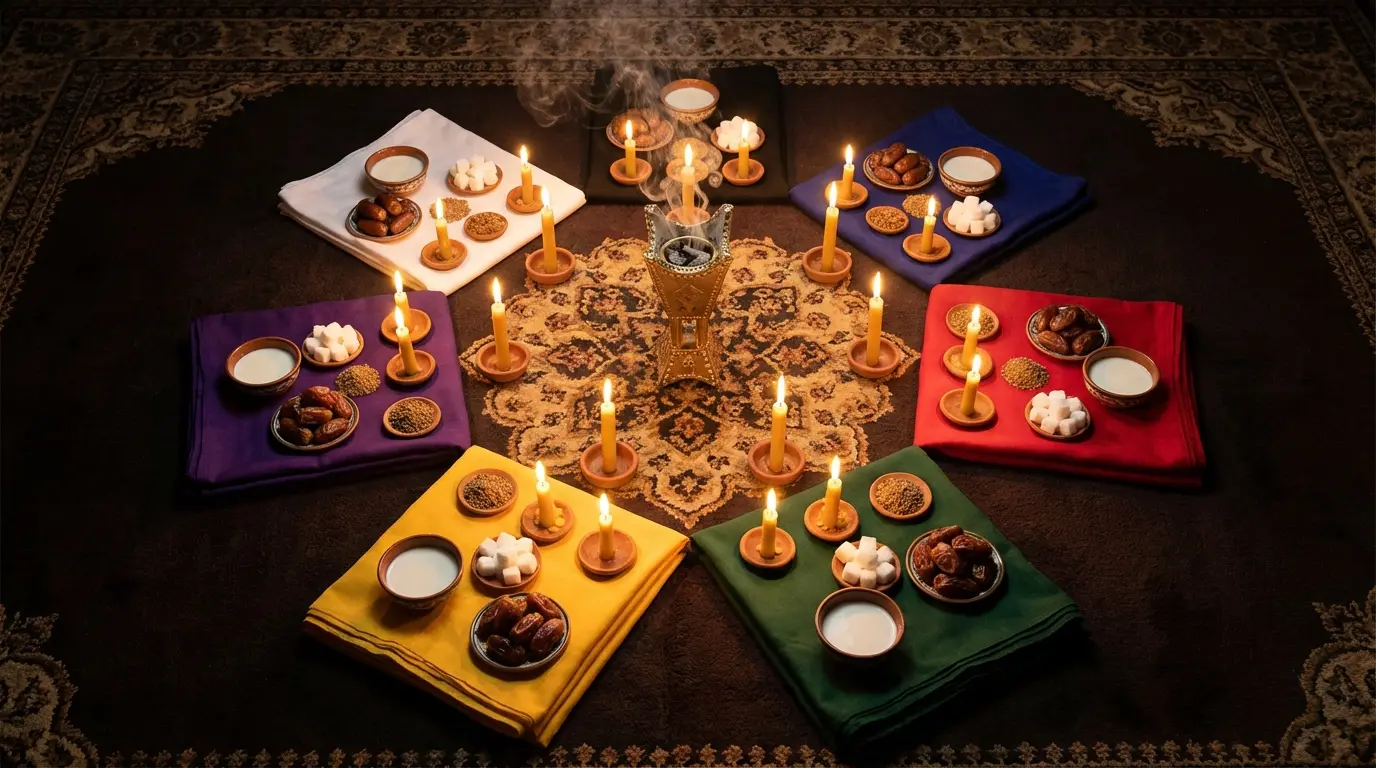
The month of Sha’ban (before Ramadan) is the most intense ritual period. Gnawa believe the spirits (Mlouk) are chained during Ramadan, so all healing ceremonies must happen beforehand. During Sha’bana, Marrakech transforms: nightly Lilas fill the medina, the seven colors are invoked — from white (Moulay Abdelqader Jilali) through black (Sidi Mimoun), blue (Sidi Moussa), red (Sidi Hammou), to yellow (Lalla Mira) and purple (Lalla Aicha) — each with its specific incense (Bakhour), rhythm, and ceremonial dress (Chachia).