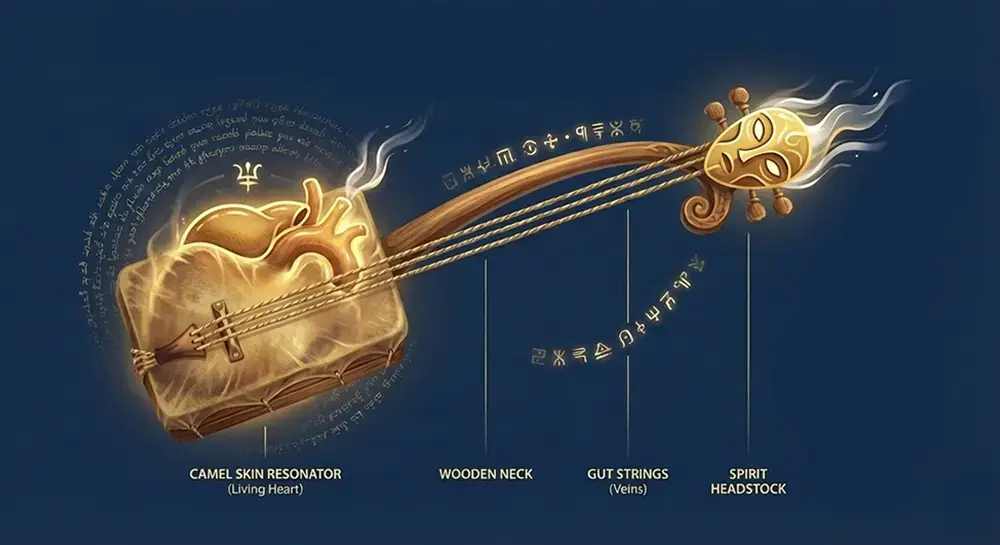
Discover the iron castanets that drive Gnawa music — from their origins as symbols of slavery to their role as instruments of spiritual liberation and trance.
Beneath the deep bass of the guembri, beneath the voices calling to spirits, there is a sound that never stops — a metallic chatter, a clanging pulse, a rhythm of iron that drives everything forward. This is the sound of the Qraqeb, the percussion backbone of Gnawa music.
But these are not ordinary instruments. They are transformed shackles — tools of bondage remade into instruments of liberation.
What Are Qraqeb?
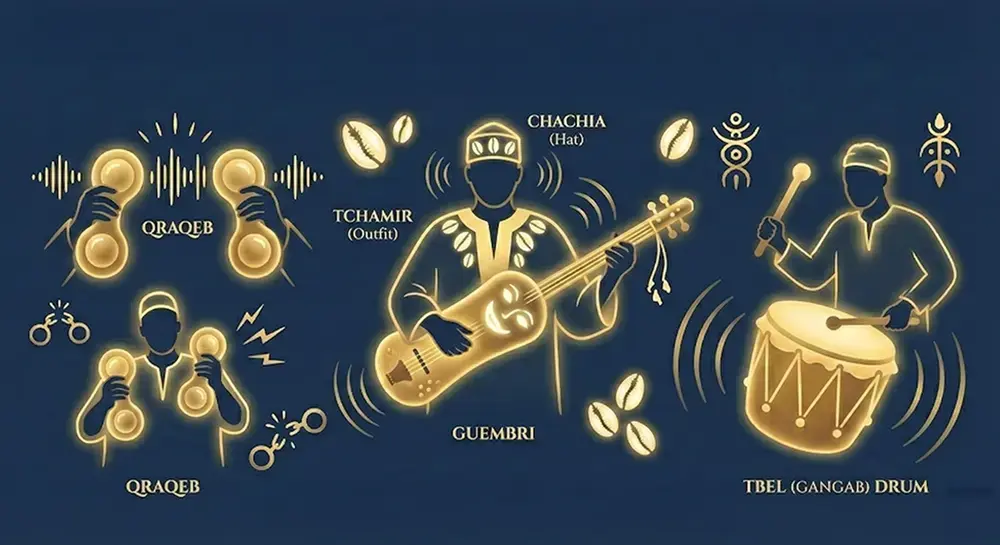
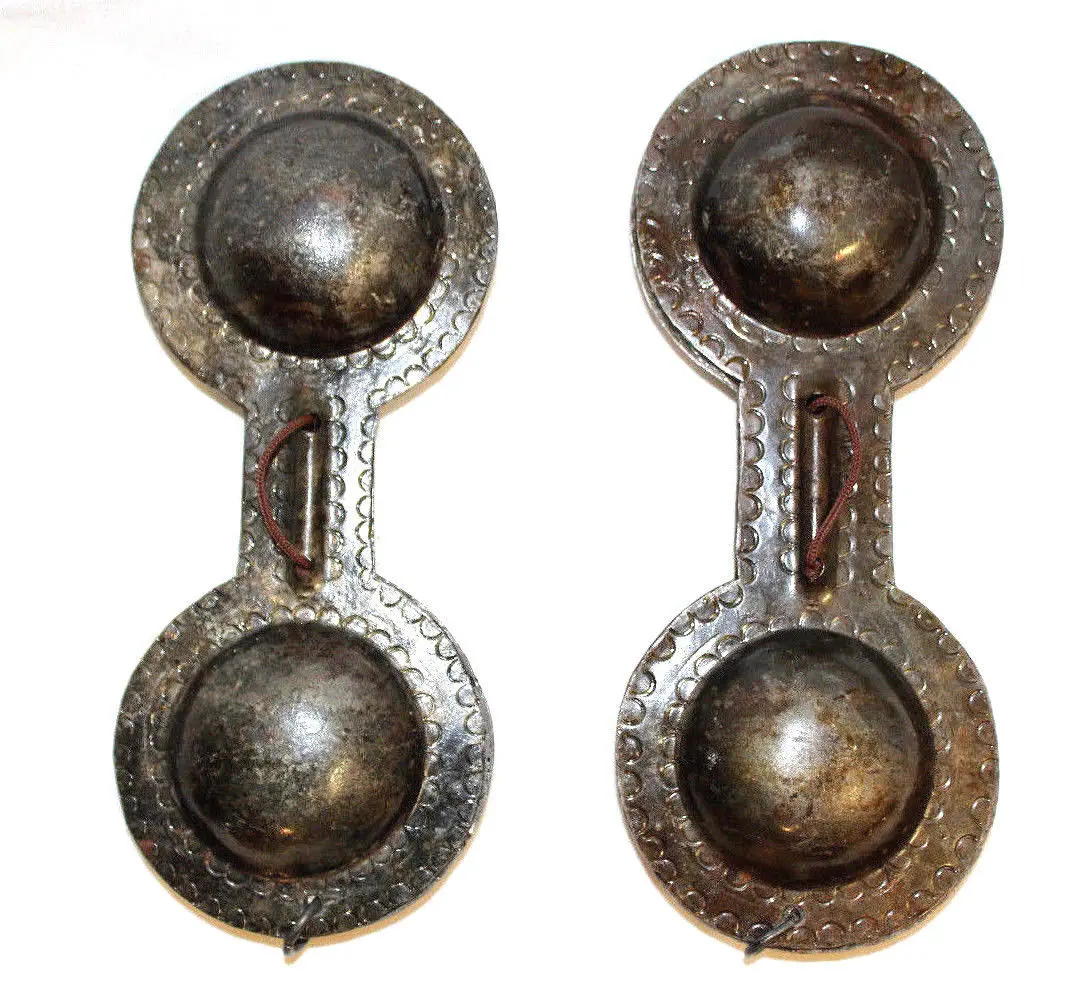
Qraqeb (قراقب, also spelled krakeb, garagab, or karkabou) are large iron castanets used as the primary rhythmic instrument in Gnawa music. The word is plural; a single piece is called a qarqab.
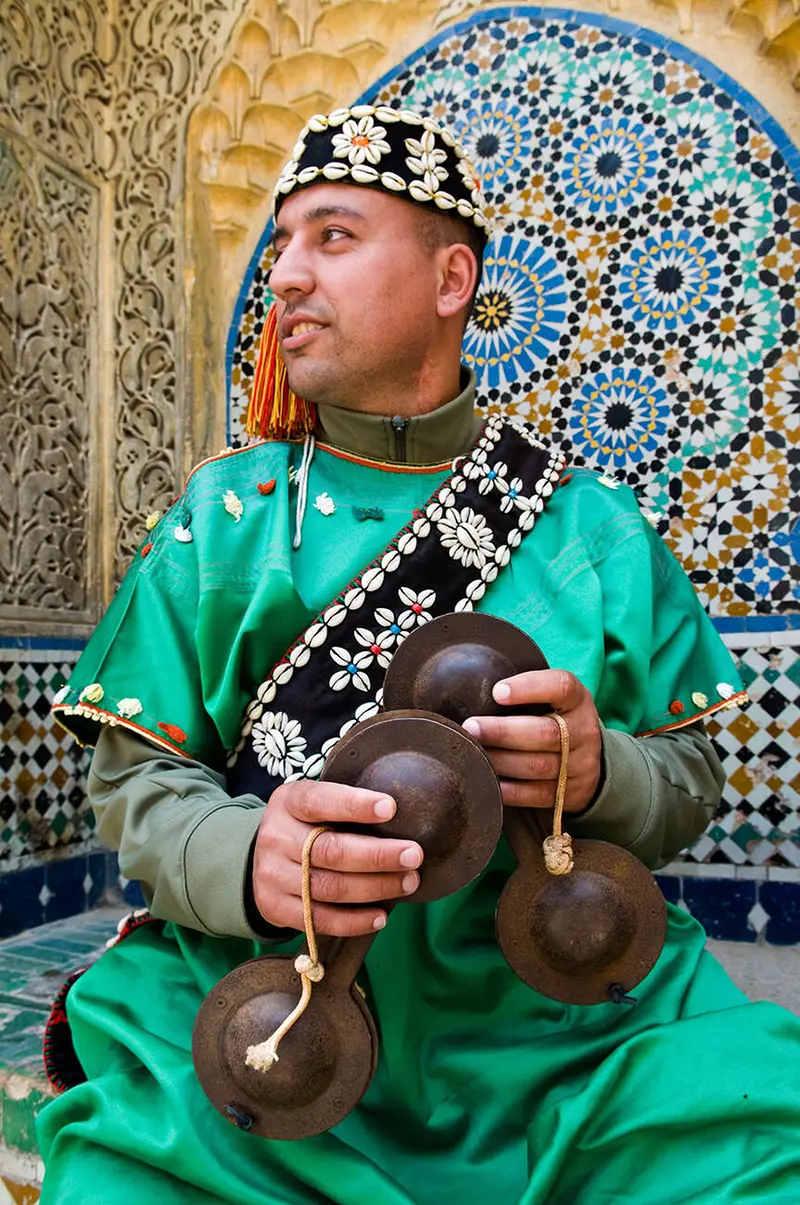
Each qraqeb set consists of four bowl-shaped metal cymbals — two connected pieces held in each hand. The player clashes them together to produce a sharp, penetrating sound that cuts through any musical texture.
Qraqeb are idiophones — instruments that produce sound through the vibration of their own body, without strings, membranes, or air columns. The iron itself sings.
What Do Qraqeb Symbolize?
The sound of qraqeb carries history in every clash.
The Shackles of Slavery
Gnawa oral tradition holds that qraqeb represent the chains and shackles that once bound their enslaved ancestors. The metallic clanging echoes the sound of iron on iron — the rattle of restraints during the long march across the Sahara, the clink of chains in the slave markets of Essaouira and Marrakech.
Some say the rhythmic pattern mimics the sound of horses’ hooves — the mounts of the slavers who drove their ancestors toward captivity. Others hear in it the crash of waves against the ships that carried human cargo.
Liberation Through Transformation
But the qraqeb are not merely memorials to suffering. They represent transformation — the moment when the tools of bondage became instruments of freedom.
When enslaved Africans were freed, they did not discard the sounds of their captivity. They reclaimed them. The chains that once silenced their culture became the rhythm that would carry their spiritual traditions forward for centuries.
Every clash of qraqeb is an act of liberation — a declaration that what was meant to destroy has been transformed into something that heals.
How Are Qraqeb Played?
The Basic Technique
The player holds one pair of connected cymbals in each hand, fingers threaded through the connecting cord. The technique involves:
- Bringing the pairs together with force to create the clash
- Keeping them closed between hits so the sound of clanging shut is prominent
- Rapid alternation between hands to create continuous patterns
Unlike Western cymbals that ring openly, Gnawa qraqeb are played closed — the metal strikes and immediately stops, creating a sharp, percussive attack rather than a sustained shimmer.
The Rhythmic Pattern
Qraqeb patterns in Gnawa music are polyrhythmic — multiple rhythmic layers that interlock and overlap. The basic pattern might sound like:
“Clack-clack-CLACK, clack-clack-CLACK”
But within an ensemble of 10 to 20 qraqeb players, each musician contributes to a dense, shimmering wall of metal that seems to breathe and pulse.
The patterns are not random. Each phase of the lila ceremony has specific qraqeb rhythms that correspond to different spirits. The players must know which patterns belong to which Mlouk, shifting together as the ceremony progresses through its seven stages.
Ensemble Playing
In a traditional Gnawa ensemble, there is:
- One guembri (played by the Maâlem)
- Up to 20 qraqeb players (the kouyou)
The kouyou do not merely accompany — they are equal partners in creating the trance-inducing sound. Their interlocking patterns create a hypnotic effect that seems to suspend time, helping participants enter the jedba (trance state).
Why Iron, Not Wood?
Qraqeb are always made of iron or steel, never wood. This choice is both practical and symbolic.
Practical Reasons
Volume: Iron produces a loud, penetrating sound that can be heard over drums, voices, and guembri. Wooden castanets would be lost in the mix.
Durability: Qraqeb are played for hours during all-night ceremonies, struck thousands of times. Iron withstands this punishment; wood would crack and splinter.
Sustain Control: Iron can be played closed (stopping immediately) or open (ringing out), giving players dynamic control. Wood offers less tonal variation.
Symbolic Reasons
The Memory of Chains: Iron qraqeb directly reference the iron shackles of slavery. Using wood would break this symbolic connection.
Transformation of Material: The same metal that bound ancestors is now used to summon spirits and heal the sick. The material itself carries the story of liberation.
Spiritual Resonance: In Gnawa belief, the metallic sound of iron has particular power to communicate with the Mlouk. The bright, cutting timbre pierces the veil between worlds.
Can You Play Gnawa Without Qraqeb?
The short answer: not really.
The Essential Role
Qraqeb are not optional decoration — they are the rhythmic foundation of Gnawa music. Without them:
- The guembri has no rhythmic support
- The polyrhythmic texture collapses
- The trance-inducing effect is severely weakened
- The ceremony loses its driving pulse
A Maâlem can play guembri alone for teaching or informal settings. But a true lila ceremony requires the qraqeb ensemble. The interaction between guembri and qraqeb is what creates the characteristic Gnawa sound.
Historical Precedent
In traditional practice, the qraqeb have always been present. The earliest accounts of Gnawa ceremonies describe the metallic percussion as central to the ritual. Archaeological and historical evidence suggests that iron percussion instruments accompanied African spiritual practices long before the Gnawa tradition crystallized in Morocco.
Modern Adaptations
In some contemporary fusion contexts — concert stages, recording studios — Gnawa music may be performed without full qraqeb ensembles. Electronic producers have sampled qraqeb sounds. Jazz collaborations may feature only one or two qraqeb players.
But traditional Gnawa practitioners consider these incomplete performances. The spiritual efficacy of the music — its power to induce trance and facilitate healing — depends on the full ensemble sound. A lila without qraqeb is like a ceremony without incense or color: technically possible, but missing essential elements.
The Sound That Endures
Every night, across Morocco, qraqeb are lifted and struck. The same sound that echoed in slave caravans now echoes in zawiyas and festival stages. The same iron that once bound now liberates.
The qraqeb remind us that music is never just sound. It is memory made audible — suffering transformed into celebration, bondage transformed into freedom, history transformed into healing.
When you hear that metallic chatter rising beneath the guembri’s bass, you are hearing centuries of survival. You are hearing the rhythm of iron — the heartbeat of Gnawa.
"The qraqeb remember what the chains forgot — that iron can sing, and the captive can dance free."
Continue Your Journey
Explore more about Gnawa instruments and history:
- The Guembri: Sacred Heart of Gnawa Music — Meet the guembri, the qraqeb’s melodic partner.
- From Slavery to World Music: The Hidden History of Gnawa — Understand the slavery origins that gave the qraqeb their symbolic power.
- Gnawa Instruments Guide: The Full Sacred Ensemble — See how qraqeb fit within the complete Gnawa ensemble.
Explore the Instruments
- The Qraqeb — Instrument Page — Detailed specifications, history, and gallery.
- The Guembri — The bass lute whose voice the qraqeb support.
- The Tbel — The large drum used in Gnawa processions.
The Kouyou Masters
- Hamid El Kasri — Known for leading large, powerful kouyou ensembles.
- H’mida Boussou — A Casablanca legend whose ceremonial qraqeb were legendary.