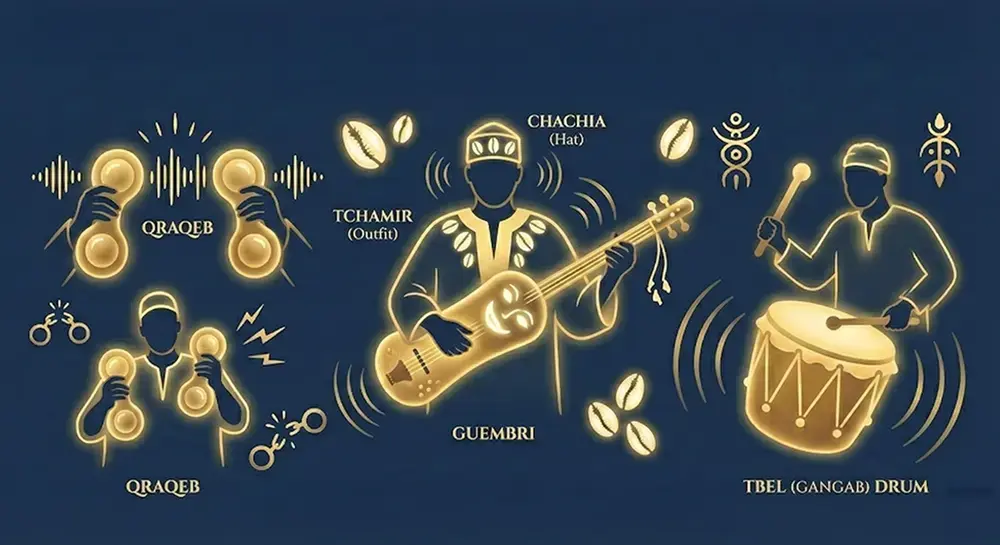
Discover the mystical three-stringed bass lute at the center of Gnawa spirituality — how it's made, why it's considered a living spirit, and the legend of its origins.
When a Maâlem lifts his guembri before a ceremony, he does not simply pick up an instrument. He awakens a living spirit. He holds in his hands the junction of three souls — the camel, the goat, and the tree — bound together to speak with the invisible world.
The guembri is not merely the central instrument of Gnawa music. It is the sacred heart that makes everything else possible.
What Is a Guembri?
The guembri (also called sintir, gimbri, or hajhouj in Hausa) is a three-stringed bass lute unique to Gnawa music. Approximately the size of a guitar, it produces deep, resonant bass notes that seem to rise from the earth itself.
Unlike any Western instrument, the guembri combines:
- Melodic playing — Plucking strings to create bass melodies
- Percussive rhythm — Striking the body for drum-like sounds
- Spiritual resonance — A metallic rattle that adds hypnotic buzz
The guembri is played exclusively by the Maâlem (master musician) during ceremonies. Only he has the spiritual authority to call the spirits through its voice.
How Is a Guembri Made?
The construction of a guembri is itself a sacred craft, passed down through generations of specialized artisans. Every material carries meaning.
The Body
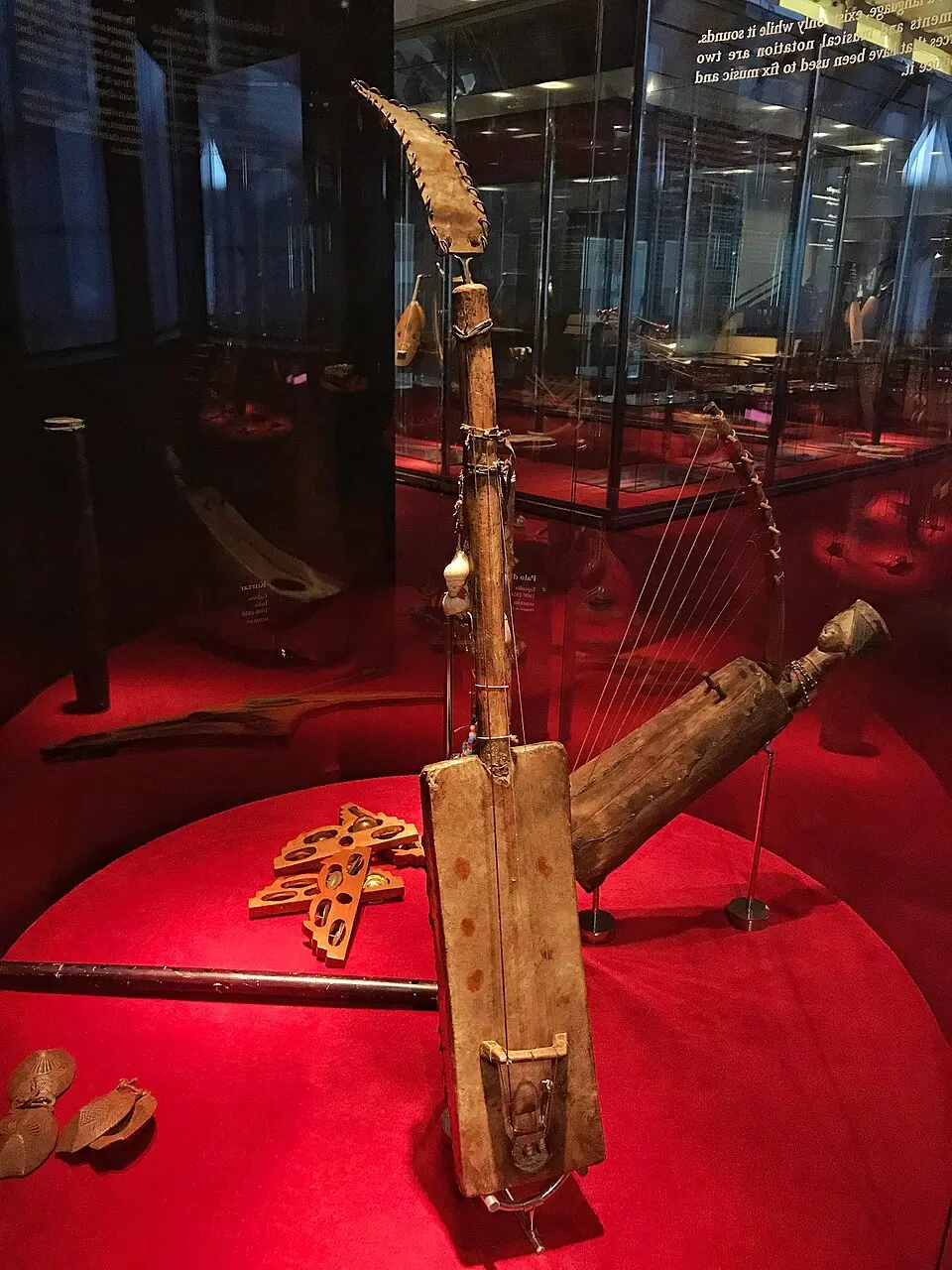
The body is carved from a single piece of wood — traditionally mahogany, walnut, iroko, or poplar. The craftsman hollows out a log to create a rectangular or canoe-shaped resonating chamber, then polishes and sometimes decorates it with inlay.
The iroko tree is particularly significant. In West African traditions, iroko is associated with fertility and spiritual power — a trace of the instrument’s Sahelian origins.
The Skin
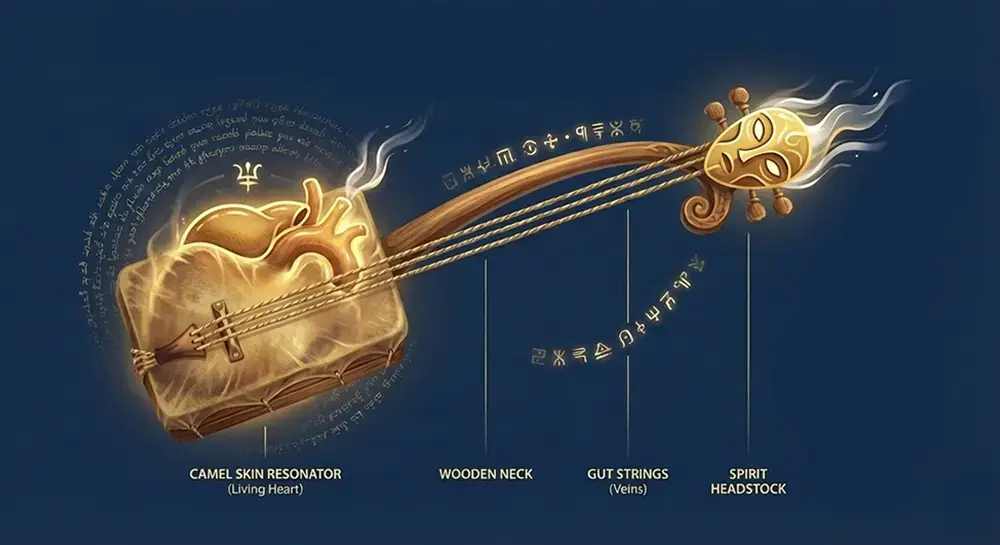
The playing side is covered with stretched camel skin, nailed tightly to the wooden body. This membrane functions like a banjo head, amplifying the bass tones. A sound hole is cut near the bridge for enhanced acoustics. Some craftsmen enhance the skin with henna designs.
The Neck
A thick wooden dowel (usually cedar or iroko) passes through the body and extends out to form the neck. This same dowel runs under the skin to serve as the string carrier at the base.
The Strings
Three strings made from goat gut (or modern nylon/metal) are attached to the dowel. Two long strings reach the end of the neck; one shorter string attaches halfway. They are tuned approximately:
| String | Tuning | Role |
|---|---|---|
| Lowest | D | Drone note |
| Middle | D (octave) | Never fretted |
| Highest | G | Fourth above drone |
Traditionally, strings were secured with leather thongs, though modern guembris often use guitar tuning pegs.
The Sersara
At the top of the neck sits the sersara — a thin metal plate shaped like a stylized flame, encircled by rings or tiny bells. This attachment quivers with every vibration, producing the distinctive buzzing, insect-like sound that characterizes the guembri.
This buzz connects directly to West African sonic traditions — the same preference for metallic resonance found in the mbira, balafon, and kora.
Why Is the Guembri Considered a Living Spirit?
In Gnawa belief, the guembri is not an object but a living entity that bridges worlds.
Three Souls in One
The guembri is said to contain three souls:
- The tree — From which the body is carved
- The camel — Whose skin covers the resonating chamber
- The goat — Whose gut becomes the strings
These three lives are joined together, creating something that transcends any of them — a vessel capable of speaking to the spirit world.
Ritual Treatment
The guembri receives treatment reserved for sacred beings:
- Incense purification — Before ceremonies, the instrument is nourished with incense smoke wafted over its body
- Upright storage — When not played, it must stand upright, never laid flat
- Protected space — Traditionally kept in the bit al-jwad (chamber of spirits) with other sacred objects
- Ablution requirement — One must perform ritual washing before touching it
The Voice That Calls Spirits
The guembri’s deep bass notes are believed to speak directly to the Mlouk (spirits). When the Maâlem plays, he is not merely making music — he is conducting a conversation with invisible entities, calling them to attend, guiding them through the ceremony.
As anthropologist Zineb Majdouli observed: “The guembri is the master of the game. It attracts the Mlouk into the dance space and drives trance.”
Guembri vs. Bass Guitar
Though both produce bass tones, the guembri and bass guitar are fundamentally different:
| Feature | Guembri | Bass Guitar |
|---|---|---|
| Strings | 3 (goat gut or nylon) | 4-6 (metal) |
| Body | Hollowed wood + camel skin | Solid wood, no membrane |
| Sound | Deep bass + percussive slap + metallic buzz | Pure bass tones |
| Technique | Thumb + index pluck, knuckle percussion | Pick or finger pluck |
| Purpose | Spiritual ritual, trance induction | Musical performance |
| Status | Sacred living entity | Musical tool |
The guembri’s playing technique is unique: strings are plucked downward with the knuckle side of the index finger and the inside of the thumb, while the player’s knuckles simultaneously strike the skin to produce percussive tones. This creates a sound no bass guitar can replicate.
The Legend of the First Guembri
The origins of the guembri are lost in the centuries of displacement and survival that shaped Gnawa culture. But traces remain.
African Roots
The instrument is clearly descended from the stringed lutes of West Africa’s Sahel region — the ngoni of Mali, the xalam of Senegal, the hoddu of the Fulani. When enslaved Africans were brought to Morocco through the trans-Saharan trade, they carried the memory of these instruments in their hands.
With the materials available in their new land — Moroccan wood, Saharan camel skin, Berber goat gut — they recreated their instruments, adapting them to new circumstances while preserving their essential function: connecting the living to the ancestors.
The Name Itself
Some scholars suggest “guembri” derives from Berber terms, while others connect it to “gimbri” or “gambri” from various West African languages. The alternative name “hajhouj” comes from Hausa, reflecting the Nigerian origins of many Gnawa ancestors.
A Symbol of Survival
The guembri represents something larger than music. It is proof that culture survives displacement. The enslaved peoples who became the Gnawa could not bring their instruments across the Sahara. But they brought the knowledge to build them again — and the spiritual traditions that gave them meaning.
Every guembri made today is a continuation of that survival, a link in a chain stretching back centuries to villages along the Niger River, to kingdoms that no longer exist, to ancestors whose names have been forgotten but whose music lives on.
The Guembri Today
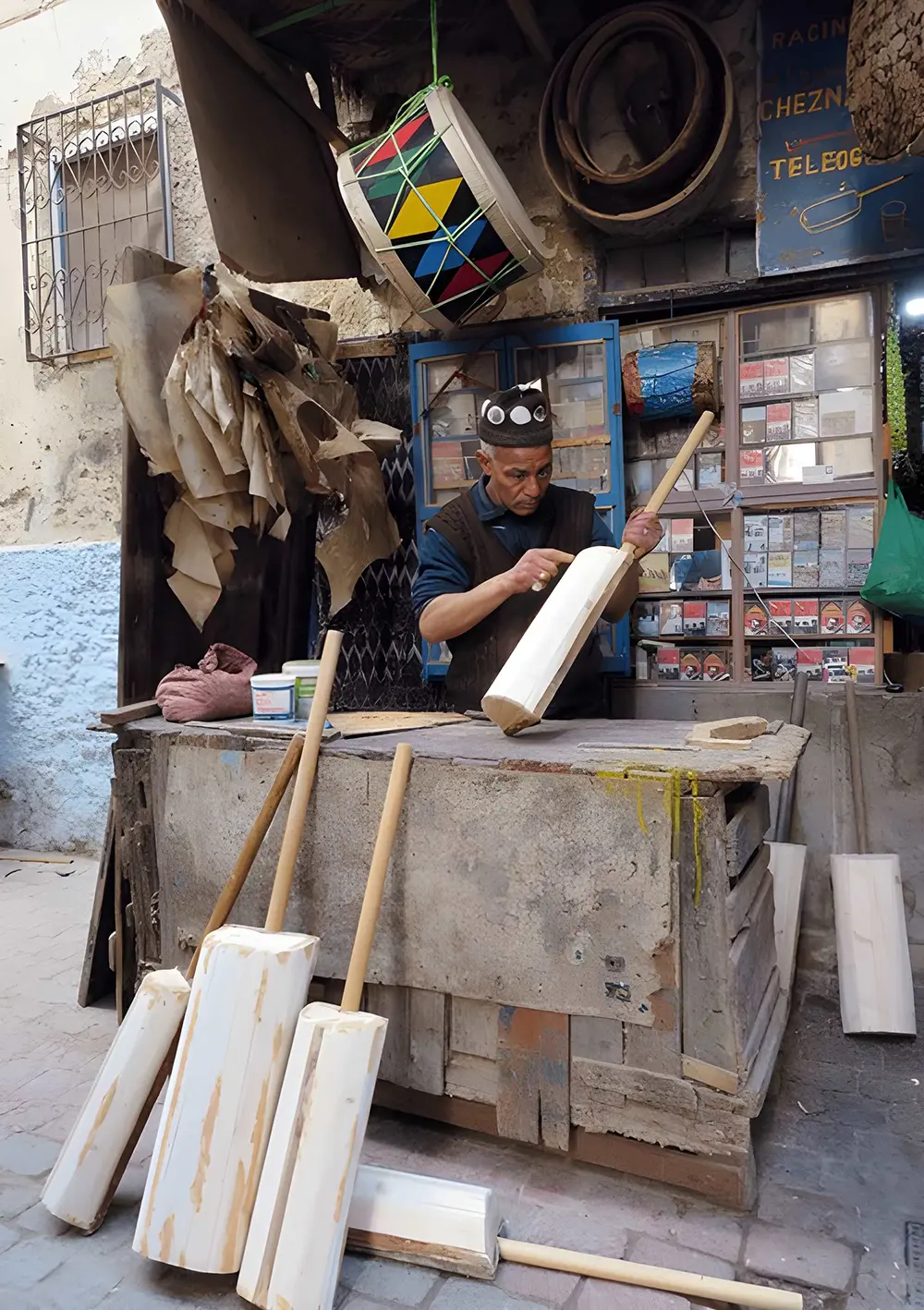
Modern guembris range from traditional handcrafted instruments to those made with contemporary materials. Some Maâlems use guitar tuning pegs instead of leather thongs. Some replace goat gut with nylon or metal strings.
But the essential form remains: the hollowed body, the skin membrane, the three strings, the sersara’s buzz. And the essential function remains: to call the spirits, to guide the trance, to heal what is broken.
When you hear a guembri’s bass notes rising in the night, you are hearing a voice that has traveled across centuries and continents — the voice of ancestors who refused to be silenced, speaking still through wood and skin and gut.
"The guembri is not played. It is awakened. And when it speaks, the spirits listen."
Continue Your Journey
Explore more about Gnawa instruments and traditions:
- Buying Your First Guembri: A Complete Buyer’s Guide — Ready to get your own? Everything you need to know before purchasing.
- Gnawa Instruments Guide: The Full Sacred Ensemble — Discover the qraqeb, tbel, and costumes that accompany the guembri.
- Qraqeb: The Rhythm of Iron — The iron castanets that form the guembri’s rhythmic partner.
The Guembri in Context
- The Guembri — Instrument Page — Detailed specifications, tuning, and gallery.
- The Qraqeb — The iron percussion that completes the guembri’s voice.
Masters of the Guembri
- Mahmoud Guinea — The King whose guembri technique defined modern Gnawa.
- Houssam Gania — Next generation of the Gania guembri dynasty.
- Asmâa Hamzaoui — The first female Maâlem to headline the Essaouira Festival.