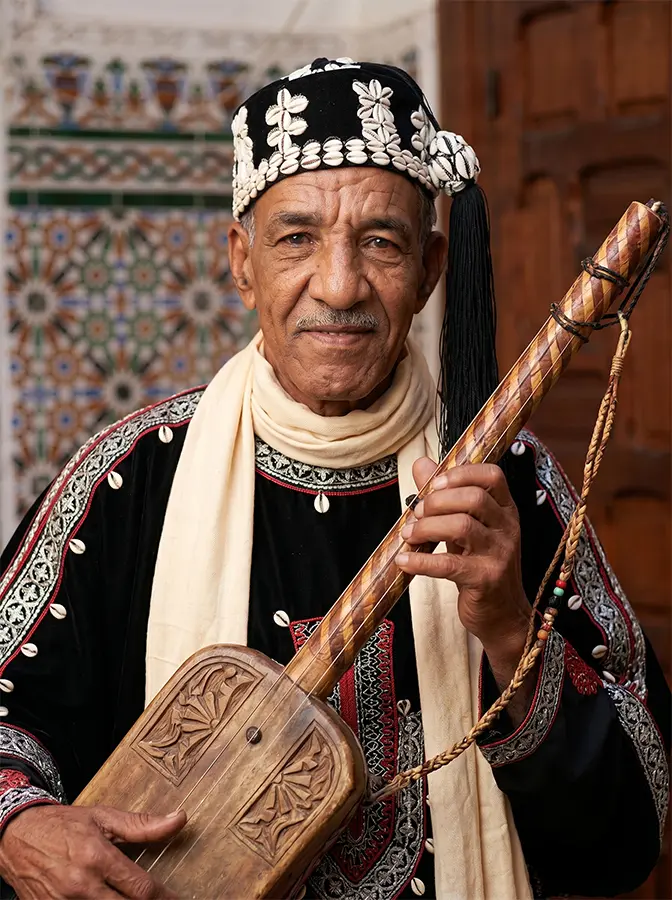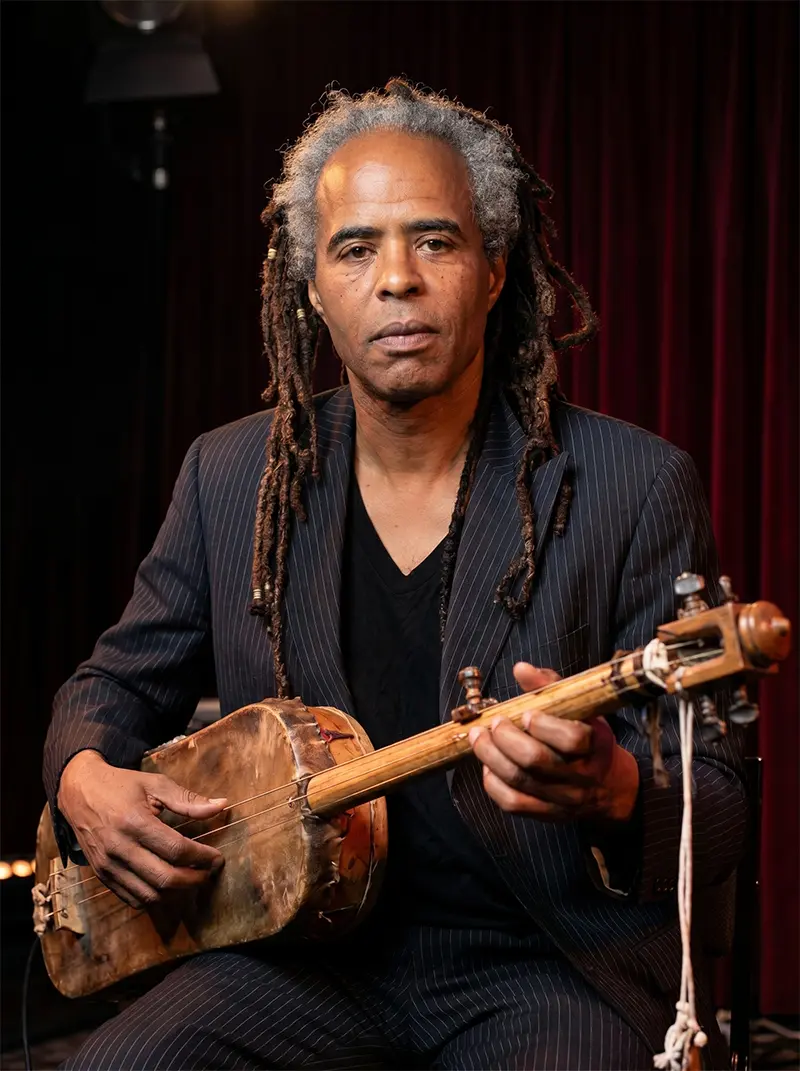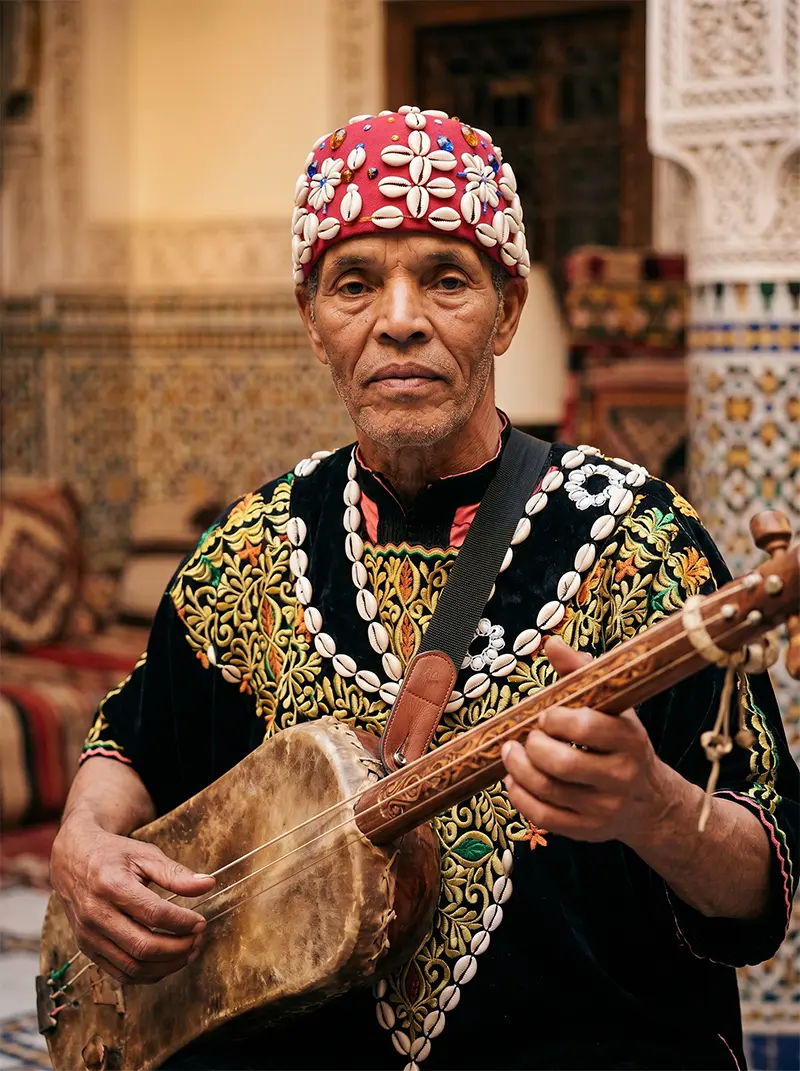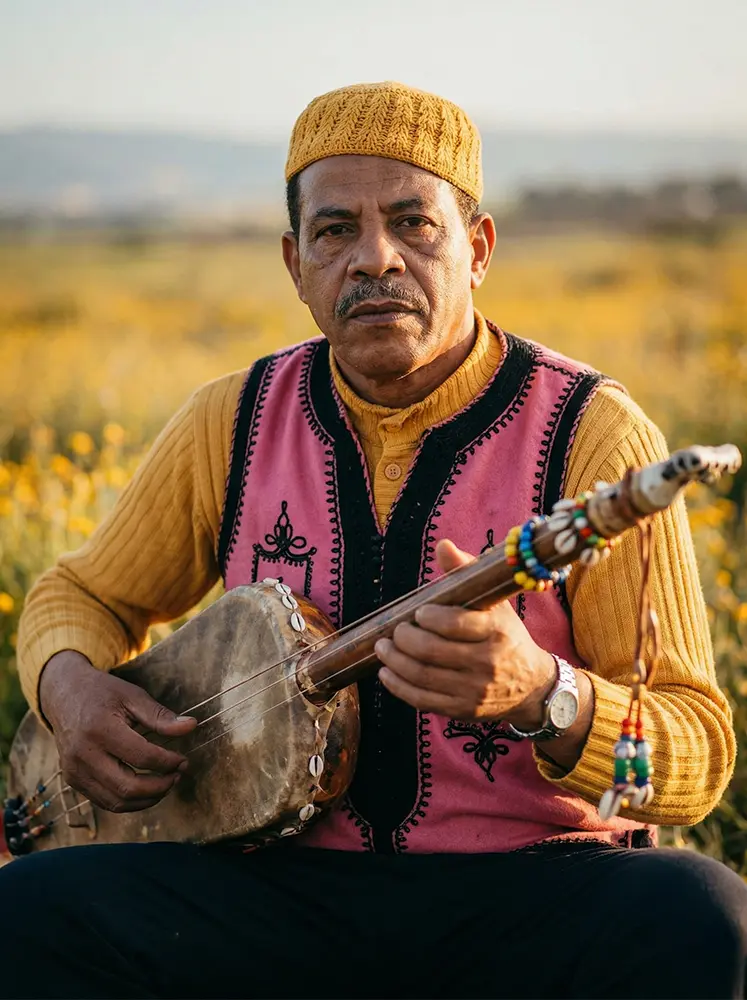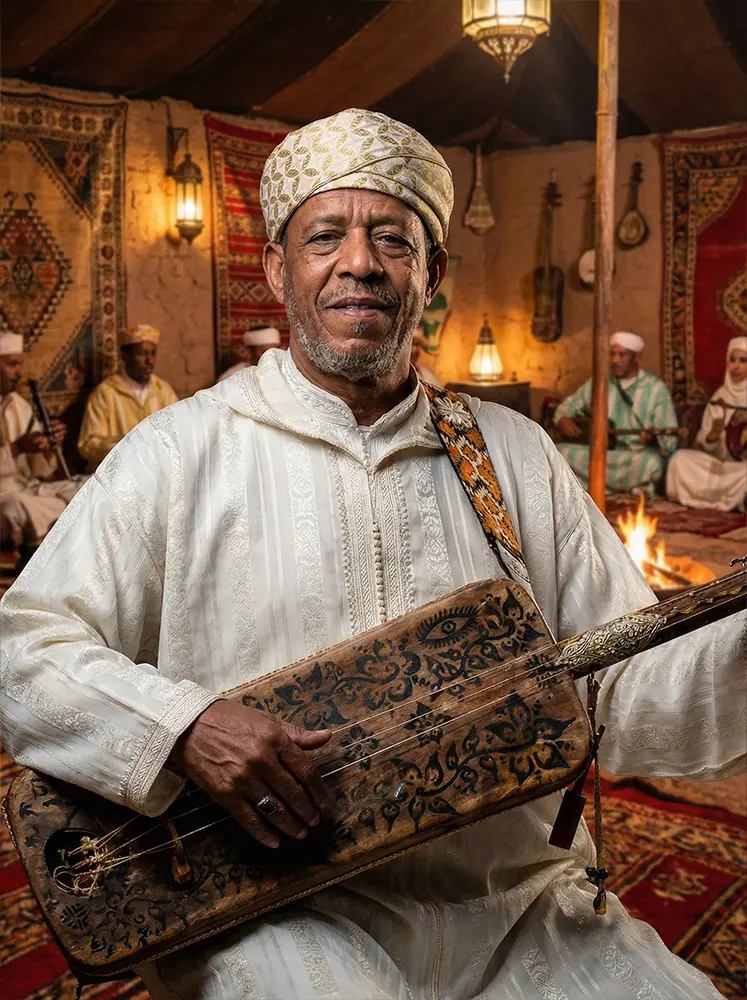
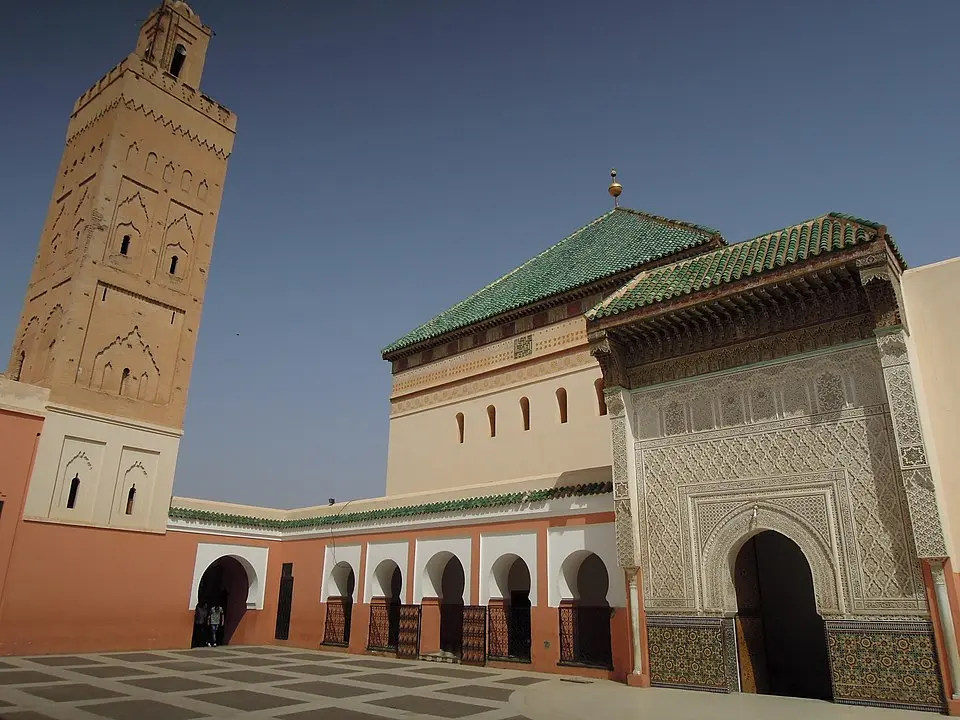
In the heart of Marrakech’s ancient medina, within the incense-filled walls of a Sufi zawiya, a boy learned that music could heal what medicine could not touch. Maâlem Mustapha Bakbou (1953-2025) was not merely born into Gnawa — he was raised inside its most sacred spaces, inheriting both the craft and the spiritual responsibility from his father before him.
He became the master who proved that tradition and innovation are not enemies but dance partners. From the midnight rituals of Marrakech to the concert halls of New York, from the folk revolution of Jil Jilala to collaborations with Marcus Miller and Pat Metheny, Bakbou carried Gnawa into the world without ever losing its soul.
Born in the Zawiya
Some musicians discover Gnawa. Mustapha Bakbou was born wrapped in it. His father, Maâlem El-Ayachi Bakbou, was a revered master who led one of Marrakech’s most important Gnawa zawiyas — those spiritual lodges where the lila ceremonies have been conducted for centuries.
From his earliest memories, young Mustapha was surrounded by the thunderous clatter of qraqeb, the deep pulse of the guembri, the thick clouds of incense, and the ecstatic movements of dancers possessed by spirits. This was not performance. This was healing. This was prayer made rhythm.
His father began teaching him the tagnawit — the sacred knowledge — before he could read. By the time other children were learning arithmetic, Mustapha was learning the names of the mlouk, the colors of the spirits, the rhythms that could call them and the rhythms that could send them away.
The Folk Revolution
The 1970s shook Morocco’s musical foundations. A generation of young artists, inspired by global folk movements, began excavating their own heritage — not as museum pieces but as living, breathing art. The movement needed authentic voices, and it found one in Mustapha Bakbou.
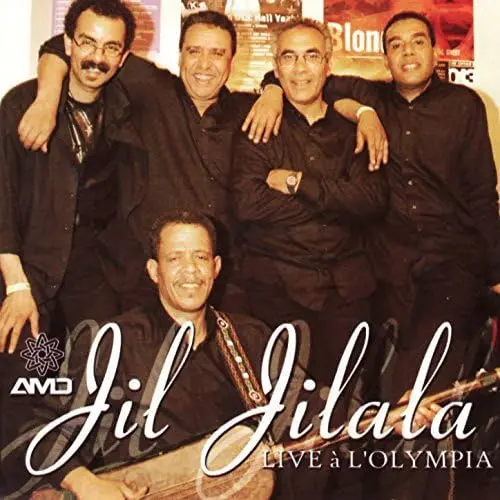
He first joined Noujoum El Hamra (Stars of the Red City), cutting his teeth on stage performance. But it was his membership in Jil Jilala — one of the legendary groups alongside Nass El Ghiwane that defined Morocco’s musical awakening — that launched him into national consciousness.
With Jil Jilala, Bakbou helped forge a new sound: traditional instruments and spiritual depths married to contemporary arrangements and social consciousness. The guembri, once confined to zawiya ceremonies, now spoke to stadiums.
The Marrakech Sound
Bakbou’s style was unmistakably Marrakchi — heavy, circular rhythms that revolve like planets around a spiritual sun. But what distinguished him from his peers was his extraordinary ability to breathe with other musical traditions without losing his own oxygen.
The Circular
Heavy, revolving rhythms faithful to tradition in ceremony, yet flexible enough to dance with jazz and rock.
The Bridge
A rare ability to hold the spiritual core while opening doors to Western harmonies and global rhythms.
The Healer
Never forgot that Gnawa is medicine first — whether in a midnight lila or on a New York stage.
He described his approach simply: “Gnawa that breathes with the world.” The tradition was the lungs; the world provided new air.
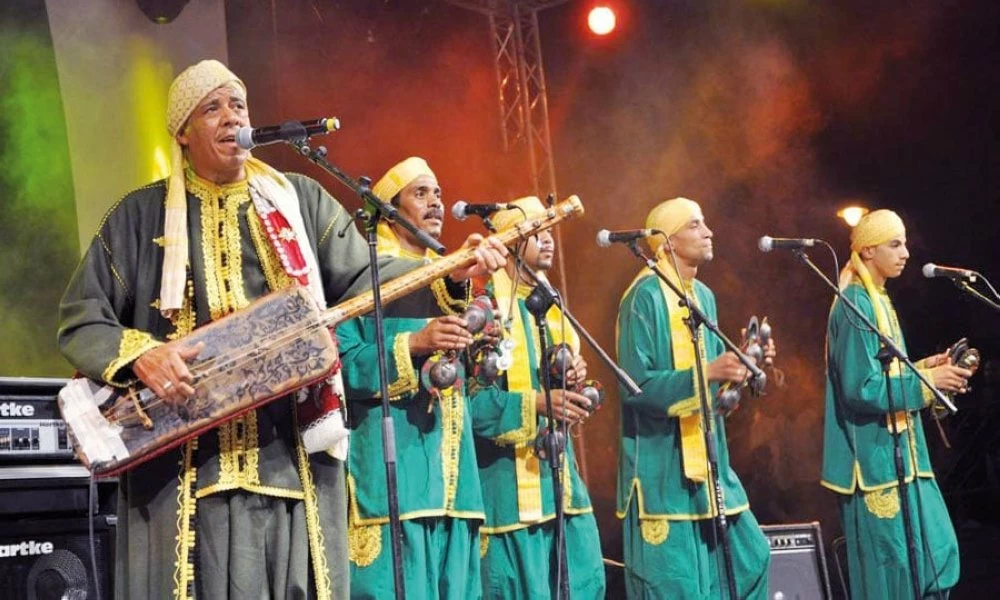
Ambassador to the World
Bakbou’s reputation crossed oceans. His mastery of fusion — real fusion, not superficial mixing — attracted the attention of jazz and world music giants who recognized in him something rare: an artist rooted deeply enough in tradition to genuinely dialogue with other forms.
The collaborations read like a dream roster:
Marcus Miller — The legendary bassist found in Bakbou’s guembri a kindred voice, two bass traditions conversing across continents.
Pat Metheny — The jazz guitar virtuoso discovered unexpected harmonies between his harmonic explorations and Gnawa’s modal depths.
Louis Bertignac — The French rock icon collaborated on projects that proved Gnawa could rock without losing its soul.
Sixun — The French jazz fusion band found in Bakbou the perfect bridge to African roots.
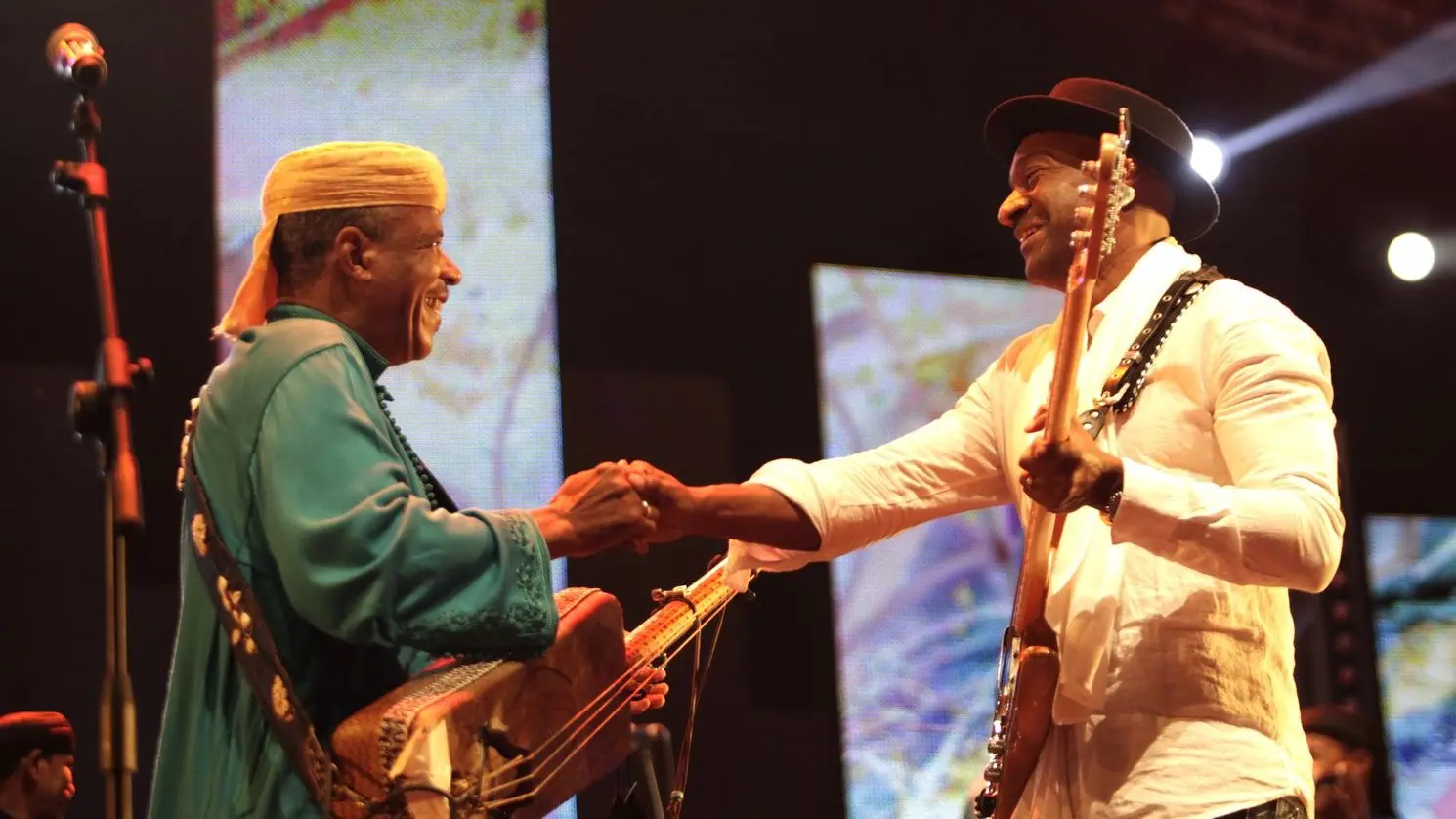
He performed across America, Europe, and Asia. In 2011, The New York Times featured his performance at Florence Gould Hall, describing Gnawa music as “spiritual yet never sedate” — words that captured Bakbou’s own approach perfectly.
Florence Gould Hall: A Night in New York
On a Saturday night in May 2011, Manhattan’s Florence Gould Hall hosted something extraordinary. As part of the World Nomads Morocco Festival, four Gnawa masters shared a single stage: Bakbou alongside Mahmoud Guinea, Hassan Zgarhi, and Hassan Hakmoun.
The New York Times critic Jon Pareles wrote of that night:
“The music is spiritual yet never sedate. Most songs are driven by quick-fingered bass riffs played by the leader on the three-stringed sintir and by the bright clatter of large metal castanets called qaraqeb, with call-and-response vocal melodies arching over the beat. The musicians are also singers and dancers: crouching and leaping, twirling and even somersaulting as the polyrhythms grow denser and the songs accelerate.”
For Bakbou, it was confirmation that Gnawa could speak to any audience willing to listen — not as exotic spectacle, but as universal spiritual language.
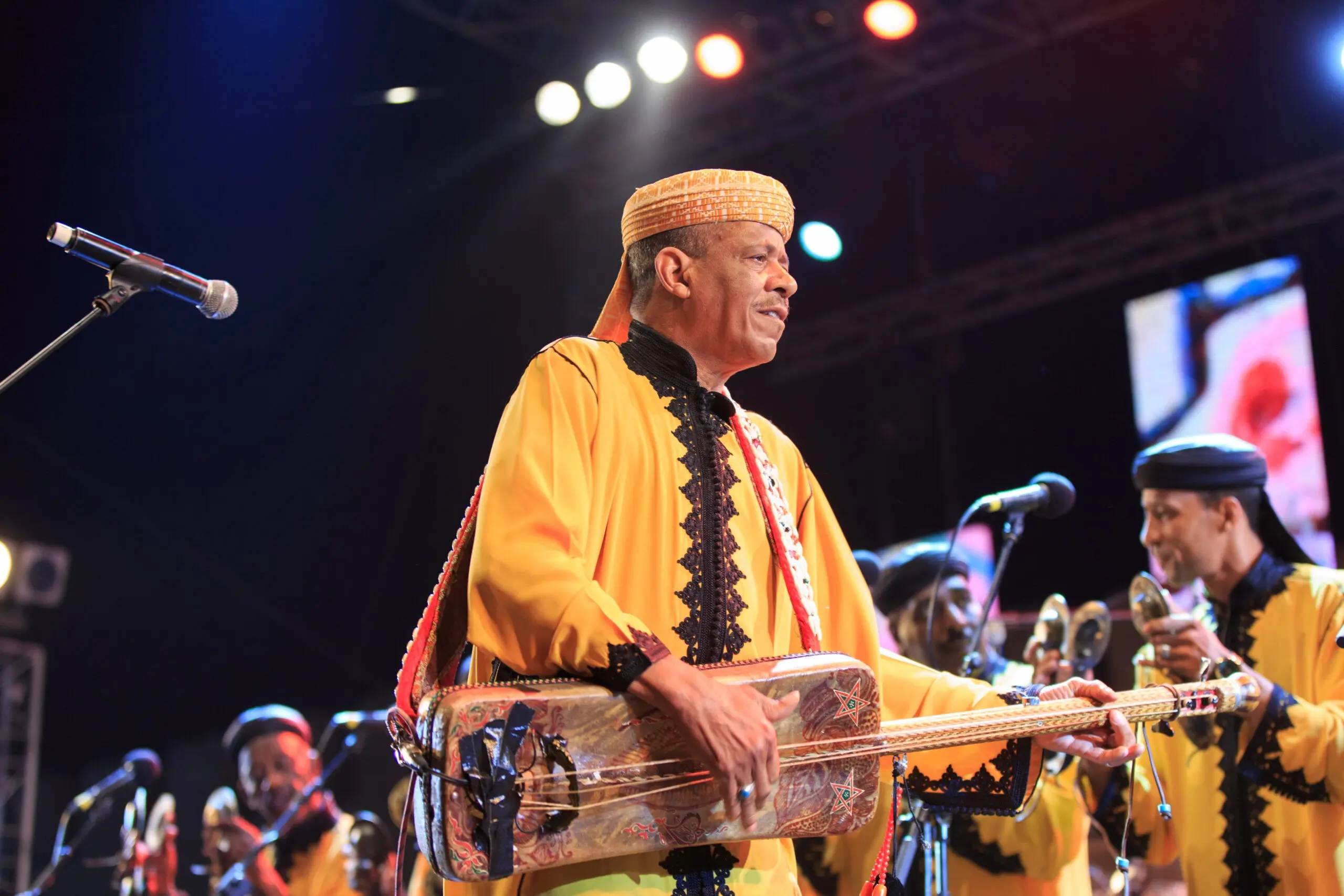
Guardian of the Flame
Despite his international success, Bakbou never abandoned the zawiya. He continued to lead traditional lilas in Marrakech, passing the tagnawit to new generations just as his father had passed it to him.
He feared what he saw happening to Gnawa: its commercialization, its reduction to festival entertainment stripped of spiritual substance. “The danger,” he would say, “is not fusion. The danger is forgetting why we play.”
His students learned not just technique but responsibility. The guembri, he taught them, is not a guitar. It is a healing instrument. To hold it is to accept a sacred duty.
The Final Silence
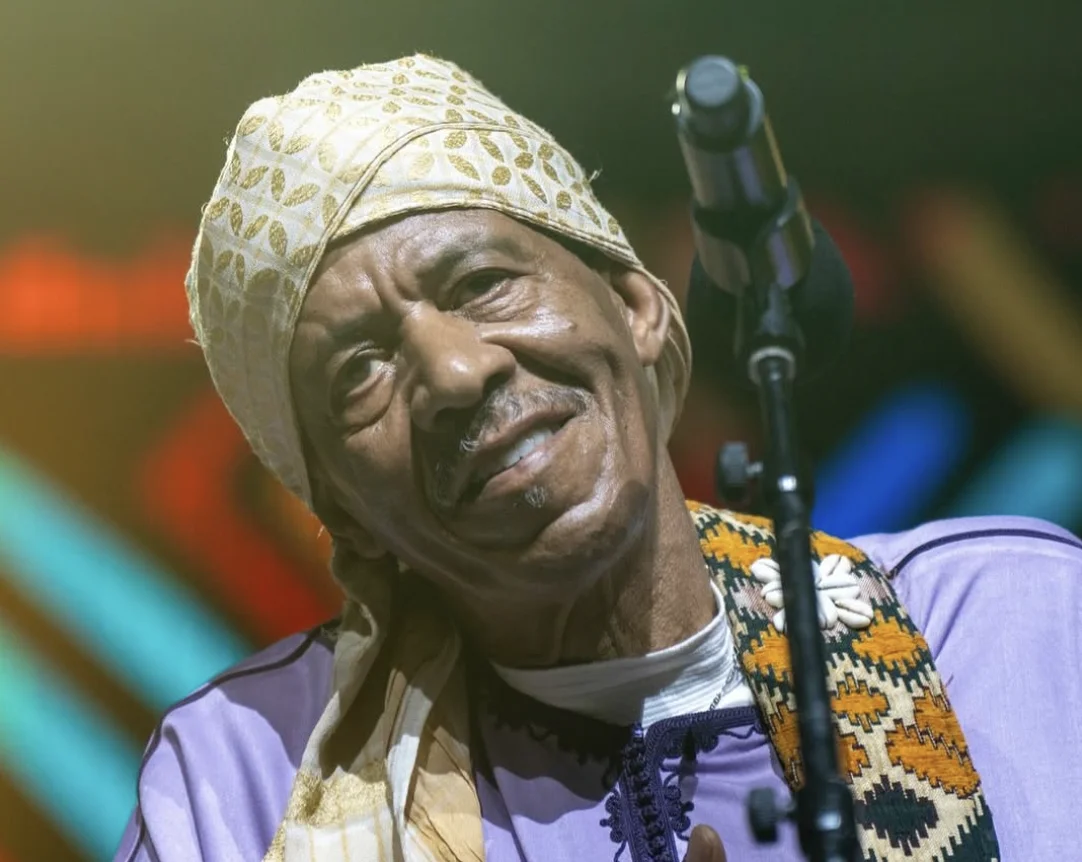
In 2025, Marrakech lost one of its greatest sons. Maâlem Mustapha Bakbou passed away after a battle with illness, at the age of 72. The red city mourned a master who had carried its spiritual voice to the world and back again.
But his legacy breathes on — in the students he trained, in the recordings he left behind, in the proof he provided that tradition and innovation can walk hand in hand when guided by genuine understanding.
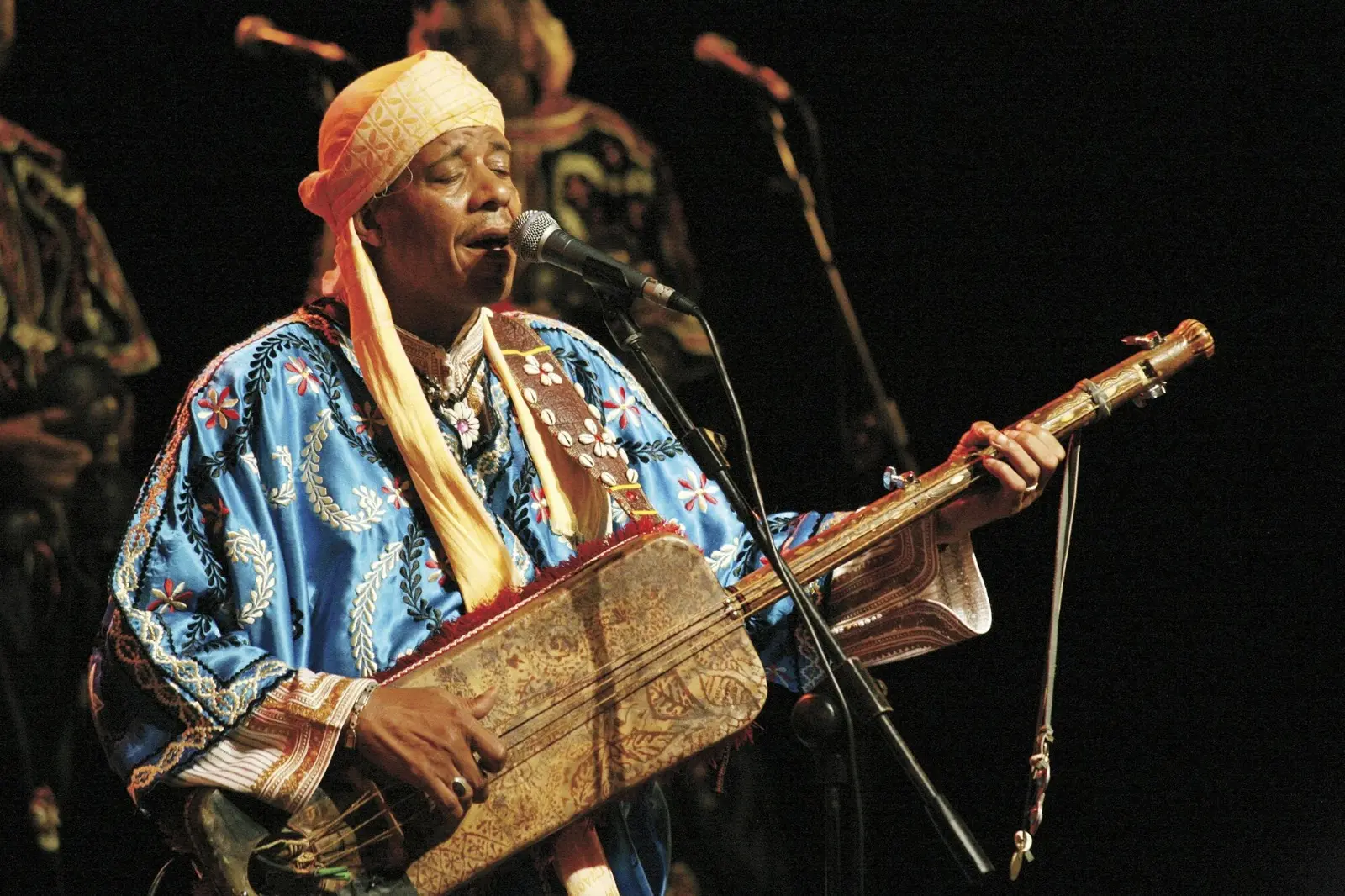
Essential Listening
Ftouh Rahba
Traditional Ritual
The opening ceremony in its purest form — Bakbou as keeper of tradition, healing rhythm intact.
With Jil Jilala
Folk Era Sessions
The folk revolution captured — Gnawa meeting contemporary arrangement in Morocco's musical awakening.
Aisha
With Peter Danstrup
East meets West in genuine dialogue — Bakbou's fusion philosophy made audible.
"Gnawa is not music. It is a spirit that saves the human being."
— Maâlem Mustapha Bakbou
He was born in a zawiya and died a master recognized across continents. He played for spirits in midnight ceremonies and for jazz legends in recording studios. He proved that you can honor your ancestors while speaking to the future.
When Mustapha Bakbou held his guembri, two worlds met: the ancient healing traditions of sub-Saharan Africa and the global conversation of contemporary music. In his hands, they were never enemies. They were partners in a dance that continues even now, carried by every student he taught, every recording he left behind, every spirit he helped to heal.
The zawiya in Marrakech still stands. The incense still burns. And somewhere in its echoes, the Maâlem plays on.