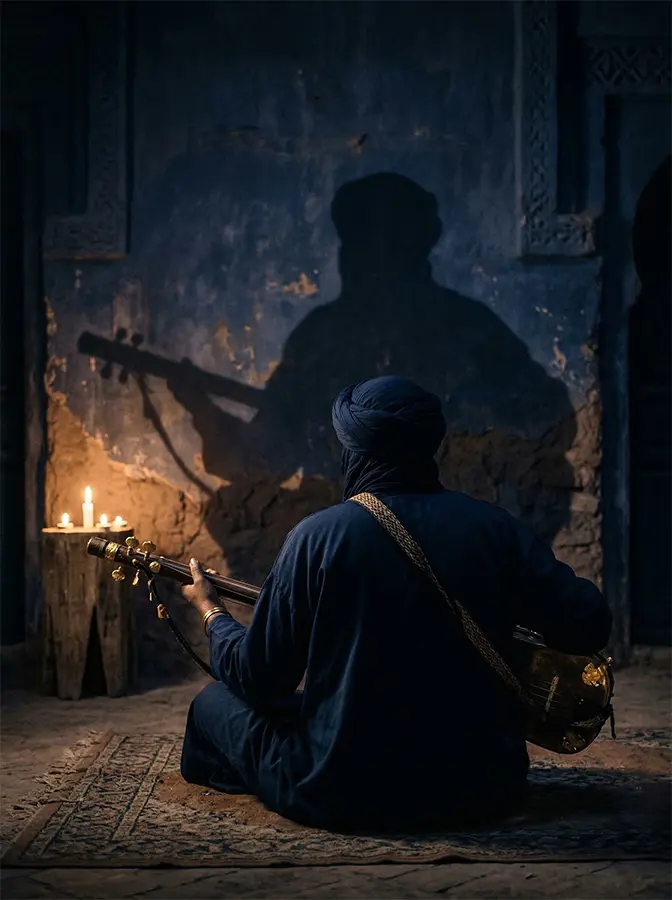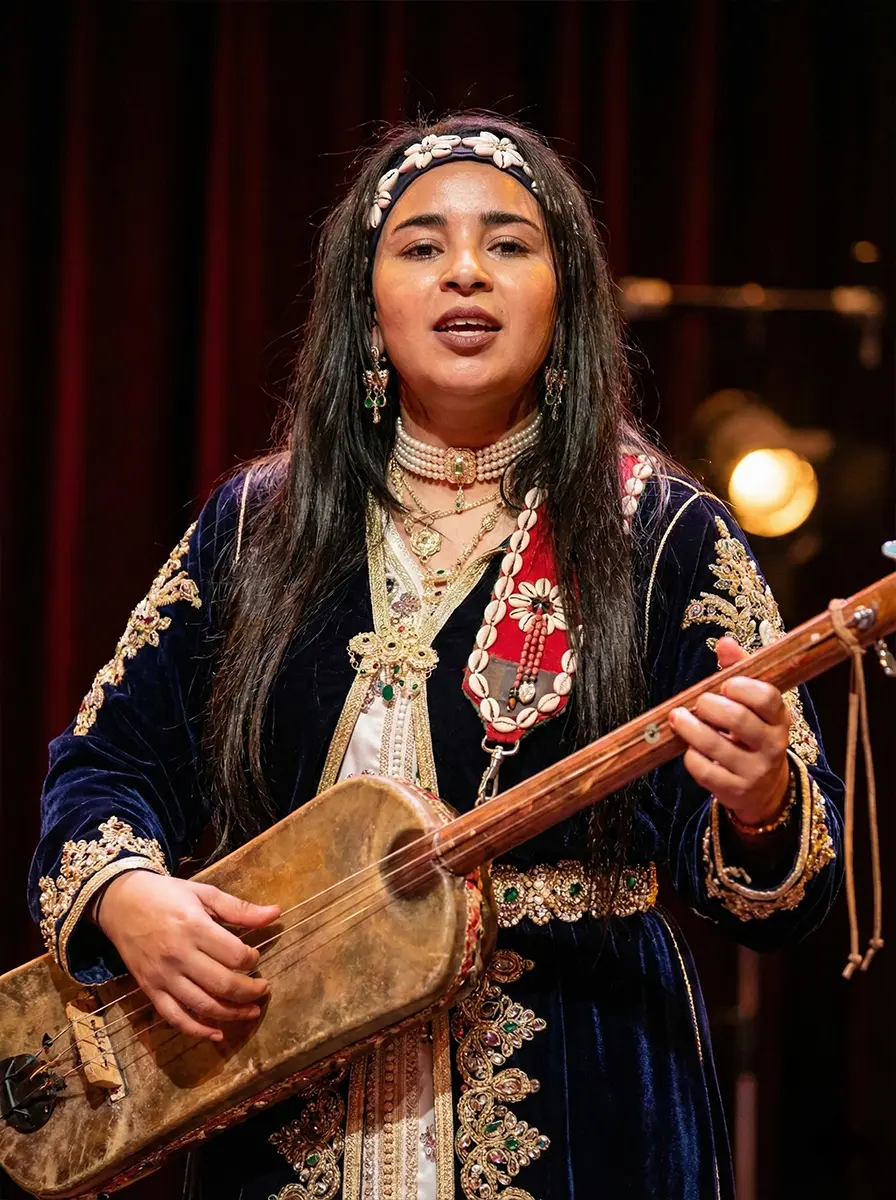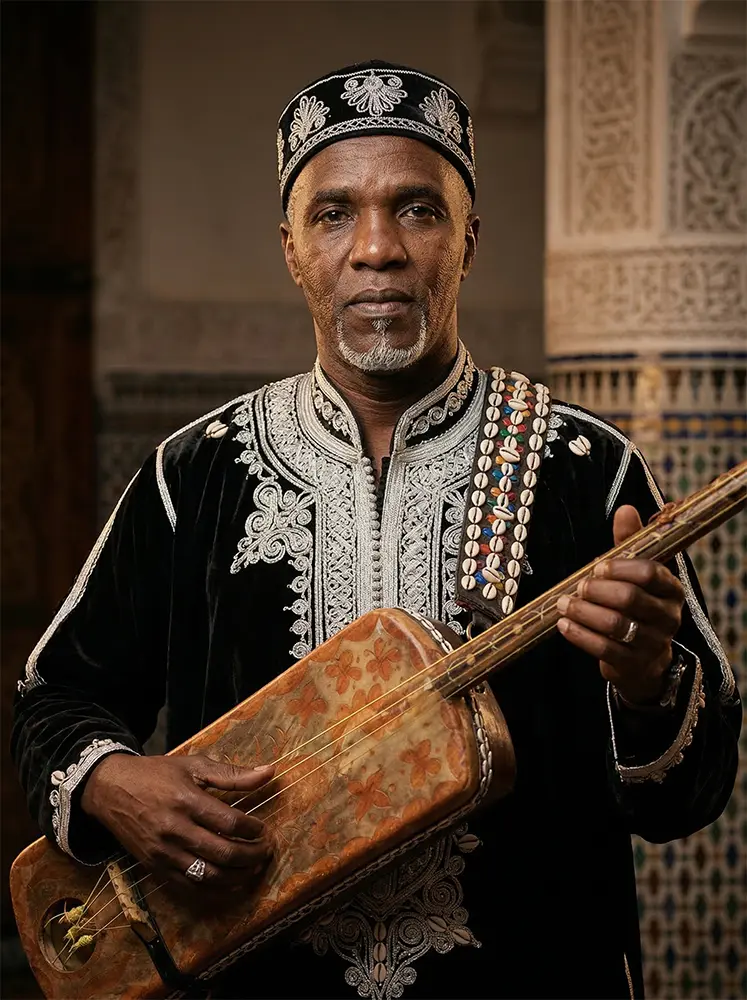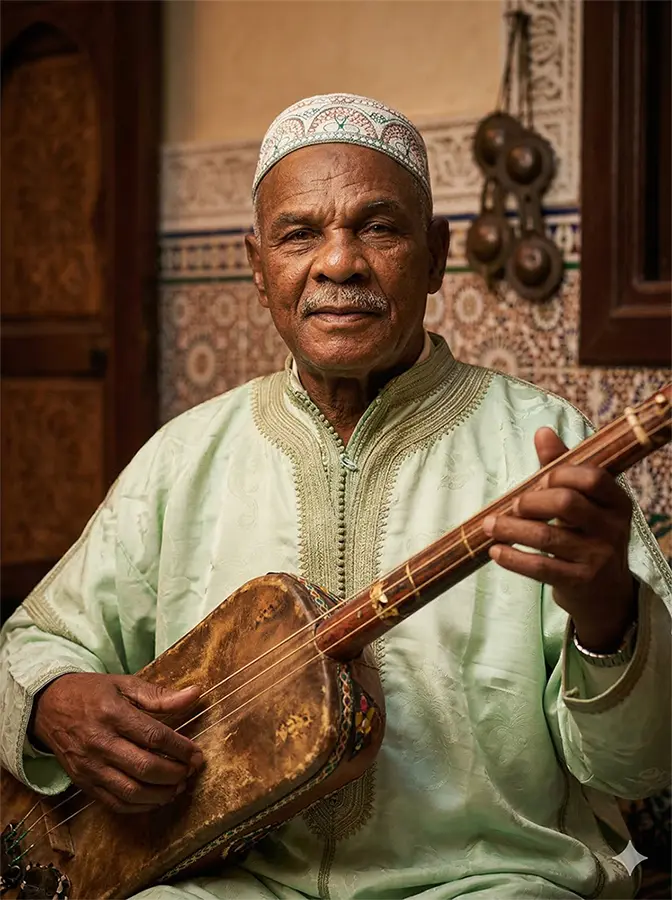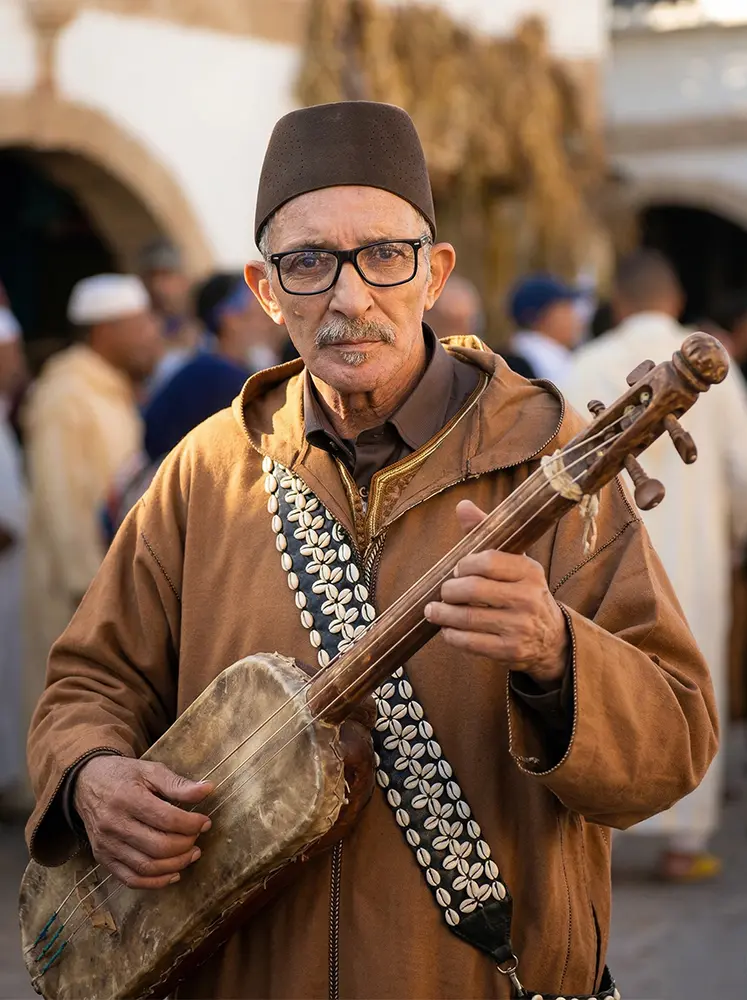
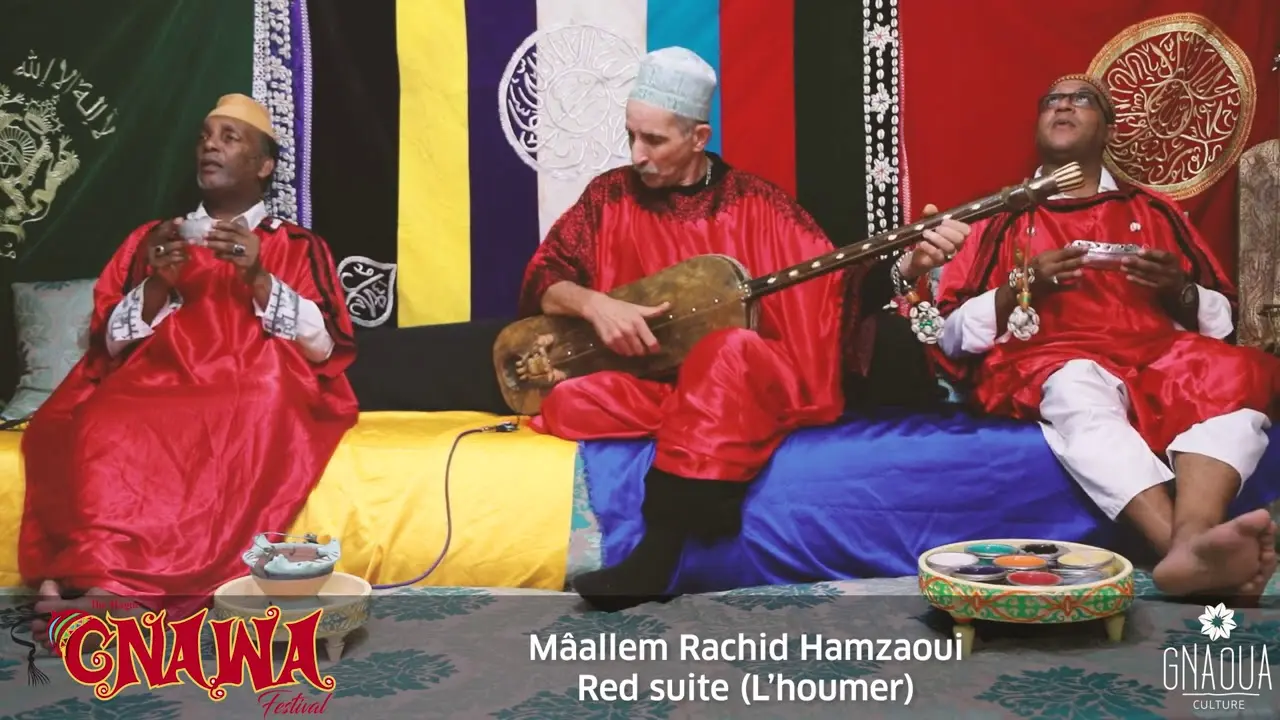
There are masters who chase the spotlight and masters who guard the fire. Maâlem Rachid Hamzaoui is the latter — a sentinel of Casablanca Gnawa who made one of the most revolutionary decisions in the history of the art: he taught his daughters the sacred guembri, shattering a centuries-old monopoly that reserved the instrument exclusively for men. His daughter, Maâlema Asmaa Hamzaoui, became the first internationally recognized female Gnawa master — but the revolution began in his living room, decades before the world took notice.
He is not merely a musician. He is an architect of transformation who builds from within the tradition, never against it.
Roots: Casablanca and the Grandmother’s Secret
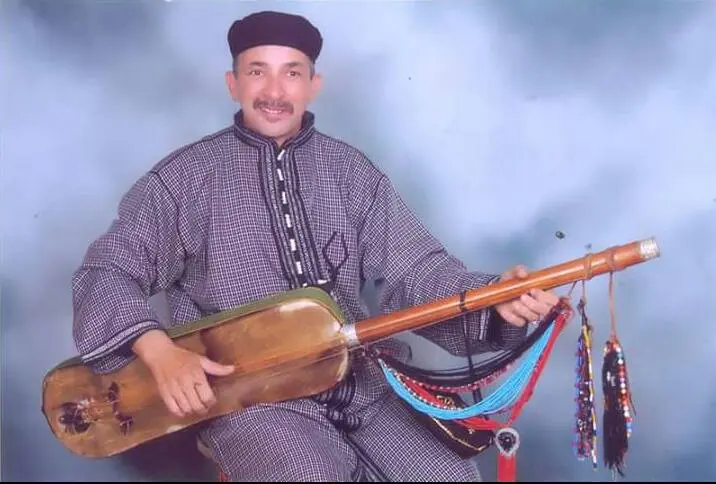
The story of Rachid Hamzaoui begins not in a zawiya or a conservatory, but in a domestic world saturated with Gnawa from birth. He grew up in Casablanca — Morocco’s economic engine, a city that transformed the Gnawa tradition from rural ritual to urban art form. In his household, the lila was not an event to attend but a periodic rhythm woven into daily existence: the incense, the seven colors, the voices — all formed his earliest consciousness of the world.
What makes his origin story unusual is the source of his first instruction. In Gnawa lineage, knowledge typically flows from male master to male apprentice. But Hamzaoui’s deepest early influence came from his grandmother — the keeper of spiritual secrets, the woman who managed the rahba (ceremonial space) from behind the scenes. She was the organizer, the spiritual director, the one who knew which incense to burn for which spirit, which color demands which song.
This maternal foundation planted a seed that would bloom decades later: if a woman could hold the spiritual keys to the entire lila, why could she not hold the guembri?
The School of Maâlem Sam
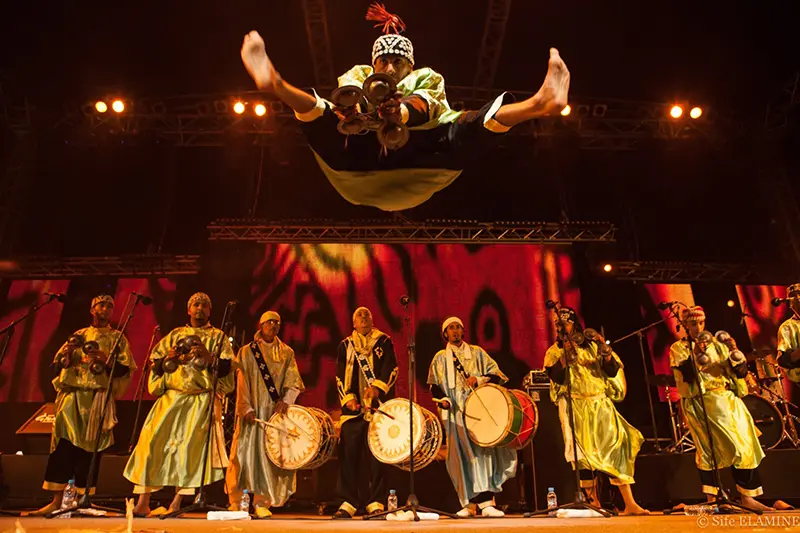
The transition from household learning to formal mastery came through Maâlem Sam (Mustapha Abirchich) — one of the towering figures of Casablanca Gnawa. Under Sam’s guidance, Hamzaoui learned that a maâlem is not merely a skilled player but a spiritual custodian: someone who possesses al-ftouh (the ability to open the ceremonial space) and who knows the secrets of every color and every molk (spirit) in the Gnawa pantheon.
The apprenticeship followed the ancient three-stage path:
The Domestic Phase
Learning from grandmother and family. Absorbing the spirituality and sacredness of Gnawa through immersion rather than instruction.
The Apprentice Phase
Serving at the lilas of senior masters. Mastering the qraqeb and learning to regulate rhythm before touching the guembri.
The Maâlem Phase
Independence with his own guembri. Leading his own ensemble and earning the spiritual authority to open and conduct the lila.
The moment Hamzaoui received his own guembri from his master was not a graduation — it was a spiritual birth. In Gnawa tradition, the instrument does not belong to you. You belong to it.
The Artistic Fingerprint: Heavy, Deep, Circular
Rachid Hamzaoui’s playing style is what Gnawa practitioners call razin — “weighted” or “grounded.” He does not chase speed for its own sake. Instead, he builds circular rhythms that pull the listener gradually into a state of meditation or spiritual ecstasy (wajd).
His technical hallmarks:
- The Guembri: He favors instruments with deep resonance, often overseeing or participating in their construction to ensure the quality of the skin and strings
- The Qraqeb: He insists on perfect dialogue between guembri and qraqeb — the iron rhythm must shadow the wooden melody, never overpower it
- The Voice: A dignified, slightly hoarse vocal quality suited to Sufi invocations, with the ability to transition smoothly between the different maqams (colors)
He describes his approach as “communication with the roots for the living” — playing for the lila with the same intensity as the festival stage, believing that the sacredness of the music does not change with the venue.
The Revolution: Teaching the Daughters
The chapter that defines Rachid Hamzaoui’s legacy is his decision to teach his daughters — Asmaa and Aicha — the full art of tagnawit. This was not a publicity stunt. It was a philosophical conviction rooted in his own upbringing: his grandmother had been the spiritual backbone of the lila. The women of Gnawa had always been present — as dancers (haddarat), as spiritual mediums (moqaddemat), as organizers. The only barrier was the guembri itself.
Hamzaoui shattered that barrier from within.
His teaching methodology is built on observation and silence before action. He made his daughters attend lilas from childhood, absorbing the rhythms before their fingers ever touched a string. He taught them that a maâlem respects the instrument and the audience before all else.
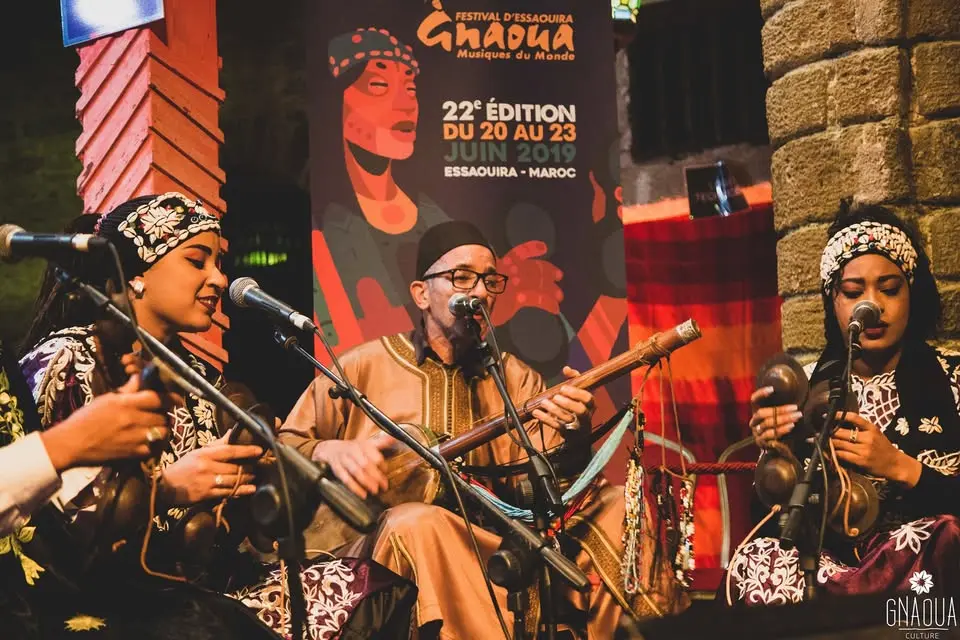
The result speaks for itself: Asmaa Hamzaoui founded Bnat Timbouktou (Daughters of Timbuktu), became the first female maâlema to headline the Essaouira Festival, and now performs on stages worldwide — from WOMAD to Roskilde to Carthage.
The Bridges: Fusion Without Dissolution
Hamzaoui holds a precise philosophy on musical fusion. For him, cross-cultural collaboration is a necessity for the survival of Gnawa in a globalized world — but only if the Gnawa rhythm remains the spine of the performance. He warns against “fusion that erases identity” and advocates for “fusion that opens doors.”
He has participated in collaborations with musicians from diverse backgrounds, always insisting that the guembri lead. One of his dreams is a project uniting Gnawa with the oldest African jazz traditions — reconnecting the two branches that emerged from the same historical wound of slavery.
Essential Listening
Ftouh Rahba
Ritual / Opening
The ceremonial opening where Hamzaoui's calm authority and ability to set the atmosphere of the lila are on full display. Essential for understanding the Sufi dimension of his art.
Hammadi
Festival / Celebratory
A piece that showcases his ability to build rhythmic peaks that move audiences instinctively. Combines technical mastery with the celebratory spirit of Gnawa.
Lkouhal - The Black Suite
Personal / Meditative
A deep dive into the painful African memory. Heavy, dignified, and full of the sorrow and strength that defines the Gnawa blues.
"Gnawa is a trust. Whoever does not honor the trust has no right to carry the guembri."
-- Maâlem Rachid Hamzaoui
Maâlem Rachid Hamzaoui did not seek to be remembered as a revolutionary. He sought to be remembered as a guardian — of the melodies, of the secrets, of the sacred trust passed down through centuries of pain and devotion. That he became a revolutionary anyway, by opening the door for his daughters to walk through, is perhaps the most Gnawa thing of all: transformation that comes not from breaking with the past, but from understanding it so deeply that you see its future.
The fire of Casablanca Gnawa burns in his hands. And through Asmaa, Aicha, and Bnat Timbouktou, it now burns in hands he trained himself — proof that the truest guardians are those who know when to let go.