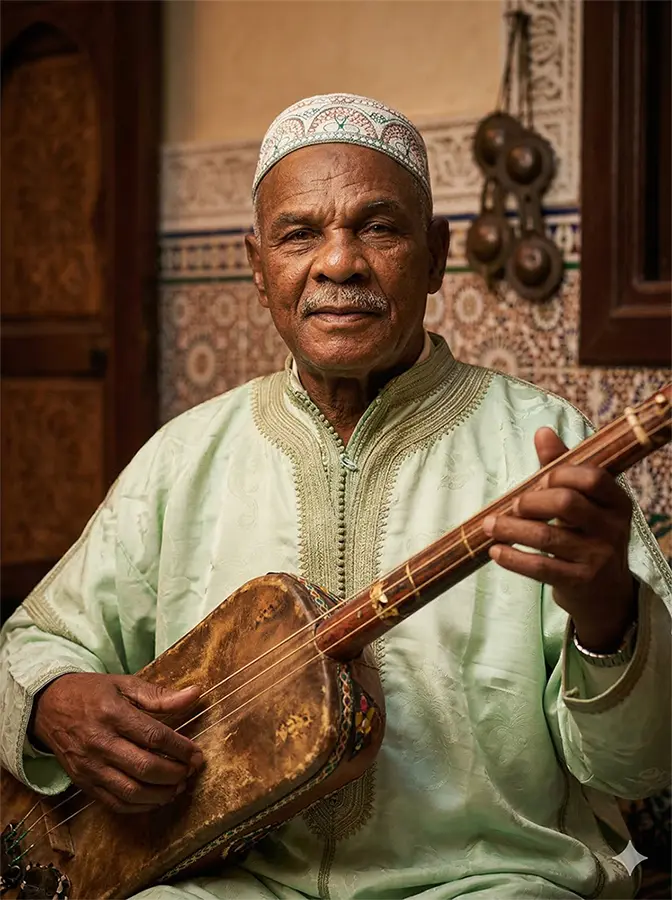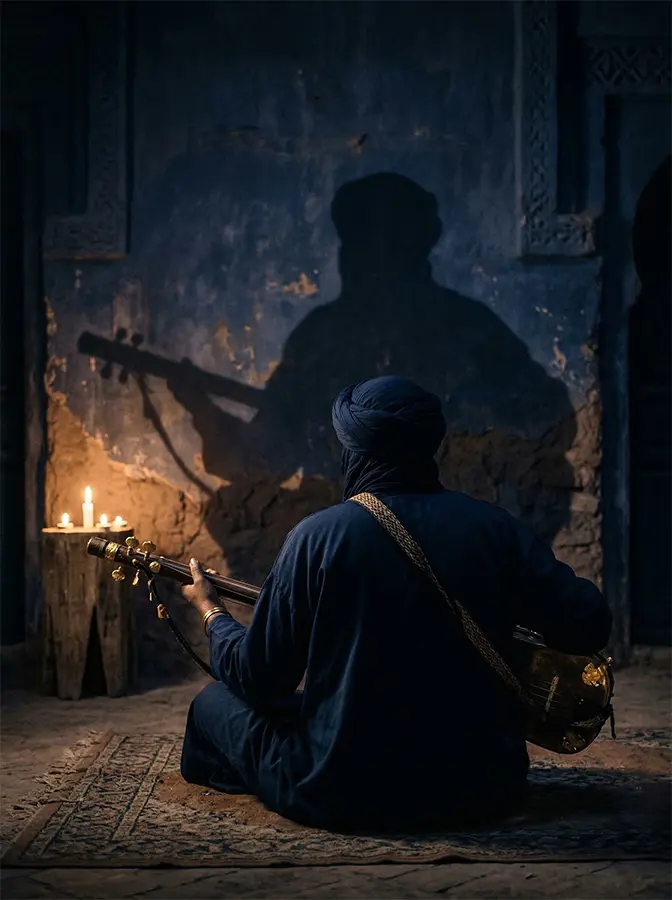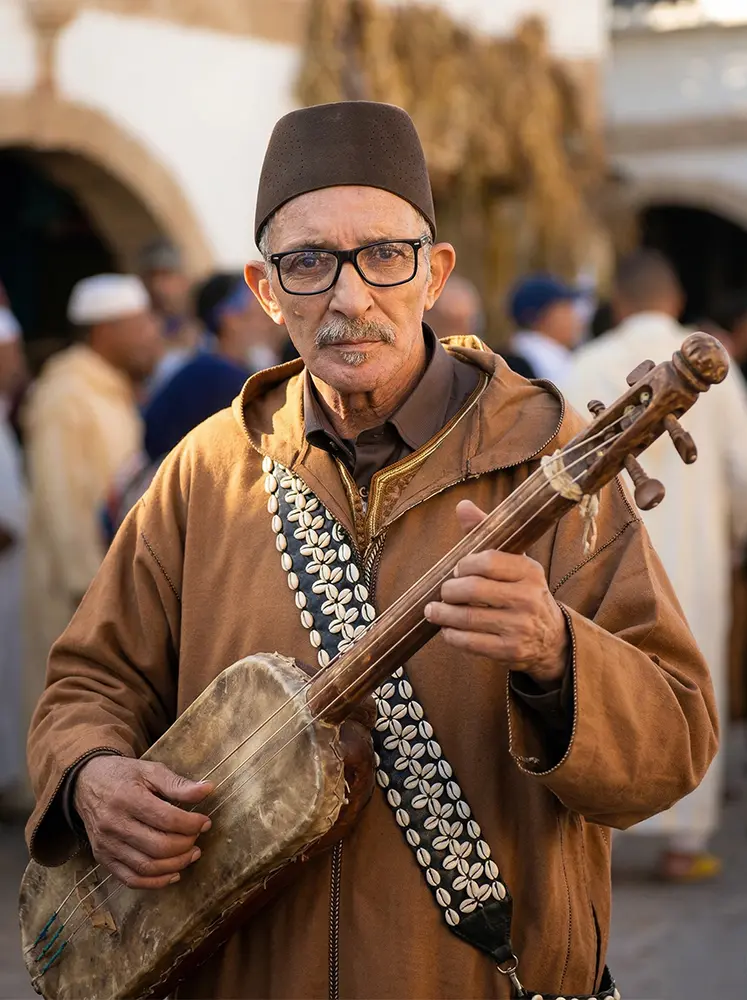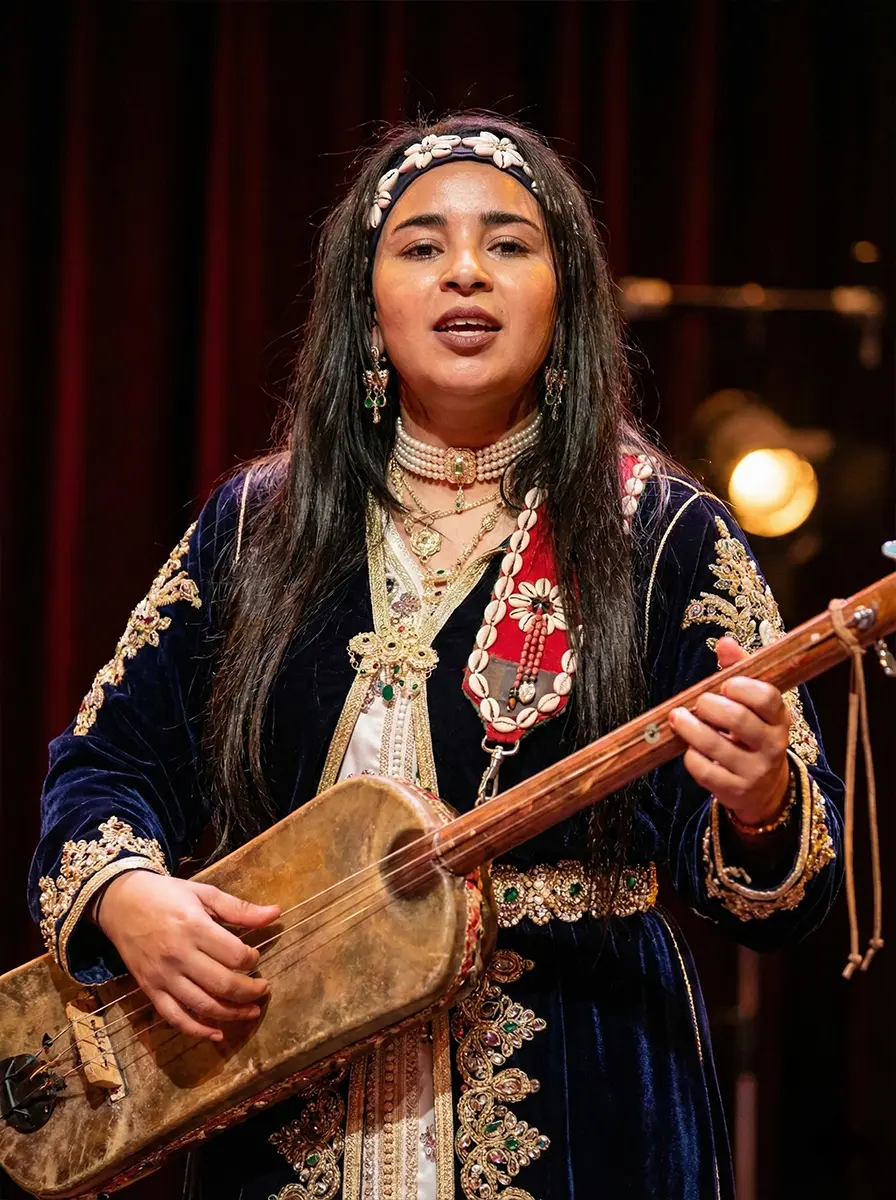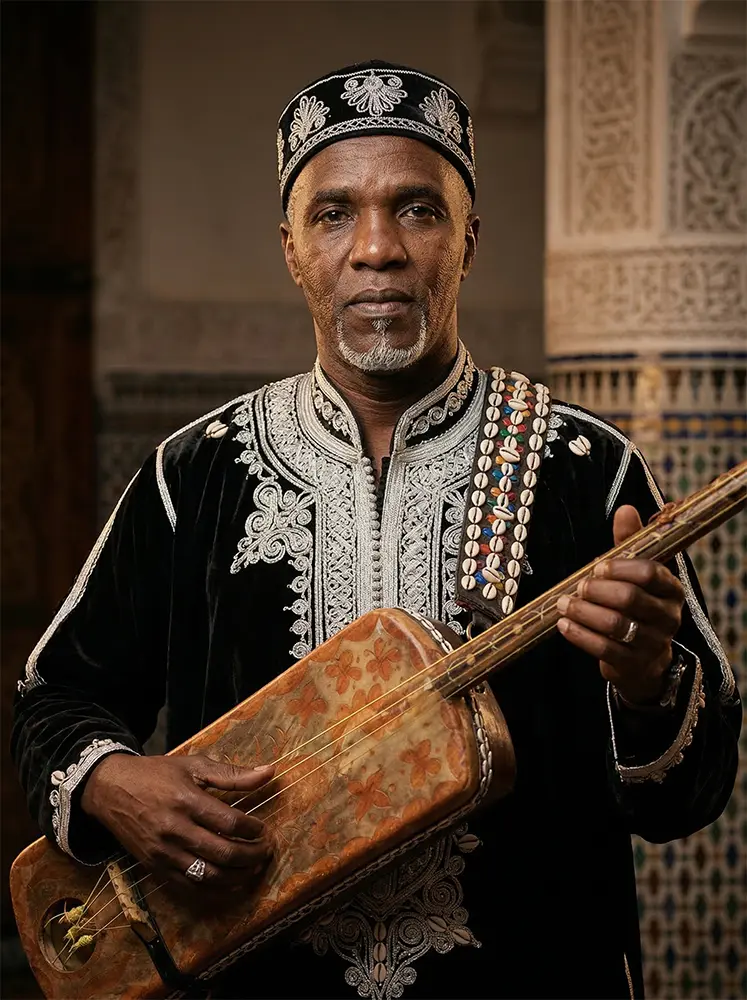
Some musicians carry a name. Maâlem Hassan Boussou carries a world. Born into the household of the legendary Maâlem Hmida Boussou, the man his peers called “the Great Master,” Hassan grew up in a Casablanca home where incense burned before sunrise and the guembri spoke before any human voice did. He did not choose Gnawa. Gnawa chose him before he could walk.
Today, Hassan Boussou stands as one of the most complete figures in the tradition: a keeper of the oldest Casawi rituals, a founder of internationally celebrated ensembles, and a fiercely honest critic of everything that threatens to hollow Gnawa music from within. He is, as those close to him describe, an archaeologist of sound and a guardian of fire.
Born into Thunder
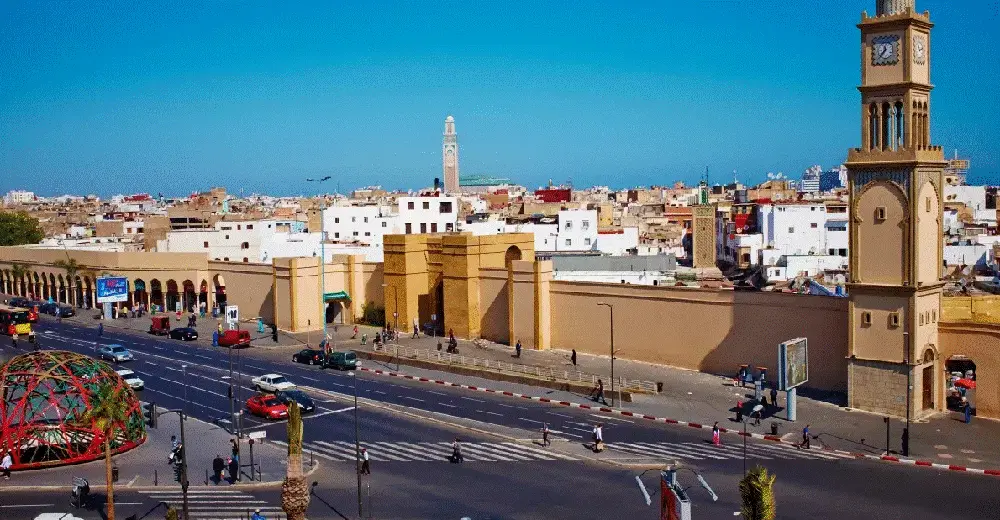
The Boussou household in Casablanca was not a quiet place. It was a living zawiya, a space where the lila was not a special occasion but a way of breathing. Hassan’s father, Hmida Boussou, commanded the deepest respect in Gnawa circles across Morocco. Musicians traveled to sit near him. Scholars came to listen. And in the middle of all this, a boy named Hassan watched, absorbed, and waited.
From the earliest years of his childhood, Hassan was immersed in the full architecture of the ceremony: not only the music, but the ritual slaughter, the colors of the mlouk, the specific protocols for each spirit. He understood early that a true Gnawi is never half present. The tradition demands the whole person, body and soul, or nothing at all.
The Son Who Listened to Everything
What made Hassan different from other sons of masters was his hunger to understand, not just to repeat. He treated the Casawi tradition the way an archaeologist treats ancient ruins: with reverence, yes, but also with relentless curiosity. He researched the Bambara roots embedded in the old Gnawa lyrics. He traced the Mandinka rhythmic patterns that survived the Atlantic crossing. He did not want to inherit a performance. He wanted to inherit a living memory.
His father never taught Gnawa as a set of songs. He taught it as a complete worldview. Hassan absorbed that lesson completely. By the time he was a teenager, he could lead prayers, manage ritual protocols, and play the guembri with the weight of someone who had spent decades in the tradition.
The European Crossing
In 1990, Hassan began accompanying his father on tours across Europe. Italy. Switzerland. Belgium. Holland. France. These were not tourist performances. They were serious cultural encounters, and they transformed Hassan from a local student into a global voice.
He watched how audiences in Brussels or Lyon responded to the guembri’s frequencies, how people who had never heard Gnawa in their lives felt something move inside them during the ceremony. This confirmed what his father had always told him: the music speaks to something older than language, older than borders.
In 1992, at the age of twenty, Hassan formally joined his father’s ensemble Boussou Ganga as a full musician. The apprentice had become a partner.
February 17, 2007
When Hmida Boussou died on February 17, 2007, the Gnawa world fell silent. He had been its center of gravity for decades. And now his son, Hassan, was asked to step forward.
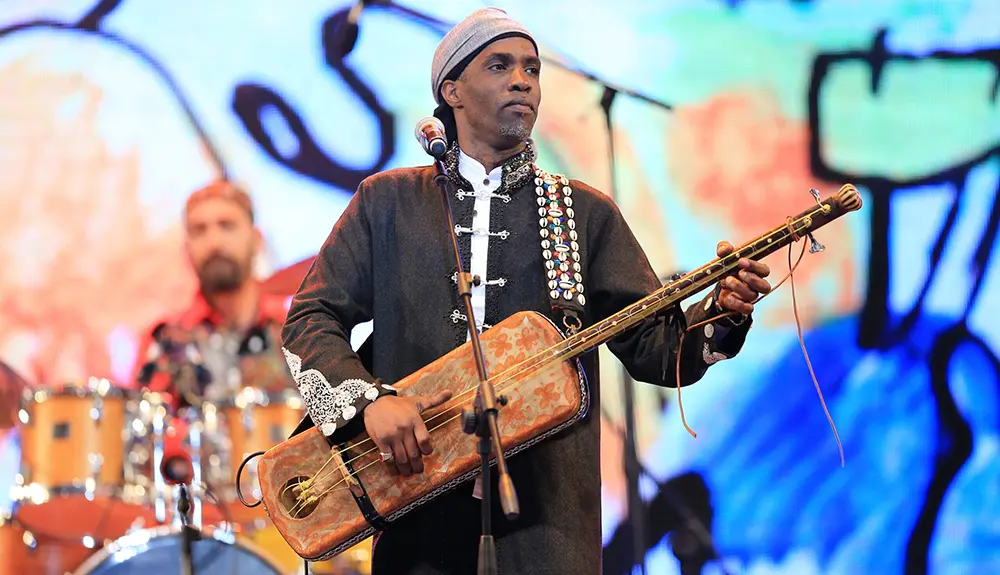
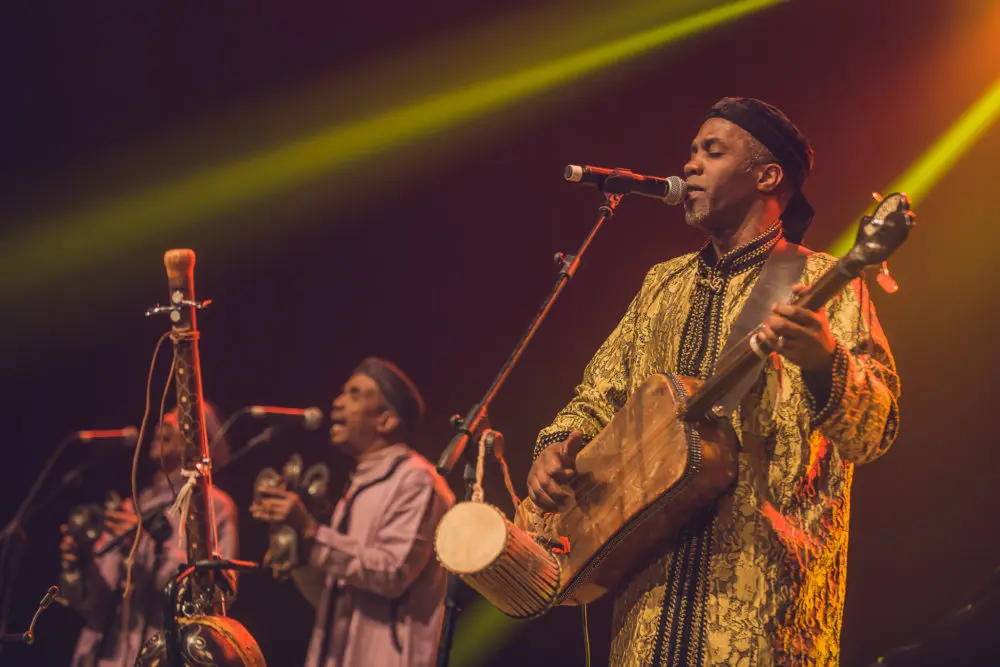
Four months later, at the tenth edition of the Essaouira Gnawa Festival, Hassan walked onto the main stage. The crowd knew what this performance meant. It was not entertainment. It was a transmission of fire. When he struck the guembri strings that night, the weight he carried was visible. And what the audience witnessed was not grief performed for display. It was a man accepting the full cost of lineage.
From that moment, Hassan Boussou was no longer a student of his father’s tradition. He was its custodian.
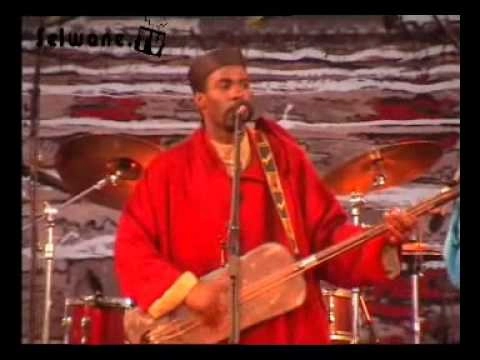
The Style: Three Faces of the Same Fire
Hassan Boussou’s artistic identity cannot be reduced to a single mode. He operates simultaneously as a ritual guardian, a stage performer, and a cultural researcher.
The Ritual Guardian
In the lila, Hassan is absolute. He follows the Casawi protocols with zero compromise, from the opening drums to the final closing prayers. The ceremony is sacred architecture and he builds it exactly as it was handed to him.
The Stage Musician
On a concert stage, Hassan opens the Gnawa repertoire to dialogue with Western instruments. The guembri remains the leader, but it welcomes jazz horns, free improvisation, and electronic textures as respectful guests in its house.
The Living Archaeologist
He studies the ancient Bambara language embedded in Gnawa chants. He researches Mandinka rhythmic origins. He sings not just to entertain but to preserve a memory that is always at risk of being forgotten.
Bridges and Stages
After building a base in Belgium in the 1990s, Hassan founded Gnawa Fusion in 1996 with Belgian musicians. He later moved to France in 2002 and launched Séwaryé, his most ambitious project: a full-scale ensemble exploring the intersections between traditional Gnawa ceremony and contemporary world music.
In 2016, he shared the stage at the Essaouira Festival with American free jazz master Jamaaladeen Tacuma in a performance that drew standing ovations from a crowd that understood exactly what it was witnessing.
In March 2017, at the legendary Bataclan concert hall in Paris, Hassan performed alongside Maâlem Mustapha Bakbou, Hindi Zahra, the late Tony Allen, Karim Ziad, Titi Robin, and Mehdi Nassouli. It was one of those rare nights when the guembri did not have to prove its place among great instruments. Its place was obvious.
Throughout all of this, Hassan continued his role as vice president of Yerma Gnaoua, the foundation dedicated to preserving and documenting authentic Gnawa practice.
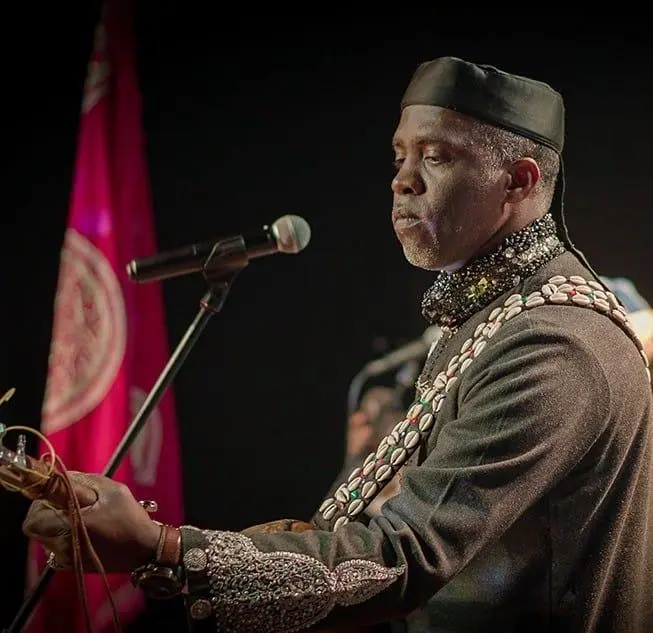
A Warning from the Inside
Hassan Boussou is not afraid to say what he thinks about the direction Gnawa music is heading. His position is clear and carries the weight of personal experience.
He does not oppose collaboration or creative exchange. His own career proves the opposite. What he opposes is the kind of fusion that strips Gnawa of its internal logic, that uses the guembri as exotic decoration, that performs the surface of a tradition while ignoring the depths that give it meaning.
He says it plainly: fusion created without deep knowledge of the tradition does not expand Gnawa. It erases it. And erosion, he warns, does not always look like destruction. Sometimes it looks like celebration.
Essential Listening
Katib Allah
Ritual / Personal
The deepest window into Hassan's Casawi soul. His voice carries both the rawness of a lila and the precision of a master who has spent decades inside the tradition. This is Gnawa before the concert hall ever existed.
Fangara
Séwaryé / Fusion
The flagship track of his Séwaryé project. Traditional Gnawa melody wrapped in contemporary instrumentation, but the guembri never surrenders command. This is what respectful fusion sounds like when the musician knows what they are doing.
Bouyandi
Ritual / Collective
Raw, unfiltered ceremony music. Hassan leading the ensemble through the rhythms of the mlouk, calling up African memory from across the centuries. No performance here. Only function, faith, and fire.
"A Gnawi is a complete whole, not just music. The fusion we see today threatens to corrupt this essence if we forget our roots. We cannot fly toward others unless we remain faithful to the strictness of the tradition."
Maâlem Hassan Boussou
In the Gnawa world, lineage is not biography. It is responsibility. Hassan Boussou carries the Boussou name not as a title earned but as a weight accepted, on February 17, 2007, under stage lights that asked everything of him.
He has answered that call in every language available to him: in the lila and on the concert stage, in Belgium and in Paris, in ancient Bambara lyrics and in the modern frequencies of Séwaryé. He is his father’s son entirely, and entirely his own master.