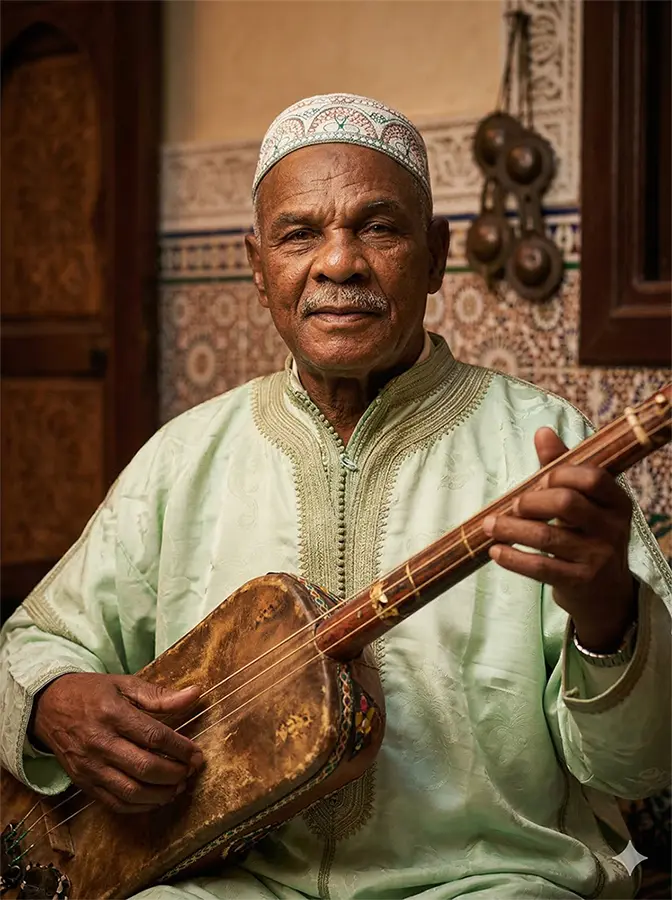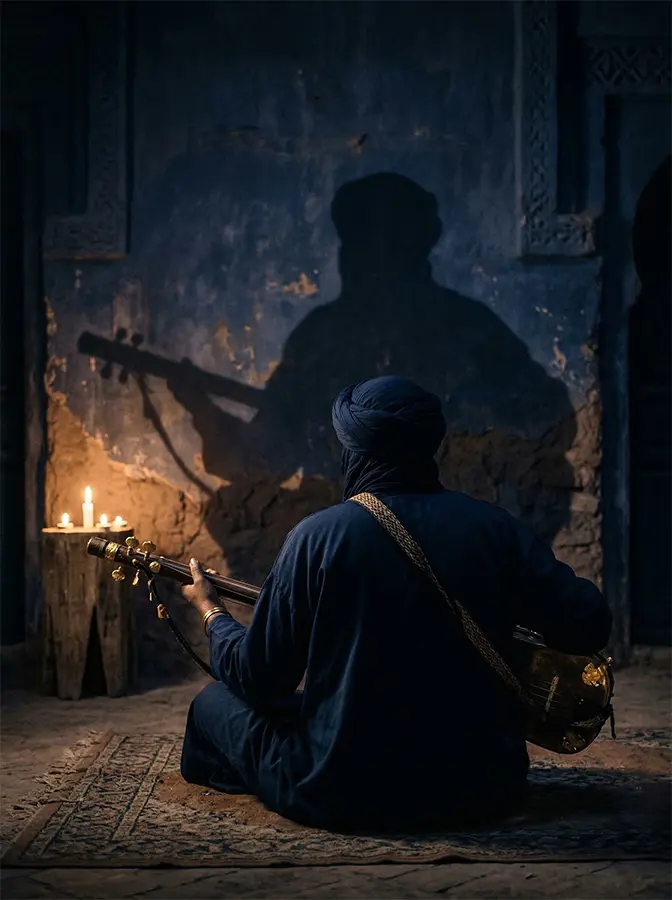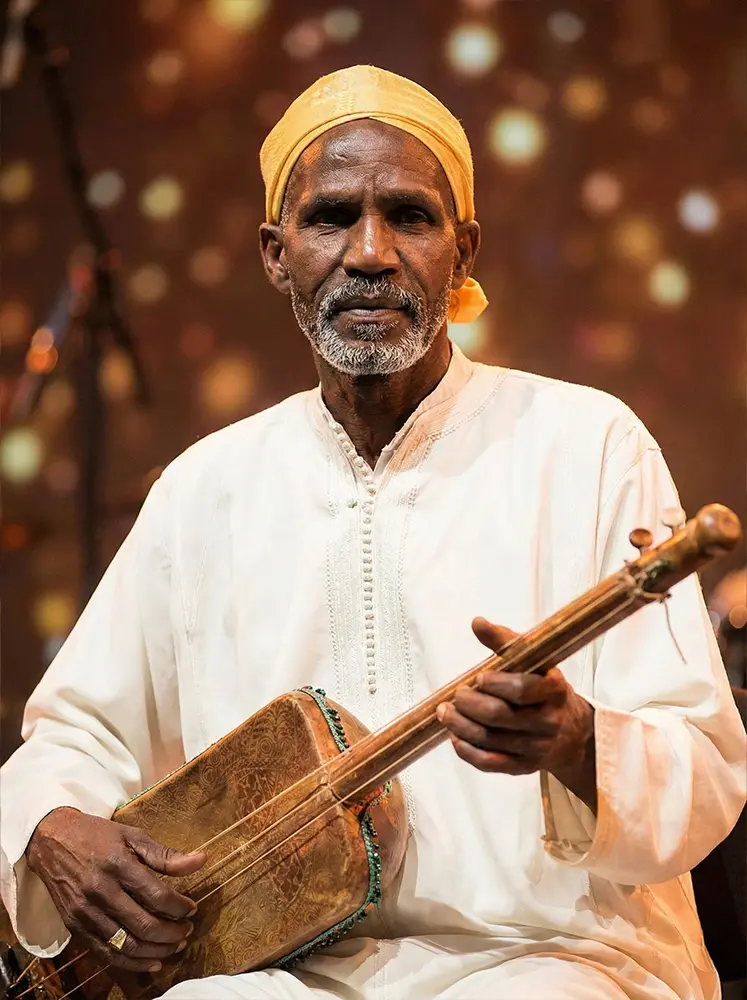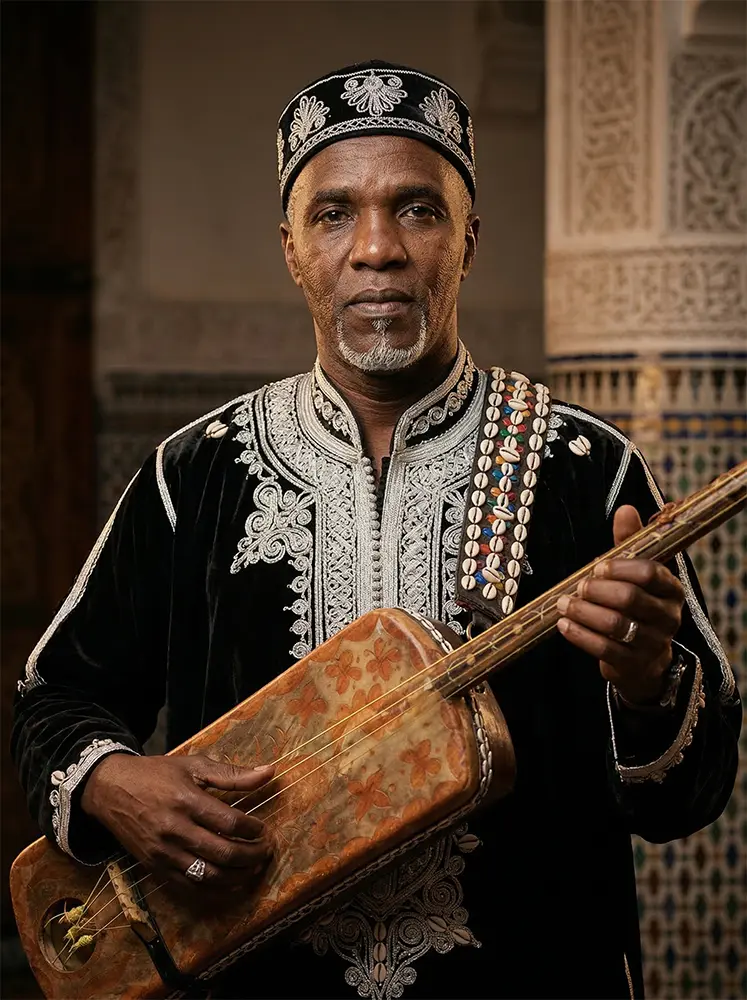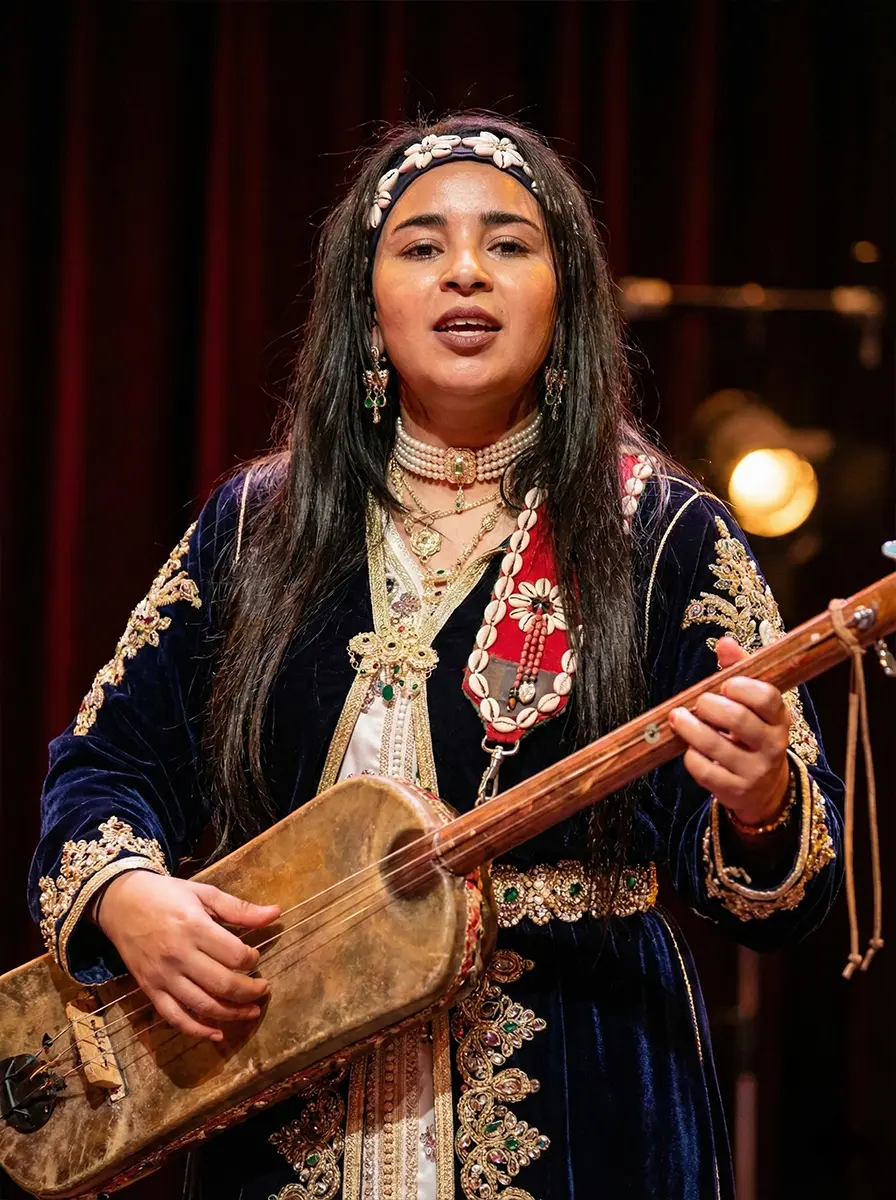
For centuries, the guembri was forbidden to women. The sacred three-stringed lute — the soul of Gnawa music — passed only from father to son, from master to male apprentice. Then came a girl from Casablanca who refused to accept that her gender determined her destiny.
Maâlema Asmâa Hamzaoui did not ask permission to carry the fire. She simply picked up the instrument, mastered it, and walked onto the world stage. Today, she leads Bnat Timbouktou (Daughters of Timbuktu), an all-female ensemble that has shattered every glass ceiling in Gnawa tradition — not through rebellion, but through undeniable virtuosity and profound respect for the sacred art.
She is not merely a musician. She is a quiet revolution.
Born Into the Rhythm
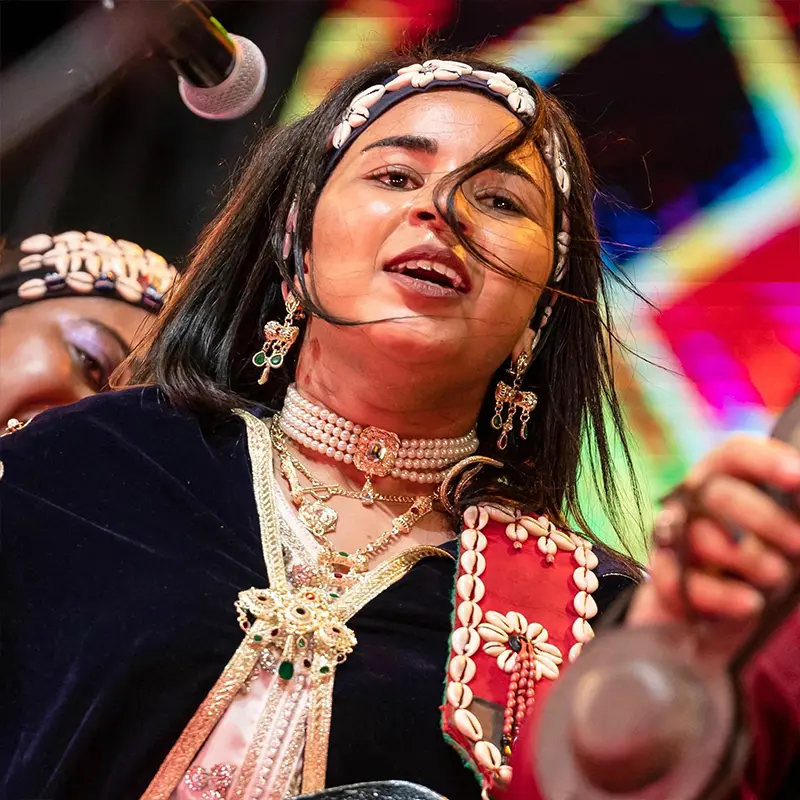
Casablanca, 1998. Asmâa Hamzaoui entered not just a family, but the beating heart of Gnawa tradition. Her father, Maâlem Rachid Hamzaoui, was a celebrated master. Her mother, a dancer of Saharawi descent. This lineage meant that Gnawa was not an art to be learned — it was the very air she breathed from infancy.
While other children played with toys, young Asmâa watched her father’s fingers dance across the guembri strings. She memorized the rhythms before she could read. She learned the names of the mlouk before she learned arithmetic. The music was not around her — it was inside her.
Her father saw what others could not: a true heir to his knowledge, regardless of gender. In an act of quiet revolution, Maâlem Rachid began teaching his daughter the guembri at age six — a conscious, progressive choice that would change the history of Gnawa.
The Passing of the Sacred
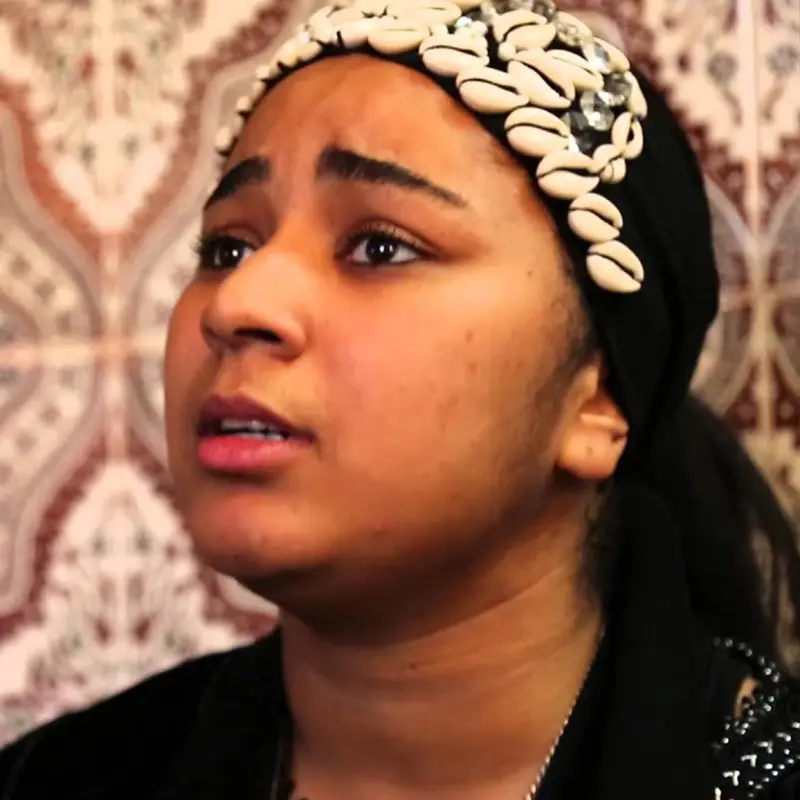
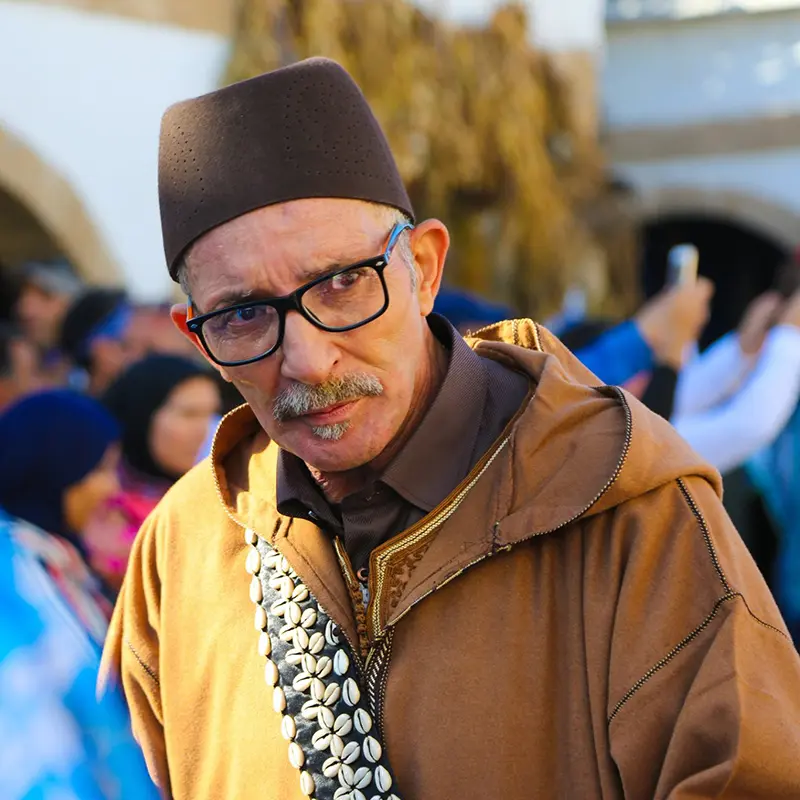
The moment that sealed her destiny came at age twelve. After years of training, after tours where she watched and learned, her father did the unthinkable: he bequeathed his own guembri to his daughter.
In Gnawa tradition, this is no simple gift. It is the transfer of spiritual authority, the passing of the title of Maâlem. For the first time in recorded history, this sacred torch was passed to a woman.
“My father felt great pride and joy in seeing us excel,” Asmâa recalls. “He cared more for my dedication than my gender.”
Maâlem Rachid Hamzaoui became a revolutionary himself — not by breaking tradition, but by recognizing that tradition’s deepest truth is the music itself, not the gender of its vessel.
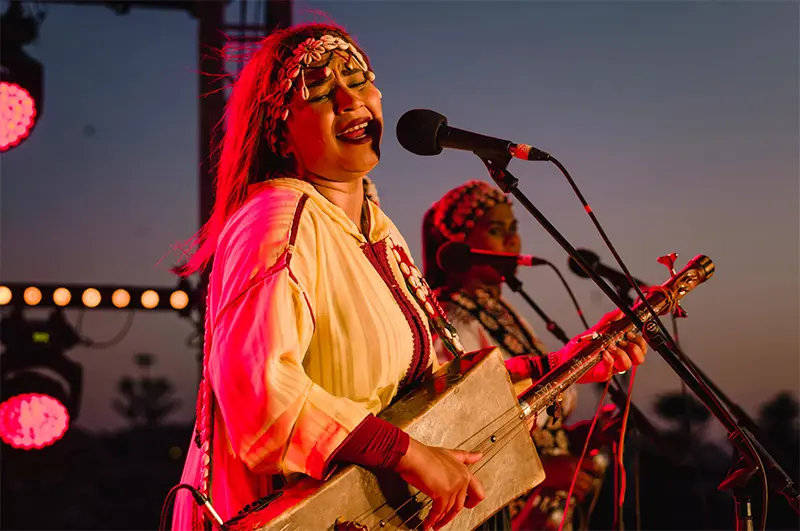
Bnat Timbouktou: A Sisterhood in Sound
In 2012, at just fourteen years old, Asmâa founded Bnat Timbouktou — The Daughters of Timbuktu. The name itself is a statement: a reference to the legendary African city, the historical source of Gnawa’s enslaved ancestors, now reclaimed by their female descendants.
Her public debut was met with astonishment and skepticism. Women playing qraqeb in the background was acceptable. But a woman leading with the guembri? Unthinkable. She faced criticism, insults, and rejection.
She never wavered.
“I was determined to enter this field despite the insults,” she stated. “I hope to carry the torch and not disappoint my parents.”
The Maâlema
Lead vocals and guembri — the first woman to publicly master the sacred instrument and claim the title.
The Sisterhood
An all-female ensemble including her sister Aicha, providing qraqeb rhythms and powerful call-and-response vocals.
The Tradition
Not fusion, but 100% pure traditional Gnawa — proving women can master the sacred form without altering it.
The band draws its inspiration from traditional Gnawa repertoire while addressing themes of suffering, exile, and African memory. More than a musical group, Bnat Timbouktou is a movement — proving that the fire of tradition can burn just as bright in female hands.
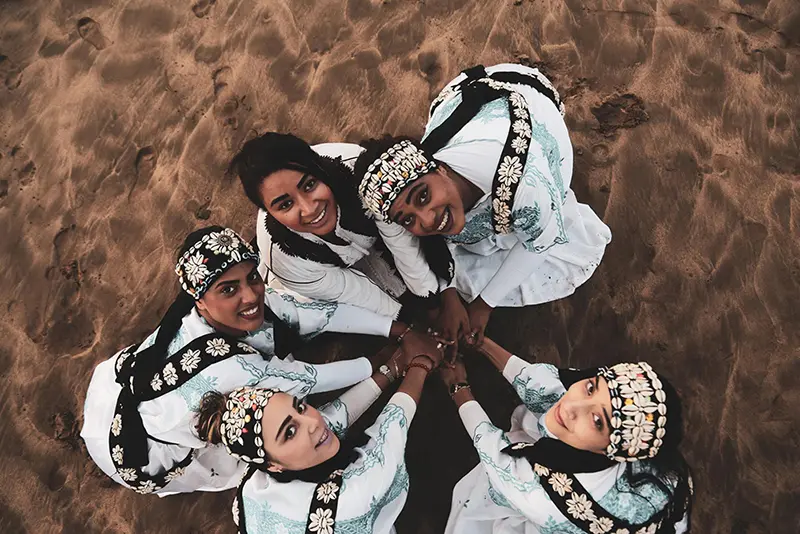
Breaking Through: Essaouira 2017
The turning point came in 2017. The Gnaoua and World Music Festival in Essaouira — the most prestigious stage in the Gnawa world — invited Asmâa Hamzaoui and Bnat Timbouktou to perform.
For a festival that had been dominated by male Maâlems for nearly two decades, this was unprecedented. When Asmâa walked onto that stage, guembri in hand, she was not just performing. She was making history.
The audience’s skepticism melted within minutes. Her voice — warm, intense, commanding — carried the soul of the blues and the authority of a master. The qraqeb chattered. The crowd swayed. By the end, they were believers.
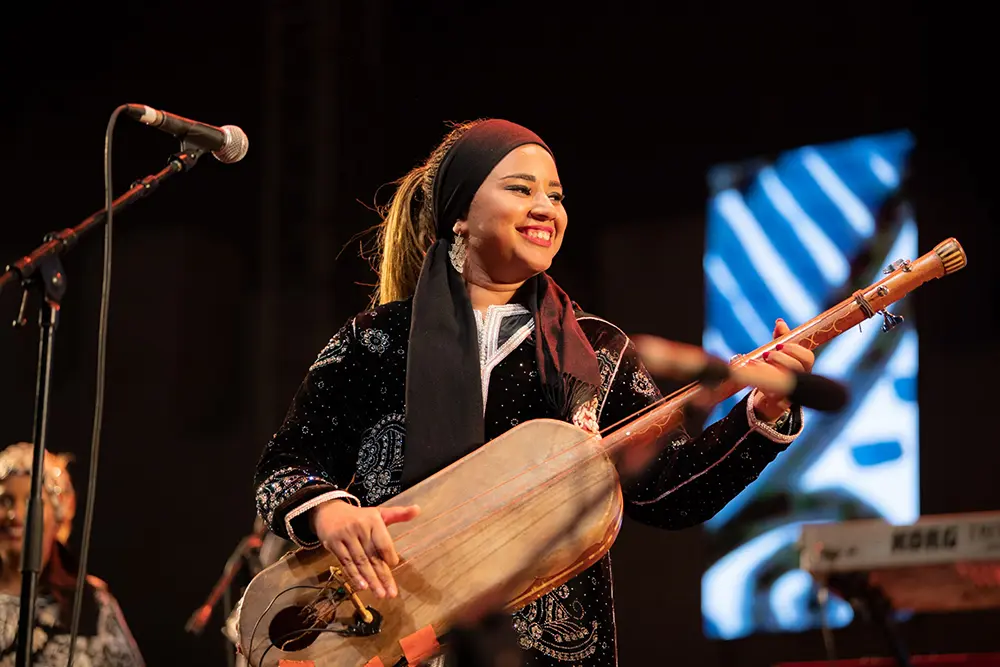
Since then, her journey has taken her to the world’s most prestigious stages: WOMAD in the UK, Roskilde Festival in Denmark, Festival International de Carthage in Tunisia. She has become Gnawa’s female ambassador to the world.
African Sisterhood: The Collaborations
Asmâa’s collaborations read like a summit of African musical royalty:
Fatoumata Diawara (2018) — The Malian superstar joined Asmâa at Essaouira, creating a historic moment: two African women, from different traditions, proving that the continent’s musical heritage belongs to its daughters as much as its sons.
Les Amazones d’Afrique — The pan-African supergroup of female artists invited Asmâa to join their ranks, amplifying her message across the continent.
Rokia Koné — Another collaboration that highlighted the deep spiritual connection among female artists carrying African musical traditions into the future.
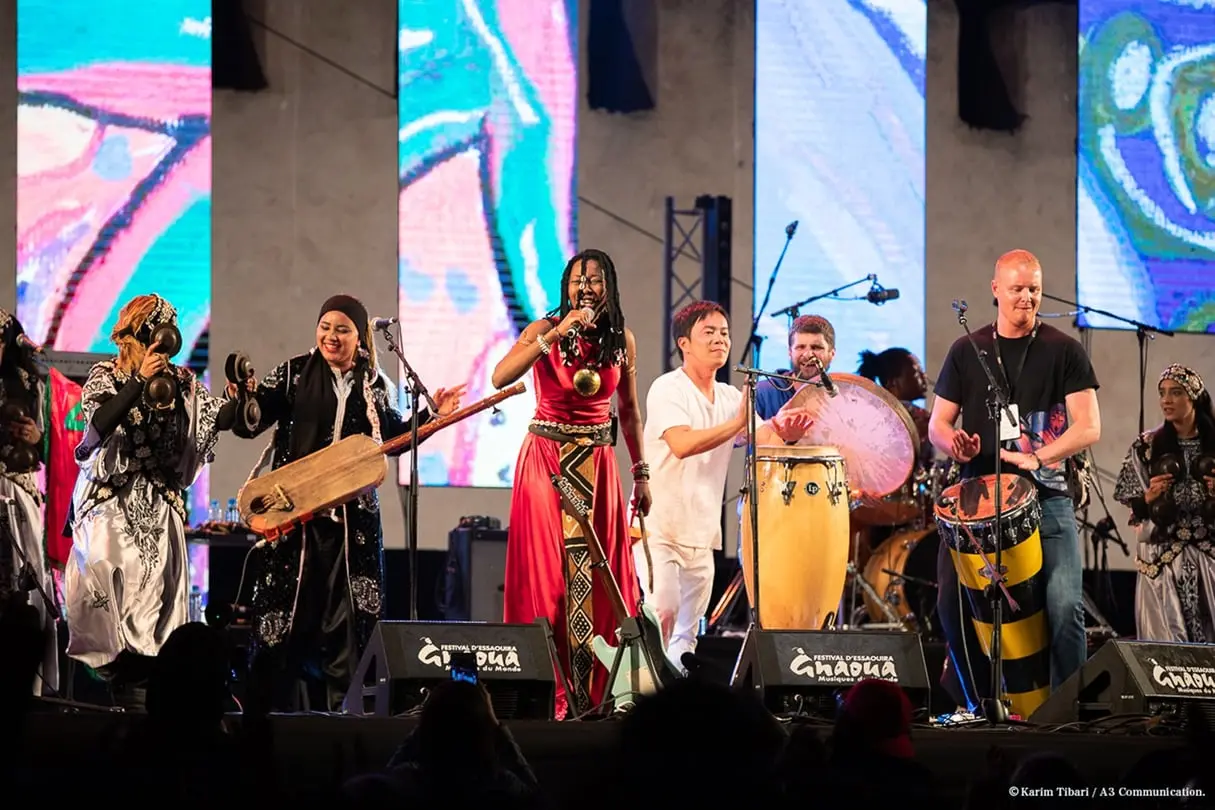
Her philosophy of fusion is clear: collaboration is essential for spreading tradition, but the sacred core must never be compromised. She does not dilute Gnawa to make it accessible — she brings collaborators into its depths.
The Recorded Legacy
Her two studio albums on Sweden’s Ajabu! Records are definitive statements of her artistic vision:
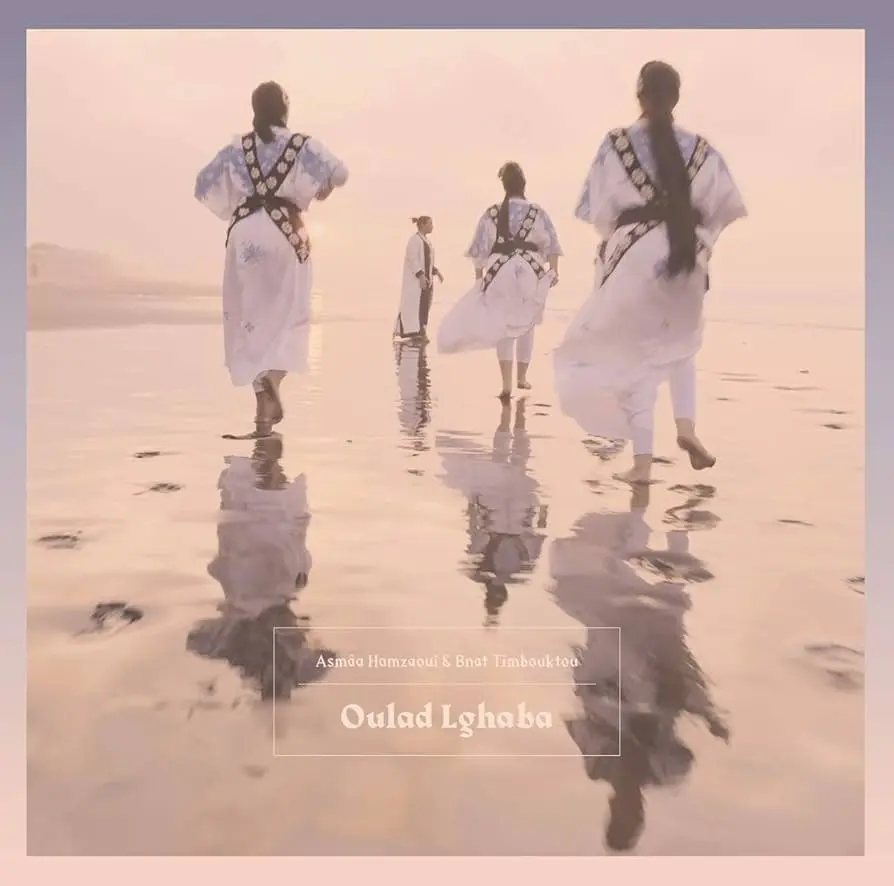
Oulad Lghaba (2019) — “Children of the Forest” refers directly to the historical roots of the Gnawa people. A journey through traditional repertoire, the album earned a nomination at the prestigious Songlines Music Awards and established her as a major international artist.
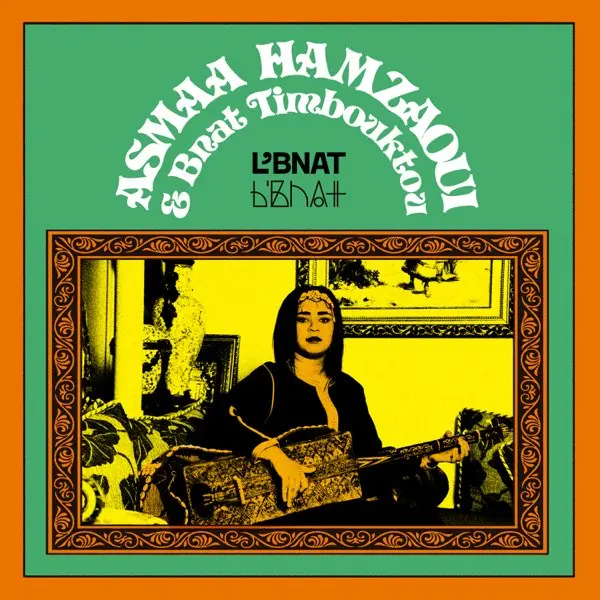
L’Bnat (2024) — “The Daughters” is an explicit declaration of her mission. It centers on female spirits and traditions within Gnawa culture, featuring tracks named after venerated female figures like Lalla Mira and Lalla Aicha. A conscious act of placing women at the heart of the spiritual narrative.
Her discography unfolds as a strategic two-act story: with Oulad Lghaba, she proved her mastery of tradition. With L’Bnat, she made her feminist statement from a position of earned authority.
Essential Listening
Soudani Mama
From Oulad Lghaba
A meditation on African origins, exile, and ancestral memory — the pain and beauty of Gnawa's history in one track.
Lalla Mira
From L'Bnat
Dedicated to the playful female spirit of Gnawa tradition — women reclaiming the spiritual narrative.
Soussia
Live Performance
Southern rhythms that unite audiences worldwide — pure Gnawa energy channeled through female power.
"Gnawa is healing for the soul. I am here to carry its torch to every African daughter."
— Maâlema Asmâa Hamzaoui
Carrying the Fire
The scene returns to the stage — Essaouira, WOMAD, Roskilde, or any of the dozens of festivals where Asmâa now commands the spotlight. The guembri hums its ancient bass. The qraqeb chatter like ancestors speaking across centuries. An all-female ensemble moves as one, channeling spirits that were called by male masters for generations.
But now, the fire burns in different hands.
Asmâa Hamzaoui has challenged patriarchal norms not with rebellion, but with profound respect and virtuosic skill. She has proven that tradition is not a museum piece but a living, breathing entity that can evolve without losing its soul. She has opened doors that were locked for centuries, and behind her, a new generation of daughters is already walking through.
The fire of Gnawa, once passed only from father to son, is now carried forward — bright and blazing — in the hands of its daughters.
And it has never burned brighter.