Discover every instrument in a traditional Gnawa band — from the guembri's bass to the qraqeb's iron clash to the tbel's thunder. Plus the sacred meaning of costumes and cowrie shells.
When a Gnawa ensemble takes the stage or enters a ceremonial space, they bring more than music. They bring a complete spiritual technology — instruments, costumes, and symbols that have been refined over centuries to open pathways between worlds.
Each element has its purpose. Each sound has its meaning. Together, they form the sacred ensemble that makes Gnawa what it is.
The Traditional Gnawa Ensemble
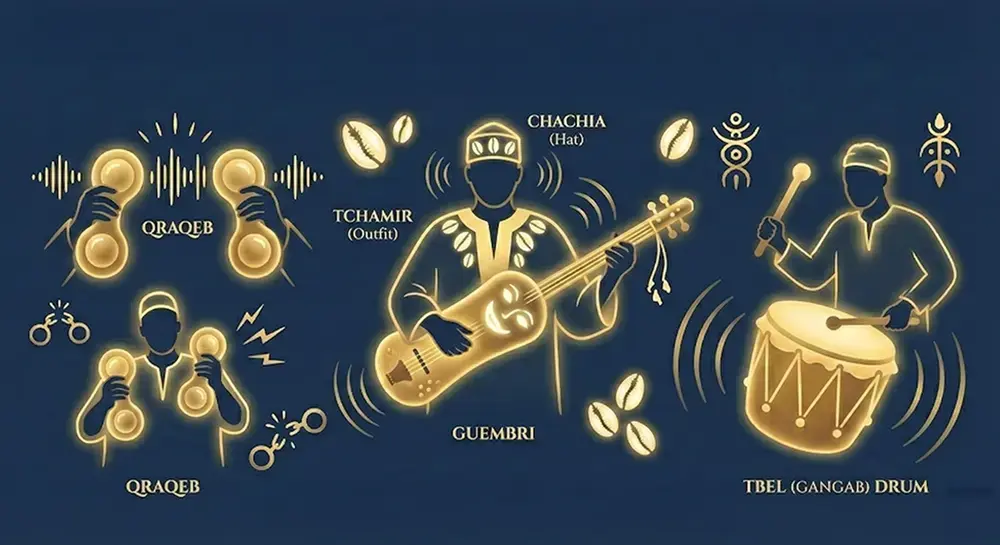
A complete Gnawa band consists of three primary instruments, each with a distinct role:
🎸 Guembri
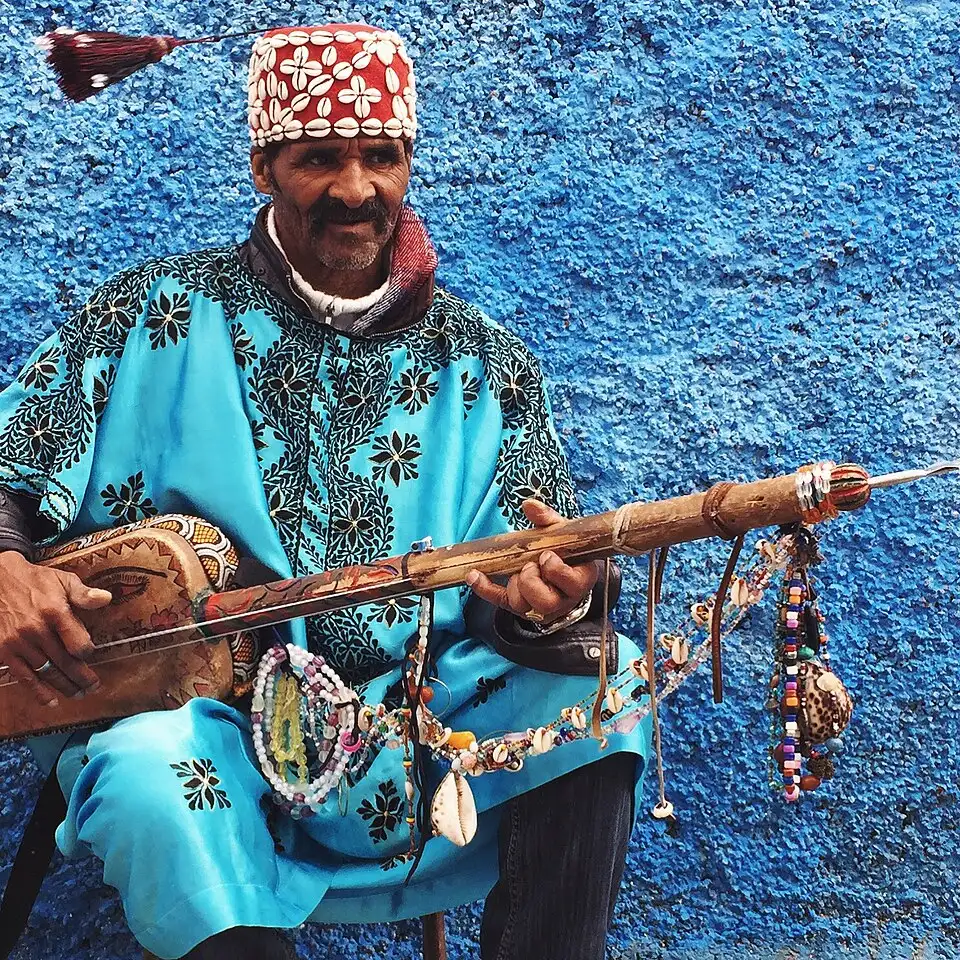
The three-stringed bass lute that leads the ceremony. Played only by the Maâlem.
🔔 Qraqeb
Iron castanets that provide the rhythmic pulse. Played by the kouyou ensemble.
🥁 Tbel
Large double-headed drum for processions and transitions.
Beyond instruments, the ensemble includes costumes (tchamir), hats (chachia), and decorative elements like cowrie shells — each carrying spiritual significance.
The Guembri: The Soul
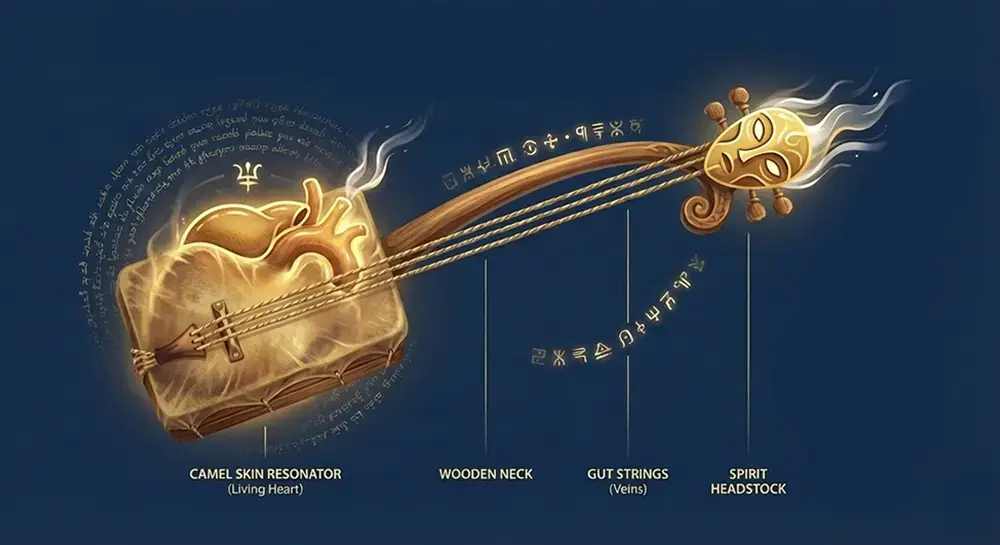
The guembri (also sintir or hajhouj) is the heart of Gnawa music. This three-stringed bass lute produces the deep, resonant tones that call the spirits and guide the ceremony.
Construction: Carved from a single piece of wood, covered with camel skin, strung with goat gut.
Player: Only the Maâlem plays the guembri. It is his voice, his authority, his connection to the spirit world.
Role: The guembri leads everything — setting the key, the tempo, the mood. It determines which spirits are called and when. The other instruments follow its guidance.
The Qraqeb: The Pulse
Qraqeb (also krakeb or karkabou) are large iron castanets — four bowl-shaped pieces of metal, two held in each hand, clashed together to create a sharp, penetrating rhythm.
Construction: Forged from iron or steel, connected by cord or metal rod.
Players: The kouyou — a group of up to 20 musicians who also sing the chorus and perform acrobatic dances.
Role: The qraqeb create the hypnotic, interlocking rhythms that induce trance. Their metallic pulse never stops during the ceremony, driving participants toward jedba (trance state).
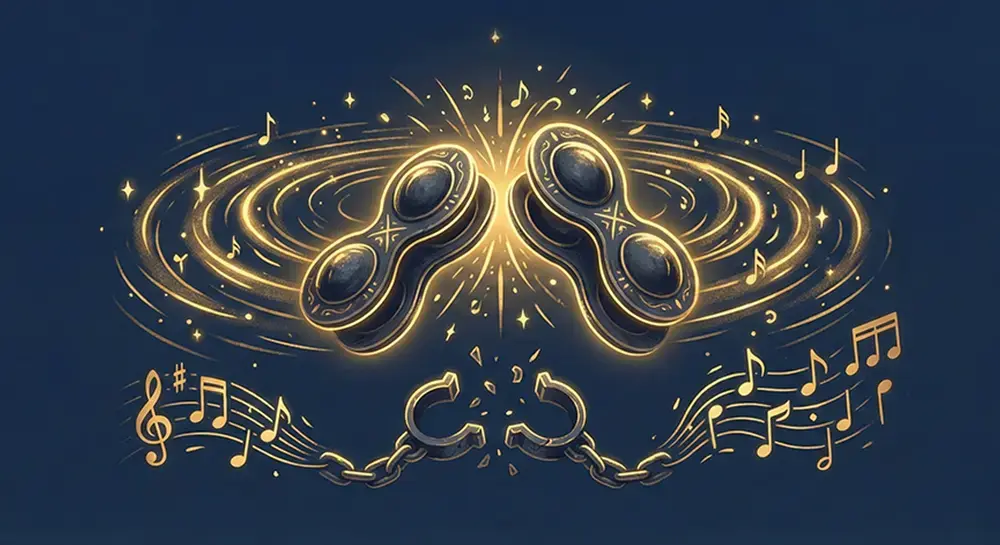
Symbolism: The iron represents the chains of enslaved ancestors — now transformed into instruments of liberation.
The Tbel: The Thunder
The tbel (also ganga or gangab) is a large double-headed drum played with two sticks — one curved, one straight — to produce both deep bass and sharp accents.
Construction: Cylindrical wooden body with animal skin heads on both sides.
Role in Ceremony:
- Outdoor processions (Aada): The tbel leads the musicians through streets, announcing the ceremony
- Transitions: Signals shifts between phases of the lila
- Spiritual intensification: Adds power during particularly intense invocations
Usage Note: In the most traditional, intimate Gnawa settings, the tbel may be absent — the guembri and qraqeb alone suffice. The tbel is more prominent in public performances and processions.
The Tchamir & Chachia: Sacred Costume
Gnawa musicians don’t just play instruments — they wear their identity. The tchamir (outfit) and chachia (hat) are essential elements of the ensemble.
The Tchamir (Outfit)
The traditional Gnawa costume consists of:
- Embroidered tunic (often in rich colors)
- Wide trousers
- Leather belt
- Decorative elements including cowrie shells and tassels
Color Significance: Colors are not arbitrary. Different ceremonies and phases may call for different colored garments:
| Color | Meaning |
|---|---|
| White | Purity, saints, opening phases |
| Blue | Protection, water spirits (Sidi Moussa) |
| Red | Power, blood, fire spirits (Sidi Hamou) |
| Green | Nature, forest spirits |
| Black | Ancestors, mystery (Sidi Mimoun) |
| Yellow | Sun, feminine spirits (Lalla Mira) |
The Chachia (Hat)
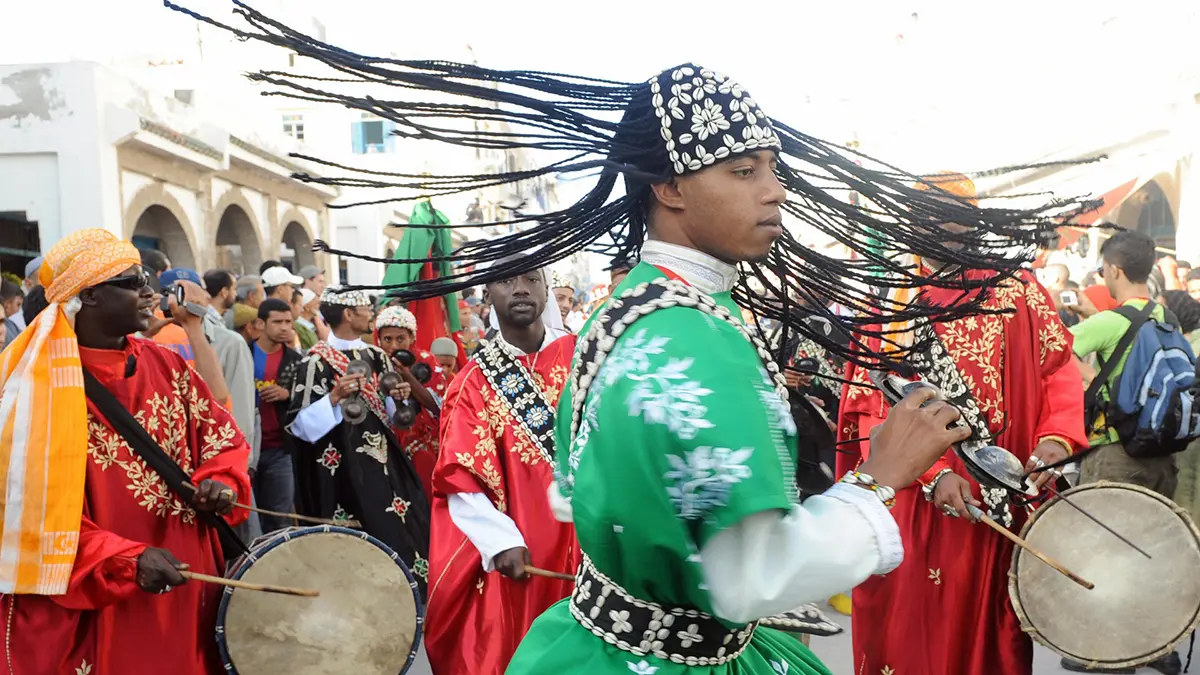
The distinctive Gnawa hat — a tasseled cap — is decorated with cowrie shells and sometimes mirrors or beads. The long tassels (chachiyat) swing dramatically during dance, creating visual patterns that complement the music.
The hat is not merely decorative. It marks the wearer as Gnawa, connects them to the brotherhood, and provides spiritual protection during ceremonies when spirits are present.
The Cowrie Shells: Currency of Spirits
Look closely at any Gnawa ensemble, and you will see cowrie shells everywhere — on hats, on guembris, on costumes, on ritual objects.
Why Cowries?
Historical Connection: Cowrie shells were the currency of the trans-Saharan slave trade. They were used to buy and sell the ancestors of the Gnawa. Using them as decoration reclaims a symbol of bondage as a mark of identity.
Spiritual Protection: In West African traditions (from which Gnawa descends), cowries protect against evil spirits and negative energies. They form a barrier between the wearer and harmful forces.
Fertility & Life: The cowrie’s shape resembles the female reproductive organ. It symbolizes fertility, birth, and the continuity of life — essential themes in Gnawa’s healing ceremonies.
Divination: In many African traditions, cowries are used for fortune-telling and communicating with ancestors. Their presence on Gnawa instruments reinforces the connection to the spirit world.
Sonic Function: When attached to instruments, cowries rattle slightly with the music, adding another layer of texture to the sound — similar to the sersara on the guembri.
Modern Instruments in Traditional Lilas
A question often arises: Can modern instruments — electric guitars, drum kits, synthesizers — be used in Gnawa ceremonies?
The Traditional View
In a traditional lila ceremony, the answer is clear: no.
The spiritual efficacy of the ceremony depends on specific sounds, specific instruments, specific relationships between those instruments. The guembri calls the spirits. The qraqeb create the trance conditions. The tbel marks the sacred time.
Modern instruments:
- Cannot replicate the guembri’s sacred voice
- Do not carry the symbolic weight of the qraqeb’s iron
- Break the sonic continuity that links today’s ceremonies to centuries of practice
Traditional practitioners are emphatic: a lila with electric guitar is not a lila. It may be a concert, a fusion performance, an interesting experiment — but it lacks the spiritual foundation that makes Gnawa healing work.
The Festival Reality
On concert stages and in recording studios, the situation is different. Many Maâlems have collaborated with:
- Jazz musicians (Randy Weston, Omar Sosa)
- Rock artists (Led Zeppelin members, Carlos Santana)
- Electronic producers (various festival collaborations)
These fusion projects have introduced Gnawa to global audiences and created exciting new music. But participants and audiences understand these are artistic performances, not spiritual ceremonies.
The Distinction
The key is distinguishing between:
- Lila (ceremony) — Traditional instruments only
- Fraja (spectacle/concert) — Flexibility for fusion and experimentation
This distinction allows Gnawa to preserve its sacred core while also engaging with the wider musical world.
The Complete Picture
When you see a Gnawa ensemble, you see centuries of history materialized:
- Instruments carved and forged by hand, designed to speak to spirits
- Costumes in colors that map the spirit world
- Cowrie shells that once bought ancestors, now protecting their descendants
- Musicians who have trained since childhood in traditions older than nations
Every element matters. Every sound has purpose. Together, they form not just a band, but a spiritual technology refined across generations.
This is why Gnawa cannot simply be “learned” from YouTube. The instruments are portals. The costumes are armor. The ensemble is a vessel for forces larger than any individual musician.
"The guembri speaks, the qraqeb answer, the tbel announces. Together, they open doors that words cannot unlock."
Continue Your Journey
Dive deeper into each instrument and the traditions behind them:
- The Guembri: Sacred Heart of Gnawa Music — The full story of the guembri — its construction, spiritual significance, and legends.
- Qraqeb: The Rhythm of Iron — How the iron castanets transform the sound of chains into music of liberation.
- The Gnawa Lila Ceremony: Full Ritual Explained — See how the ensemble works together during a sacred ceremony.
Individual Instrument Pages
- The Guembri — The three-stringed bass lute that leads every ceremony.
- The Qraqeb — The iron castanets that drive Gnawa’s pulse.
- The Tbel — The large drum that announces processions.
- The Chachia — The sacred tasseled cap worn by Gnawa musicians.
The Musicians
- Mahmoud Guinea — The legendary Maâlem who mastered all elements of the ensemble.
- Omar Hayat — Taught by Mahmoud Gania himself, a keeper of the complete tradition.