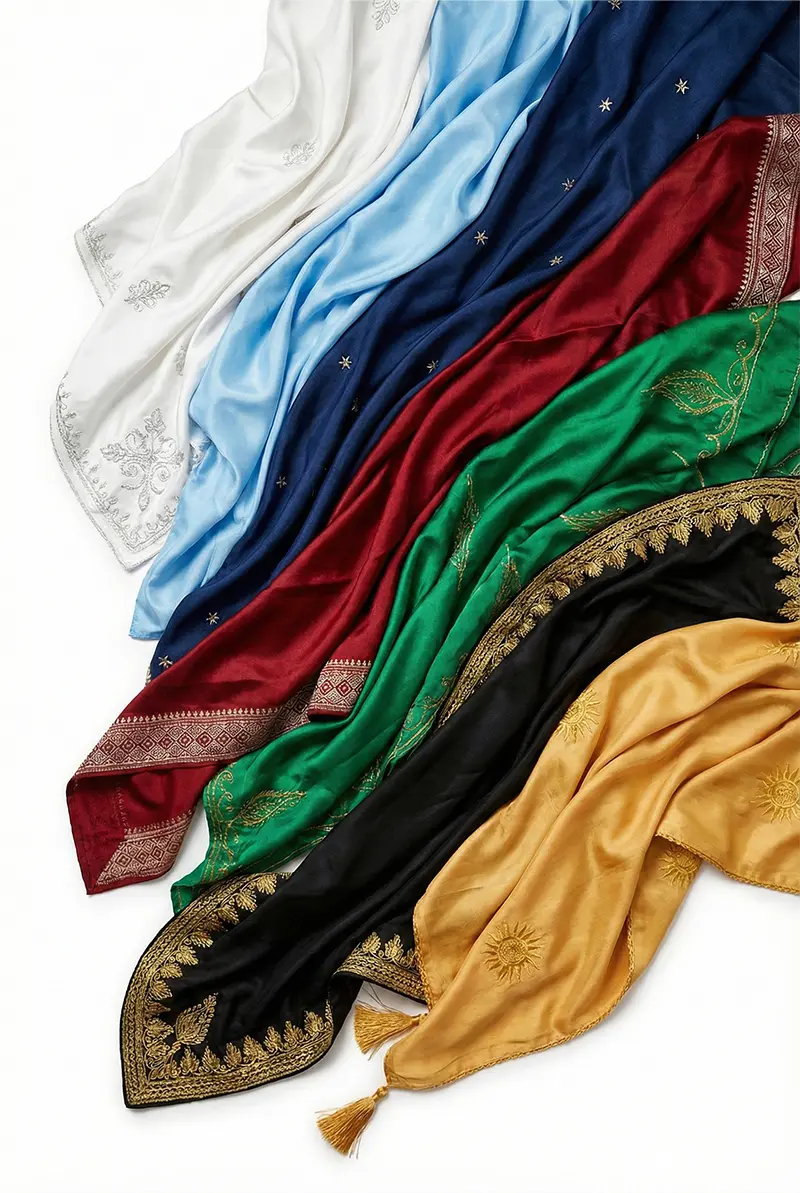
In the Gnawa universe, colors are not decoration. They are a precise spiritual code — each hue corresponding to a family of spirits, dictating unique musical rhythms, and governing distinct phases of the Lila. The sequence of colors acts as a roadmap for the soul, guiding the trance from purity through confrontation, finally arriving at renewal.
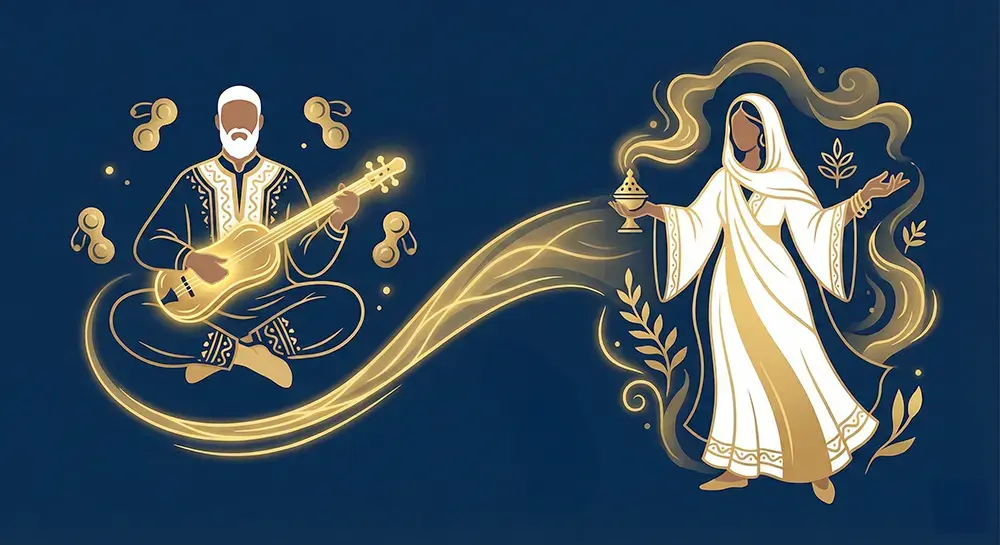
When the Moqaddema drapes a colored veil over a dancer’s shoulders, she is not styling them. She is opening a gate.
The Seven Gates
White (Al-Bayd)
Purity & Sanctity
Opens the Lila with prayers for peace. Dedicated to the saints and the Prophet — the color of beginnings and light.
Light Blue (Al-Zareq Fath)
The Sky & Air
Invokes celestial spirits and lightness. Represents clarity, openness, and the breath of the heavens.
Dark Blue (Al-Zareq)
The Sea & Depths
Linked to Sidi Moussa and marine spirits. Invokes deep calmness and the healing power of water.
Red (Al-Hamer)
Power & Blood
Associated with spirits of thunder and war. Triggers intense, fiery trances — the color of raw vitality.
Green (Al-Khoder)
Lineage & Islam
Connected to the Chorfa and local saints. Brings baraka (blessings) and spiritual renewal to all present.
Black (Al-Kouhel)
Depth & The Ancestors
Summons spirits of the forest and earth. Represents primal forces and historical memory of the ancestors.
Yellow (Al-Safra)
The Female Spirits
Associated with Lalla Mira. Represents the sun, feminine energy, and healing from specific ailments.
The Ritual Function
The Veils
The Moqaddema drapes dancers in colored scarves matching the music, facilitating connection to that specific spirit family.
The Sequence
Music follows a strict order of colors. Playing out of sequence breaks the ritual harmony and disrupts the spiritual journey.
Sensory Alignment
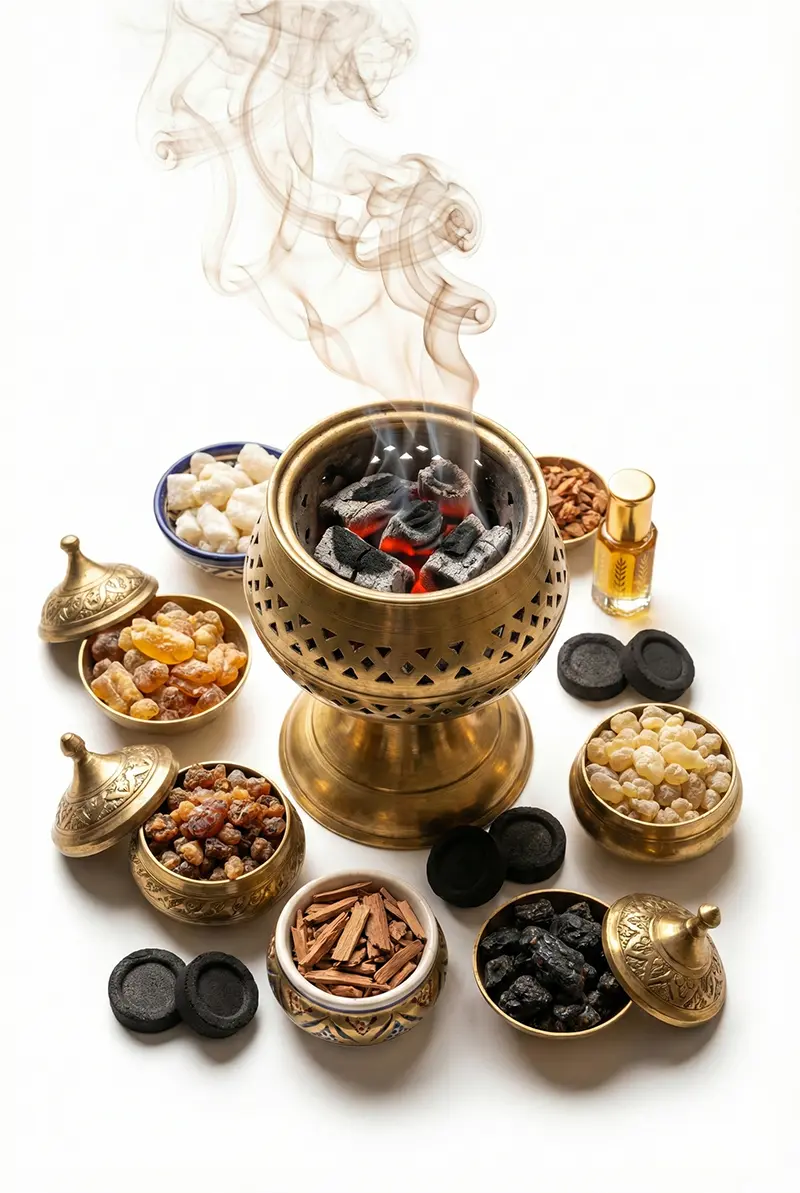
Veil color synchronizes with specific incense and lighting — a complete sensory architecture for each spiritual phase.
The Soul’s Journey
The transition between colors represents a therapeutic human passage:
White → Light Blue — From peace to openness
Light Blue → Dark Blue — From air to deep water
Dark Blue → Red — From calm to passionate release
Red → Green — From intensity to healing
Green → Black — From renewal to ancestral depth
Black → Yellow — From shadow to light and joy
It is a cycle designed to confront inner struggles, express suppressed emotions through movement, and ultimately integrate them. What cannot be spoken in words is expressed through the hue of the cloth.
Did You Know?
The Personal Color: Many attendees feel an inexplicable pull toward one specific color during a Lila. This is interpreted as the spirit family they are most spiritually aligned with.
The Dawn: The ritual concludes as the sun rises with lighter colors — often returning to white or green — signifying a return to the mundane world, cleansed and renewed.
When the Veil Falls
As dawn approaches and the final colors are sung, something has shifted. The dancers who entered in turmoil have passed through fire and water, darkness and light. The colors have done their work — not as symbols, but as doorways.
The veils are folded. The spirits return to their realm. And those who remained through the night carry something new within them: the memory of having been touched by every color of the soul.