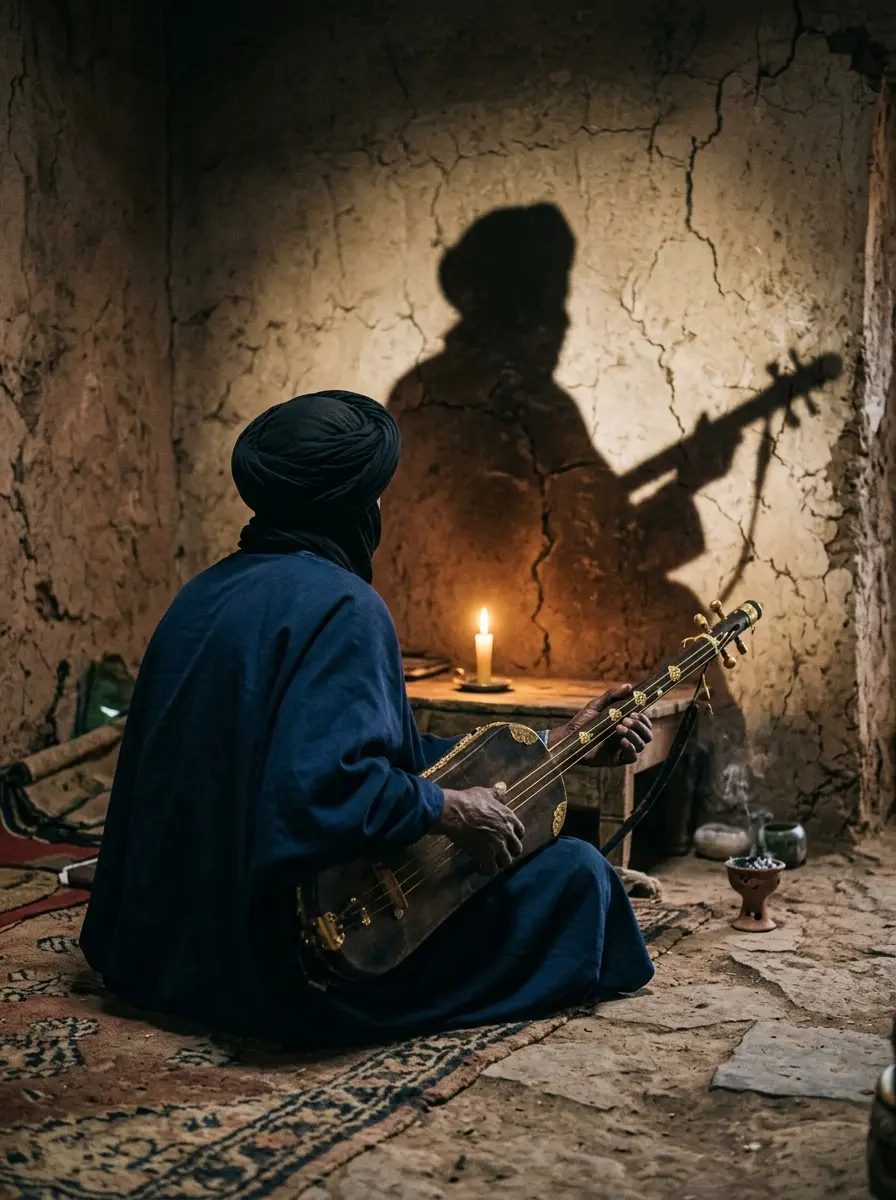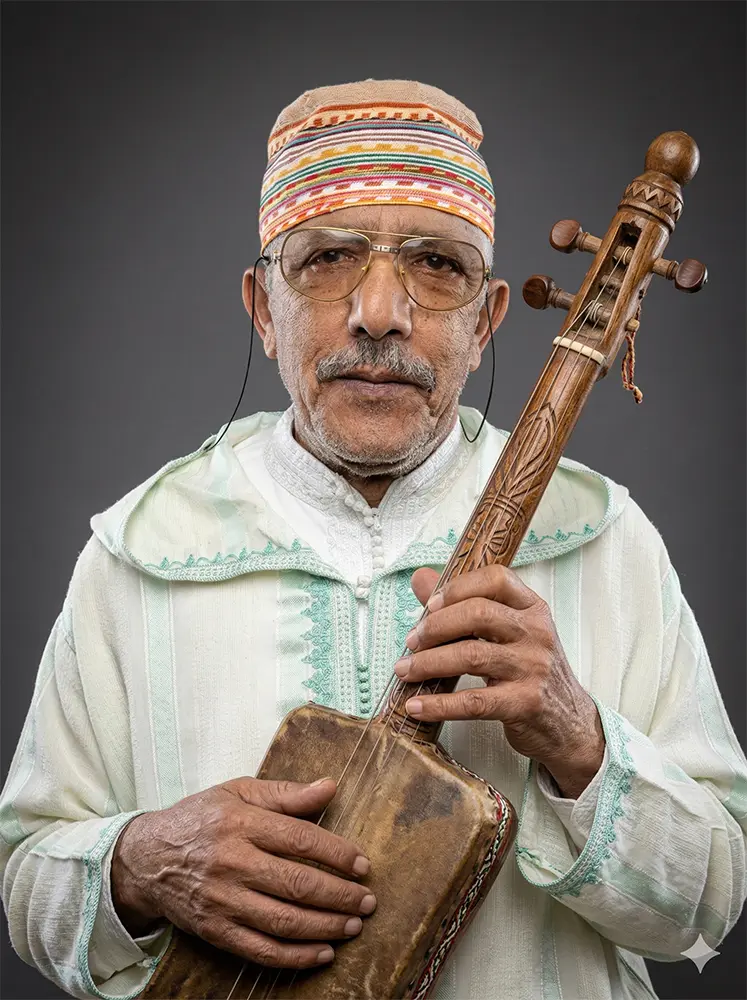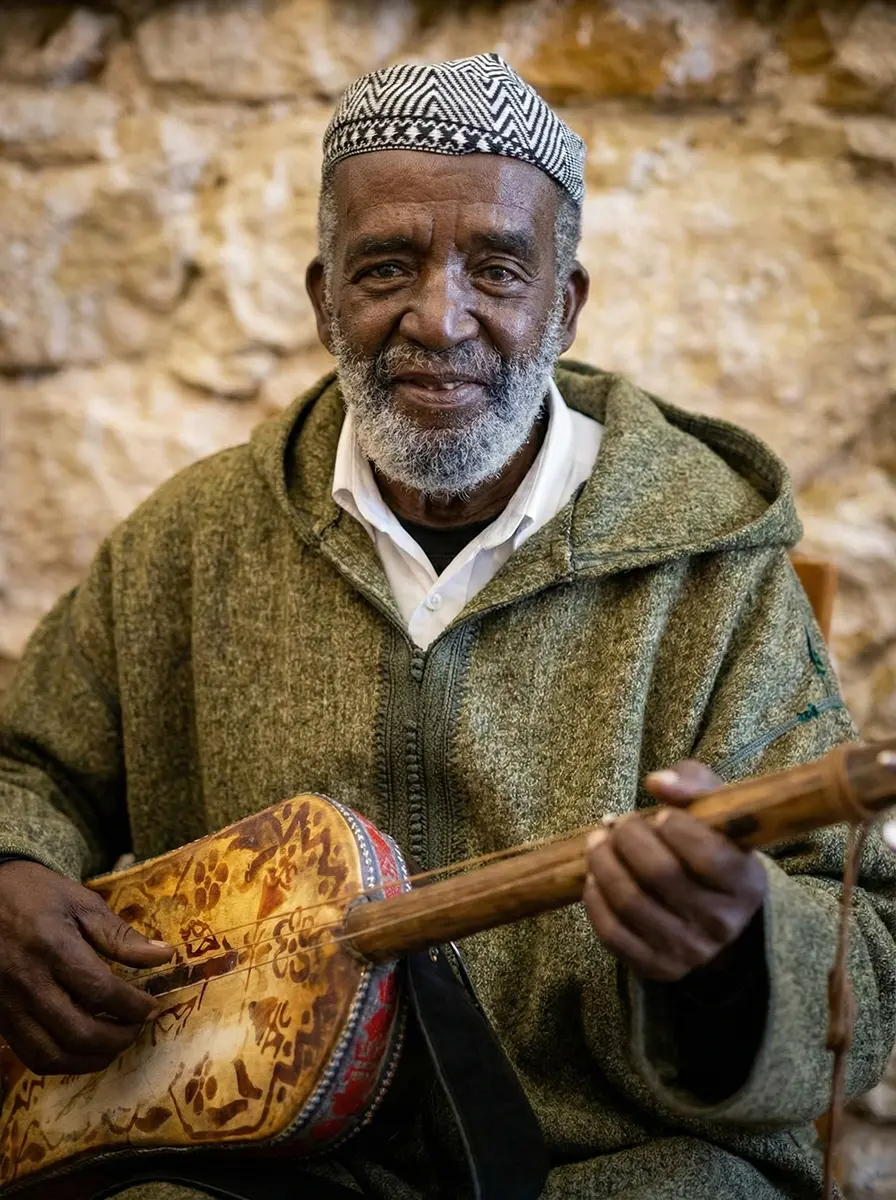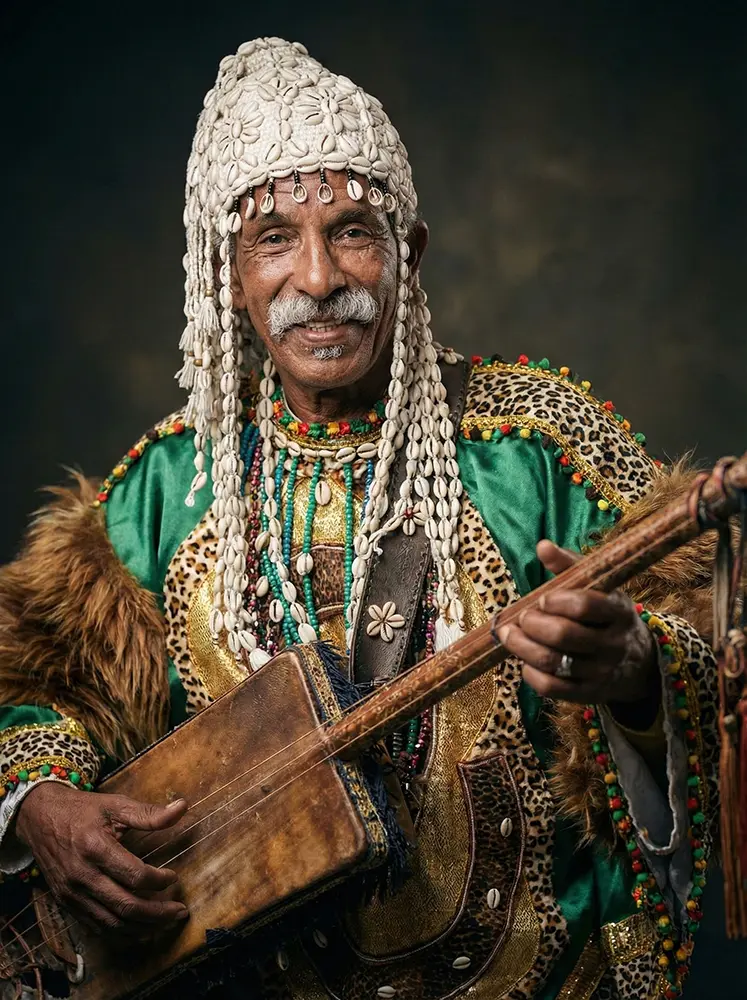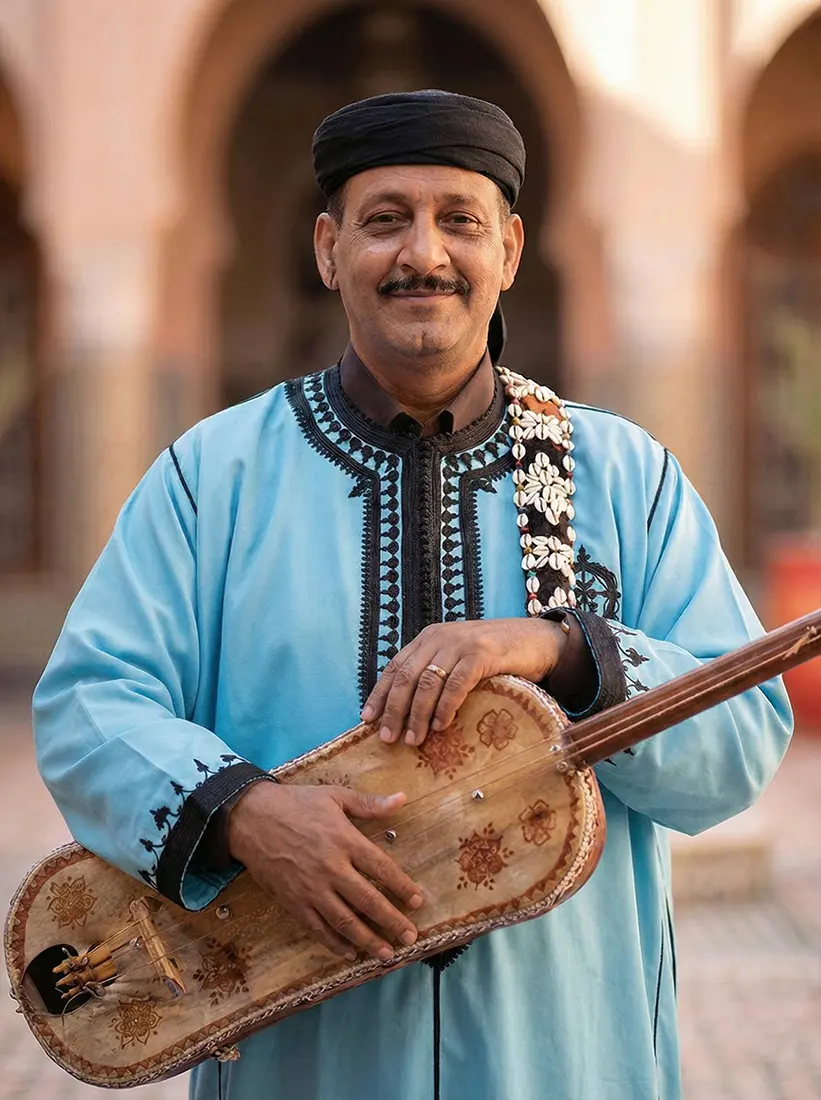
There are voices that carry the weight of centuries. Voices that don’t merely sing but summon — calling upon ancestors, spirits, and the deepest chambers of the soul. In the world of Gnawa, few voices resonate with such power as that of Maâlem Hamid El Kasri. He is not simply a musician; he is a keeper of flame, a bridge between worlds, and a living testament to a tradition that refuses to be silenced.
The House Where Spirits Gathered
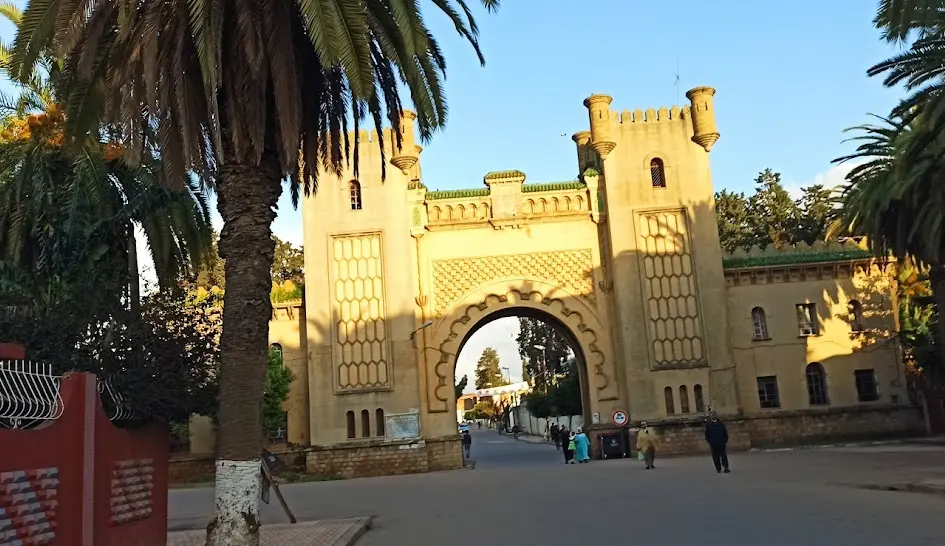
The story begins in Ksar El Kebir, a city nestled between Tangier and Rabat, where the echoes of Sub-Saharan Africa still whisper through narrow streets. Born in 1961 into a family where Gnawa was not a profession but a way of being, young Hamid found himself drawn to sounds that seemed older than memory itself.
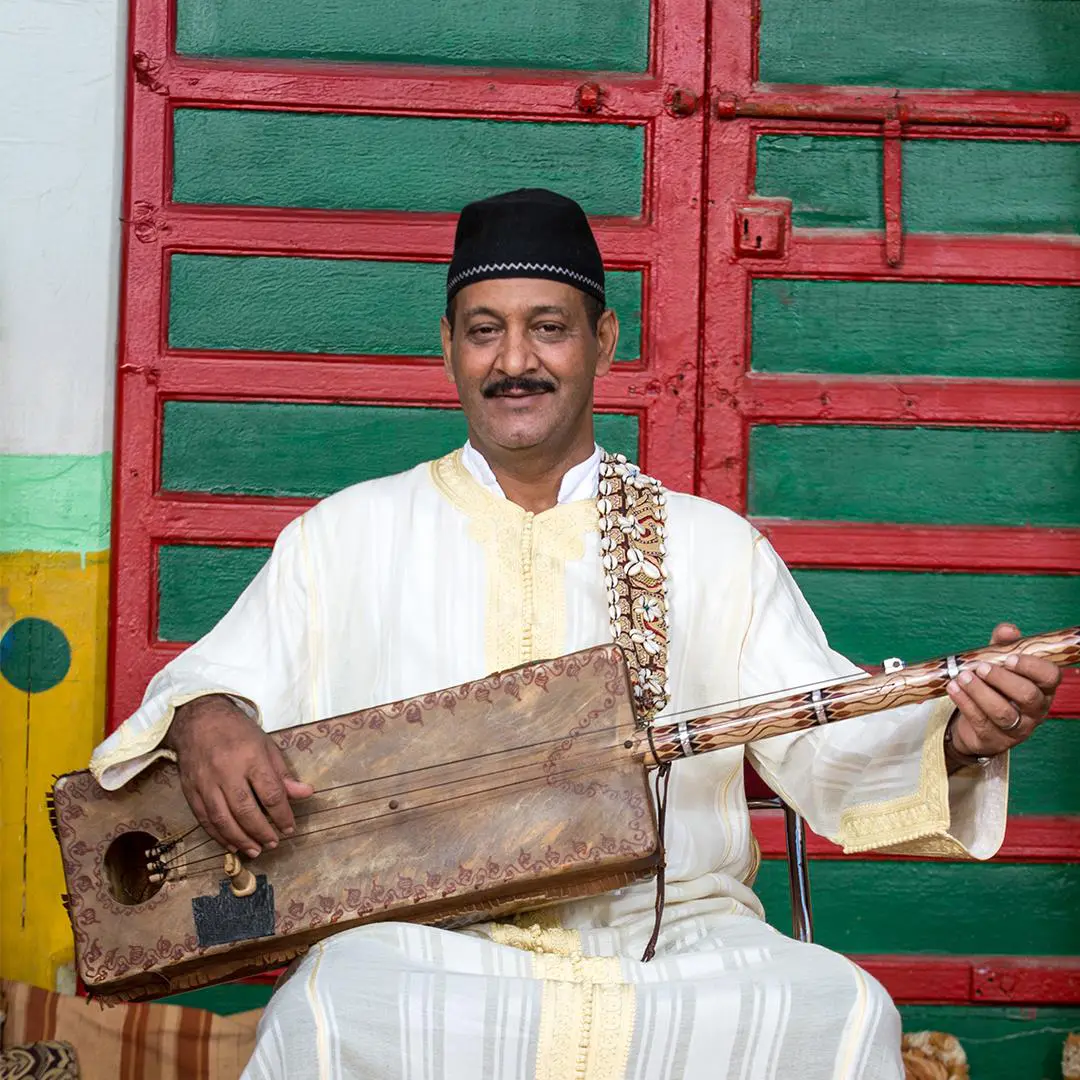
His grandmother hosted layali — those sacred nighttime ceremonies where the boundaries between the visible and invisible grow thin. The air in her house would thicken with incense, and the rhythms of the qraqeb would pulse like a second heartbeat. But it was her husband, an elderly man of Sudanese origin who had once been enslaved, who would plant the deepest seed in the boy’s heart. This man, whose name history has not preserved but whose influence proved immortal, introduced Hamid to the guembri — that three-stringed instrument whose bass notes can unlock doors between realms.
A Father’s Resistance, A Son’s Calling
Not everyone in Hamid’s life welcomed his path. His father, like many of his generation, saw Gnawa as something to be left behind — a relic of marginalization, of slavery’s long shadow. He wanted more for his son. Education. Respectability. A life unburdened by the weight of ancestral spirits.
The conflict grew so intense that Hamid was sent to live with his uncle in Rabat, far from the layali and the guembri. But fate, or perhaps the spirits themselves, had other plans. One day, sent to the souk to purchase fabrics for his uncle’s shop, the seven-year-old boy heard something that stopped him cold: the hypnotic clatter of qraqeb, the deep throb of a guembri, voices rising in call and response.
He followed the sound. Hours passed. His uncle grew frantic with worry, searching the medina for a lost child. But Hamid was not lost — he had been found. By the music. By his destiny.
The Pilgrimage of Learning
What followed was a journey that would take him across Morocco’s diverse Gnawa landscape. Recognizing that the call was too strong to resist, his uncle relented and sent him to study in Tetouan, considered at the time a true school of Gnawa tradition.
There, at the tender age of seven, Hamid began his formal initiation under Maâlem Abdelouahed Stitou, a founder of the legendary Tanguba school. He also studied with Maâlem Alouane, absorbing the distinct flavors of the Northern Gnawa tradition. But Hamid was not content to master one school. He traveled — to Tangier, to Marrakech, to Essaouira — drinking from every well of knowledge he could find.
This wandering apprenticeship gave him something rare: the ability to merge the Gnawa rhythms of Morocco’s north with those of the south, creating a synthesis that had never been heard before. Where others specialized, Hamid unified.
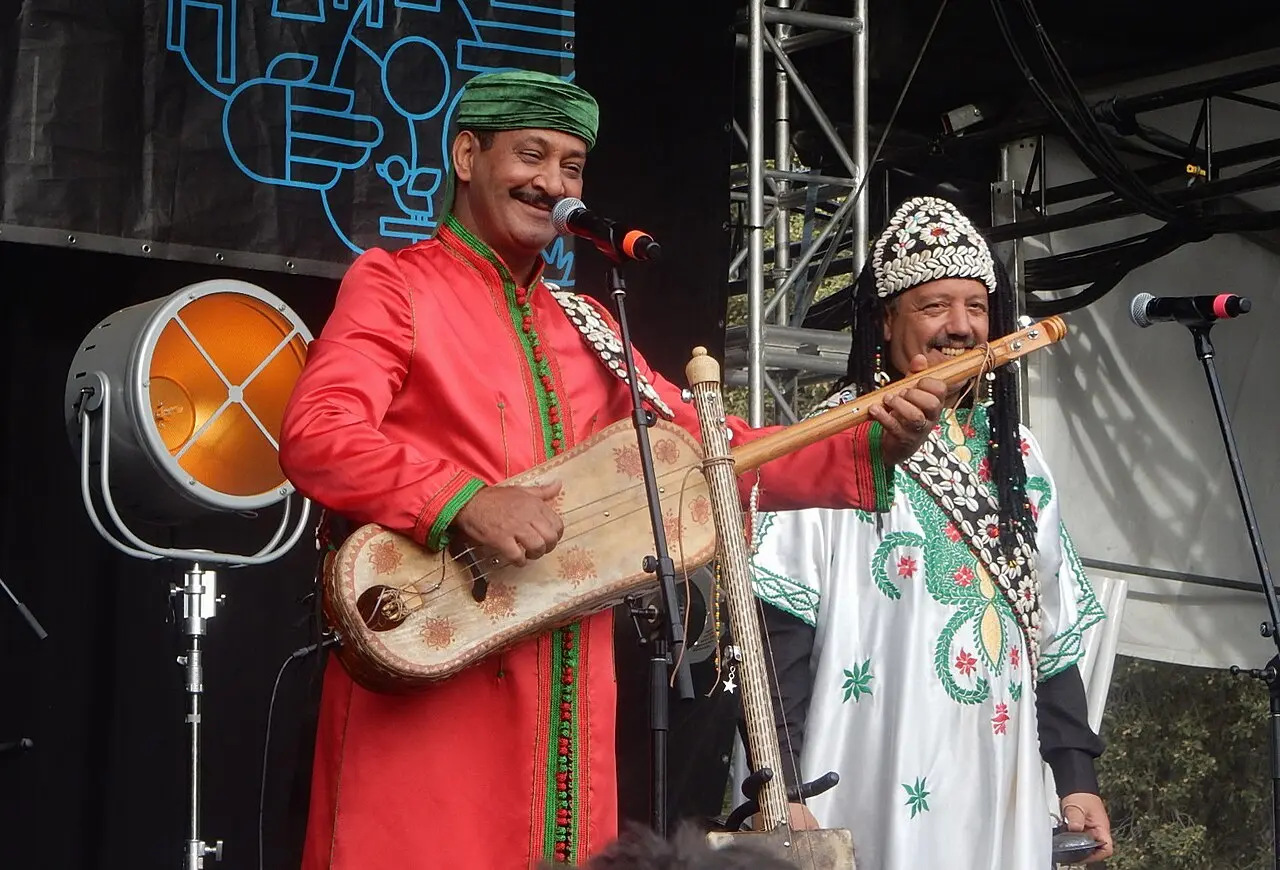
The Night of Recognition
In Gnawa tradition, one does not simply declare oneself a Maâlem. The title must be earned, witnessed, and blessed by those who came before. For Hamid, this moment arrived in Larache, where he organized a private gathering and invited the greatest masters of his era.
They came to test him, to listen, to judge. Through the long hours of the night, Hamid played and sang, demonstrating his command of the repertoire, his understanding of the spirits, his ability to navigate the treacherous waters between the sacred and the profane. When dawn broke, the masters gave their blessing. The boy who had once wandered lost through the souks of Rabat was now Maâlem Hamid El Kasri.
A Voice Like No Other
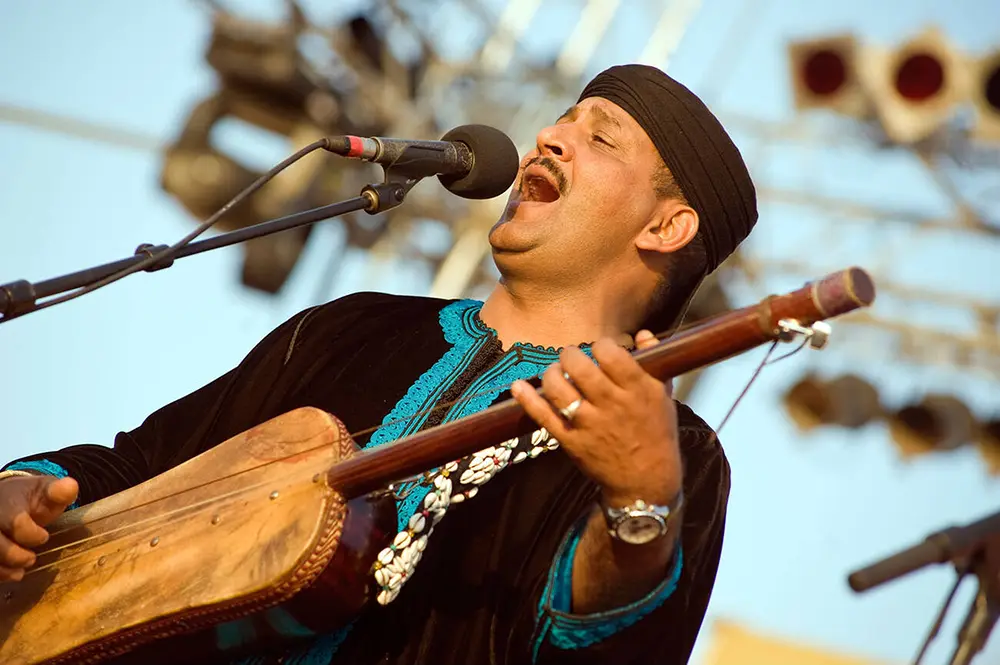
Those who have heard Hamid El Kasri perform speak of his voice as something almost geological — deep, resonant, emerging from some subterranean place where ancient rivers still flow. It is a voice that seems to have absorbed all the suffering and triumph of the Gnawa people, compressed into sound.
The Voice
Deep, resonant, geological — emerging from subterranean places where ancient rivers still flow.
The Weight
Each note lands like a stone dropped into still water, ripples spreading outward into trance.
The Synthesis
Merging north and south Moroccan Gnawa into a unity never heard before.
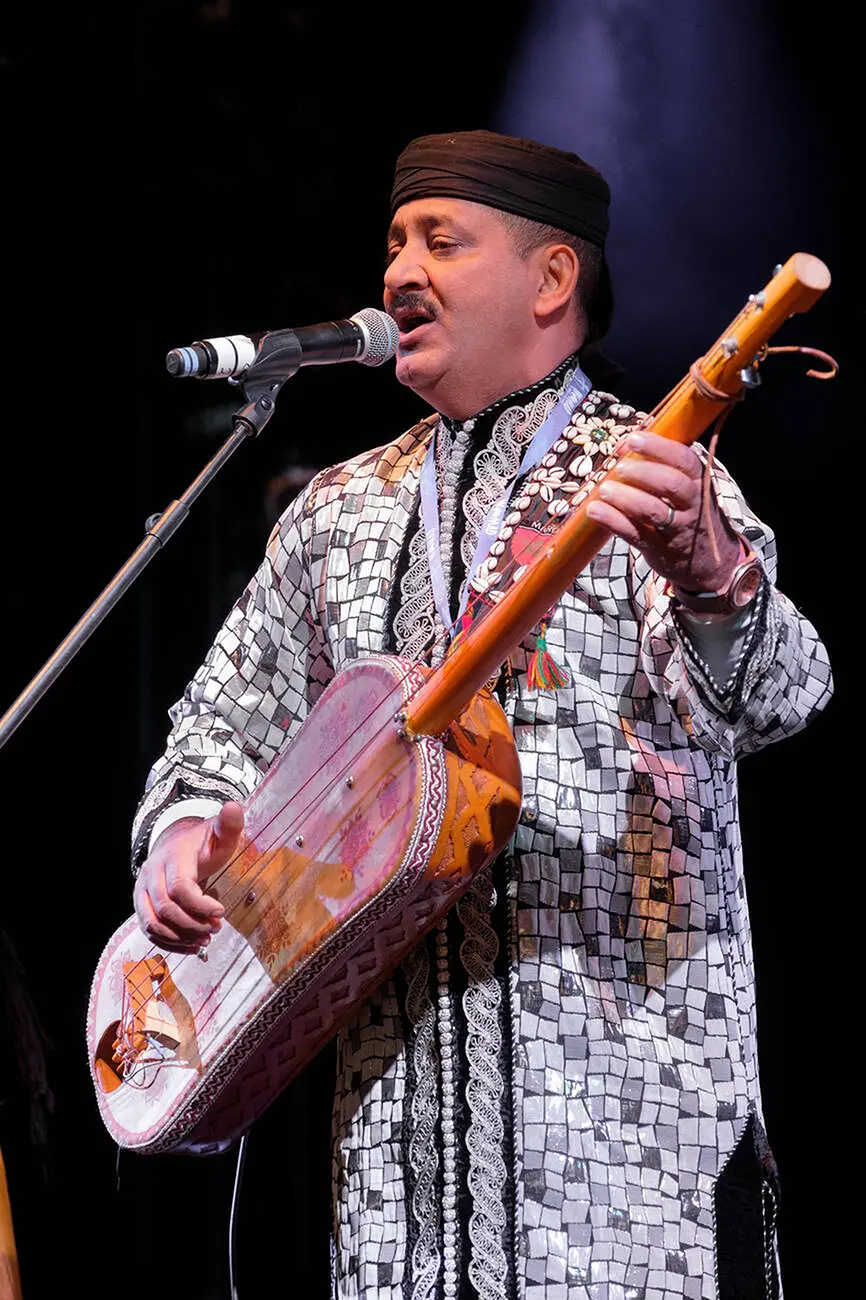
His approach to the guembri is equally distinctive. Where some masters favor speed and virtuosity, Hamid plays with a deliberate weight. He does not rush the spirits; he invites them.
Where Worlds Collide
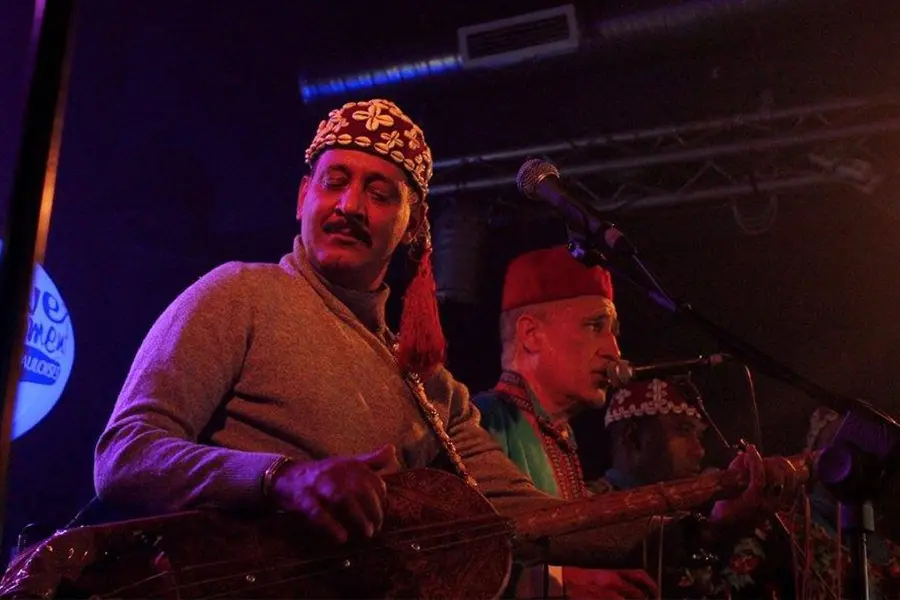
The Gnaoua and World Music Festival of Essaouira has been Hamid’s second home for decades. He is not merely a regular performer but a pillar of the institution, returning year after year to demonstrate that tradition and innovation need not be enemies.
His 2004 performance with the legendary Joe Zawinul became the stuff of festival legend — two masters from different worlds finding common ground in the universal language of rhythm and improvisation. Since then, he has collaborated with Karim Ziad, Hamayun Khan, Shahin Shahida, and in 2018, delivered a stunning opening concert alongside Brooklyn’s Snarky Puppy that proved Gnawa could stand shoulder to shoulder with the most sophisticated jazz fusion.
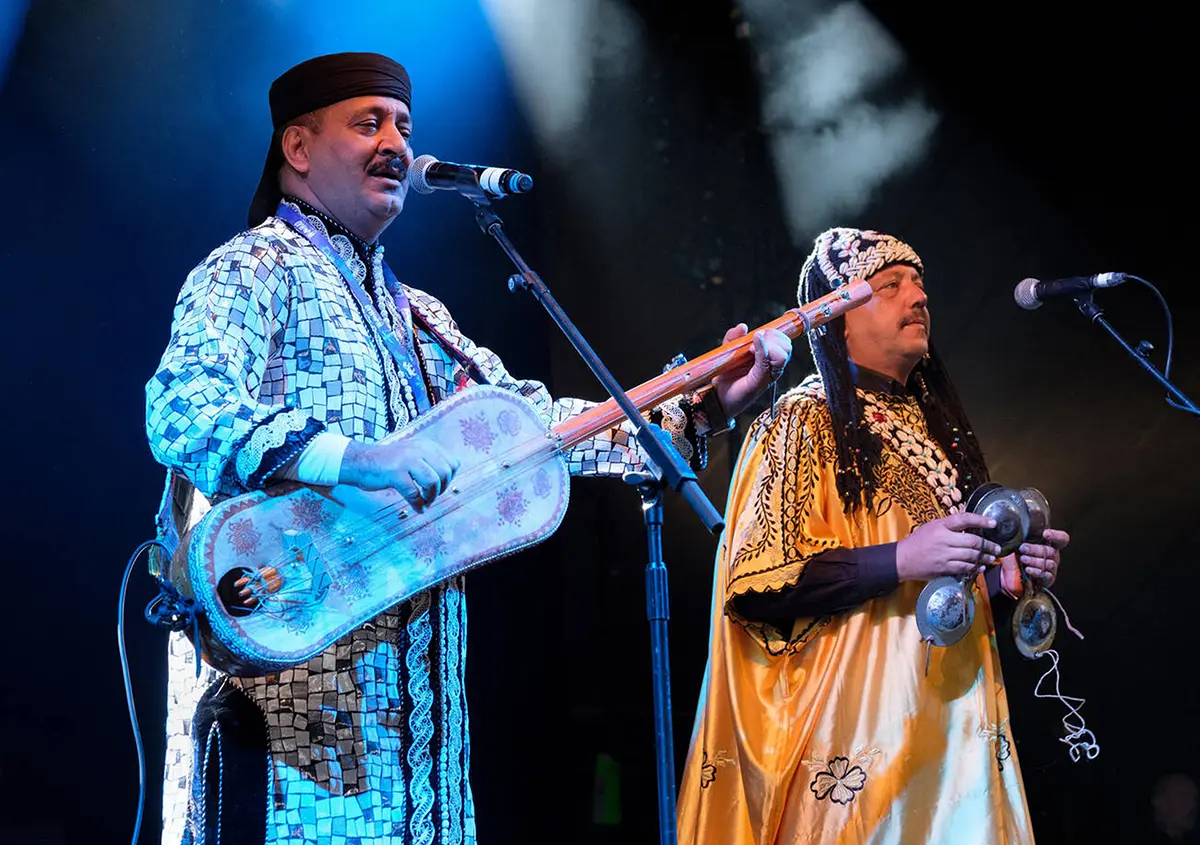
His collaboration with Jacob Collier took him to the BBC Proms, bringing Gnawa to audiences who had never heard a guembri in their lives. Yet through all these adventures, Hamid has never abandoned the source. He remains Vice President of the Yerma Gnaoua Association, working to preserve and transmit the tradition he inherited.
The Question of Fusion
When asked about blending Gnawa with other genres, Hamid’s answer reveals a nuanced philosophy. He does not reject fusion — his career is proof of that — but he insists on a crucial distinction: there is a difference between adding to the tradition and diluting it.
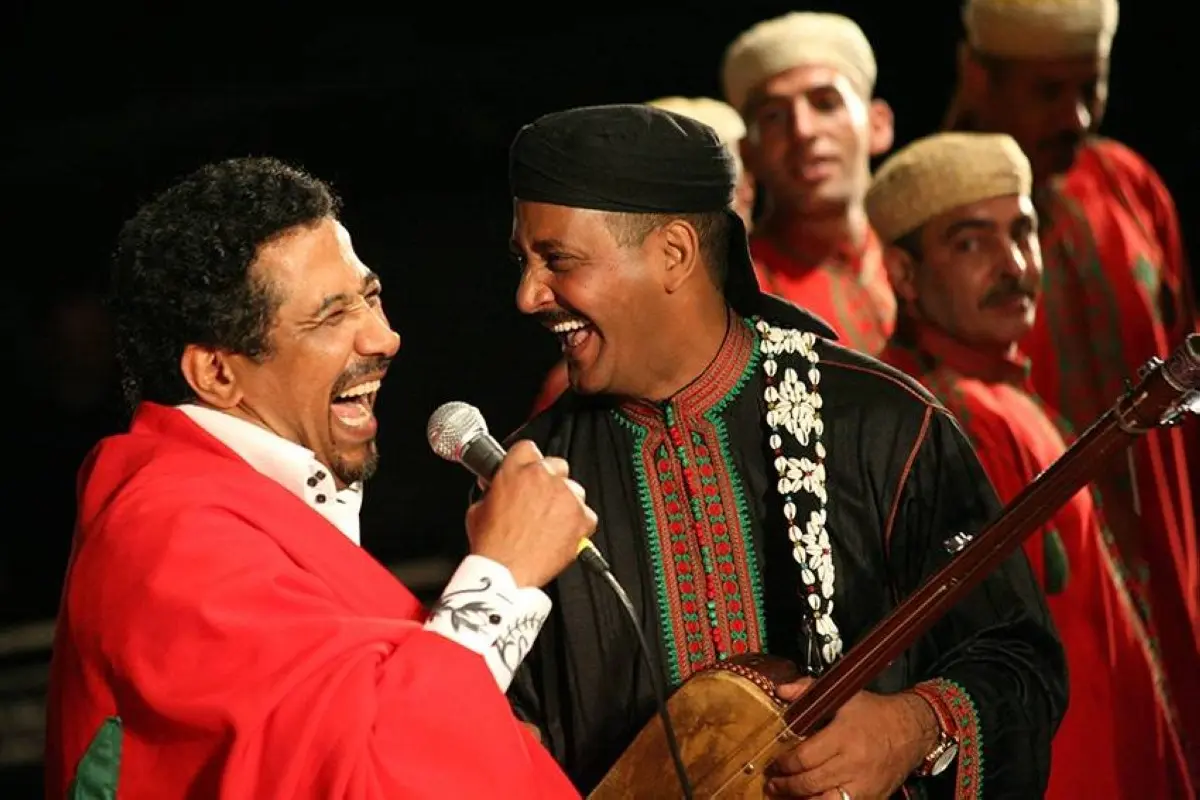
For Hamid, the sacred core must remain intact. The rhythms that summon the mluk, the spirits, cannot be arbitrarily altered for commercial appeal. Innovation must come from deep understanding, not superficial borrowing. When he plays with Western musicians, he brings the full weight of tradition to the encounter; he does not simplify or abbreviate.
Transmitting the Flame
Now in his sixties, Maâlem Hamid El Kasri carries a weight that goes beyond performance. He is acutely aware that he represents one of the last generations to have learned directly from masters who themselves learned from the children of the enslaved. The chain is fragile, and every link matters.
He speaks often of his fears for Gnawa’s future — not that the music will disappear, but that it will be hollowed out, reduced to exotic entertainment stripped of its spiritual substance. The layali, the all-night ceremonies of healing and communion, are becoming rarer. Young people want the stage, not the sanctuary.
Yet Hamid remains committed to teaching, to passing on not just the notes and rhythms but the understanding of why they matter.
The Sound of Memory
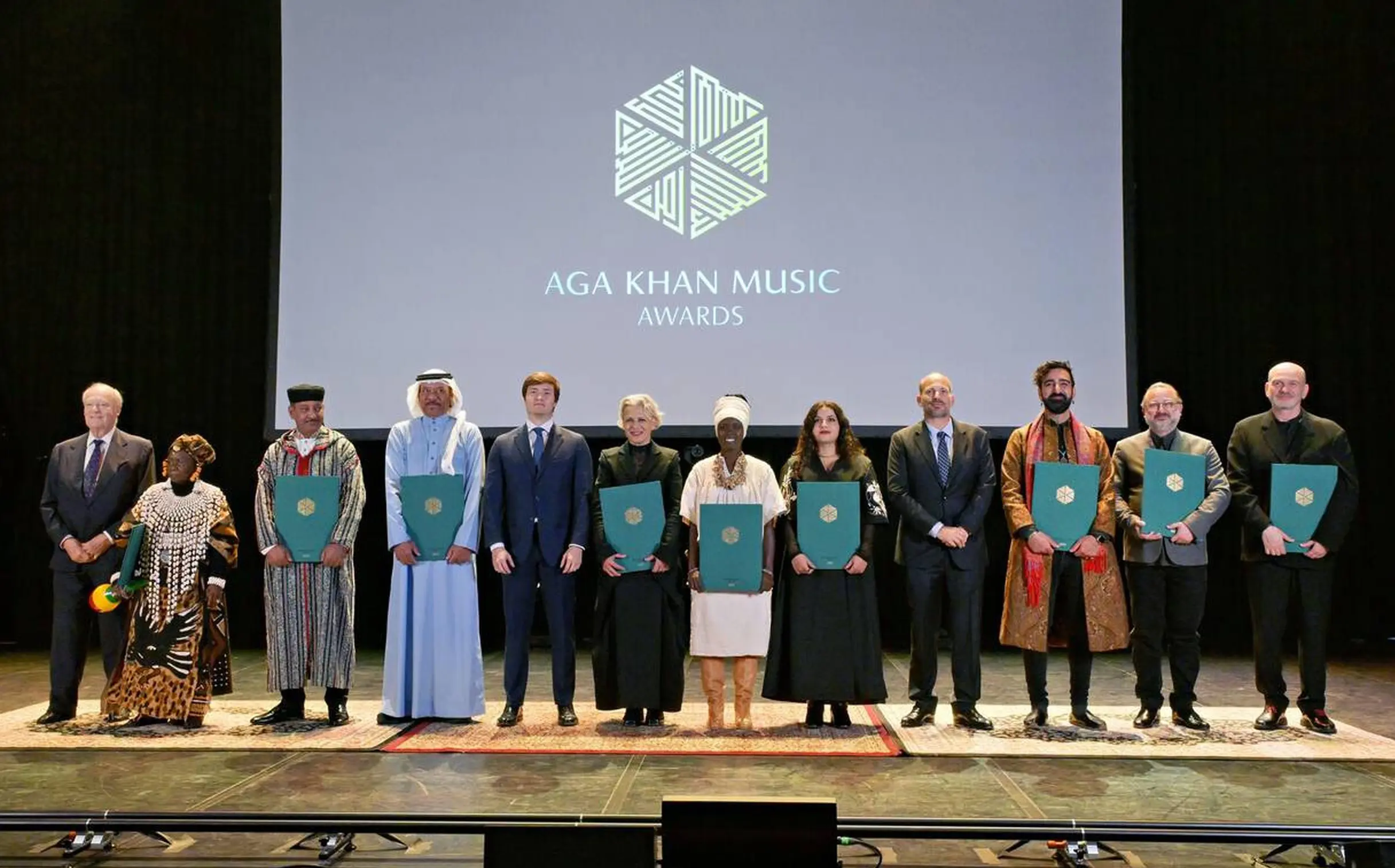
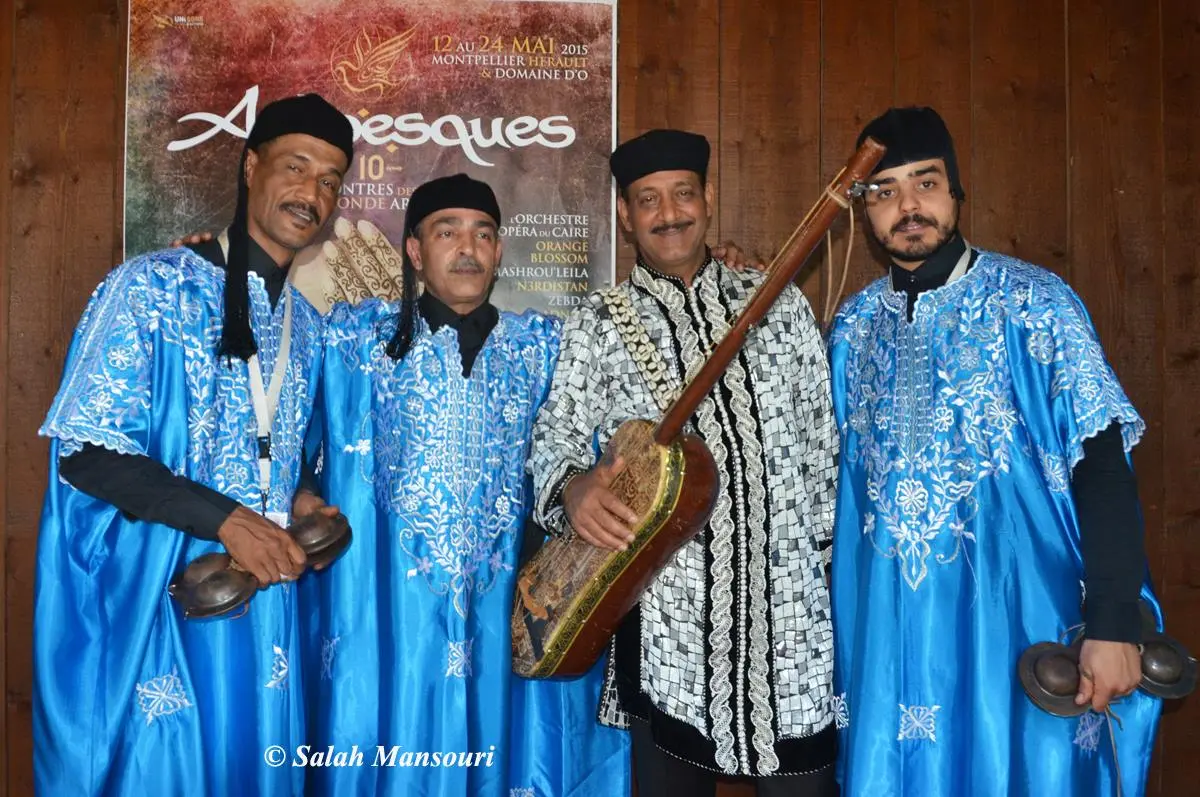
In 2025, Hamid El Kasri was named a finalist for the Aga Khan Music Awards, recognition of a lifetime spent in service to an art form that many once dismissed as primitive or marginal. He fills stadiums across Africa and Europe, his backup singers still wearing the ornate silk robes and tasseled fezes that Gnawa musicians have worn for centuries.
But perhaps the truest measure of his achievement lies not in the awards or audiences but in the simple fact that when Hamid El Kasri plays, he creates a portal. Through his voice and his guembri, listeners can touch something that stretches back to medieval slave routes, to Sudanese villages, to the first moment when suffering found its voice in rhythm and melody.
He is a time machine in human form, a man whose art allows us to truly live a Gnawa experience.
Essential Listening
Al Jadba
2009 • Traditional
His most celebrated album. Gnawa as ritual, designed to induce the trance state that gives the album its name.
Bouhala Gnawa
2003 • Raw Power
Captures Hamid at the height of his powers, with a rawness that later productions sometimes smooth away.
Djesse Vol. 1
2018 • With Jacob Collier
Gnawa in dialogue with contemporary global music while maintaining its essential character.
"Gnawa is not music you play. It is music that plays you."
— Maâlem Hamid El Kasri