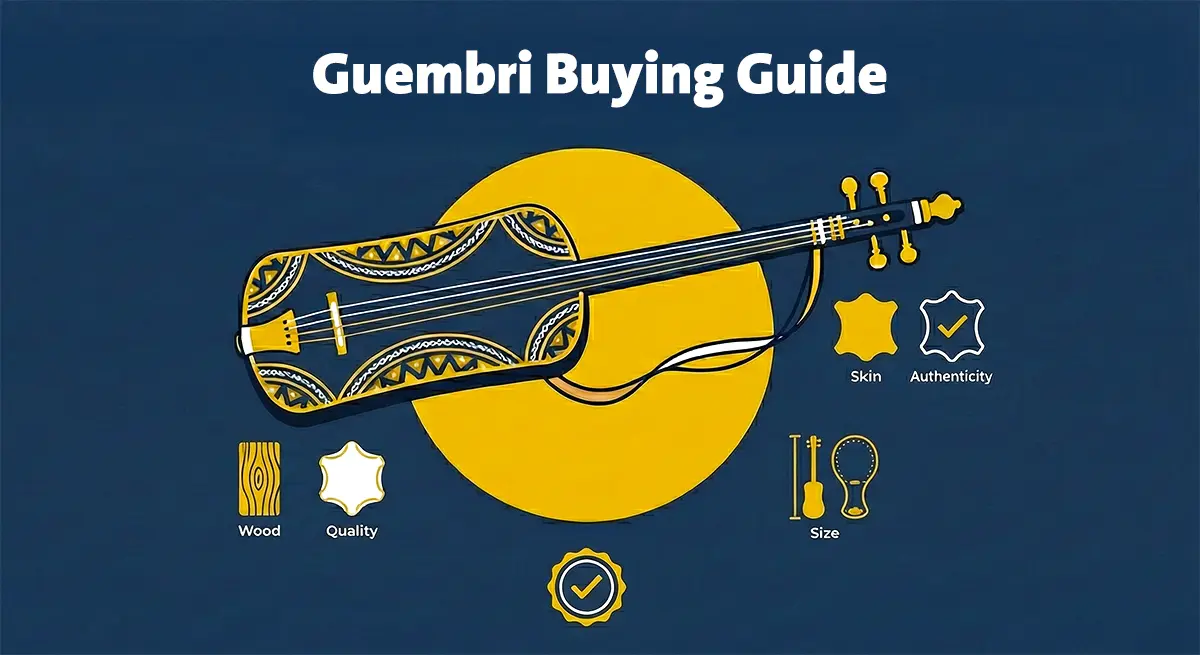
Everything you need to know before purchasing a Guembri — from professional vs. souvenir quality, wood types, skin authenticity, sizes, and where to find authentic instruments online.
The guembri is not just an instrument — it’s a sacred vessel that has carried the voices of ancestors for centuries. Buying your first one is a significant step, whether you’re a musician seeking to learn Gnawa traditions or a collector appreciating master craftsmanship.
But the market is flooded with options ranging from authentic handcrafted pieces to tourist souvenirs. This guide will help you understand the differences and make an informed choice.
Professional vs. Souvenir Guembri: The Essential Difference
This is the most important distinction you need to understand before purchasing.
Professional Guembri (For Playing)
A professional guembri is built for sound and durability:
- Body: Carved from a single piece of quality hardwood
- Skin: Genuine camel neck leather, properly stretched and cured
- Strings: Authentic goat gut or high-quality nylon
- Neck: Solid wood dowel with proper string tension
- Sersara: Metal rattle plate that produces the characteristic buzz
- Craftsmanship: Made by experienced artisans, often Maâlems themselves
Price range: €200–€500+
Souvenir Guembri (For Decoration)
A souvenir guembri prioritizes appearance over function:
- Body: Often thin wood or composite materials
- Skin: Poorly stretched or synthetic material
- Strings: Decorative only, cannot hold proper tension
- Focus: External decoration, paint, tourist appeal
- Sound: Hollow, tinny, or completely unplayable
Price range: €30–€100
The Test
If you can’t play it properly — if the skin doesn’t resonate, if the strings won’t stay in tune, if the bass notes sound dead — it’s a souvenir, regardless of how beautiful it looks.

Wood Types: What Affects Sound and Price
The wood used in a guembri significantly impacts both its sound quality and cost.
Premium Woods
Mahogany (المهوغاني)
- Deep, warm resonance
- Excellent durability
- Beautiful natural grain
- Price impact: +50–100% over basic woods
Walnut (الجوز)
- Clear, defined sound
- Dark, elegant appearance
- Good longevity
- Price impact: +40–80%
Iroko
- Traditional West African choice
- Spiritual significance in source cultures
- Strong and resonant
- Price impact: +30–60%
Standard Woods
Cedar (الأرز)
- Lightweight and resonant
- Often used for necks
- Good for beginners
- Price impact: Baseline
Poplar (الحور)
- Budget-friendly option
- Less dense, lighter weight
- Shorter lifespan
- Price impact: Most economical
Our Recommendation
For serious playing, invest in mahogany or walnut body with a cedar neck. The sound difference is substantial, and the instrument will last decades with proper care.
Checking Skin Quality: Camel vs. Goat
The skin covering is crucial to the guembri’s voice. Here’s how to verify authenticity.
Camel Neck Leather (Preferred)
- Thickness: 2–3mm, substantial feel
- Sound: Deep, warm, earthy bass tones
- Durability: Lasts decades with care
- Appearance: Natural variations, slight imperfections
Goat Skin (Alternative)
- Thickness: 1–2mm, thinner
- Sound: Brighter, sharper attack
- Durability: Good, but less than camel
- Appearance: More uniform texture
The Authenticity Test
-
Thumbnail Press: Press firmly — genuine leather yields slightly then recovers within 10 seconds. Synthetic materials retain the indent.
-
Smell Test: Real leather has an earthy, natural scent. Chemical odors indicate synthetic or poorly processed materials.
-
Edge Inspection: Check cut edges — color should penetrate throughout, not just surface coating.
-
Flexibility Test: Bend gently — authentic leather moves smoothly without cracking sounds.
-
Water Drop Test: A small water drop on genuine leather darkens temporarily then returns to normal as it dries.
Red Flags: Uniform texture, plastic smell, permanent indentation, visible synthetic backing.
Standard Sizes: Full-Size vs. Taqtouqa
Guembris come in different sizes, each suited to different players and purposes.
Full-Size (الكبير)
- Dimensions: 98–123 cm total length, 56–61 cm body
- Sound: Maximum bass depth and resonance
- Best for: Professional performance, traditional ceremonies
- Considerations: Heavier, requires larger hands
Taqtouqa / Medium (التقتوقة)
- Dimensions: 80–105 cm total length, 45–55 cm body
- Sound: Balanced, slightly higher pitch
- Best for: Beginners, practice, travel
- Considerations: Easier to handle, more portable
For Beginners: Start with Taqtouqa
We recommend the medium size for first-time buyers:
- Easier to hold and manage during learning
- Less finger stretch required
- Lighter for extended practice sessions
- More affordable entry point
- Still produces authentic Gnawa sound
Once you’ve developed technique and hand strength, you can graduate to a full-size instrument.
Where to Buy Authentic Guembri Online
Finding genuine, playable guembris requires knowing where to look. Here are trusted sources.
What to Look For in a Seller
- Artisan credentials: Connection to Gnawa tradition
- Detailed photos: Multiple angles, close-ups of skin and construction
- Video demonstrations: Hearing the instrument played
- Material specifications: Clear description of wood and skin types
- Return policy: Authentic sellers stand behind their work
- Customer reviews: Look for musician feedback, not just tourist buyers
Trusted Online Sources
Handcrafted Guembris on Etsy
Browse authentic instruments from verified Moroccan artisans. Filter by wood type, size, and customer ratings.
Professional Grade Instruments
Premium guembris with mahogany bodies, camel leather, and traditional goat gut strings. Includes carrying bag.
Beginner-Friendly Taqtouqa
Medium-sized guembris perfect for learning. Cedar construction with quality camel skin at accessible prices.
Before You Buy: Ask These Questions
- What wood is the body made from?
- Is the skin camel neck or goat?
- Can you send a video of the instrument being played?
- What is included (bag, extra strings)?
- What is your return policy for sound quality issues?
Quick Reference: What to Look For
| Feature | Professional | Avoid |
|---|---|---|
| Wood | Mahogany, Walnut, Iroko | Thin plywood, composite |
| Skin | Camel neck, properly stretched | Synthetic, loose, painted |
| Strings | Goat gut or quality nylon | Decorative, can’t hold tune |
| Sersara | Metal rattle included | Missing or glued on |
| Price | €200+ | Under €100 |
| Source | Artisan with credentials | Tourist shop, no details |
Your Journey Begins
Buying a guembri is the first step into a profound musical and spiritual tradition. Take your time, ask questions, and invest in quality. A well-made instrument will be your companion for decades, developing its own voice as you develop yours.
The Maâlems say the guembri chooses its player as much as the player chooses the guembri. When you find the right one, you’ll know.
"A good guembri is not bought — it is discovered. And once found, it becomes part of your soul."
Continue Your Journey
Learn more about the guembri and Gnawa traditions:
- The Guembri: Sacred Heart of Gnawa Music — Understand the spiritual significance of what you’re about to own.
- Gnawa Instruments Guide: The Full Sacred Ensemble — Discover the other instruments that accompany the guembri.
- Best Gnawa Artists to Listen To: A Complete Guide — Listen to the masters to understand the sound you’re aiming for.
Instrument Pages
- The Guembri — Detailed specifications, tuning, and gallery.
- The Qraqeb — Consider adding qraqeb to complete your setup.
The Masters to Study
- Mahmoud Guinea — Study the King’s technique to hear what a great guembri sounds like.
- Houssam Gania — Next-generation technique for modern players.